
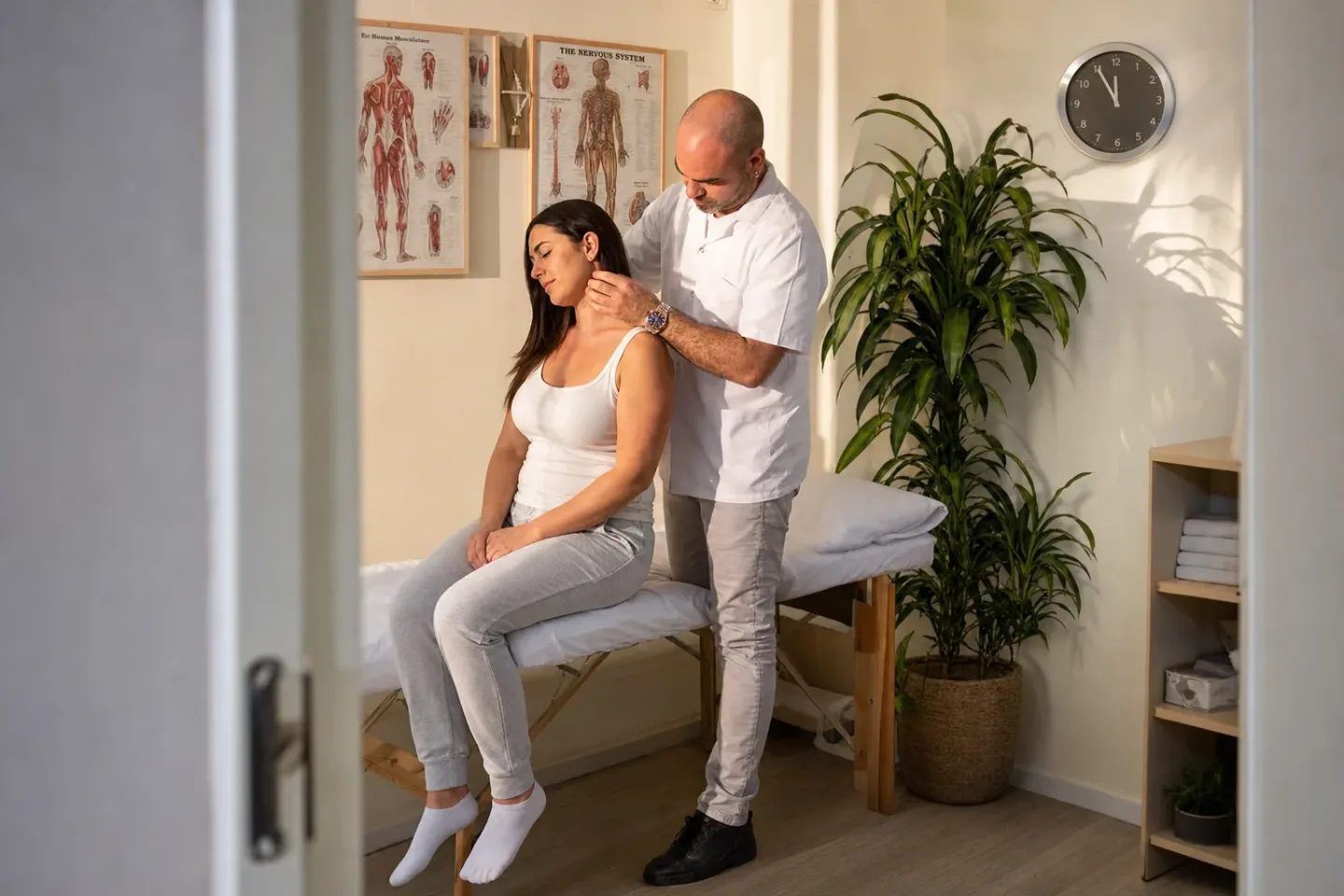
Cervical Vertigo - When the Dizziness Starts in the Neck
9 min read
Do you feel unsteady or dizzy every time you turn your head or look up at a high shelf? Did the tests at the ear‚ nose and throat doctor come back normal‚ while the dizziness and the stiffness at the back of your neck keep following you? Does a long day at the computer end with a feeling that the ground is moving under your feet?
I'm Roman Kibler‚ an osteopath D.O at my clinic in Kiryat Tivon‚ and I examine the neck‚ shoulders and chest as one system to find the mechanical source of the symptoms after a medical workup has ruled out other causes.
Leave your details or call me‚ and I'll check with you whether this is cervical vertigo and what can be done to ease it!

Cervical vertigo is a term for a feeling of unsteadiness or dizziness that comes‚ according to the clinical assessment‚ from a functional disturbance in the cervical spine. Unlike classic spinning vertigo that starts in the inner ear‚ the focus here is on the link between the mechanical structures of the neck and the balance system and nervous system.
It is not a simple condition to diagnose‚ because other causes‚ such as vestibular‚ neurological or cardiovascular problems‚ have to be ruled out first. When a thorough medical workup finds nothing clear and the symptoms go on‚ the possibility sometimes comes up that the neck is the part that disturbs the sense of balance‚ in other words cervical vertigo. Doctors also call this cervicogenic dizziness.
What Is Cervical Vertigo and How Does It Develop?
The cervical spine is made of seven vertebrae‚ deep and superficial muscles‚ ligaments and small‚ delicate joints. This area holds many sensory receptors whose job is to tell the brain‚ at every moment‚ where the head is in space. This information is combined with input from the inner ear and the eyes‚ and together they create the feeling of stability.
When there is mechanical overload‚ limited movement between the neck vertebrae‚ chronic muscle tension or an earlier injury such as a whiplash injury‚ the information coming from the joints and muscles can be disturbed‚ and this is how cervicogenic dizziness can begin.
The mismatch between what the neck reports and what the inner ear reports can show up as non-spinning dizziness‚ a floating feeling and sometimes also a sense of pressure in the head.
It is important to know that a diagnosis of cervical vertigo is usually made only after other causes have been ruled out. It rests on a combination of typical symptoms‚ a physical examination and the absence of other findings in the medical workup.
Can Neck Problems Cause Dizziness?
Many people ask: can neck problems cause dizziness? The answer is that they can‚ although it is not the most common cause of dizziness‚ and that is exactly why the medical workup comes first. Cervicogenic vertigo is the term for dizziness that is linked to the neck and appears together with neck pain or stiffness.
Common Causes of Cervical Vertigo
In practice‚ I meet a few situations that repeat themselves in people with cervical dizziness:
- Long hours in front of a screen with the head tilted forward.
- A car accident or an injury that caused a sharp movement of the head.
- Ongoing emotional stress that shows up as tightening of the muscles at the back of the neck and shoulders.
- Degenerative changes in the neck vertebrae that limit the range of movement.
- A shallow breathing pattern that loads the neck muscles.
Cervical Vertigo Symptoms
Beyond the dizziness itself‚ many patients report neck stiffness‚ a limited range of movement and sometimes pain at the back of the neck and head. The pain may be dull and pressing and get worse after long sitting or computer work. A sudden‚ severe headache is not part of this picture and needs a doctor at once.
Sometimes there is also numbness or a tingling current in the arm‚ especially when cervical nerve roots are involved.
Some patients also describe sensitivity to light‚ mental fatigue‚ trouble concentrating or head pressure and dizziness. In some cases cervicogenic dizziness has to be told apart from a migraine with a vestibular component‚ so the doctor's guidance is especially important here.
Neck Pain and Dizziness: Dizziness When Turning Head
A typical pattern is neck pain and dizziness that appear together: dizziness when turning head to look back while reversing the car‚ when looking up‚ or after hours with the head bent over a phone. When the dizziness follows the position of the head and the state of the neck in this way‚ cervical vertigo is one of the possibilities the doctor and I consider.
How Is Cervical Vertigo Different From Inner Ear Vertigo?
In vertigo that comes from the inner ear‚ people usually describe a feeling that the room is spinning‚ sometimes with strong nausea and involuntary eye movements. In cervical vertigo the feeling is usually one of unsteadiness or floating‚ and it is linked more to the position of the head and the state of the neck. The final distinction is made by a doctor‚ sometimes with dedicated balance tests.
When Does Dizziness Need a Doctor Right Away?
Before any manual treatment‚ it is important to make sure there are no warning signs. If the dizziness comes together with one of the following signs‚ see a doctor or go to the emergency room at once:
- A sudden and especially strong headache.
- Significant vision problems or double vision.
- Weakness or numbness on one side of the body.
- Difficulty speaking or swallowing.
- Loss of consciousness or confusion.
- A sharp‚ new pain in the neck or the back of the head together with dizziness‚ especially after an injury or a sharp movement of the head.
Only when the medical workup is normal and a functional neck source is suspected is there room for assessment and manual treatment. Any change in the nature of the symptoms means going back to the doctor.
How Is Cervical Vertigo Assessed at the Clinic?
The assessment starts with a detailed conversation: when the dizziness appears‚ in which positions it gets worse‚ which tests have already been done and what they showed. After that I check the range of movement of the neck‚ the quality of movement between the vertebrae‚ the tension of the suboccipital muscles‚ the breathing pattern and the overall posture.
Quite often a clear link turns up between a certain sitting position and the appearance of cervical dizziness. These findings guide the treatment and let me build a plan that fits your body exactly‚ not a general protocol.
Osteopathic Cervical Vertigo Treatment
Osteopathy looks at the body as one system in which structure and function are linked. In cervical vertigo treatment the focus is not only on the neck itself‚ but also on the chest‚ the shoulder girdle and the connection between them. A posture in which the head is tilted forward for a long time‚ for example‚ builds up a load on the suboccipital muscles and on the small joints of the neck.
The osteopathic techniques are manual and gentle. Their aim is to improve joint mobility‚ reduce muscle tension and improve the quality of the sensory information that travels from the neck to the nervous system.
Better mobility may reduce the sensory mismatch that causes cervical vertigo. Sometimes I also work on the diaphragm and the breathing pattern‚ which affect the tone of the neck muscles.
The first session lasts about an hour and includes a full assessment‚ and follow-up sessions last about 45 minutes. Alongside the treatment you will get simple advice for home: movement breaks during the working day‚ adjusting the height of the screen and gentle mobility exercises for the neck.
How Is Cervicogenic Dizziness Treatment Different From the Conventional Approach?
Conventional medicine focuses first on ruling out dangerous conditions - an important and necessary approach. When there is no abnormal finding‚ cervicogenic dizziness treatment may include physiotherapy‚ posture exercises and sometimes medication for the symptoms.
The osteopathic approach puts a wider emphasis on the links between different areas of the body and how they affect each other. It is not a replacement for conventional medicine‚ but a complementary approach that suits a functional disturbance in particular‚ and not a serious structural pathology.
Who Is Cervical Vertigo Treatment Suitable For?
People who have cervicogenic dizziness together with neck stiffness‚ recurring pain at the back of the neck‚ or dizziness after a period of ongoing load at the computer may benefit from this approach. Someone who had a minor car accident or a neck injury and has felt unsteady ever since can also benefit from an in-depth functional assessment.
Patients come to my clinic in Kiryat Tivon after a workup with their family doctor or an ear‚ nose and throat doctor. If you are looking for an osteopath in Kiryat Tivon who will examine the neck together with everything that affects it‚ you can book a first assessment.
Daily Habits That Ease Cervical Dizziness
Treatment at the clinic is only part of the picture‚ because the neck works all day long. A short break every 40-50 minutes of sitting‚ in which you move your shoulders and turn your head slowly within a comfortable range‚ reduces the load on the suboccipital muscles. The same goes for the phone: hold it close to eye level and do not bend your neck over it for long periods.
Pay attention to sleep as well: a pillow that is too high‚ or sleeping on your stomach with your head turned‚ often makes the feeling worse in the morning. When cervical vertigo appears mainly when you get out of bed‚ get up gradually by rolling onto your side and give your body a few seconds to settle.
Slow breathing through the nose‚ drinking enough and avoiding sharp head movements during an episode also help the balance system calm down. If the exercises increase the dizziness‚ stop and tell me about it at the next session.
Cervical Vertigo - A Reason to Investigate‚ Not to Put Up With It
Cervical vertigo is a complex condition that most likely comes from a functional disturbance in the neck that affects the balance system. A correct diagnosis requires ruling out other causes‚ and only then can manual treatment be considered.
Osteopathic treatment may help by improving mobility‚ reducing muscle tension and balancing movement and breathing patterns. This approach looks at the whole body‚ with the aim of supporting normal function and reducing the feeling of dizziness in a careful and responsible way.
Frequently asked questions
Is cervical vertigo a dangerous condition?
Cervical vertigo itself is usually a functional disturbance and not a life-threatening condition. However‚ dizziness can also come from serious causes‚ so any new or worsening dizziness needs a doctor's workup before manual treatment.
How do you know the dizziness comes from the neck?
No single test proves cervicogenic dizziness‚ and that is why the diagnosis of cervical vertigo takes time. The diagnosis rests on ruling out other causes‚ on a link between the dizziness and movements or positions of the head‚ and on findings in the examination of the neck.
How many sessions are usually needed?
It varies from person to person and depends on how long the symptoms of cervical vertigo have lasted and on what keeps them going. Someone whose dizziness began recently after a period of heavy computer work often needs fewer sessions than someone who has lived with it for years. After the first assessment I'll be able to tell you which plan suits you‚ and at every stage I'll check with you whether there is improvement.
Does the treatment hurt?
The techniques are gentle and adapted to each patient's sensitivity. Sometimes you may feel slight tiredness or tenderness in the area on the day after the session‚ and it usually passes on its own. If anything during the session feels uncomfortable‚ tell me and I'll change the technique.
What can I do at home to ease cervical vertigo?
Raise the screen to eye level‚ get up and move your neck every hour and avoid sharp head movements. A suitable pillow and getting out of bed slowly also help many people with cervical vertigo. If the dizziness gets worse or new symptoms appear‚ see a doctor.
Does osteopathic treatment replace a medical workup?
No. Treatment comes after the doctor has ruled out other causes of the dizziness‚ and it works alongside the medical advice. If during the assessment I suspect a problem that is not functional‚ I'll refer you back to your doctor.
Table of Contents
- What Is Cervical Vertigo and How Does It Develop?
- Can Neck Problems Cause Dizziness?
- Common Causes of Cervical Vertigo
- Cervical Vertigo Symptoms
- Neck Pain and Dizziness: Dizziness When Turning Head
- How Is Cervical Vertigo Different From Inner Ear Vertigo?
- When Does Dizziness Need a Doctor Right Away?
- How Is Cervical Vertigo Assessed at the Clinic?
- Osteopathic Cervical Vertigo Treatment
- How Is Cervicogenic Dizziness Treatment Different From the Conventional Approach?
- Who Is Cervical Vertigo Treatment Suitable For?
- Daily Habits That Ease Cervical Dizziness
- Cervical Vertigo - A Reason to Investigate‚ Not to Put Up With It
- Frequently asked questions
