Does your baby turn his head to the same side almost all the time‚ cry in certain positions or struggle to feed on one side? Does he squirm in the evening‚ look tense with gas and refuse to settle even in your arms? Or perhaps‚ after a hard birth or a C-section‚ you simply feel that something in his little body is not quite at ease?
I am Roman Kibler‚ an osteopath (D.O) who treats babies from their first weeks of life at my clinic in Kiryat Tivon‚ with a very gentle touch and with the parents fully involved.
Leave your details or call me‚ and I will check with you whether osteopathic treatment is right for your baby!
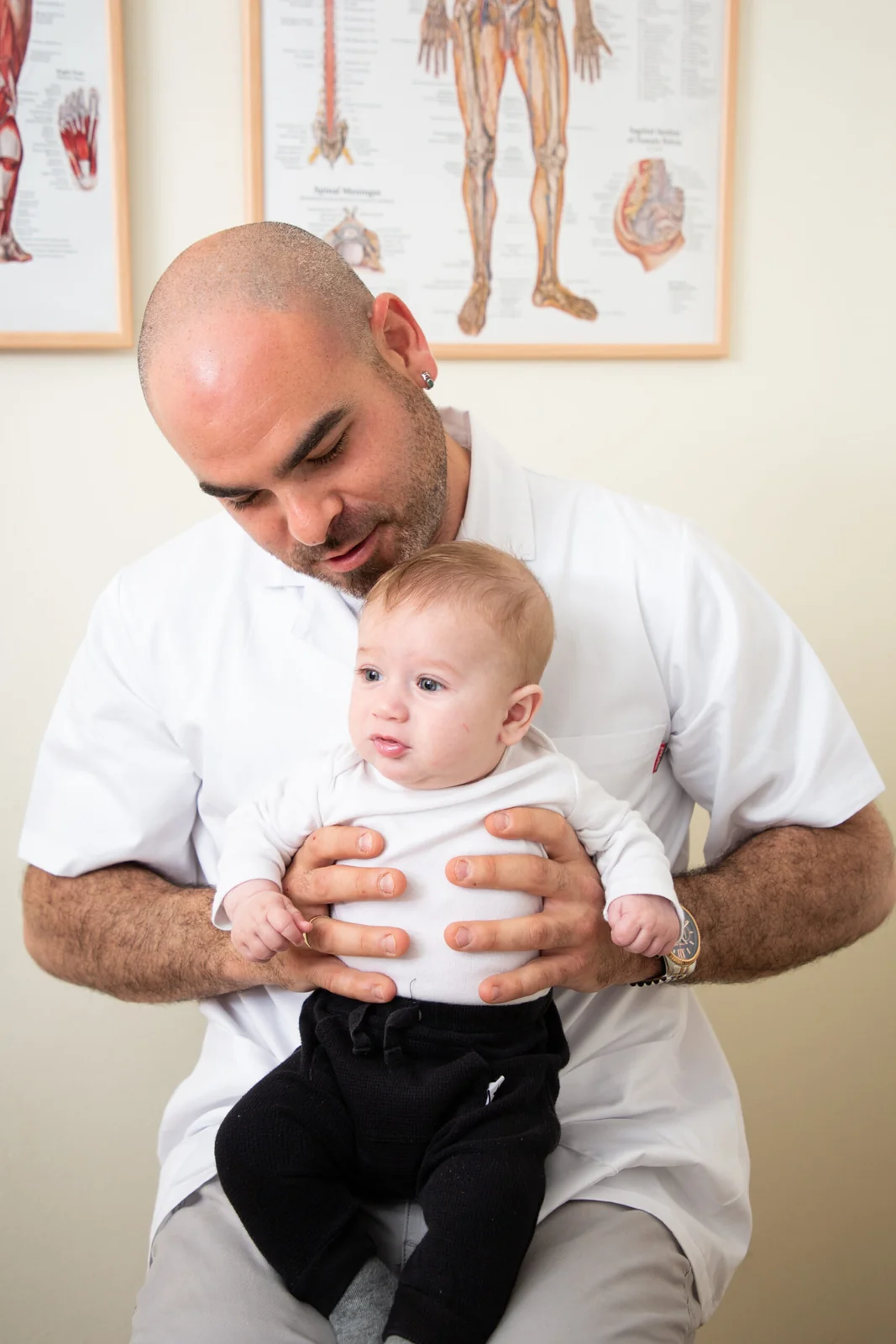
Osteopathy for babies is a gentle manual treatment that looks for movement strain‚ tension in the tissues or mild restrictions that affect a baby's comfort and function. In the first months of life the body changes fast: the muscles‚ the skeleton‚ the digestive system‚ breathing and sensory regulation are all still developing.
That is why even a relatively small strain can show up as crying‚ restlessness‚ a preferred side‚ difficulty in certain positions or a sense that the baby is "not comfortable" in his own body. It is important to say this clearly: baby osteopathy does not replace the pediatrician‚ the well-baby clinic‚ a lactation consultant‚ developmental physiotherapy or a medical workup when there are worrying signs.
Osteopathy for babies can fit in when the picture suits a gentle‚ conservative approach‚ and when the goal is to improve movement‚ reduce strain and help parents understand how to handle everyday care in a better way.
What Is Osteopathy for Babies?
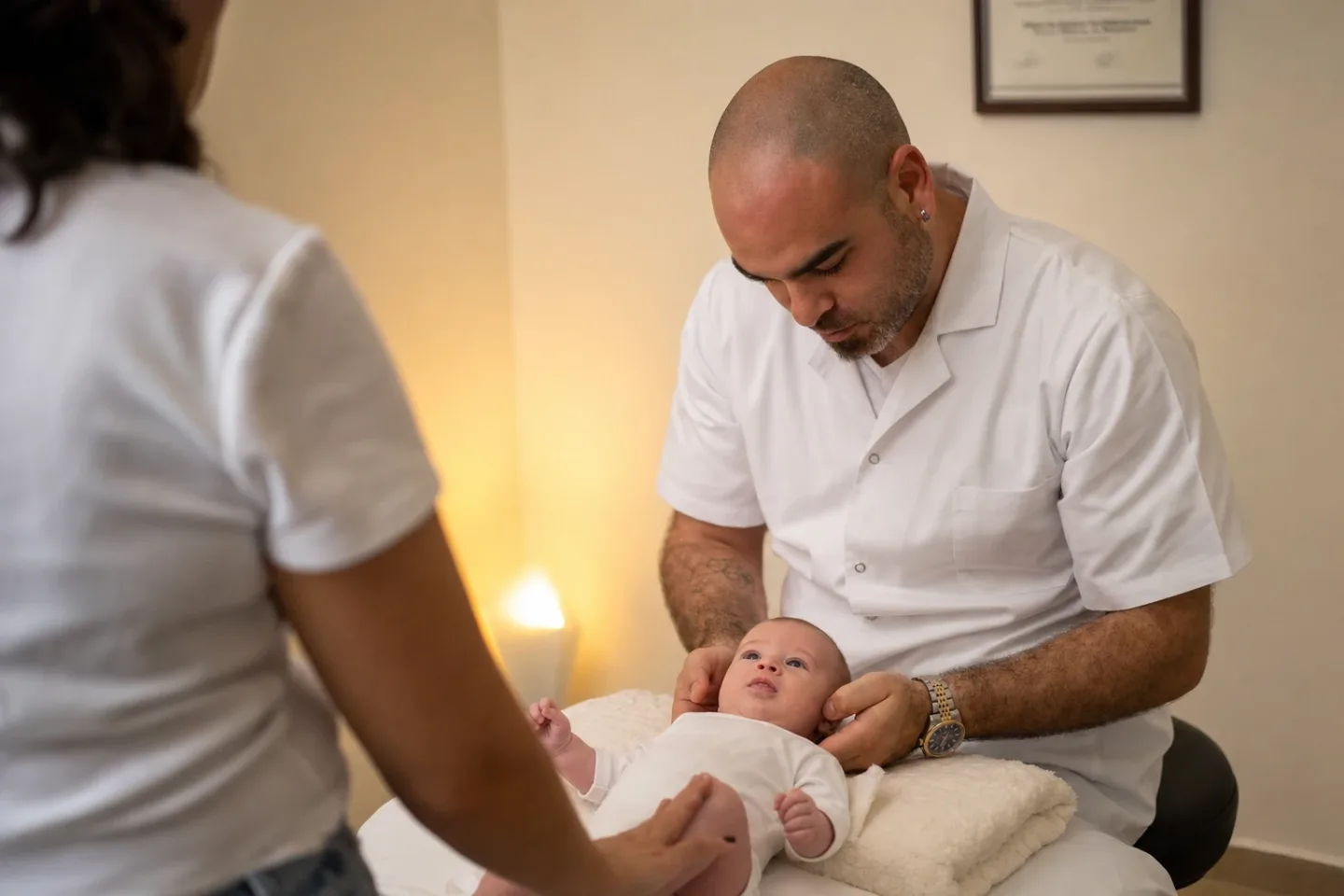
Osteopathy for babies is based on a very gentle manual touch‚ on observation and on examining how the baby moves the head‚ neck‚ back‚ pelvis and limbs. A baby osteopath does not "apply force" to the baby and never tries a sharp or aggressive correction.
Baby osteopathy is slow‚ and I keep listening to the baby's response‚ to how comfortable he is and to his ability to stay calm under my hands. The examination usually includes questions to the parents about the pregnancy and the birth‚ sleep patterns‚ feeding‚ crying‚ bowel movements‚ a preferred side and the positions that calm him or make things worse.
As a baby osteopath I also watch how the baby moves on his own. In many cases a significant part of my work as an osteopath for babies is guidance: how to hold‚ how to lift‚ how to vary positions‚ how to encourage movement to both sides and how to add tummy time safely and gradually while the baby is awake.
Parents sometimes ask me about pediatric osteopathy‚ infant osteopathy‚ osteopathy for infants or cranial osteopathy for babies‚ as if these were separate methods. For me they describe the same careful work: the touch on the head is as gentle as everywhere else‚ and I never promise to reshape a baby's skull.
When Should You See a Baby Osteopath?
A baby osteopath can help when parents notice a pattern that keeps repeating: the baby turns his head mainly to one side‚ finds it hard to lie on his tummy‚ looks very tense‚ is uncomfortable in certain positions‚ struggles to calm down or reacts with discomfort when he is lifted‚ swaddled or fed.
In situations like these the goal is not to "diagnose a disease"‚ but to check whether there is a movement strain that gentle touch and guidance can ease. Sometimes parents come after a long labor‚ an instrumental delivery‚ a C-section‚ an unusual presentation or a period when the baby spent a lot of time in the same position.
That does not mean every baby born this way needs an osteopath for babies. Still‚ when parents see a clear pattern of discomfort‚ a preferred side or limited movement‚ a gentle examination by a baby osteopath can give a wider picture of how the baby's body is organizing itself.
Common Reasons Parents Come to an Osteopath for Babies
- A preferred side and limited head turning‚ including torticollis.
- Difficulty feeding on one side or difficulty latching.
- Spitting up‚ silent reflux‚ gas and crying in the evening.
- Restlessness‚ crying in certain positions and difficulty settling.
- A flattened head or an asymmetric head shape.
- High or low muscle tone‚ and tension in the body when lifted.
- A check-up after a long labor‚ a vacuum delivery or a C-section.
When spitting up comes with arching of the back‚ crying after feeds and difficulty lying down‚ many parents start reading about reflux in babies and look for an osteopath for baby reflux. Here too the first address is the pediatrician.
Osteopathy for babies can work alongside the pediatrician's instructions‚ with gentle work on the diaphragm‚ the chest and the tummy. This may help some babies feel more comfortable‚ but it does not cure the reflux itself.
A Baby Osteopath After an Instrumental Delivery or a C-Section
An instrumental delivery‚ a long labor or a birth with significant pulling may leave some babies with temporary tension around the head‚ neck or shoulders. Not every baby born this way needs baby osteopathy‚ and not every change in the shape of the head is a problem.
But when parents notice a preferred side‚ difficulty breastfeeding on one side‚ discomfort when the baby is lifted or clear tension in the neck‚ it is worth seeing an osteopath for babies and having the baby checked properly.
After such a birth‚ an elongated head following a vacuum birth can naturally worry parents‚ even though in most cases the swelling and the elongated shape go away on their own within a few days to a few weeks. My role as a baby osteopath is not to replace medical follow-up after the birth‚ but to check whether there is a subtle movement strain that I can ease.
A C-section is not always an "easy" birth for the baby either. When the operation follows hours of contractions and pressure in the pelvis‚ or when the baby was in a breech position‚ the first weeks sometimes bring a preferred side‚ a stiff neck or difficulty getting comfortable during feeds.
As an osteopath for babies I check these things gently‚ and at the same time I make sure the follow-up with the pediatrician continues as usual. Here too‚ if everything is fine and the baby is relaxed‚ there is no need to "treat just in case".
Difficulty Feeding and Latching
Some babies latch well on one side and struggle on the other‚ slip off the nipple‚ fall asleep quickly while breastfeeding or tire out on the bottle. Sometimes the cause is related to breastfeeding technique‚ a tongue tie‚ milk flow or a medical condition‚ so a lactation consultant and the pediatrician are an important part of the workup.
When that workup has been done and the baby still seems to find it hard to turn his head‚ open his jaw comfortably or stay calm in the feeding position‚ a baby osteopath can examine the neck‚ the jaw‚ the chest and the shoulders.
In a case like this the aim of baby osteopathy is to help the baby feel more comfortable in the feeding position‚ alongside the lactation consultant's advice and not instead of it. Sometimes a small change of position‚ such as the football hold on the harder side‚ makes a noticeable difference within the same week.
Gas‚ Colic and Evening Crying
Crying in the afternoon and evening‚ legs pulled up to the tummy‚ a red face and a feeling that the baby is "fighting" gas are familiar to many parents in the first months. In most cases this is a passing stage that improves gradually as the digestive system and self-regulation mature‚ usually by the age of three to four months.
Before anything else‚ it is important for the pediatrician to rule out a medical cause such as cow's milk protein allergy‚ an infection‚ a hernia or poor weight gain. Osteopathy for babies is not a "colic cure"‚ and it does not guarantee that the crying will stop.
Even so‚ in osteopathy for babies‚ gentle work on the tummy‚ the diaphragm and the back‚ together with guidance on soothing positions‚ can help some babies feel more at ease. Quite often parents discover that the crying gets worse in one particular position or after feeding on one side‚ and details like these help me understand whether there is a movement component.
That is why it helps to write down‚ before you visit a baby osteopath‚ when the crying starts‚ how long it lasts‚ what calms it and what makes it worse. A few days of notes give a more accurate picture than any memory of one hard night.
Osteopathic Treatment for a Baby - What Does It Actually Look Like?
Osteopathy for babies usually starts with a conversation with the parents. As a baby osteopath I ask about the week of birth‚ the course of the labor‚ breastfeeding or bottle feeding‚ sleep‚ crying‚ bowel movements‚ a preferred side‚ tummy time‚ earlier medical checks and anything else that worries you.
Then I do a very gentle examination as a baby osteopath‚ sometimes with the baby lying down and sometimes while one of the parents holds him. The touch itself should be calm‚ non-invasive and painless.
As part of baby osteopathy I may work gently on the neck‚ chest‚ back‚ pelvis or limbs‚ depending on the examination and on the baby's response. Sometimes the baby stays calm throughout‚ and sometimes we need breaks‚ a feed‚ a cuddle or a change of position‚ because a good treatment adapts to the baby and not the other way round.
It is a good idea to bring a muslin cloth‚ a favorite toy‚ a bottle or a pacifier to the visit with the baby osteopath‚ as well as discharge summaries or earlier diagnoses if you have any. This makes it easier for the baby to relax‚ and easier for me to understand the full picture.
Baby Osteopathy Has No Room for Force
Osteopathy for babies has to be completely different from treating an adult. There is no force‚ there are no sharp movements and there is no attempt to "fix" the body by pushing it. The touch is gentle‚ slow and adjusted to the baby's response.
A responsible baby osteopath stops when the baby shows significant signs of discomfort‚ looks for the positions in which he is calmer and involves the parents in the process. Not every cry and not every difficulty is an osteopathic problem: much of a baby's behavior changes with age‚ maturity and a digestive system that is still developing.
How Many Sessions With a Baby Osteopath Are Needed?
There is no fixed number of sessions with an osteopath for babies‚ as it depends on the baby's age‚ the reason for the visit and the baby's response. In many cases two to four sessions one to two weeks apart are enough‚ and sometimes after the very first treatment parents already have the tools they need to carry on at home.
The first treatment takes about an hour and includes a conversation‚ an examination and treatment‚ and follow-up sessions are shorter‚ around 45 minutes. If after two or three sessions there is no change in the pattern you came for‚ that is a sign to stop‚ reassess and consider referral to someone else‚ not to go on with treatments endlessly.
What Is the Best Age to See an Osteopath for Babies?
There is no single "perfect" age‚ but the earlier you come‚ the easier it usually is to work with a pattern that has not yet settled in. A preferred side or a flattened head that starts in the first or second month usually responds better to varied positions and guidance than a pattern that has lasted half a year.
You can see a baby osteopath in the first weeks after the birth‚ once the pediatrician or the well-baby clinic has checked the baby‚ so an osteopath for newborn babies is not too early. Babies of a few months who are starting to roll‚ sit or crawl and show a clear preference for one side can also benefit from a gentle examination.
Baby Osteopathy and Signs in the Head That Call for Caution
A baby's head raises quite a few questions for parents‚ and rightly so. In infancy the skull has soft areas‚ and the shape of the head can still change under the influence of positions‚ growth and movement.
Most of the time these are natural or positional processes‚ but there are situations in which a manual assessment is not enough. When parents notice an unusual change in the look of the head‚ swelling‚ an unusual dip‚ fever‚ unusual drowsiness‚ vomiting‚ unusual crying‚ poor feeding or a general change in behavior‚ it is important to see a doctor.
The same applies when you have a concern about the baby fontanelle: with any unusual sign the first address is a medical examination. Baby osteopathy can fit in only once the situation is medically suitable for it.
My job as a baby osteopath is to recognize functional strains that I can work with gently‚ and at the same time to know where the limits of manual treatment lie.
Sleeping Positions‚ Head Shape and Reducing Repeated Pressure
Safe sleep for babies means on the back‚ on a flat and firm surface‚ with no pillows‚ loose blankets‚ soft toys or other soft items in the crib. The safe sleep rules must never be changed in an attempt to influence the shape of the head.
The right influence happens mainly while the baby is awake and supervised: short‚ gradual tummy time‚ switching sides when lifting‚ varied feeding positions‚ placing things to look at on both sides and less time in the car seat or the stroller when it is not needed. During a session of baby osteopathy I will go through your routine with you‚ and together we will find small changes that are easy to apply.
When parents ask whether a flat head in babies corrects itself‚ the answer depends on the baby's age‚ the degree of asymmetry‚ the preferred side‚ the neck's range of motion and how long the same spot has been under repeated pressure. In mild cases‚ varied positions and the right guidance may help a great deal.
Head Asymmetry - Positional or Medical?
Not every asymmetry of a baby's head points to a dangerous problem. Very often it is a positional effect: the baby prefers one side‚ lies a lot in the same position or finds it hard to turn his head equally to both sides.
Still‚ it is important to tell a positional change apart from rarer conditions that need a medical diagnosis. When plagiocephaly appears‚ the assessment should look at the shape of the head‚ the position of the ears‚ neck movement‚ the baby's age and the developmental history.
If it gets worse quickly‚ the skull sutures look unusual‚ there is a developmental delay or the parents are worried‚ the right step is to see a doctor. An osteopath for babies can help with the movement and positional part‚ but does not replace a medical diagnosis.
A Preferred Side and Limited Head Turning in Babies
One of the most common patterns that bring parents to a baby osteopath is a clear preference for one side. The baby looks mostly in one direction‚ calms down more easily with the head resting to one side‚ finds it hard to feed on one side or resists when you try to encourage him to turn the other way.
Sometimes this is only a positional habit‚ and sometimes muscle tension or a restricted range of motion in the neck is involved. In some cases it is the condition known as torticollis in babies‚ which is related to tension or relative shortening of the neck muscles.
It is important to have this diagnosed professionally and not to assume that every preferred side is the same problem. Baby osteopathy may focus on improving the mobility of the neck‚ the chest‚ the shoulder blades and the upper back‚ together with guidance for parents on how to encourage movement to both sides without forcing and without causing distress.
A Baby Osteopath for Sleep‚ Restlessness and Difficult Positions
Babies wake up often‚ and that is a natural part of the first months. Not every broken night is a problem‚ and not every cry points to a physical strain.
At the same time‚ some babies show a clear pattern: restlessness in a certain position‚ difficulty settling on one side‚ tension in the body when lifted or difficulty letting the head rest freely. When sleep problems in babies appear together with a preferred side or neck tension‚ a gentle examination of the movement patterns makes sense.
Osteopathy for babies is not a "sleep treatment" and does not promise that the baby will sleep through the night. Instead‚ a baby osteopath looks at whether there is a physical strain that keeps him from being more comfortable in different positions.
When a baby looks very stiff‚ startles easily or finds it hard to let go of his arms and legs‚ parents often look for information on high muscle tone in babies‚ and there I explain what the doctor checks and what you can do at home.
Guidance for Parents - A Central Part of My Work
The work of a baby osteopath does not end with the touch on the treatment table. You are with your baby most hours of the day‚ so the guidance you take home has a big influence on the result.
A small change in the way you lift him‚ switching sides during feeds‚ encouraging him to look to the less preferred side‚ building up tummy time gradually and using the right positions while he is awake can reduce repeated strain and help the baby try out more movement.
In osteopathy for babies‚ it is important that the guidance is practical and not stressful. Parents do not need to turn every moment with the baby into an exercise‚ and they should not feel guilty if the baby prefers a certain position.
When you understand what you are seeing and why you are making a certain change‚ it is easier to keep it up without stress. At the end of every session you leave with two or three simple things to practice‚ not a long list.
For example: put a toy on the less preferred side‚ change the side from which you place the baby in the crib‚ or lift the baby by rolling him through his side instead of pulling him up by the arms.
When Is Osteopathic Treatment Not Enough?
There are situations in which a baby osteopath is not the first address. Fever‚ listlessness‚ seizures‚ repeated vomiting‚ a significant drop in feeding‚ breathing difficulties‚ unusual crying that does not settle‚ a change in skin color‚ an injury‚ unusual swelling of the head‚ a rapid change in the general condition or a suspicion of significant pain all require a doctor.
The pediatrician and the well-baby clinic are responsible for diagnosis‚ monitoring growth and development‚ vaccinations and treating illness‚ and this is a foundation that cannot be skipped. As a baby osteopath I ask a different question: how does the baby use his body‚ does the head turn to both sides‚ does the back round and open‚ and does a small change of position make him more comfortable?
Even if you as parents simply feel that "something is wrong"‚ listen to that intuition and have the baby examined by a doctor. Osteopathy for babies should never be aggressive‚ frightening or painful: if the baby cries without settling or looks distressed‚ I stop and adjust the approach.
A responsible osteopath for babies has to know when to treat and when to refer. Good treatment does not promise a solution to every problem‚ does not replace a medical diagnosis and never ignores warning signs.
How Do You Choose a Baby Osteopath?
When you choose a baby osteopath or a pediatric osteopath‚ make sure this is a professional who works in a way adapted to infancy‚ knows the limits of the treatment‚ asks about the medical background and refers to a doctor when needed. Look for a treatment that includes a clear explanation for the parents‚ a gentle examination‚ a pace that suits the baby and practical guidance for afterwards.
Sweeping promises such as "one treatment solves everything"‚ or ignoring medical signs‚ should be a red flag. A parent does not have to understand every professional term‚ but should feel that someone explains what is being checked‚ why a certain technique was chosen and what to expect after the treatment.
Baby osteopathy calls for special responsibility‚ because this is a body that develops from day to day and a sensitive nervous system. I also work as an osteopath in Kiryat Tivon with adults and athletes‚ but with babies the same listening to the body happens at a pace and an intensity suited to an age of weeks and months.
For Mom Too - Treatment in Pregnancy and After the Birth
I also treat women during pregnancy and after the birth‚ so mother and baby often come to the same clinic. If you suffered in pregnancy from strain in the lower back‚ the tailbone or the pelvic joints and you still feel it after the birth‚ you can read about pelvic pain during pregnancy and check whether gentle treatment can ease it‚ alongside the follow-up with your doctor or midwife.
Frequently asked questions
From what age can we see a baby osteopath?
From the first weeks of life‚ once the pediatrician or the well-baby clinic has seen the baby and found no medical reason that calls for a different treatment. Baby osteopathy at this age is very gentle and adjusted to the baby's response.
Does baby osteopathy hurt?
No. The touch is gentle and slow‚ and many babies relax and even fall asleep during it. If the baby shows discomfort‚ I stop‚ we soothe him and I continue only when he is ready.
How long does a session with a baby osteopath take?
The first treatment includes a conversation and an examination‚ so it is longer‚ about an hour. Follow-up treatments are shorter‚ around 45 minutes‚ and usually a few treatments are enough‚ depending on the condition and the progress.
What should we bring to the treatment?
A muslin cloth‚ a favorite toy‚ a bottle or a pacifier‚ and discharge summaries or earlier diagnoses if you have any. It also helps to come when the baby is not too hungry‚ or to be ready to feed him during the session.
Are the parents in the room during a baby osteopathy session?
Yes‚ always. You take an active part in the treatment‚ hold the baby when needed and get practical guidance for carrying on at home.
Does osteopathy for babies help with colic and gas?
There is no promise that the crying will stop‚ and in most cases colic improves on its own with age. Once the pediatrician has ruled out a medical cause‚ gentle work on the tummy and the diaphragm and guidance on soothing positions can help some babies feel more at ease.
Should we come with a baby born by C-section?
Only if there is a reason‚ for example a preferred side‚ difficulty feeding on one side or tension in the neck. A C-section on its own is not a reason for treatment‚ and a relaxed baby who is developing well does not need a "check just in case".
Can you treat a baby who was born premature?
Yes‚ an osteopath for babies can treat a premature baby after discharge from the neonatal unit and with the approval of the treating doctor. With premature babies we go by the corrected age‚ and the touch is even shorter and gentler.
What happens after the treatment?
Some babies sleep more that day‚ and some are more alert or a little restless in the evening‚ which is a passing reaction. If fever‚ vomiting or unusual crying appear‚ see a doctor as usual.
Do we need a doctor's referral?
You do not need a referral‚ but it is important that the pediatrician or the well-baby clinic has seen the baby before the treatment. If you have discharge summaries‚ test results or diagnoses‚ bring them to the first session.
Does insurance cover baby osteopathy?
Some private insurance companies refund part of the cost. Check your policy in advance to see the conditions for a refund and which documents are required.
What is the difference between a baby osteopath and developmental physiotherapy?
Developmental physiotherapy focuses on motor milestones and exercise‚ and usually comes with a referral from the pediatrician. A baby osteopath works with a gentle manual touch on tissue tension and range of motion‚ and guides the parents on positioning. The two approaches can work together‚ and when needed I recommend going to physiotherapy.
Is osteopathy for babies safe?
When baby osteopathy is done by an osteopath trained to work with babies‚ with a gentle touch and no sharp movements‚ and after a doctor has ruled out a medical cause‚ it is considered a gentle and conservative treatment. It is important to tell me about any known medical problem‚ and I stop at any sign of distress.
What do we do at home between baby osteopathy sessions?
Keep up the two or three habits you got in the guidance: switching sides during feeds and lifting‚ short tummy time while the baby is awake and things to look at on the less preferred side. There is no need to turn the day into exercise‚ and it is enough to weave the changes into your normal routine.
Table of Contents
- What Is Osteopathy for Babies?
- When Should You See a Baby Osteopath?
- Common Reasons Parents Come to an Osteopath for Babies
- A Baby Osteopath After an Instrumental Delivery or a C-Section
- Difficulty Feeding and Latching
- Gas‚ Colic and Evening Crying
- Osteopathic Treatment for a Baby - What Does It Actually Look Like?
- Baby Osteopathy Has No Room for Force
- How Many Sessions With a Baby Osteopath Are Needed?
- What Is the Best Age to See an Osteopath for Babies?
- Baby Osteopathy and Signs in the Head That Call for Caution
- Sleeping Positions‚ Head Shape and Reducing Repeated Pressure
- Head Asymmetry - Positional or Medical?
- A Preferred Side and Limited Head Turning in Babies
- A Baby Osteopath for Sleep‚ Restlessness and Difficult Positions
- Guidance for Parents - A Central Part of My Work
- When Is Osteopathic Treatment Not Enough?
- How Do You Choose a Baby Osteopath?
- For Mom Too - Treatment in Pregnancy and After the Birth
- Frequently asked questions