

Reflux in Babies - Spotting Silent Reflux and What Helps
13 min read
Does your baby squirm and cry after every feed‚ even when there is almost no spitting up? Does your baby arch their back‚ swallow again and again and wake up shortly after you put them down? And are you wondering whether it is silent reflux‚ gas or something else entirely?
I'm Roman Kibler‚ an osteopath D.O. at my clinic in Kiryat Tivon‚ and I treat babies with especially gentle touch‚ checking the neck‚ chest and diaphragm that affect how comfortable a baby is around feeds.
Leave your details or call me‚ and I'll check with you what is making things hard for your baby and how we can ease it safely!
Reflux is a condition in which stomach contents flow back up into the esophagus‚ and sometimes toward the throat and mouth. Reflux in babies is very common‚ mainly because the valve between the esophagus and the stomach is still developing‚ the baby lies down most of the time and the diet is liquid.
In most babies‚ infant reflux and the spitting up decrease gradually during the first year‚ as the baby starts to sit and eat solid food. When there is obvious spitting up‚ it is easy to recognize‚ but in silent reflux the contents go up and down without coming out‚ so parents feel that something is bothering the baby without understanding where it comes from.
Reflux also appears in adults‚ as a result of a combination of eating habits‚ physical load‚ posture‚ stress‚ excess weight or a hiatal hernia. In this article I go through the symptoms at every age‚ the difference between silent reflux and gas‚ what helps at home and the signs that mean you should see a doctor.
Reflux in Babies - When Is It Normal and When Is It a Problem?
Reflux in babies is not always a problem that needs treatment. A baby who spits up after feeds‚ but eats well‚ gains weight and seems calm and happy‚ is usually called a "happy spitter"‚ and the situation is expected to improve with time.
When infant reflux causes long crying‚ refusal to eat‚ difficulty gaining weight or breathing problems‚ it is a condition doctors call reflux disease‚ and it needs medical assessment and follow-up. The important difference is that the amount of spitting up doesn't show how much the baby is suffering: one baby spits up a lot and feels fine‚ while another hardly spits up and seems uncomfortable.
Why Is Baby Reflux So Common?
In a baby the esophagus is relatively short‚ the stomach is small and the valve between the esophagus and the stomach doesn't yet close tightly. Add a liquid diet‚ lying down most hours of the day and swallowing air while feeding‚ and it is easy to understand why baby reflux appears in so many of them.
As the baby gets stronger‚ lifts their head‚ sits up and moves to more solid food‚ the closing mechanisms improve and baby reflux eases. That is why reflux in babies who are otherwise healthy is in most cases considered a developmental stage and not a disease.
Newborn Reflux in the First Months
Newborn reflux tends to appear in the first weeks and to increase in the first months of life‚ as the amount of food grows. So with newborn reflux‚ doctors look at the whole picture: feeding‚ weight gain‚ sleep‚ breathing‚ bowel movements and general condition‚ and not only at the amount of spitting up.
Silent Reflux in Babies: What Does It Look Like?
Silent reflux in babies shows up as discomfort around feeds even when there is no visible spitting up. As in any acid reflux in babies‚ the acidic contents rise into the esophagus and throat and are swallowed again‚ so it is hard for parents to connect the crying with the food.
Silent Reflux Symptoms
- Crying and squirming during a feed or right after it.
- Arching the back and tilting the head backward.
- Repeated swallowing‚ gurgling sounds in the throat and coughing‚ especially when lying down.
- Frequent hiccups and a sour smell from the mouth.
- Eating in small portions‚ pulling away from the breast or bottle and wanting to eat again shortly after.
- Difficulty falling asleep on the back and waking up shortly after being put down.
- Hoarseness or a chronic runny nose without signs of a cold.
It is important to know that crying and squirming on their own are very common in healthy babies and don't prove reflux‚ and antacid medicines are not recommended for crying alone. Silent reflux symptoms can also look like gas‚ overtiredness or difficulty moving between positions‚ so it is important to check them with your pediatrician.
Silent Reflux in Babies Who Are Not Gaining Weight
When silent reflux in babies comes with a stop in weight gain‚ refusal to eat or fewer bowel movements and wet diapers‚ don't wait. A situation like this needs an examination by the pediatrician‚ who will decide whether changes in feeding‚ tests or medication are needed.
Reflux or Gas? Baby Signs That Tell You What Is Really Bothering Them
Telling silent reflux in babies apart from gas is not always simple. Gas tends to come with a swollen‚ hard belly‚ cramps‚ pulling the legs up to the belly‚ passing wind and relief after a bowel movement or a change of position.
Reflux in babies‚ on the other hand‚ often appears during a feed or right after it‚ when lying on the back or when there is pressure on the belly‚ and it improves when the baby is held upright. Some babies have both at once‚ so trying to stick a single label on them doesn't always reflect reality. Learning the signs of reflux in babies helps you describe the picture clearly to the doctor.
Restlessness and Unsettled Sleep
Long crying can come from many causes: hunger‚ tiredness‚ gas‚ sensory overload‚ reflux‚ difficulty with a position‚ muscle tension or a combination of several factors. When infant reflux appears together with frequent waking and difficulty falling asleep‚ it is worth also reading about sleep problems in babies and the ways to recognize what is waking your baby.
Infant Reflux and Safe Sleep
With reflux in babies‚ one of the most important topics is safe sleep. Even when there is infant reflux‚ don't put the baby to sleep on their tummy or side to "ease" it‚ and don't raise the head of the cot or use pillows‚ wedges and sleep accessories that are not recommended.
The main safety guideline is sleep on the back‚ on a flat‚ firm surface free of soft objects. So the right reflux baby sleeping position is the same as for every baby. You can hold the baby upright for about 20-30 minutes after a feed while they are awake and supervised‚ but during sleep you keep to the safety rules.
Awake Positions and Head Shape
A baby with infant reflux who feels comfortable in only one position may lie again and again on the same side of the head. When a flat head in babies appears‚ it is not a reason to change the sleep rules‚ but a sign to vary positions while awake: supervised tummy time‚ switching sides when lifting and feeding‚ and stimulation from both sides.
Feeding Tips When There Is Baby Reflux
- Feeding in smaller amounts more often‚ without overfeeding.
- Burping in the middle of the feed and at the end‚ in an upright position.
- With a bottle: a teat with a suitable flow and an angle that prevents swallowing air.
- Avoiding pressure on the belly after a feed‚ such as a tight belt or sitting slumped in a car seat.
- Changes in formula or in the breastfeeding mother's diet only on the pediatrician's advice.
Reflux in Babies and the Link to Birth‚ the Neck and Movement
Some babies come into the world after a long labor‚ an instrumental birth or a birth with significant pulling. Not every birth like this causes a problem‚ and not every baby needs treatment afterward‚ but when there is difficulty feeding on one side‚ a side preference‚ tension in the neck or crying in certain positions‚ it is worth checking whether the body is holding tension.
It is important to say this honestly: there is no proof that an instrumental birth causes reflux‚ and the link parents see usually runs through feeding comfort and positions. After a vacuum birth some babies have temporary swelling or sensitivity of the scalp‚ and if you want to know what is normal‚ you will find an explanation in a separate article.
Side Preference and Torticollis
When a baby finds it hard to turn their head to both sides equally‚ it affects feeding‚ sleep and body positions. The baby feeds better on one side‚ gets upset on the other and cries when put down in a position that isn't comfortable for them.
When neck rotation is limited‚ torticollis in babies can affect general comfort and the ability to change positions. This doesn't mean that every baby with infant reflux also has a neck restriction‚ but when there is a clear side preference it is worth checking the ranges of movement.
Natural Treatment for Reflux: What Does an Osteopath Do?
The osteopathic approach doesn't promise to "cure reflux" and doesn't change the acidity in the stomach. It checks whether there are load factors that make the feeling worse: tension around the diaphragm‚ stiffness in the chest‚ limited neck movement or an uncomfortable body position during feeds.
Osteopathic Treatment for Infant Reflux
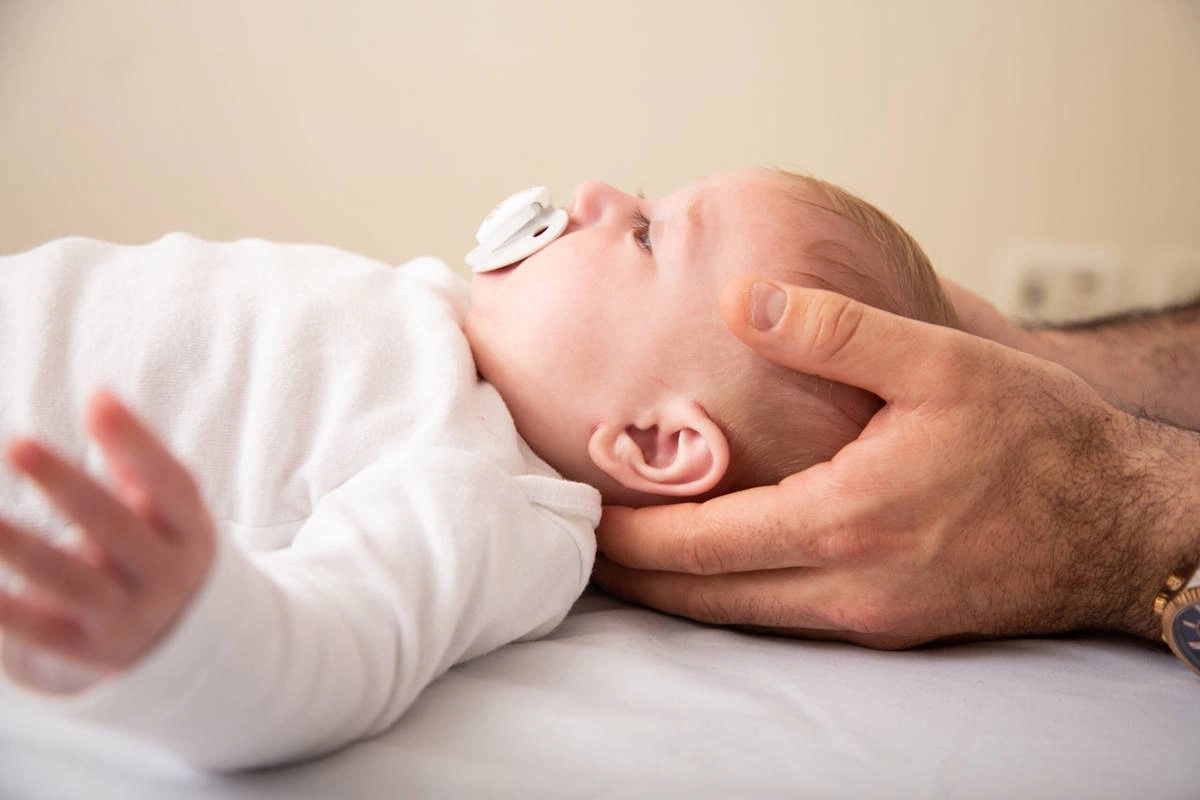
My approach to osteopathy for babies is very gentle‚ without force and without manipulations‚ and it is done when the baby is calm‚ sometimes in the parent's arms. With reflux in babies‚ I examine the head‚ neck‚ chest‚ diaphragm and belly‚ and guide the parents on holding and feeding positions that make things easier for the baby.
The treatment fits in with the pediatrician's follow-up and doesn't replace it. Research on manual treatment for reflux in babies is limited and doesn't prove a benefit‚ so I see it as gentle support that some parents feel brings relief‚ mainly when there is also a side preference or neck tension.
What Does a First Session With a Baby Look Like?
For baby reflux‚ the first treatment lasts about an hour and starts with a conversation with the parents about the pregnancy‚ the birth‚ feeding‚ sleep and crying. I'm an osteopath D.O. who studied osteopathy for five years‚ including 1,000 clinical hours‚ and I have worked at Maccabi Tivi since 2022; I examine the baby gently and explain at every stage what I'm doing.
At the end of the session the parents get practical guidance on holding‚ feeding and awake positions‚ and with baby reflux we usually arrange a shorter follow-up treatment a few days or a week later.
Natural Treatment for Reflux in Adults
In adults the diaphragm‚ the main breathing muscle‚ sits close to the junction between the esophagus and the stomach. Shallow breathing‚ a bent posture and stiffness in the chest can increase the pressure on this area.
Diaphragmatic breathing practice has been tested in small studies as an addition to the treatment of heartburn‚ and gentle work on the diaphragm‚ upper back and ribs can be combined with changing habits‚ but not instead of medical treatment.
Alongside treatment you can learn simple exercises for home. A practical explanation of how to release a tight diaphragm is especially suitable if you feel pressure under your ribs after a meal.
Reflux in Adults and Silent Reflux in Adults
In adults‚ reflux shows up as heartburn‚ acidity in the mouth‚ a dry cough‚ throat irritation‚ hoarseness‚ pressure in the chest‚ difficulty swallowing or a feeling of food coming back up. Silent reflux in adults‚ also called laryngopharyngeal reflux‚ shows up mainly as coughing‚ hoarseness‚ throat clearing and a feeling of a lump in the throat‚ sometimes with no heartburn at all.
Silent reflux like this is often confused with an allergy or a cold that won't go away. When the symptoms come back often‚ get worse at night or require regular use of medication without advice‚ it is worth seeing your family doctor or an ear‚ nose and throat doctor.
Silent Reflux and Hoarseness That Won't Go Away
If you clear your throat all the time‚ feel your voice tiring at the end of the day or cough for no clear reason‚ you may have silent reflux. In this situation an examination by an ear‚ nose and throat doctor helps rule out other causes and decide on the right treatment.
Daily Changes That Help
- Smaller meals and eating slowly.
- A gap of three to four hours between the last meal and lying down.
- Raising the head of the bed for adults only‚ if your doctor has recommended it.
- Cutting down on foods that make it worse for you personally‚ smoking and alcohol.
- Clothes that don't press on the belly and keeping a healthy weight.
When the tension is also felt in the chest and ribs‚ for example after long sitting at a computer‚ it is worth knowing the signs of tight chest muscles‚ because pressure in the chest from a muscular source is sometimes confused with heartburn. New or strong chest pain always needs a medical examination first.
When Does Reflux in Babies or Adults Need a Doctor?
In babies‚ see a doctor when there is forceful‚ projectile vomiting or green vomit‚ blood in the vomit or stool‚ fever‚ breathing difficulty or pauses in breathing‚ unusual sleepiness‚ eating less‚ not gaining weight‚ signs of dehydration or a sharp change in behavior. Reflux in babies that starts after six months or continues after the age of one also justifies an examination.
How Is Reflux Diagnosed?
Reflux in babies is in most cases diagnosed from the parents' description and an examination by the pediatrician‚ without the need for special tests. Only when the picture is unusual‚ for example when there are breathing problems or no weight gain‚ the doctor may refer you for further assessment by a pediatric gastroenterologist.
In adults‚ get checked when there is chest pain‚ difficulty swallowing‚ weight loss‚ repeated vomiting‚ blood‚ anemia or heartburn that comes back despite changing habits. When there is a medical suspicion‚ you start with a medical assessment‚ and when the picture fits a functional condition‚ osteopathic treatment can be added to check load‚ positions‚ breathing and movement.
The Bottom Line: Reflux in Babies Needs Patience and a Wide View
Reflux in babies is common and usually passes as the baby grows‚ but silent reflux is hard to recognize because there isn't always obvious spitting up or heartburn. In babies it shows up as discomfort around feeds‚ an arched back and unsettled sleep‚ and in adults as heartburn‚ coughing‚ hoarseness or pressure after eating.
When there are no warning signs‚ changes in feeding and positions‚ daily habits and gentle manual treatment help the body organize itself better. When there are unusual signs‚ the start is always with the pediatrician or the family doctor.
Frequently asked questions
Until what age does reflux in babies last?
In most babies‚ reflux in babies improves gradually during the first year‚ as the baby starts to sit and eat solid food. Reflux that continues after the age of one or gets worse justifies an examination by the pediatrician.
How do you know there is silent reflux in babies?
Possible signs are crying and arching around feeds‚ repeated swallowing‚ coughing‚ throat sounds and difficulty falling asleep on the back‚ even without spitting up. These infant reflux symptoms are diagnosed by the pediatrician according to the whole picture.
Can a baby with reflux sleep on their side or tummy?
No. Even when there is infant reflux‚ safe sleep is on the back‚ on a flat surface and without pillows or wedges. You can hold the baby upright after a feed while they are awake and supervised.
What is the difference between silent reflux and gas?
Silent reflux usually appears during a feed or right after it and improves when the baby is held upright. Gas comes with a swollen belly‚ pulling the legs up to the belly and relief after a bowel movement or passing wind.
Is there a natural treatment for reflux in babies?
Changes in feeding‚ burping‚ holding the baby upright after a meal and varying positions while awake help many babies with baby reflux. Gentle osteopathic treatment can be added when there are no warning signs‚ always alongside the pediatrician's follow-up.
Can a silent reflux baby gain weight normally?
Yes‚ many babies with mild reflux eat well and gain weight as expected‚ and that is a reassuring sign. If weight gain slows or stops‚ reflux in babies needs an examination by the pediatrician without delay.
Is acid reflux in babies treated with medicine?
Not as a first step. Antacid medicines are not recommended for crying alone‚ and only the pediatrician decides whether medication‚ tests or feeding changes are needed‚ usually when infant reflux comes with poor weight gain or breathing problems.
Is baby reflux related to breastfeeding or formula?
Baby reflux appears both in breastfed babies and in babies who eat formula. Sometimes a change in the feeding pace‚ the teat flow or the type of formula helps‚ but any change in diet is made on the advice of the pediatrician or a lactation consultant.
Is osteopathic treatment safe for babies?
Osteopathic treatment for babies is done with very gentle touch‚ without force and without manipulations. It is not suitable when there is fever‚ forceful vomiting‚ no weight gain or another sign that needs a medical assessment first.
What are the symptoms of silent reflux in adults?
A dry cough‚ hoarseness‚ throat clearing‚ a feeling of a lump in the throat and sometimes mild heartburn or acidity in the mouth‚ mainly in the morning or after meals. Symptoms that last for weeks need an examination by a doctor.
Is reflux in adults related to posture and breathing?
A bent posture‚ long sitting after eating and shallow breathing can increase pressure on the belly and on the junction between the esophagus and the stomach. Changing habits and working on the diaphragm and chest bring relief for some people.
Table of Contents
- Reflux in Babies - When Is It Normal and When Is It a Problem?
- Why Is Baby Reflux So Common?
- Newborn Reflux in the First Months
- Silent Reflux in Babies: What Does It Look Like?
- Silent Reflux Symptoms
- Silent Reflux in Babies Who Are Not Gaining Weight
- Reflux or Gas? Baby Signs That Tell You What Is Really Bothering Them
- Restlessness and Unsettled Sleep
- Infant Reflux and Safe Sleep
- Awake Positions and Head Shape
- Feeding Tips When There Is Baby Reflux
- Reflux in Babies and the Link to Birth‚ the Neck and Movement
- Side Preference and Torticollis
- Natural Treatment for Reflux: What Does an Osteopath Do?
- Osteopathic Treatment for Infant Reflux
- What Does a First Session With a Baby Look Like?
- Natural Treatment for Reflux in Adults
- Reflux in Adults and Silent Reflux in Adults
- Silent Reflux and Hoarseness That Won't Go Away
- Daily Changes That Help
- When Does Reflux in Babies or Adults Need a Doctor?
- How Is Reflux Diagnosed?
- The Bottom Line: Reflux in Babies Needs Patience and a Wide View
- Frequently asked questions
