
Baby Not Sleeping - A Normal Phase or a Reason to Check?
19 min read
Does your baby fall asleep only in your arms and wake up crying the moment you put them down in the crib? Do they squirm‚ arch their back and always turn their head to the same side? Have you gone weeks without a full night's sleep‚ wondering whether this is a normal phase or something is bothering your baby?
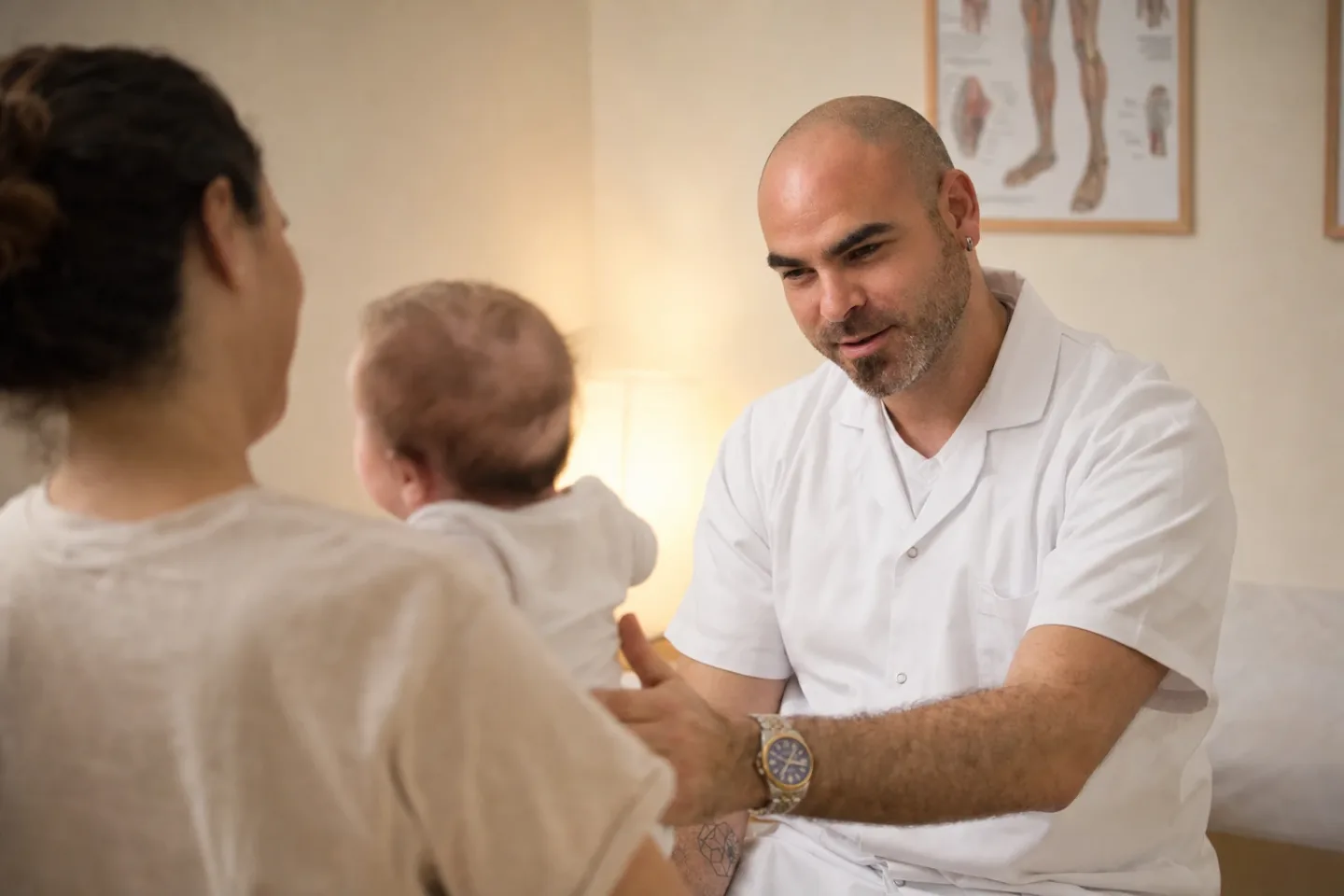
I'm Roman Kibler‚ an osteopath (D.O.) in Kiryat Tivon‚ and I examine babies with a very gentle touch‚ looking for body tension‚ restricted movement or a side preference that may disturb their calm and their sleep.
Leave your details or call me‚ and I'll check with you what your baby is going through and what you can start doing at home today!
A baby not sleeping well is one of the topics that occupy almost every parent in the first year. Babies wake at night‚ cry‚ move a lot and find it hard to fall asleep‚ so a baby not sleeping at night is something most families meet‚ and sometimes they seem uncomfortable even when there is no clear medical problem.
Some of these behaviors are normal for the age and are related to the maturing nervous system‚ hunger‚ gas‚ growth spurts‚ teething or a change in routine. At the same time‚ there are situations in which the restlessness comes back again and again‚ together with a side preference‚ body tension or a change in behavior‚ and then baby sleep problems are worth looking at more deeply.
It is important to be clear: osteopathic treatment does not replace a pediatrician‚ a lactation consultant‚ developmental follow-up or a medical assessment when there are worrying signs. When a baby won't sleep‚ its aim is to check whether there are movement loads‚ muscle tension or difficulty with certain positions that may affect your baby's calm‚ feeding and sleep.
Baby Sleep Problems: What Is Normal and What Is Not?
To understand baby sleep problems‚ remember that a baby's sleep is very different from an adult's. In the first months the sleep cycles are short‚ a large part of sleep is light sleep‚ and waking up to feed is a natural part of growing.
A baby not sleeping at night in the early months is expected‚ so do not expect a small baby to sleep through the night‚ and do not see every waking as a sign of a problem. A baby not sleeping well is mainly worrying when the pattern is unusual for the age‚ gets worse over time or comes together with other signs.
A Newborn Not Sleeping in the First Months
A newborn sleeps many hours a day‚ but in short stretches and without a clear difference between day and night. Only gradually‚ over the first months‚ does the internal clock settle and night sleep get longer‚ so a newborn not sleeping in long stretches is normal.
At this stage‚ a newborn not sleeping for more than a few hours at a time because they wake to feed is not considered a sleep problem‚ but expected behavior. The more important sign is how your baby seems between sleeps: whether they are alert‚ feed well‚ gain weight and calm down when held.
Night Waking‚ Growth Spurts and Teeth
Periods of growth spurts‚ learning a new skill such as rolling over or crawling‚ and teething sometimes cause a week or two of restless sleep in babies who slept well before. Many parents call this a baby sleep regression‚ and in most cases sleep returns to its previous rhythm once the phase passes.
When the waking goes on for many weeks‚ happens each time in a similar position or comes with crying that is hard to soothe‚ these are baby sleep problems worth looking at more closely.
Baby Sleep Problems by Age
In the first three months‚ baby sleep problems are usually related to hunger‚ gas‚ physical discomfort or difficulty moving from light sleep to deep sleep. At this age your baby is still learning to soothe themselves and needs a lot of touch and presence.
Between three and six months sleep gradually becomes more organized‚ and sometimes exactly then a period when the baby won't sleep as before appears‚ as the brain goes through a change in its sleep pattern. In the second half of the year‚ a baby not sleeping well is more often related to teeth‚ new movement skills and separation anxiety.
Age helps you understand what to expect‚ but it does not replace looking at your baby. A baby not sleeping much who is alert‚ feeds well and develops as expected is less worrying than a baby who sleeps little and seems tense‚ cries a lot and struggles with feeding.
Restlessness in Babies: What Is Common and What Needs a Check-Up?
Restlessness in babies can show up as long crying‚ difficulty calming down in your arms‚ resisting certain positions‚ squirming or short‚ broken sleep. In small babies crying is a main way of communicating‚ also for a baby not sleeping‚ so crying in itself does not necessarily mean there is a problem.
However‚ when the crying sounds different from usual‚ when your baby cannot calm down at all‚ or when there is less feeding‚ fever‚ repeated vomiting or unusual drowsiness‚ see a doctor. These signs come before any question about a baby not sleeping.
In many cases of baby sleep problems‚ parents feel that the baby "can't settle" mainly in a certain position: on the back‚ on the tummy‚ when feeding on one side or when held up to burp. In such situations‚ once medical problems have been ruled out‚ it is possible to check whether there is a physical load that makes it hard for the baby to relax.
A Baby Fussy at Night and in the Evening Hours
Many parents describe especially hard evening hours: a baby fussy at night who cries‚ asks to feed again and again and does not calm down‚ even though they are relatively calm during the day. In the first weeks this is a familiar pattern‚ and it usually lessens with age.
When a baby not sleeping in the evening hours goes on for months‚ comes with back arching or strong squirming‚ or appears together with feeding difficulties‚ it is worth checking with your pediatrician and also considering an assessment of the physical side.
Baby Sleep Problems and Physical Comfort
Baby sleep problems are not always "a problem" in the medical sense. Many babies change their sleep patterns with age‚ and a baby not sleeping for a few nights is often affected by hunger‚ illness‚ overstimulation or a change in the daily routine.
At the same time‚ when a baby not sleeping well also shows constant restlessness‚ difficulty resting the head to one side or crying that appears each time in a similar position‚ it is worth checking whether a physical factor is getting in the way. The key question is not only how many hours your baby sleeps‚ but how the body organizes itself while awake and asleep.
Do they fall asleep in only one position? Do they resist lying on the tummy while awake?
Do they turn the head easily to both sides? Do they look tense around the shoulders or neck? When a baby won't sleep and shows signs like these‚ a gentle examination can identify the restrictions‚ and at the same time give parents simple guidance for changing positions during the day.
Digestion‚ Gas and Reflux
A baby who suffers from gas‚ discomfort after feeding or repeated spitting up is often a baby not sleeping well: they find it hard to fall asleep and wakes up crying a short time after being put down. Some parents describe back arching‚ squirming and crying during or after feeding.
In these situations the doctor checks whether it is a condition such as silent reflux in babies‚ which needs medical attention. When the assessment is normal‚ gentle work on the chest‚ the diaphragm and the belly‚ together with good feeding and burping positions‚ can support your baby's comfort.
Baby Sleep Problems and Breathing Through the Nose
Small babies breathe mainly through the nose‚ so even mild nasal congestion makes it hard for them to feed and sleep. Baby sleep problems sometimes appear exactly during a cold‚ when the baby wakes again and again to breathe comfortably.
Rinsing the nose with saline‚ as guided by your pediatrician or the well-baby clinic‚ helps many of them. If your baby is not sleeping at night because breathing is noisy even without a cold‚ or if there is loud snoring or pauses in breathing during sleep‚ see a doctor.
When the nose is clear and breathing is quiet‚ but your baby is still not sleeping well‚ the physical side can be checked: the neck‚ the chest and the diaphragm‚ which affect comfort when lying down and calm breathing.
Muscle Tension and Tone
Some babies seem "on alert" all the time: clenched fists‚ an arched back‚ stiff legs and difficulty curling up in your arms. A baby like this is often a baby not sleeping deeply‚ and this is one of the common causes of baby restless sleep‚ when every noise or touch wakes them up.
When parents notice a picture like this‚ it is worth also looking into high muscle tone in babies‚ which requires an assessment by a pediatrician or developmental follow-up. Gentle touch and guidance on holding your baby well can be combined alongside that follow-up.
A Long or Instrumental Birth
A long labor‚ prolonged pressure in the birth canal or a birth with the help of an instrument can leave some babies with tension around the head and neck in the first weeks. Not every such baby will have baby sleep problems‚ but in some of them a side preference and discomfort in certain positions can be seen.
Parents who want to understand more can read about the effect of a vacuum assisted delivery on the baby‚ and bring the birth details to the examination. This information helps to understand where the tension started and where it is worth checking gently.
A Baby Not Sleeping After a Vaccination or an Illness
After a vaccination‚ a cold or an ear infection‚ many babies sleep less well for a few days. This is natural‚ and sleep usually returns to its previous rhythm as the body recovers.
When a baby not sleeping well goes on for weeks after the illness has passed‚ it is worth checking what has changed: whether the nose is still blocked‚ whether feeding has changed‚ or whether your baby got used to falling asleep in a different way during the illness.
Baby Restless Sleep and Safe Baby Sleep Positions
A baby not sleeping makes parents look for quick solutions‚ but it is important not to give up on the safety rules. Babies need to sleep on their back‚ on a firm surface‚ without pillows‚ soft blankets‚ bumpers or accessories that are not recommended for safe sleep.
Safe Sleep Rules Even When Your Baby Won't Sleep Calmly
- On the back for every sleep‚ including daytime naps.
- A firm mattress that fits the crib‚ without pillows or soft toys.
- A pleasant room temperature and clothes that suit it‚ without overdressing.
- A separate crib or bassinet in the parents' room in the first months‚ according to your pediatrician's recommendation.
If your baby calms down only in a position that is not safe‚ for example on the tummy or sitting in a car seat or bouncer‚ that is not the solution for sleep. It is actually a sign that it is worth understanding what is stopping them from lying comfortably on their back.
Daytime Habits for a Baby Not Sleeping Well
If there is a concern about head shape or a side preference‚ the answer is not to change the baby sleep positions‚ but to work well during awake time: supervised tummy time‚ varied positions‚ switching sides when lifting and feeding‚ and less time spent in a car seat or a stroller.
When the same area of the head receives repeated pressure over time‚ flat head syndrome can develop gradually‚ mainly in the first months. Osteopathic treatment does not change the safe sleep rules‚ but it can help when there is restricted neck rotation or difficulty staying in varied positions.
Baby restless sleep sometimes improves when the body moves more freely during the day. A baby who can turn‚ stretch and lie on the tummy while awake usually comes to sleep calmer‚ and fewer baby sleep problems follow.
Side Preference in Babies and Its Effect on Sleep‚ Feeding and Head Shape
A side preference in babies can appear as early as the first weeks. The baby looks mainly to one side‚ feeds better on one side‚ turns the head easily in only one direction or gets upset when you try to place them differently.
A mild side preference sometimes improves with time and varied positions‚ but when it is consistent and clear‚ it is worth checking whether there is neck tension‚ restricted movement of the chest or a holding pattern that keeps it in place. The link to a baby not sleeping well is clear: a baby who is comfortable only on one side returns again and again to the same position‚ and wakes up on reaching a less comfortable one.
A Head Tilt and Difficulty Turning the Neck
When parents notice a constant difficulty turning the head‚ torticollis in babies may be related to muscle tension or a movement restriction that requires a professional assessment. A condition like this affects both sleep comfort and head shape‚ because of repeated pressure on one side.
When flattening on one side of the head is already visible‚ the doctor may check for plagiocephaly and recommend follow-up. Gentle treatment‚ together with guidance for parents‚ can encourage movement to both sides without forcing your baby into a movement that hurts.
Baby Sleep Problems and Breastfeeding Difficulties
A baby who finds it hard to turn the head to one side‚ or whose jaw and neck are tense‚ may also find it hard to breastfeed on that side. They feed less efficiently‚ tire quickly and wake up hungry sooner‚ so a baby not sleeping at night may really be a baby not feeding well‚ and baby sleep problems are sometimes related to feeding rather than to sleep itself.
In a situation like this a lactation consultant checks the breastfeeding itself‚ and a gentle examination of the neck‚ jaw and chest can complement it. A small improvement in feeding comfort sometimes leads to longer sleep afterward.
Signs on Your Baby's Head That Need a Doctor
A baby's head changes and develops in the first months‚ and many parents get frightened by a small change. Some changes are normal‚ but if your baby seems ill‚ unusually drowsy‚ is not feeding‚ is vomiting‚ has a fever or a weak cry‚ see a doctor.
When parents notice that the anterior fontanelle looks sunken‚ especially together with fewer wet diapers‚ a dry mouth or difficulty feeding‚ it is important to get a quick medical assessment. An osteopath does not diagnose dehydration or an acute medical condition‚ and in such situations my role is to refer you to a doctor.
Osteopathic Treatment for a Baby Not Sleeping
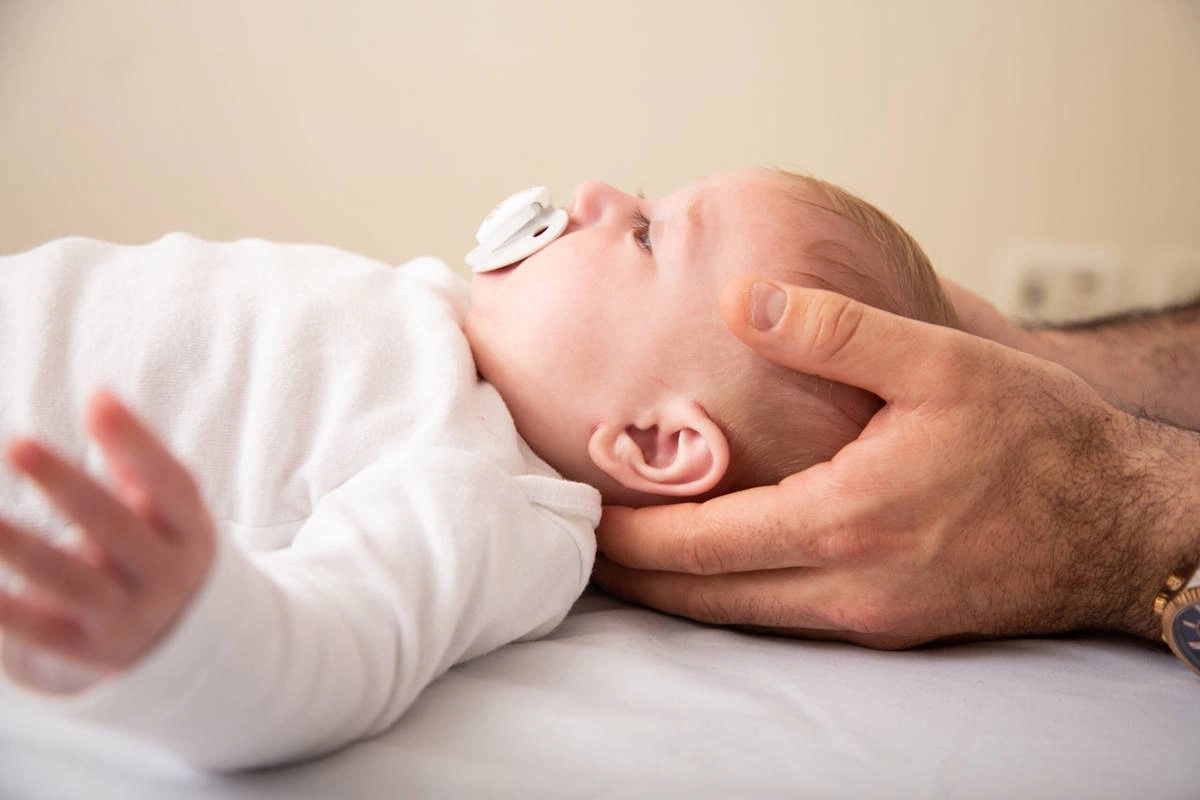
Osteopathic treatment for babies is done with a very gentle touch‚ without sharp movements and without force. With a baby not sleeping‚ I check how they respond to different positions‚ whether there are areas of tension in the neck‚ back‚ chest‚ belly or pelvis‚ and whether they move freely to both sides.
When there are no medical warning signs‚ osteopathy for babies can be part of the picture in cases of a side preference‚ body tension‚ difficulty with certain positions or functional discomfort. It is not a treatment for diseases and does not promise that all baby sleep problems will disappear‚ but it helps to understand what in the body makes it hard for your baby to settle.
What Happens During the Examination of a Baby Not Sleeping Well?
The first session lasts about an hour. I hear from you about the pregnancy‚ the birth‚ feeding‚ sleep and crying‚ watch your baby moving freely‚ and only then examine gently‚ usually while the baby is in the arms of one of the parents or on a soft surface.
A significant part of the session is guidance: how to lift‚ how to put down‚ how to encourage tummy time gradually and how to vary sides when feeding and playing. Follow-up sessions for baby sleep problems last about 45 minutes‚ and sometimes they focus mainly on progress and on practice at home.
What Doesn't Osteopathy Do?
Osteopathy is not sleep training and does not replace a sleep consultant‚ a lactation consultant or a pediatrician. It also does not "fix" habits such as falling asleep in your arms or night feeds. Parents lead the changes in habits at a pace that suits them and the baby‚ sometimes with the support of a professional who specializes in sleep.
When a baby won't sleep‚ what it does check is the physical side: whether there is a restriction or tension that causes your baby discomfort. When the cause is a habit and not the body‚ I say so simply and refer you to the right address.
Who Treats Your Baby and With What Experience?
I studied osteopathy for five years‚ including 1000 clinical hours‚ I am a member of the Israeli Osteopathic Association‚ and I have worked as an osteopath at Maccabi Tivi since 2022. Parents looking for an osteopath in Kiryat Tivon and northern Israel come to my clinic at 6 Karkom Street in Kiryat Tivon‚ and some private insurance plans refund part of the cost.
Baby Not Sleeping: What Can Parents Do at Home?
With a baby not sleeping well‚ parents can do a lot without "treating" anything themselves. Simple steps during the day support more balanced movement and calmer sleep.
- Varied positions while awake‚ and lifting from both sides.
- Alternating feeding sides‚ when this is suitable.
- Short‚ supervised tummy time several times a day‚ getting longer gradually.
- Toys and stimulation on both sides of the crib and the play mat.
- A steady routine before sleep: dim light‚ a bath or a short‚ quiet massage.
- A safe sleep environment for every sleep.
When your baby resists a certain position‚ it is better to progress gradually and not force them to stay in a position that causes distress. A few seconds of tummy time on a parent's chest are a good start for a baby not sleeping well and finding it hard on the mattress.
Nights when your baby won't sleep unless held‚ with long periods of carrying‚ are very exhausting‚ so it is a good idea for parents to take turns as much as possible. If you feel you might fall asleep while your baby is on you‚ put them back in their own crib or bassinet‚ because sleeping with a baby on a sofa or an armchair greatly increases the risk of sudden infant death‚ and an overtired parent finds it harder to soothe a restless baby.
A Sleep Diary When There Are Baby Sleep Problems
When there are baby sleep problems‚ it is important to look at the wider picture. Did sleep change after a vaccination‚ an illness‚ a growth spurt or a change in routine? Is there a link between the restlessness and feeding‚ gas‚ bowel movements or overtiredness?
A short record of sleep times‚ feeding‚ crying and positions over a few days helps to spot patterns‚ for example a baby waking up every hour only after certain feeds. When you come to the doctor or to the examination with a diary like this‚ it is easier to understand what causes the baby sleep problems in your specific case.
The Sleep Environment and a Baby Not Sleeping at Night
A fairly dark room‚ a pleasant temperature and steady background noise help many babies fall asleep and stay asleep. Strong light from screens‚ sudden noise or a room that is too warm can make a baby not sleeping well even worse‚ even when there is no physical problem at all.
It is also worth paying attention to bedtime: an overtired baby won't sleep easily‚ falls asleep with more difficulty and wakes more. A steady routine and a time to fall asleep that suits the age are simple tools‚ and no less important than any treatment.
When Should You See a Doctor?
See a doctor when there is fever‚ less feeding‚ repeated vomiting‚ unusual crying‚ extreme drowsiness‚ difficulty breathing‚ fewer wet diapers‚ a seizure or a sharp change in behavior. A parent's feeling that something is not right with a baby not sleeping is also a good reason for a check-up.
When the medical assessment is normal but the baby sleep problems‚ the restlessness‚ the side preference or the body tension continue‚ you can consider an osteopathic assessment. The aim is to understand whether there is a movement pattern that makes it hard for your baby to feel comfortable‚ not to promise immediate improvement.
What Is Important to Remember About a Baby Not Sleeping?
Baby sleep problems are usually a natural part of the first year‚ but when they come with a side preference‚ difficulty with positions‚ body tension or a change in behavior‚ it is worth checking what is behind them. Unusual signs require a doctor‚ and in suitable cases gentle touch and guidance can make things easier for your baby.
The osteopathic approach does not treat sleep as an isolated phenomenon‚ but looks at the whole body: the head‚ neck‚ chest‚ belly‚ pelvis and movement to both sides. That way parents dealing with a baby not sleeping get a better understanding of their baby's body and practical tools for a calmer and safer routine.
Frequently asked questions
From What Age Can I Bring a Baby for an Osteopathic Examination?
You can come as early as the first weeks‚ after the pediatrician has examined your baby‚ also with a newborn not sleeping well. The touch at this age is very gentle‚ and the examination is adapted to the baby's pace and mood.
Do Baby Sleep Problems Go Away on Their Own?
In many cases yes: they are related to a developmental phase‚ a growth spurt or teeth‚ and they improve once the phase passes. When they go on for a long time‚ get worse or come with other signs‚ it is worth checking.
How Many Treatments Does a Baby Not Sleeping Usually Need?
It varies from baby to baby. Sometimes one or two sessions together with home guidance are enough‚ and sometimes a follow-up of several sessions over a few weeks is recommended.
Does the Treatment Hurt the Baby?
No. The touch is very gentle‚ without pressure and without sharp movements. If your baby is hungry‚ tired or unsettled‚ we stop‚ feed or soothe‚ and continue when they are ready.
What Is the Difference Between Baby Sleep Problems and Sleep Habits?
A habit is a way in which your baby learned to fall asleep‚ for example only in your arms or only with a bottle. A physical problem usually shows up as discomfort in certain positions‚ a side preference or tension‚ and telling them apart helps you choose the right address.
Is a Side Preference in Babies Related to Sleep?
Sometimes yes. A baby who is comfortable only on one side returns again and again to the same position and may wake up on reaching a less comfortable one‚ and head shape is also affected by the repeated pressure.
Is Baby Restless Sleep a Sign of Pain?
Not always. Babies move‚ make sounds and partly wake in light sleep‚ and a baby not sleeping soundly every minute is normal. Strong crying that is hard to soothe‚ back arching or signs of illness require a medical check-up.
Does an Osteopath Replace a Sleep Consultant?
No. With baby sleep problems‚ a sleep consultant works on routine and habits‚ and an osteopath checks the physical side. For some families the two approaches complement each other.
Can I Come for an Examination With a Premature Baby?
Yes‚ after the medical team following the premature baby approves it. With premature babies the touch and the length of the session are adapted to the corrected age and the general condition.
What Should I Bring to the First Session?
It is worth bringing the birth summary‚ the follow-up booklet or the information from the well-baby clinic‚ and a sleep diary of a few days if you have one. It is also a good idea to bring a bottle or plan the session around a feeding time.
What Should I Do When My Baby Cries Every Time I Put Them on Their Back?
First of all‚ check with the doctor that there is no medical cause such as reflux or an ear infection. After that it is worth checking whether there is tension in the back or neck that makes it hard for your baby to lie flat‚ rather than switching to tummy sleeping.
Does a Newborn Not Sleeping Well Harm Development?
Short periods of broken sleep do not harm development‚ and they are a normal part of the first year. When a newborn not sleeping well goes on for a long time and comes with difficulty feeding or gaining weight‚ the doctor will check the overall picture.
Are Baby Sleep Problems Related to Gas?
Sometimes. Gas and tummy discomfort are a common reason for a baby not sleeping at night and wake some babies‚ especially in the first months. Good burping positions‚ tummy time while awake and gentle touch on the belly help many of them.
Should I Wake My Baby So They Sleep Better at Night?
In the first months‚ the decision to wake your baby for a feed is made with your pediatrician or the well-baby clinic‚ according to weight and age. In older babies‚ a daytime nap that is too long or too late can affect the night.
What Is the Difference Between Restlessness in Babies and Colic?
Colic is long‚ repeated crying in a healthy baby‚ mainly in the first months and in the evening hours. Restlessness in babies is a broader term that can come from many causes‚ so any unusual crying first needs a doctor's check-up.
Can a Baby Not Sleeping Well Have Hard Periods Again After Treatment?
A baby's sleep changes all the time‚ so hard periods can come back with teeth‚ illness or a new developmental stage. If the body tension has released and you know how to work with positions at home‚ coping with such periods is easier.
Does Insurance Cover Osteopathic Treatment for a Baby?
Some private insurance plans refund part of the cost of osteopathic treatment. It is worth checking the terms of your policy before the session.
Table of Contents
- Baby Sleep Problems: What Is Normal and What Is Not?
- A Newborn Not Sleeping in the First Months
- Night Waking‚ Growth Spurts and Teeth
- Baby Sleep Problems by Age
- Restlessness in Babies: What Is Common and What Needs a Check-Up?
- A Baby Fussy at Night and in the Evening Hours
- Baby Sleep Problems and Physical Comfort
- Digestion‚ Gas and Reflux
- Baby Sleep Problems and Breathing Through the Nose
- Muscle Tension and Tone
- A Long or Instrumental Birth
- A Baby Not Sleeping After a Vaccination or an Illness
- Baby Restless Sleep and Safe Baby Sleep Positions
- Safe Sleep Rules Even When Your Baby Won't Sleep Calmly
- Daytime Habits for a Baby Not Sleeping Well
- Side Preference in Babies and Its Effect on Sleep‚ Feeding and Head Shape
- A Head Tilt and Difficulty Turning the Neck
- Baby Sleep Problems and Breastfeeding Difficulties
- Signs on Your Baby's Head That Need a Doctor
- Osteopathic Treatment for a Baby Not Sleeping
- What Happens During the Examination of a Baby Not Sleeping Well?
- What Doesn't Osteopathy Do?
- Who Treats Your Baby and With What Experience?
- Baby Not Sleeping: What Can Parents Do at Home?
- A Sleep Diary When There Are Baby Sleep Problems
- The Sleep Environment and a Baby Not Sleeping at Night
- When Should You See a Doctor?
- What Is Important to Remember About a Baby Not Sleeping?
- Frequently asked questions
