
Baby Fontanelle - What Is Normal and When Should You Check?
15 min read
Does your baby's fontanelle suddenly look more sunken or more bulging than it did yesterday? Are you afraid to touch the soft area during bath time or while brushing your baby's hair? And are you not sure when the fontanelle is supposed to close and when you need to rush to the doctor?
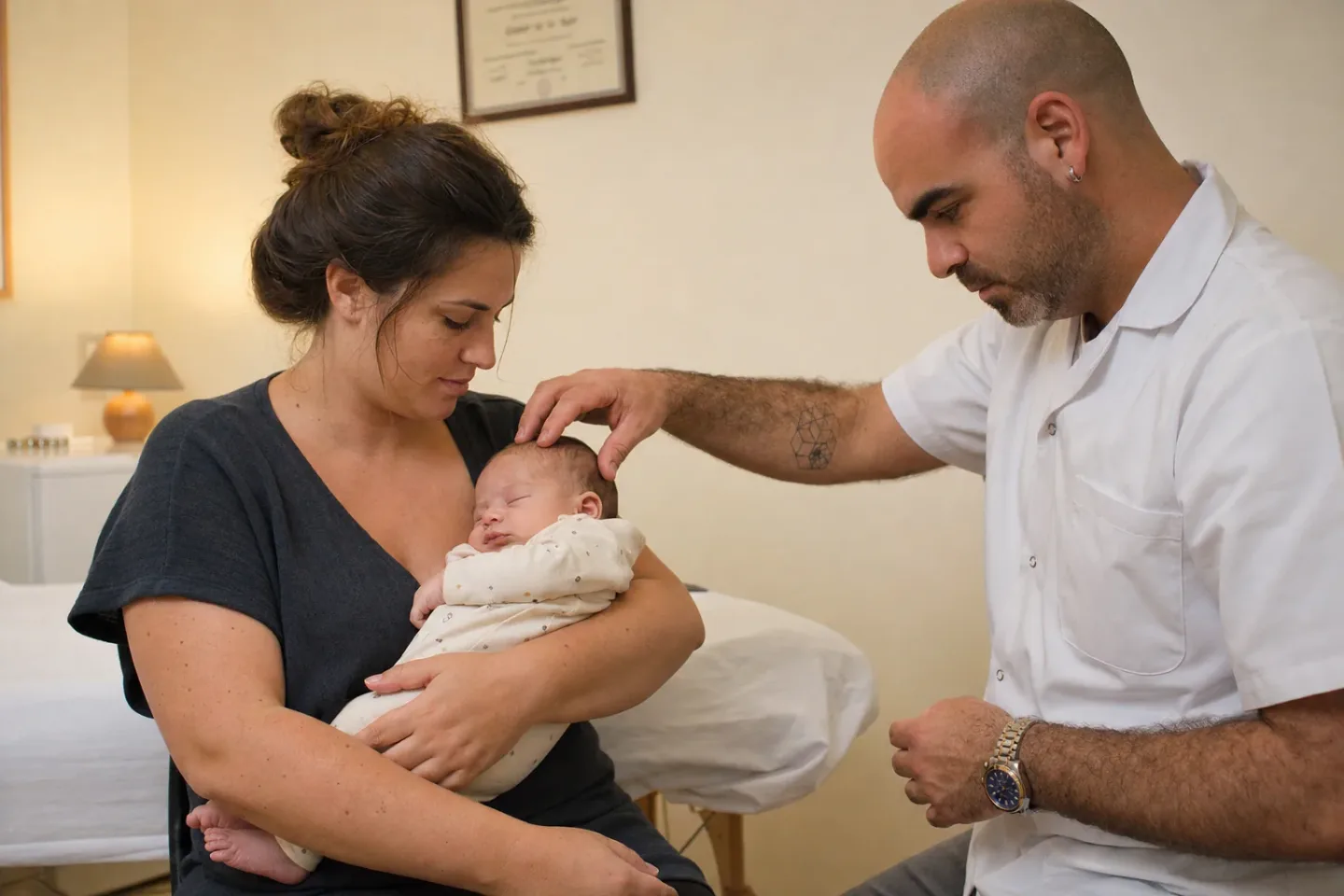
I am Roman Kibler‚ an osteopath D.O. in Kiryat Tivon‚ and I treat babies with very gentle touch‚ always separating what is suitable for treatment from what needs a doctor.
Leave your details or call me‚ and I will check with you whether your baby moves comfortably and how I can help!

The fontanelle is one of the topics that occupy many parents in the first months of a baby's life. It is a soft area of the skull where the skull bones have not yet fully joined together. In most cases this area is a natural and healthy part of development‚ but it is important to know the difference between ordinary signs and situations in which you should not wait.
Understanding the baby soft spot connects basic medical knowledge with the everyday observation of parents. On the one hand‚ there is no need to panic over every small change or every pulse you see there. On the other hand‚ a clearly sunken fontanelle‚ an obvious bulge‚ fever‚ vomiting or unusual drowsiness require a medical examination‚ and osteopathic treatment is suitable only when there are no such warning signs.
What Is a Fontanelle and Why Is It Called the Soft Spot?
Fontanelle (also spelled fontanel) is the medical term for the soft area between the skull bones of a baby‚ and in everyday language it is called the soft spot. When parents ask what a fontanelle is‚ they usually mean the soft spot on a baby's head that can be felt on the top of the head. This soft area lets the skull stay flexible during birth‚ and later leaves room for the rapid growth of the brain in the first months.
It is important to know that this area is not an "open hole" in the head. It is covered by a membrane and skin that are relatively strong‚ so gentle touch during bathing‚ holding or a medical check should not cause harm. Still‚ do not press on it with force and do not keep checking it again and again out of worry.
The Other Fontanelles on a Baby's Head
After birth a baby has several fontanelles‚ meaning several soft areas between the skull bones. The anterior fontanelle is the largest and best known‚ while the posterior fontanelle is smaller and usually closes much earlier‚ most often by the age of one or two months. There are also small soft areas on the sides of the head that parents usually do not feel at all.
When we talk about fontanelles‚ the goal is not to check every point on the head on your own‚ but to notice the overall picture. A calm baby who eats well‚ develops in line with their age and has normal follow-up does not need repeated checks at home. A clear change in the shape of the head‚ unusual swelling or a change in behaviour justifies an examination.
Baby Fontanelle: What Counts as a Normal Look?
In a healthy baby‚ the anterior fontanelle feels soft and flexible‚ and sometimes you can see a gentle pulse in it that is affected by the heartbeat and blood flow. This looks strange to parents‚ but in many cases it is completely normal. A baby fontanelle looks a little different when the baby cries‚ lies down‚ is calm or sits with support‚ so we always look at the baby's general condition too.
When the baby is alert‚ eats as usual‚ responds to the surroundings and passes urine as usual‚ a small change in how the soft spot looks is not necessarily a reason for concern. At the same time‚ every parent knows their own baby better than anyone. If you feel that something has clearly changed‚ or the look of the head comes with unusual behaviour‚ going to the doctor is the right step.
Touching the Baby Soft Spot in Everyday Life
With gentle touch on the soft spot‚ a healthy baby will not feel pain and will not be harmed. Bathing‚ washing the hair‚ soft brushing‚ a hat and a kiss on the head are all part of the normal routine. What you should avoid is strong pressure‚ shaking or repeated attempts to "measure" the area with your fingers.
The Anterior Fontanelle: Where Is It and When Does It Close?
The anterior fontanelle is located at the top front of the head‚ where several of the skull bones meet. It is the area that is easiest to feel‚ so parents notice it more. The pace of fontanelle closure varies from baby to baby‚ and there is no single age that fits everyone.
The paediatrician follows the growth of the head‚ the shape of the skull and the state of the soft spot at routine checks at the baby clinic (Tipat Halav) and the doctor's office.
Very early or very late closure can sometimes justify further investigation‚ but no conclusions should be drawn only from the look or from the parents' touch. Measuring head circumference‚ a developmental check and a medical impression matter more than any self-assessment.
An Open Fontanelle: Why Does It Matter for Development?
An open fontanelle is a natural state in young babies. It allows the skull to adapt to the rapid growth of the brain‚ especially in the first months. Parents sometimes worry that the soft spot has not closed yet‚ but in most cases that is exactly what is supposed to happen.
The right attitude to an open fontanelle is ordinary care and normal follow-up. If the baby develops well‚ head circumference is normal at follow-up and there are no warning signs‚ there is no reason to panic just because the soft spot can still be felt. A soft spot that stays open much longer than expected will be checked by the doctor‚ who will decide whether further investigation is needed.
A Closed Fontanelle: When Is It Normal and When Should You Check?
When parents feel that the soft area can no longer be felt‚ they may worry that it closed too early. In practice‚ a parent's feeling is not enough to determine whether it has closed: sometimes it is small‚ hard to locate or less prominent‚ but still there. That is why the assessment is made by a doctor‚ especially when there is a change in the shape of the head or in the rate of growth of head circumference.
A fontanelle that closes too early can in rare cases be related to early closure of the skull sutures‚ but this is not a conclusion you can reach at home. If the head keeps growing normally‚ the baby develops well and the doctor is not concerned‚ there is no reason for anxiety. Routine follow-up exists precisely to tell normal variation apart from a situation that needs investigation.
Bulging Fontanelle and Sunken Fontanelle - Signs That Need Attention
The changes that worry parents most are a bulging or a sunken fontanelle. Both can be temporary and harmless‚ but both can also point to a medical condition. Telling them apart has to be a medical decision‚ not a guess at home.
Bulging Fontanelle: When Is It a Warning Sign?
The soft spot can look fuller when the baby cries‚ strains or lies down‚ and sometimes this passes when the baby calms down. A bulging fontanelle that persists‚ especially with fever‚ vomiting‚ drowsiness‚ unusual crying or reduced alertness‚ requires seeing a doctor immediately. In such situations you do not wait for manual treatment and do not try to interpret the cause yourself.
The reason for caution is that a bulging fontanelle may indicate increased pressure inside the skull‚ an infection‚ an injury or another medical condition. Not every temporary bulge is dangerous‚ but only a doctor can determine that. A responsible osteopath will not treat a baby with such signs before a proper medical assessment.
Sunken Fontanelle and Dehydration: When Should You Not Wait?
A sunken fontanelle can appear in different situations‚ and one of the most important things to rule out is dehydration. If the baby passes less urine‚ nurses or eats less than usual‚ looks weak and drowsy‚ with a dry mouth or crying without tears‚ see a doctor quickly. When a sunken soft spot in a baby comes with diarrhoea‚ vomiting or fever‚ the check is even more urgent.
Dehydration in babies progresses faster than in adults‚ so it is better to go early than to wait. In such a situation there is no place for osteopathic treatment before a medical assessment. Only after the doctor has ruled out an urgent problem can I check whether there is also neck tension or discomfort in movement that I can gently help with.
A Sunken Anterior Fontanelle Versus a Temporary Change in the Look of the Head
Not every slightly sunken look is an emergency. Position‚ lighting‚ the structure of the head and a particular moment of the day all affect the way parents see the soft area. But when you see a clearly and persistently sunken anterior fontanelle‚ especially if the baby is less alert or eats less‚ the right decision is to go for a check.
The difference between a temporary change and a significant sunken anterior fontanelle is not always clear to an untrained eye. So do not panic over every small change‚ but do not ignore signs that appear together either. The paediatrician assesses the baby's fluid status‚ head circumference‚ alertness and general behaviour‚ and gives you a more reliable answer.
Head‚ Neck and Movement Around the Fontanelle
In babies‚ the head and neck are constantly developing. Turning the head to the sides‚ tummy time while awake‚ the quality of lifting the head and repeated position preferences all affect the way pressure is distributed on the skull. So even when the soft spot itself is normal‚ the baby's movement and ability to use both sides matter.
Side Preference and Head Tilt
A baby who prefers to look to one side‚ has trouble turning the head to the other side or resists certain positions may struggle with feeding‚ sleep and keeping a symmetrical head shape. When torticollis in babies is also part of this picture‚ it is worth having the movement of the neck and body checked professionally. Gentle treatment can help in some cases‚ but a significant limitation or a suspected medical problem requires a doctor.
Sleep‚ Restlessness and Positions
Babies' sleep is affected by many factors: hunger‚ the digestive system‚ overtiredness‚ developmental leaps‚ illness‚ body position‚ neck tension or a need for closeness. It is not right to blame every sleep difficulty on the head or the soft spot‚ but it is worth noticing whether the baby calms down only in a certain position or wakes up when you change sides.
When the restlessness appears mainly after feeds‚ with repeated spitting up and back arching‚ it is also worth reading about reflux in babies and consulting your paediatrician.
When parents describe sleep problems in babies‚ it is important to understand the wider picture and not look for a single solution. If sleep is affected by a side preference or discomfort in certain positions‚ gentle treatment may go together with parent guidance. Safe sleep remains the basis: on the back‚ on a firm‚ flat surface‚ with no pillows or soft blankets in the cot.
Head Shape: Does a Flat Head Resolve on Its Own?
A change in head shape in the first months is often related to repeated pressure on the same area‚ when the baby lies a lot in the same position or prefers one side. Do not change the safe sleep rules to prevent flattening: the baby keeps sleeping on the back‚ and work on head shape is done while the baby is awake and supervised.
When parents ask whether a flat head in babies resolves on its own‚ the answer depends on the baby's age‚ the degree of flattening‚ the side preference and whether there is a limitation in the neck. Changing positions while awake‚ gradual tummy time‚ alternating sides during feeds and less time spent in a car seat often help. In more marked cases‚ consult a paediatrician or a suitable developmental professional.
After an Assisted or Long Birth
After an assisted delivery‚ a long labour or a birth with significant strain‚ parents sometimes notice a temporary change in head shape‚ sensitivity‚ a side preference or tension in the neck and shoulders. Head shape usually changes gradually over the first weeks‚ but it is important to follow the baby's general condition and not assume that every change is "just from the birth".
When a situation such as an elongated head after a vacuum birth appears‚ see a paediatrician first to make sure everything is fine. If there are no warning signs‚ gentle osteopathic treatment may help in assessing neck tension‚ head movement and comfort in different positions. The goal is not to change the shape of the head by force‚ but to help the baby move comfortably and to give you safe tools for daily life.
Gentle Osteopathic Treatment When the Fontanelle Is Normal
Osteopathy for babies is based on very gentle touch‚ observation‚ movement assessment and an understanding of how the baby responds to different positions. The treatment does not hurt‚ is not aggressive and does not replace a medical examination when there are unusual signs. With babies‚ the line between suitable treatment and a situation that needs a doctor has to be especially clear.
When there is no suspicion of an urgent medical problem‚ osteopathy for babies focuses on comfort‚ reducing tension in the tissues‚ encouraging movement to both sides and guiding parents on holding‚ lifting and tummy time. The treatment does not "treat the fontanelle" itself; it relates to the baby's body as one system: head‚ neck‚ chest‚ back‚ pelvis and general movement.
What Do I Check at the Clinic?
During the examination I watch the baby lying on the back and on the tummy‚ check head rotation to both sides‚ comfort when being lifted and the response to touch. Sometimes there are also signs of increased muscle tension‚ and then it is worth reading about high muscle tone in babies and consulting your paediatrician. The first treatment lasts about an hour‚ including a conversation with the parents‚ and follow-up treatments are shorter.
I studied osteopathy for five years‚ including 1,000 clinical hours‚ and since 2022 I have been working as an osteopath at Maccabi Tivi. Parents from the north who look for an osteopathy clinic in Kiryat Tivon come to me at 6 Karkom Street for calm treatment at the baby's own pace. Some private insurance companies refund part of the cost of treatment.
When I treat a baby‚ I do not press on the soft spot and do not work on it directly. When touch on the head is needed‚ it is very light and focused on the baby's comfort. If during the examination I notice a bulging or sunken fontanelle‚ or a change in alertness and behaviour‚ I stop and refer you to the paediatrician that same day.
When Should You See a Doctor About the Fontanelle?
See a doctor when the fontanelle bulges persistently or is clearly sunken‚ and when this comes with fever‚ vomiting‚ drowsiness‚ unusual crying‚ eating less or passing less urine. A change in alertness‚ a seizure or any injury to the head also requires an immediate examination.
- A bulging fontanelle that does not settle when the baby is calm and upright.
- A sunken fontanelle with fewer wet nappies‚ a dry mouth or crying without tears.
- Fever‚ repeated vomiting or unusual drowsiness.
- A rapid change in head shape or head circumference.
- A fall or a blow to the head‚ even if the baby calms down quickly.
In such situations manual treatment is not the first step. First make sure there is no medical problem that needs attention‚ and only then‚ when the picture fits a movement limitation‚ careful and adapted osteopathic treatment can be considered.
A Healthy Fontanelle - What to Remember
The fontanelle‚ or baby soft spot‚ is a natural part of the structure of a baby's head in the first months. In most cases it is a normal‚ soft and flexible area that closes gradually as part of development. A persistent bulge‚ a clearly sunken fontanelle‚ a change in behaviour‚ fever‚ vomiting or signs of dehydration require a medical examination.
Osteopathic treatment fits in only when there are no medical warning signs and there is a need for gentle work on movement‚ side preference‚ neck tension or general comfort. The right approach combines medical follow-up‚ safe sleep‚ supervised tummy time and guidance tailored to the parents‚ so you can approach the subject calmly and responsibly.
Frequently asked questions
When Does the Soft Spot Close?
The pace at which the anterior fontanelle closes varies a lot between babies‚ so there is no single date that fits everyone: in most babies it closes between 12 and 18 months‚ and in some earlier or later‚ in a wide range from about 7 months to about two years. The paediatrician follows fontanelle closure together with head circumference and general development.
Is It Safe to Touch My Baby's Fontanelle?
Yes‚ gentle touch during bathing‚ brushing or stroking does no harm. The area is covered by strong tissue‚ but do not press on it with force or keep checking it again and again.
Why Can I See a Pulse in the Fontanelle?
A gentle pulse in the soft spot is related to the heartbeat and blood flow‚ and it is normal in most babies. If the pulse comes with a bulge‚ fever or a change in behaviour‚ see a doctor.
What Does a Sunken Fontanelle Mean?
Sometimes it is a matter of position or lighting‚ but a sunken fontanelle can also be a sign of dehydration. If the baby eats less‚ passes less urine or looks weak‚ see a doctor the same day.
Is a Bulging Fontanelle When Crying Normal?
Yes‚ when the baby cries or strains‚ the soft spot can look fuller and return to normal when the baby calms down. A bulge that stays even at rest‚ or that comes with fever and vomiting‚ requires an immediate examination.
Is a Fontanelle the Same as a Baby Soft Spot?
Yes. Fontanelle is the medical word‚ and baby soft spot is the everyday name for the soft area between a baby's skull bones. Both terms describe the same structure‚ and doctors use both; when it is checked‚ a calm baby usually does not react to the touch at all.
Is a Fontanelle That Closes Early a Problem?
Not necessarily‚ because sometimes it is simply small and hard to feel. If the head grows normally and the doctor is happy with the baby's development‚ usually no further investigation is needed.
Does an Osteopath Treat the Fontanelle Itself?
No. Osteopathic treatment relates to comfort‚ neck movement and the baby's body as a whole‚ and it fits in only after the doctor has ruled out a medical problem.
How Many Fontanelles Does a Baby Have?
A baby has several fontanelles at birth: the large anterior fontanelle‚ the small posterior fontanelle and small soft areas on the sides of the head. Parents usually feel only the anterior one‚ and sometimes the posterior one too.
Can I Wash and Brush My Baby's Hair While the Fontanelle Is Open?
Absolutely: bathing‚ washing the hair and brushing with a soft brush are safe even when the soft spot is open. What matters is to be gentle and not press on the area.
What Is Checked in the Fontanelle at the Baby Clinic?
The nurse or doctor gently feels the soft area‚ measures head circumference and compares it with previous checks. The combination of the measurement‚ the shape of the head and the baby's development matters more than any single check.
Is the Baby Soft Spot Sensitive to Sun and Cold?
The soft area is not more sensitive than the rest of the scalp‚ but a baby's head loses heat and gets sunburnt easily. A suitable hat in summer and winter protects the whole head‚ including this area.
Table of Contents
- What Is a Fontanelle and Why Is It Called the Soft Spot?
- The Other Fontanelles on a Baby's Head
- Baby Fontanelle: What Counts as a Normal Look?
- Touching the Baby Soft Spot in Everyday Life
- The Anterior Fontanelle: Where Is It and When Does It Close?
- An Open Fontanelle: Why Does It Matter for Development?
- A Closed Fontanelle: When Is It Normal and When Should You Check?
- Bulging Fontanelle and Sunken Fontanelle - Signs That Need Attention
- Bulging Fontanelle: When Is It a Warning Sign?
- Sunken Fontanelle and Dehydration: When Should You Not Wait?
- A Sunken Anterior Fontanelle Versus a Temporary Change in the Look of the Head
- Head‚ Neck and Movement Around the Fontanelle
- Side Preference and Head Tilt
- Sleep‚ Restlessness and Positions
- Head Shape: Does a Flat Head Resolve on Its Own?
- After an Assisted or Long Birth
- Gentle Osteopathic Treatment When the Fontanelle Is Normal
- What Do I Check at the Clinic?
- When Should You See a Doctor About the Fontanelle?
- A Healthy Fontanelle - What to Remember
- Frequently asked questions
