
Flat Head Baby - When Does It Settle and What Really Helps?
13 min read
Have you noticed that the back of your baby's skull looks flatter from week to week? Does your baby turn his gaze to the same side almost all the time‚ both in sleep and during feeds? Are you wondering whether it will settle on its own or whether it is worth having it checked now?
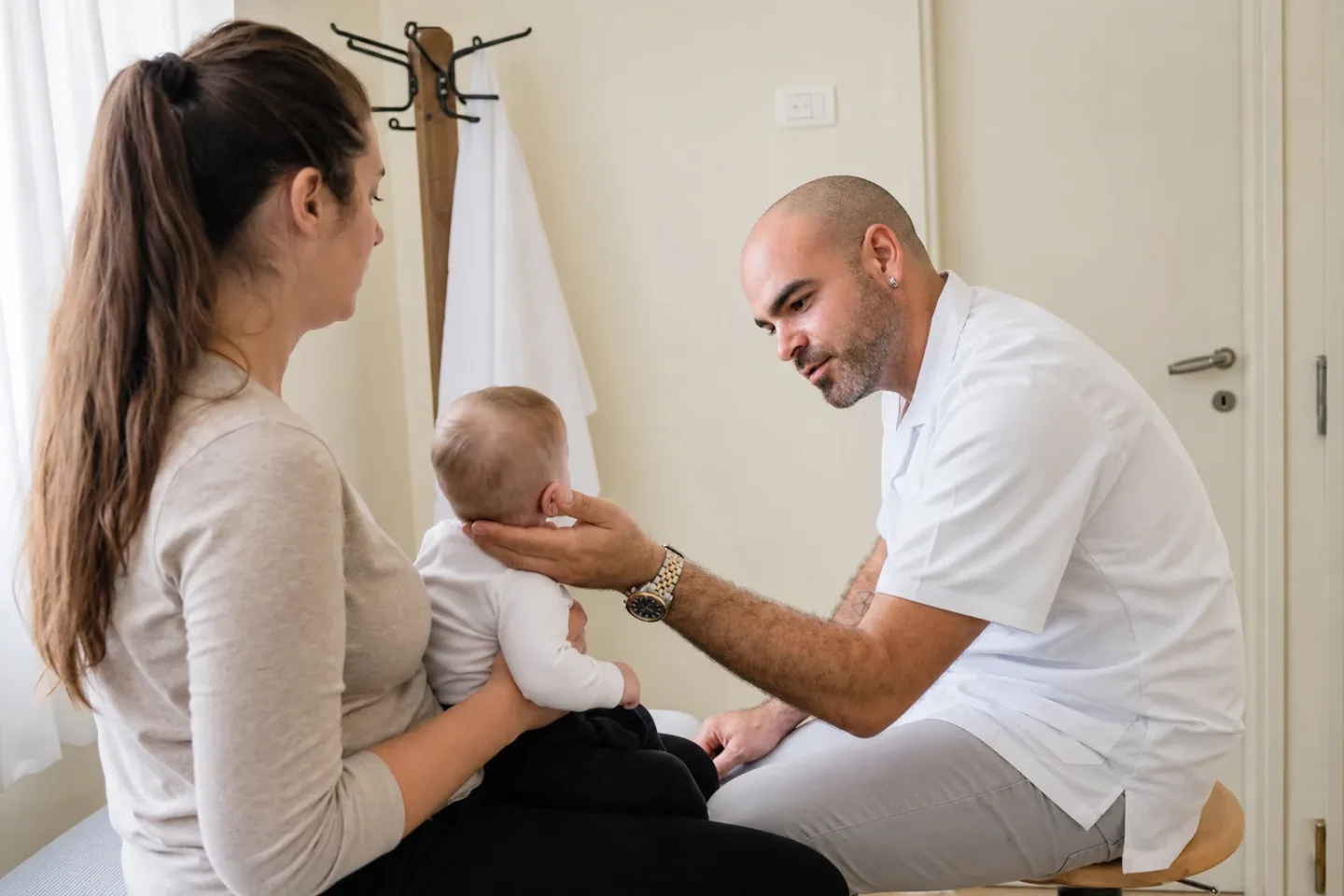
I am Roman Kibler‚ an osteopath (D.O) at my clinic in Kiryat Tivon and at Maccabi Tivi‚ and I examine babies with flat head syndrome using a very gentle touch‚ find what limits their movement and show parents what to do at home.
Leave your details or call me‚ and I will check with you what is behind your baby's flat head syndrome!
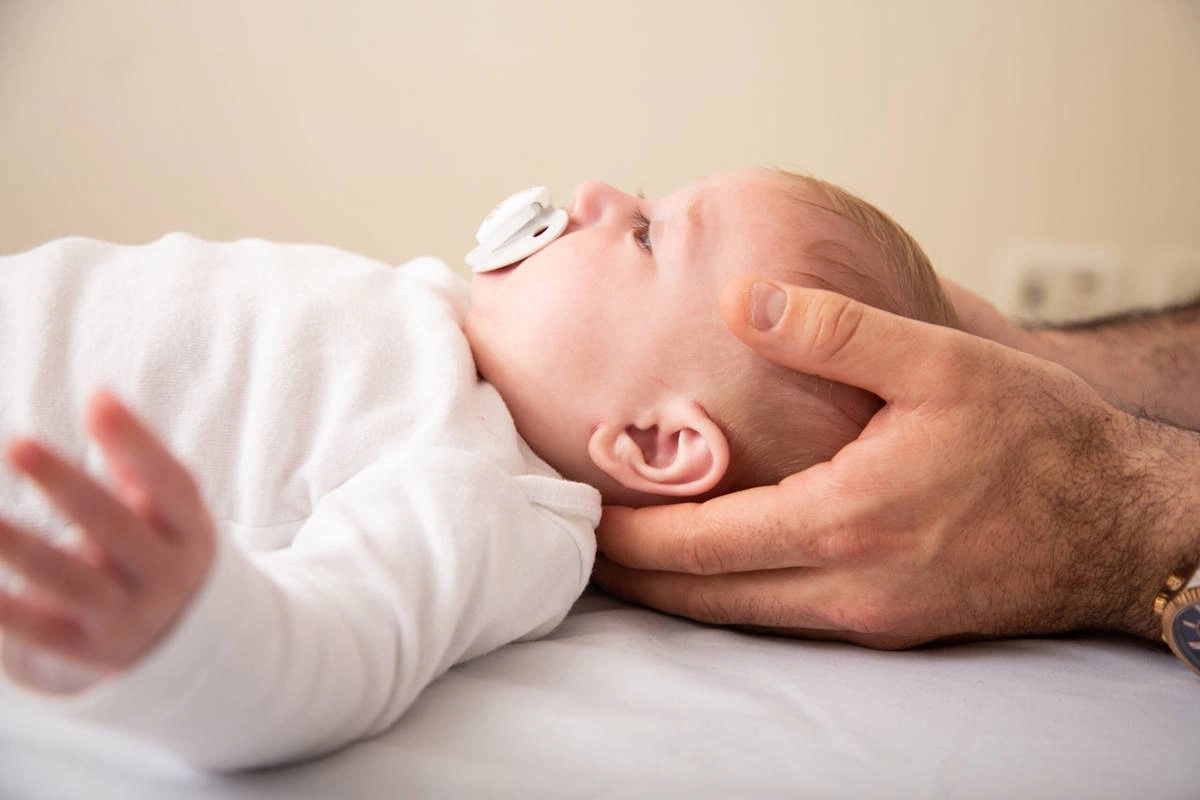
A flat head in babies is something that worries many parents‚ especially when they notice that the back or the side of the skull looks flatter than usual. In most cases it is a positional change: the shape changes because of repeated pressure on the same spot of the baby's soft bones.
It is important to understand that flat head syndrome does not necessarily mean there is a problem with brain development. Still‚ it is worth keeping an eye on it‚ spotting in time whatever keeps adding pressure and knowing when to go for a medical check or supportive treatment.
What Is Flat Head Syndrome and Why Does It Develop?
To understand a baby flat head‚ remember that in the first months of life the bones of the skull are still relatively flexible and joined by soft sutures. This is a natural part of development: the flexibility lets the head pass through the birth canal and later grow as the brain grows.
The same flexibility means that long periods in the same position‚ a preferred side or limited neck movement can affect the shape of the skull. That is why the right approach to baby flat head is not panic‚ but a calm look at how the baby lies‚ is held‚ feeds and moves.
When the pressure falls mainly on the middle of the back of the head‚ the baby flat head looks symmetrical from behind. When it falls on one side‚ the skull may look diagonal‚ and sometimes one ear or one side of the forehead looks slightly further forward.
The diagonal shape is known as plagiocephaly‚ and there is a separate article about it on the site. Both shapes are often grouped under the everyday name flat head syndrome.
Flattening at the Back Versus Flattening on One Side
A flat head in babies that sits in the middle of the back of the head is usually linked to lying on the back for long periods without a clear preferred side. Flattening on one side usually suggests that the baby likes to look in one direction‚ out of habit‚ comfort or a restriction in the neck.
This distinction matters‚ because it changes what I check. When parents describe a flat back of head baby pattern‚ I focus mainly on varying positions and tummy time‚ while with flattening on one side I also check how freely the neck‚ the shoulders and the chest move.
Flat Head Baby - Why Does It Happen in the First Months?
The main cause of a baby flat head is repeated pressure on one area. Babies spend a lot of time lying on their back‚ which is also the safe and recommended sleeping position‚ so the safe sleep rules must never be changed to "fix" the shape of the skull.
What you can and should do is vary positions while the baby is awake‚ encourage movement to both sides and notice whether he turns his face almost always in the same direction. In many cases flat head syndrome appears together with a clear preference for one side.
The baby looks more to the right or to the left‚ prefers one side during feeds or calms down mainly when held at one angle. When this pattern repeats again and again‚ the same area takes more pressure and the outer shape of the skull changes gradually.
The earlier you spot flat head syndrome‚ the easier it is to influence it through gentle changes in daily habits. A flat head newborn pattern that is noticed in the first weeks usually needs far less effort than one that has gone on for months.
Factors That Raise the Risk of Flat Head in Babies
In some situations the chance of flat head syndrome is higher. These include:
- Long periods in the car seat‚ the swing or a baby seat even when there is no need.
- A fixed preferred side during breastfeeding‚ bottle feeding or sleep.
- Limited neck movement‚ for example difficulty turning the head to one side.
- A cramped position in the womb in the last weeks of pregnancy‚ a long labor or an instrumental delivery.
- Premature birth‚ when the skull bones are even softer and the baby lies in the same position for a long time.
Babies who spit up a lot or are uncomfortable after feeds also tend to spend long periods in the car seat or at a fixed angle‚ and sometimes arch and turn the head to the same side while feeding. In that case it is worth asking the pediatrician whether this is reflux in babies.
After a feed you can hold the baby upright on your right shoulder and your left shoulder in turn‚ so that the pressure does not always fall on the same spot of the skull. Small habits like this are part of flat head prevention from the very first weeks.
Does a Baby Flat Head Settle on Its Own or Need Treatment?
In a large share of babies‚ positional flat head syndrome improves with time. This happens mainly when the baby starts to lift his head‚ roll over‚ sit‚ crawl and spend less time lying on the same area.
Still‚ it is not always wise just to "wait for it to pass". If a baby flat head is marked‚ if there is a clear preferred side‚ if the baby finds it hard to turn his head to one side or if you feel it is getting worse‚ it is worth going for a professional assessment.
The important question is not only whether a flat head baby's skull will round out‚ but why the flattening developed. If it is only a matter of position habits‚ the right guidance can help a lot‚ and if there is a neck restriction‚ tension after the birth or a movement difficulty‚ gentle treatment may need to be added.
When parents search for "how to fix flat head baby" or "flat spot on baby head"‚ they usually hope for one quick trick. In practice‚ the answer lies in finding the cause and changing the daily pressure on the head.
What Affects the Chance That Flat Head Syndrome Will Improve?
The age at which the condition is spotted matters a great deal: in the first months the skull grows fast and it is easier to influence the pressure on it. The severity of the flattening‚ the presence of a neck restriction and the parents' ability to make small changes in the routine also affect the result.
When the cause is only a habit‚ changing positions is usually enough. When a movement factor keeps bringing the baby back to the same side‚ it is worth treating that too‚ or the pattern will be hard to break.
Unusual Signs That Call for the Pediatrician
Most cases of infant flat head are related to positions and repeated pressure‚ but parents should also know the signs that call for a doctor. A rapid change in skull shape‚ an unusual bulge‚ fever‚ vomiting‚ unusual sleepiness‚ unusual crying‚ poor feeding or lack of response all require a medical examination and not a positional explanation.
A baby's skull has soft areas that close gradually‚ and the most noticeable of them is the soft spot on top of the head‚ called the anterior fontanelle. If you notice a significant change in this area‚ especially together with general symptoms or unusual behavior‚ see a pediatrician.
In rare cases an unusual skull shape comes from early closure of one of the skull sutures and not from the lying position. This is a medical diagnosis only‚ so any unusual shape that does not fit a positional pattern needs to be checked by a doctor.
Flat Head in Babies and Positions at Home
Babies should keep sleeping on their back‚ on a safe‚ stable surface free of soft objects. Do not use pillows‚ head positioners or any items that are not recommended for safe sleep in an attempt to correct a flat head in babies.
The right way to influence flat head in babies is while they are awake and supervised:
- Short tummy time that builds up gradually‚ several times a day.
- Switching sides during feeds‚ including bottle feeds.
- Holding the baby on each arm in turn.
- Placing toys and things to look at on both sides of the crib.
- Less time in the car seat or the stroller when there is no need for it.
When there is a preferred side‚ do not try to "force" the baby to turn the other way. It is better to encourage movement with your voice‚ a toy or a way of holding that lets the baby look to the less preferred side too.
If he resists strongly or seems restricted‚ it is worth checking whether there is tension in the neck.
Tummy Time Without a Struggle
If your baby finds tummy time hard‚ you can start on your chest‚ on your knees or at a more comfortable angle‚ and not straight away on a flat surface. The goal is a positive experience: a few minutes at a time‚ and gradually more as the baby gets stronger.
It also helps to look at your routine: on which side you hold the baby‚ from which side you offer the bottle‚ which way he looks in the stroller and where the sounds that catch his attention come from. Sometimes a small change in the surroundings is enough for the baby to use the less preferred side more.
A Neck Restriction‚ an Instrumental Delivery and a Flat Head Baby
When a baby finds it hard to turn the head to one side or keeps leaning to the same side‚ the pressure on the skull may be uneven. In that situation‚ even when parents are careful with tummy time and varied positions‚ the baby returns again and again to the same pattern.
That is why it is important to check not only how flat the head is‚ but also the quality of movement in the neck‚ the shoulders‚ the chest and the upper back. When torticollis in babies is present‚ treatment should be gentle‚ gradual and suited to the age‚ and sometimes follow-up by a doctor or a developmental physiotherapist is also needed.
A long labor‚ an instrumental delivery or prolonged pressure in the birth canal may leave some babies with temporary tension around the skull‚ the neck and the shoulders. In most cases the body adapts gradually‚ but if you notice discomfort‚ difficulty breastfeeding on one side or a position that keeps repeating‚ it is worth following it up properly.
Parents who went through such a birth are welcome to read the article on vacuum assisted delivery and its effect on the baby. Osteopathic treatment is not meant to change the shape of the skull by force‚ but to help the baby move more comfortably when there is a functional restriction.
Osteopathic Treatment for Flat Head Syndrome - What Does It Look Like?
Osteopathic care for a flat head baby is based on a very gentle touch‚ on watching how the baby moves and on understanding the links between the skull‚ the neck‚ the chest‚ the back and the pelvis. The aim is not to "press on the head" or shape it‚ but to check whether there are areas that limit movement and make the baby prefer one position over and over.
When comfort and freedom of movement improve‚ it is easier for the baby to vary positions while awake‚ and this may reduce the repeated pressure on the same area. In suitable cases osteopathy for babies works alongside medical follow-up and everyday guidance for parents.
The first session takes about an hour and includes a conversation about the pregnancy‚ the birth‚ feeding and sleep‚ watching how the baby moves and a gentle manual examination. Follow-up sessions are shorter‚ and you leave each session with simple instructions for home.
The Limits of Baby Flat Head Treatment
Osteopathic treatment does not replace the pediatrician and does not guarantee full correction of a baby flat head. If there are unusual signs‚ a change in the general condition or a question about the structure of the skull‚ the first address is the doctor.
When infant flat head is significant and does not improve despite changes in position‚ a doctor or a developmental professional may recommend further assessment‚ and in some cases a corrective helmet. Parents often read online about a baby helmet for flat head‚ but that decision is made after a medical assessment‚ not because of a product advert.
Are Pillows and Special Products the Answer?
Many parents come across adverts promising to correct flat head syndrome with pillows‚ mats or various products. For sleep‚ the safety advice is clear: a firm‚ clear surface‚ with no pillows‚ no loose blankets and no soft items around the baby.
If you are considering any product for awake‚ supervised time‚ check it with a professional and make sure it does not replace natural movement‚ tummy time and varied positions. In most cases the most important way to influence flat head syndrome is changing the load on the head‚ not buying a product.
The Bottom Line - Flat Head Syndrome Is a Reason to Check‚ Not to Panic
A baby flat head is usually a common positional condition‚ caused by repeated pressure on one area of the soft skull. In many cases it improves with time‚ especially when tummy time‚ varied positions and encouraging movement in both directions are combined.
Even so‚ do not ignore a clear preferred side‚ a neck restriction‚ worsening flattening or unusual signs in the general condition. The earlier a flat head in babies is spotted‚ the easier it is to change the pattern.
If you live in the valleys and the north of Israel and are looking for an osteopath in Kiryat Tivon‚ you can book an examination and get a clear picture of what is affecting your baby.
Frequently asked questions
At what age does flat head syndrome usually appear?
A baby flat head usually becomes visible in the first months‚ when the baby spends a lot of time lying down and does not yet move his head freely. Many parents notice it at around two to four months.
Does a baby flat head correct itself completely?
In mild‚ positional cases of flat head in babies the shape usually improves significantly as the baby moves more. In marked cases‚ or when there is a neck restriction‚ the improvement depends on spotting it early and treating the cause.
Does flat head syndrome affect brain development?
Positional flat head syndrome is a change in the outer shape of the skull and does not in itself point to a problem with brain development. If there is a developmental delay or unusual signs‚ they should be checked separately by a pediatrician.
Can I put my baby to sleep on the side or tummy to fix flat head syndrome?
No. Sleep stays on the back‚ on a safe surface and without pillows‚ and the change is made only while the baby is awake and supervised.
How much tummy time a day is recommended?
Start with short spells of a few minutes several times a day‚ and lengthen them gradually as the baby gets stronger. It matters more that tummy time is pleasant and regular than long‚ and it is one of the simplest tools for preventing a flat head in babies.
When should a flat head baby be checked?
When the flattening is marked‚ getting worse‚ or comes with a clear preferred side or difficulty turning the head. With a rapid change‚ a bulge‚ fever or unusual behavior‚ go to the pediatrician first.
Does osteopathic treatment hurt the baby?
Treatment for infant flat head is based on a very gentle touch and on following the baby's reactions. If the baby is not calm‚ I stop‚ wait or continue while a parent holds him.
How many treatments are usually needed?
It varies from baby to baby and depends on the cause of the flat head syndrome and on the age. After the first examination you get a clear assessment and a recommendation on whether more sessions are needed.
Do I need a doctor's referral for an examination?
You do not need a referral for an osteopathic examination. Still‚ if the pediatrician has already examined the baby‚ bring the summary‚ because it helps me understand what has been ruled out and what is worth checking.
Some private insurance companies refund part of the cost of treatment‚ so it is worth checking this in advance.
Table of Contents
- What Is Flat Head Syndrome and Why Does It Develop?
- Flattening at the Back Versus Flattening on One Side
- Flat Head Baby - Why Does It Happen in the First Months?
- Factors That Raise the Risk of Flat Head in Babies
- Does a Baby Flat Head Settle on Its Own or Need Treatment?
- What Affects the Chance That Flat Head Syndrome Will Improve?
- Unusual Signs That Call for the Pediatrician
- Flat Head in Babies and Positions at Home
- Tummy Time Without a Struggle
- A Neck Restriction‚ an Instrumental Delivery and a Flat Head Baby
- Osteopathic Treatment for Flat Head Syndrome - What Does It Look Like?
- The Limits of Baby Flat Head Treatment
- Are Pillows and Special Products the Answer?
- The Bottom Line - Flat Head Syndrome Is a Reason to Check‚ Not to Panic
- Frequently asked questions
