
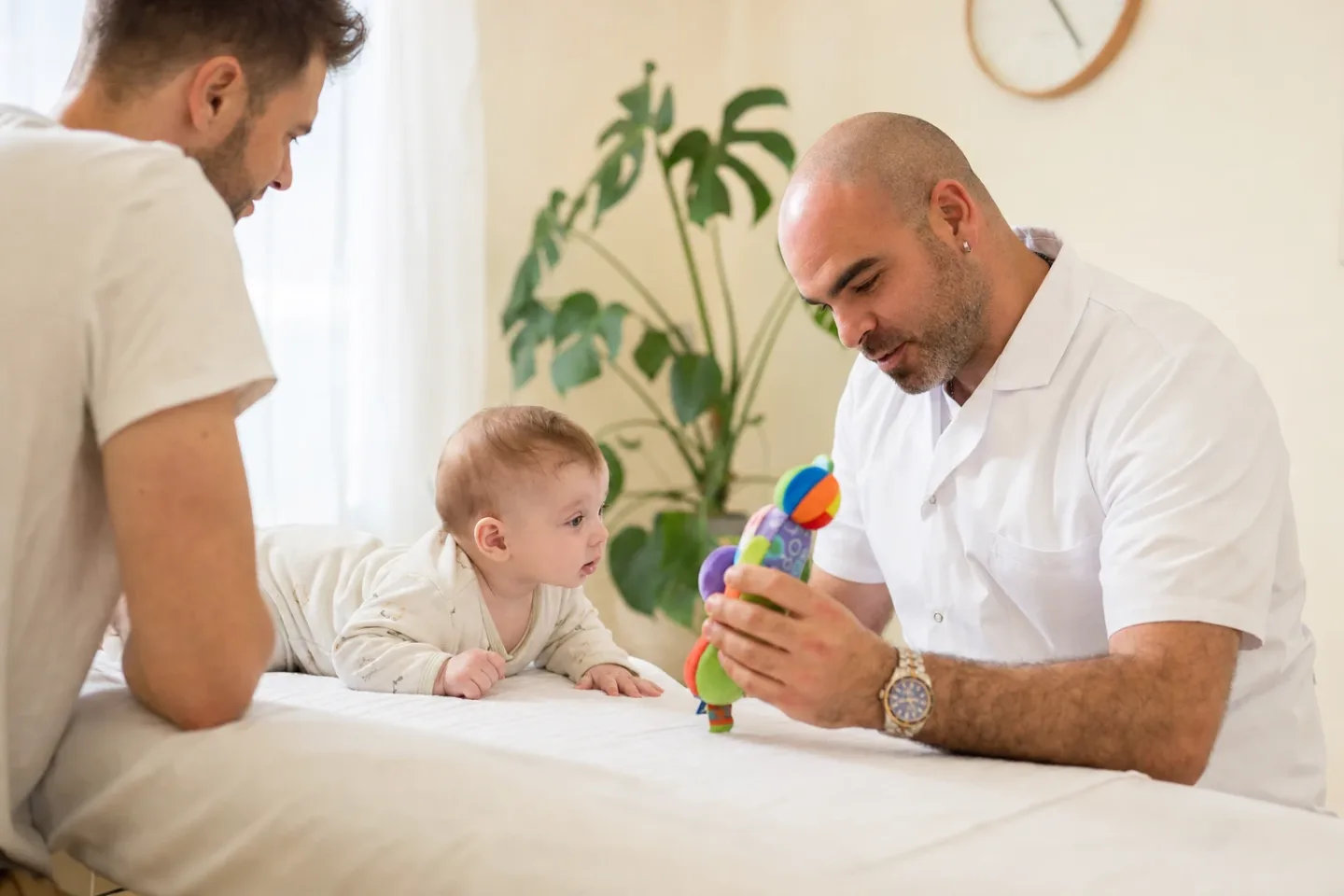
Plagiocephaly - Early Detection and Gentle Care for Babies
10 min read
Have you noticed that one side of the back of your baby's head looks flatter? Does your baby almost always look in the same direction and wake up when you try to turn them to the other side? Did the nurse at the baby clinic say "plagiocephaly"‚ and now you are not sure what to do?
I am Roman Kibler‚ an osteopath D.O. with a clinic in Kiryat Tivon‚ and I gently examine your baby's neck‚ chest and movement patterns and show you what to do at home to reduce the pressure on the head.
Leave your details or call me‚ and I will check with you what is causing the side preference and how we can help your baby!
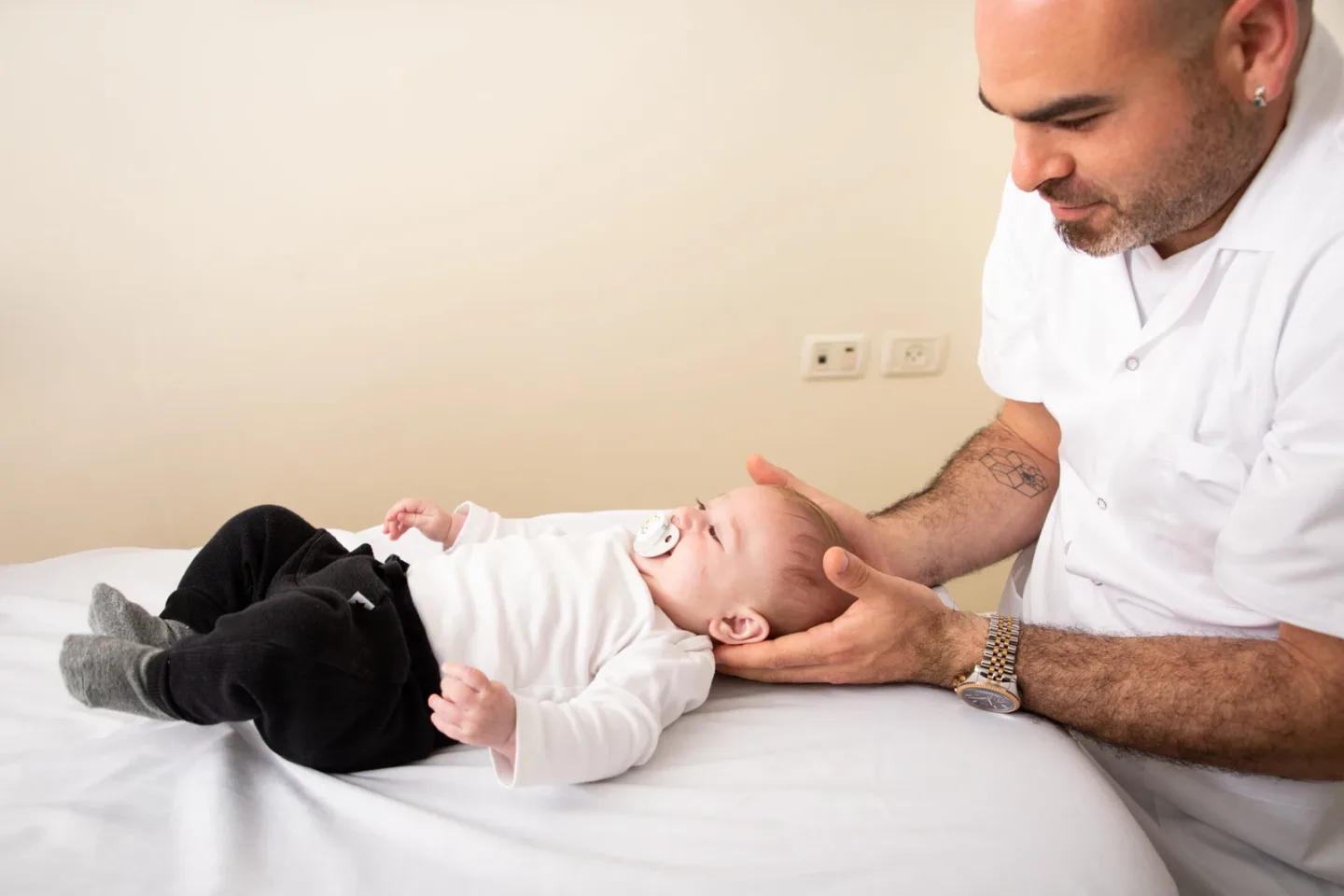
Plagiocephaly is a condition in which the shape of a baby's head becomes asymmetrical‚ usually because of repeated pressure on a certain area of the skull at a time when the skull bones are still soft and flexible. In most cases this is positional plagiocephaly‚ also called deformational plagiocephaly‚ meaning a change in shape caused by a fixed position‚ a side preference or the baby's difficulty turning the head to both sides.
It is important to know that in most cases plagiocephaly is not dangerous to the brain and does not necessarily point to a developmental problem. Still‚ it should not be ignored: early detection lets you vary positions‚ reduce repeated pressure and check whether there is a neck limitation that needs treatment.
What Is Plagiocephaly and How Is It Related to a Flat Head?
Plagiocephaly describes an asymmetry in the shape of the head‚ usually with flattening on one side of the back or the side of the skull. The name comes from Greek and means "oblique head"‚ and in everyday language people simply say "flat head".
In practice plagiocephaly and related head shapes come in different patterns: symmetrical flattening at the back‚ flattening on one side‚ asymmetry of the ears and sometimes a subtle change in the look of the forehead. When the flattening is at the back and equal on both sides‚ it is called brachycephaly‚ and when it is on one side‚ it is plagiocephaly. This is the simple answer to the question of plagiocephaly vs brachycephaly.
If you want to understand the differences between the types of flattening and the chances that the head will even out over time‚ you will find a detailed explanation in my article on flat head syndrome. Here I focus on plagiocephaly in babies‚ how to recognize it and what helps.
Why Does Plagiocephaly Appear in the First Months?
In infancy the head grows very fast and the bones are still soft. When the head rests again and again on the same spot‚ growth goes in the direction where there is less pressure‚ and this is how flattening forms.
The recommendation to put babies to sleep on their backs has greatly reduced the risk of sudden infant death‚ and that recommendation remains in force. One of its results is that more parents meet positional plagiocephaly‚ so it is important to vary positions while the baby is awake.
How Can You Recognize Plagiocephaly at Home?
Parents can notice a few simple signs:
- The baby usually looks to the same side‚ both when lying down and when feeding
- One side of the back of the head looks flatter
- One ear looks slightly further forward than the other
- The forehead sticks out a little more on one side
- Difficulty lifting the head symmetrically when lying on the tummy
It is worth looking at your baby in several situations and not relying on one picture‚ because the head looks different depending on lighting‚ angle or position. A gentle photo from above while the baby lies on the back helps you follow changes over time‚ but it does not replace a professional examination.
Plagiocephaly usually begins in the first months‚ and it is sometimes clearly visible only while the hair is still thin or when the baby is wet in the bath. Many parents first notice it in a photo taken from above.
When in doubt‚ it is better to get an early assessment than to wait for months and find that the pattern has become fixed. Plagiocephaly that is detected early usually responds better to simple changes in the daily routine.
Positional Plagiocephaly Versus Conditions That Need Medical Investigation
In most cases asymmetry of the head in babies is related to position and external pressure‚ and not to early closure of the skull bones. Still‚ it is important to know the difference between positional plagiocephaly and rarer conditions such as craniosynostosis‚ in which one or more of the sutures of the skull close too early and may affect the growth of the head.
A parent is not supposed to diagnose this alone at home. If there is an unusual change‚ a rapid worsening or an unusual look of the head‚ the paediatrician is the first address.
The soft area on the baby's head also needs attention. When you are worried about the look of the baby soft spot or about it closing early‚ or when you feel that the head is growing in an unusual way‚ go for a medical examination and do not settle for manual treatment.
Torticollis‚ Side Preference and Plagiocephaly
When a baby has trouble turning the head to one side‚ the head gets similar pressure again and again‚ and over time this pattern contributes to the asymmetry. Sometimes parents notice that the baby feeds better on one side‚ calms down more when held in a certain direction or wakes up when you try to turn them to the less comfortable side.
In such situations infant torticollis may be part of the picture‚ especially when there is a limitation in turning the head or tension in the neck muscles. In many babies with plagiocephaly such a limitation is found as well‚ so I always check both together.
It is important not to pull the head by force and not to try to "open" the neck aggressively. Gentle treatment focuses on improving the mobility of the neck‚ the chest and the shoulder blades‚ together with guidance for parents on how to encourage turning the head to both sides in a pleasant way.
Plagiocephaly After an Assisted Delivery
A long labour‚ an assisted delivery or a challenging passage through the birth canal may temporarily affect the way the baby holds the head and neck. In most cases the body balances itself gradually‚ but when there is a clear side preference‚ difficulty feeding on one side or an asymmetry that appears early‚ it is worth following it.
Parents who notice a change in head shape after such a birth often read about vacuum assisted delivery and fear that every change is a problem. In fact some of the changes improve on their own‚ and a gentle examination helps you understand whether there is also a movement component that feeds the plagiocephaly.
Prevention and Plagiocephaly Treatment at Home
The most important rule is that babies keep sleeping on their backs‚ on a safe‚ stable surface free of soft objects. Do not change the recommended sleeping position to treat the shape of the head‚ and do not use special pillows or unrecommended accessories during sleep.
Reducing pressure on the head is done mainly while the baby is awake and supervised:
- Short tummy time several times a day‚ gradually getting longer
- Switching sides when feeding and carrying
- Placing toys and things to look at on the less preferred side
- Changing the direction in which you lay the baby in the cot‚ so that they turn to the other side to see you
- Less long time in the car seat and the bouncer when it is not needed
The goal is not to "shape" the head by force‚ but to create more variety in movement and positions. The small daily change is sometimes the most important part of plagiocephaly treatment.
Osteopathic Treatment for Plagiocephaly
Osteopathic treatment for positional plagiocephaly does not focus on pressing on the skull or trying to shape it by force. It is very gentle‚ attentive and free of sharp movements‚ and the focus is on assessing movement: how the baby turns the head‚ how the chest takes part in the movement‚ how they respond to tummy time and what happens during lifting and feeding.
Treatment for plagiocephaly can include gentle touch around the neck‚ shoulder blades‚ chest and pelvis‚ according to the findings and the baby's response. Sessions of baby osteopathy are done with the parent beside the baby the whole time‚ and we can stop at any moment for a feed or to settle the baby.
Alongside the treatment‚ guidance for parents is a central part: how to encourage turning to the less preferred side without a struggle‚ how to make tummy time more successful and how to reduce repeated pressure without breaking the safe sleep rules. In many cases the change at home matters no less for plagiocephaly than the session at the clinic.
What Happens at the First Session?
The session starts with a conversation about the pregnancy‚ the birth‚ feeding‚ sleep and what you see at home. Then I examine the baby lying on the back‚ on the tummy and in your arms‚ and look at the shape of the head from above and from the sides.
I studied osteopathy for five years‚ including 1,000 clinical hours‚ and I have been working as an osteopath at Maccabi Tivi since 2022. At the end of the session you leave with a clear explanation of what I found and with two or three simple instructions for home‚ because plagiocephaly improves mainly through what happens between treatments.
The Osteopathic Approach Alongside Medical Follow-Up
The paediatrician assesses the shape of the head‚ checks the rate of growth of head circumference‚ identifies warning signs and decides whether further investigation is needed. In some cases there will be a referral to developmental physiotherapy‚ to a head shape clinic or for a plagiocephaly helmet (a moulding helmet).
The osteopathic approach examines movement and the loads that lead to a side preference‚ and it is suitable only when the picture is positional and there are no warning signs. Research on manual treatment for plagiocephaly is limited and does not prove that it changes the shape of the head‚ so I see it as a supportive addition to guidance and changes in position‚ which are the core of the treatment.
The two approaches do not contradict each other‚ and in many cases they complement each other.
When Does Plagiocephaly Require Seeing a Doctor?
See a paediatrician when any of these appear:
- An unusual or rapid change in the shape of the head
- A concern about early closure of the skull sutures‚ or a soft spot that looks unusual
- Head circumference that is not progressing as expected
- Repeated vomiting‚ fever‚ unusual drowsiness or unusual crying
- A developmental delay‚ or a feeling on your part that something is not right
A referral to the doctor does not mean that the situation is necessarily serious. Sometimes it simply makes it possible to confirm that this is positional plagiocephaly and that you can move forward safely with guidance‚ changes in position and gentle manual treatment.
In Summary
Plagiocephaly in babies is usually a positional condition related to repeated pressure‚ a side preference or a limitation in neck movement. In most cases there is no danger to the brain‚ but early detection is important in order to reduce pressure and prevent an unbalanced pattern from becoming fixed.
When medical follow-up‚ the right guidance and gentle treatment adapted to the baby are combined‚ you can help your baby move freely. Parents looking for an osteopath in Kiryat Tivon for a gentle check of their baby are welcome at my clinic at 6 Karkom Street.
Frequently asked questions
Does Plagiocephaly Go Away on Its Own?
In mild cases‚ and especially when it is detected early and positions are varied‚ the shape of the head usually improves as the baby grows and moves. When the flattening is significant or does not improve‚ it is important to continue follow-up with the paediatrician.
Does Plagiocephaly Affect Brain Development?
Positional plagiocephaly is a change in the outer shape of the skull‚ and it does not press on the brain. Still‚ it can point to a side preference or a neck limitation that is worth treating.
From What Age Can a Baby With Plagiocephaly Be Treated?
Gentle osteopathic treatment is possible from the first weeks of life‚ after the paediatrician has examined the baby. The earlier you start‚ the faster the head is still growing and the more the changes in routine have an effect.
Does a Special Pillow Help Plagiocephaly?
Using pillows or accessories during sleep is not recommended‚ because they increase the risk during sleep. Varying positions while the baby is awake is the safe way to reduce pressure.
How Can You Tell Plagiocephaly From Early Closure of the Skull Sutures?
In positional plagiocephaly the head usually looks like a parallelogram when seen from above‚ and the ear on the flat side moves slightly forward. In early closure of a suture the shape is different and sometimes comes with a ridge you can feel‚ and the distinction is made by a doctor‚ sometimes with the help of imaging.
Are Crying and Side Preference Related?
Sometimes yes: a baby who feels discomfort in the neck calms down only in one position and resists change. When movement improves‚ parents often describe a calmer baby during feeds and changes of position.
When Is a Plagiocephaly Helmet Needed?
The decision about a moulding helmet is made by a doctor or a dedicated clinic‚ according to the severity of the asymmetry and the baby's age. It is suitable only for some cases and not for every flattening.
How Long Does Treatment Last?
The first treatment lasts about an hour and includes a conversation‚ an examination and treatment. Follow-up treatments last about 45 minutes‚ and the frequency of sessions is set according to the baby's response.
Is Tummy Time a Must?
Tummy time while awake and supervised is one of the most important tools‚ both for strengthening the neck and for reducing pressure on the back of the head. If the baby struggles‚ start with a few minutes on your chest and progress gradually.
Table of Contents
- What Is Plagiocephaly and How Is It Related to a Flat Head?
- Why Does Plagiocephaly Appear in the First Months?
- How Can You Recognize Plagiocephaly at Home?
- Positional Plagiocephaly Versus Conditions That Need Medical Investigation
- Torticollis‚ Side Preference and Plagiocephaly
- Plagiocephaly After an Assisted Delivery
- Prevention and Plagiocephaly Treatment at Home
- Osteopathic Treatment for Plagiocephaly
- What Happens at the First Session?
- The Osteopathic Approach Alongside Medical Follow-Up
- When Does Plagiocephaly Require Seeing a Doctor?
- In Summary
- Frequently asked questions
