Does your lower back hurt at the end of every day‚ and does every move from sitting to standing feel like an effort? Does your pelvis "lock" when you turn over in bed‚ or is there a stab in your pubic bone with every step? Or maybe the birth is already behind you‚ but your back and pelvis still haven't gone back to normal?
I'm Roman Kibler‚ an osteopath (D.O.) who treats women during pregnancy and after birth at my clinic in Kiryat Tivon‚ with a gentle touch and in positions that are comfortable for a body that changes every week.
Leave your details or call me‚ and I'll check with you whether osteopathy during pregnancy suits the stage you are at!
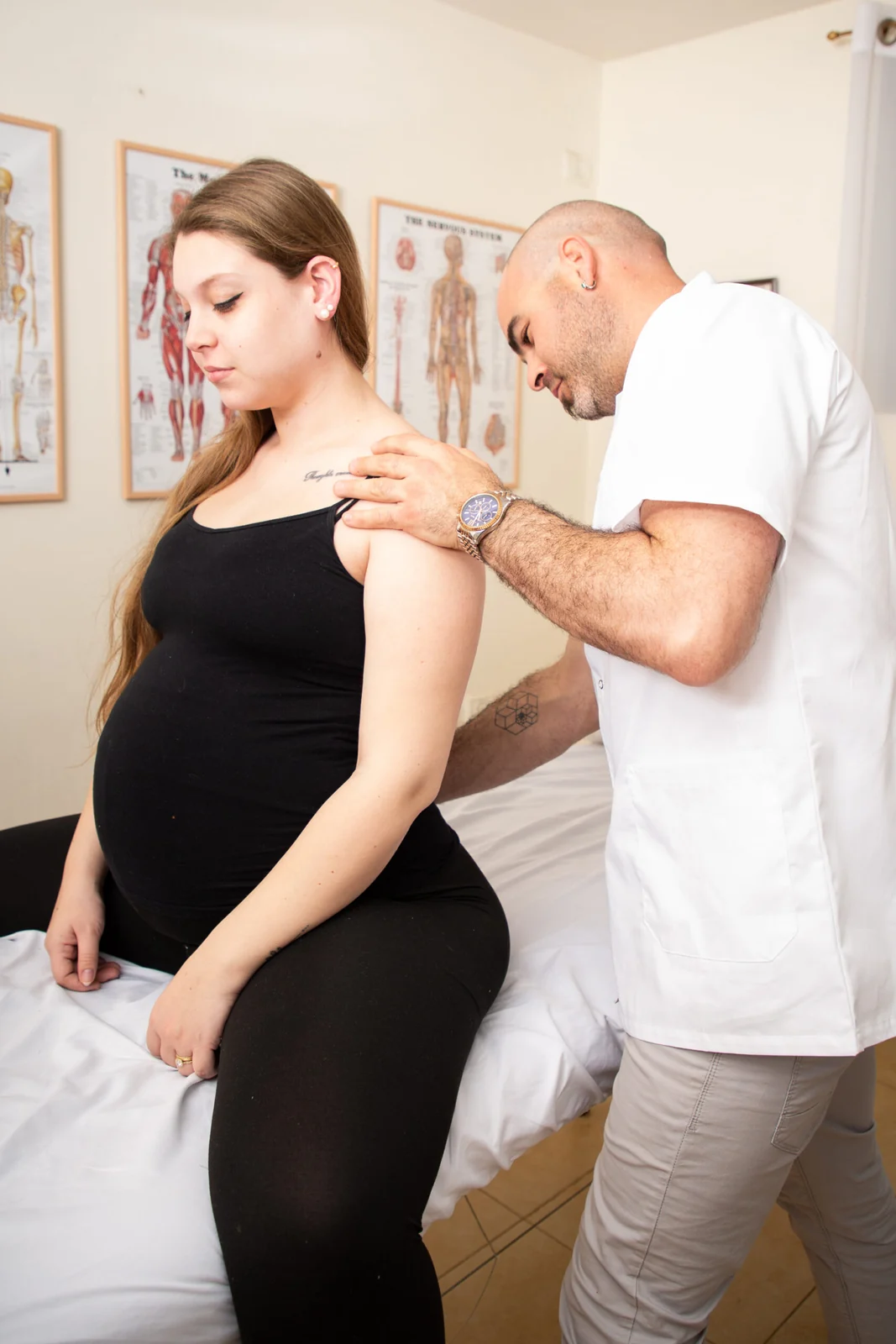
Over nine months the body goes through a fast change: the weight of the belly pulls the center of gravity forward‚ the lower back curves more‚ and the hormone relaxin loosens the ligaments of the pelvis to prepare it for birth. These changes are natural‚ but for some women they bring pain‚ stiffness and a feeling that the body is "unstable".
Pregnancy osteopathy is not meant to stop this process‚ but to help the body adapt to it with less strain. Gentle hands-on treatment of the back‚ the pelvis‚ the diaphragm and the ribs‚ together with guidance on positions and movement in daily life‚ can ease quite a lot of the pain of this period.
What Is Pregnancy Osteopathy and Why Does It Suit This Time?
Osteopathy is a manual therapy that checks how the parts of the body move in relation to each other: the spine‚ the pelvis‚ the chest‚ the diaphragm and the limbs. Pregnancy osteopathy focuses on the areas that carry most of the new load‚ mainly the lower back‚ the pelvic joints and the muscles around them.
There are no sharp movements or "cracking" in the treatment. A pregnancy osteopath works with soft techniques of stretching‚ releasing tissues‚ slow joint mobilization and work with the breath‚ at an intensity that suits a body that is already under load.
The goal is practical: to sleep more comfortably‚ to walk without a stab in the pelvis‚ to get out of bed without waiting for the back to "loosen up"‚ and to reach the birth with a pelvis and a back that move freely.
Osteopathy During Pregnancy - Why Is It Considered Gentle and Safe?
Osteopathy during pregnancy is done without pressure on the belly‚ without lying on your belly for long and without strong techniques on the spine. When you are treated by an osteopath trained to work with pregnant women‚ and you are in regular follow-up with your doctor or midwife‚ pregnancy osteopathy is a very conservative treatment.
Before every session of pregnancy osteopathy I ask which week you are in‚ about your latest tests‚ your blood pressure‚ whether it is a high-risk pregnancy and about any unusual symptom. If something in the picture needs a medical assessment first‚ the treatment is postponed until the doctor gives approval.
It is also important to know what pregnancy osteopathy does not do: it does not change the baby's position by force‚ does not "speed up" labor‚ and does not replace medical follow-up‚ pelvic floor physiotherapy or medication when it is needed.
A Pregnancy Osteopath Alongside Your Doctor and Midwife
A pregnancy osteopath is part of the team that accompanies you‚ not a replacement for it‚ and osteopathy during pregnancy works alongside medical care. The doctor or midwife is responsible for the follow-up‚ the tests and the medical decisions‚ and I ask the mechanical question: how are the back and pelvis coping with the new load‚ and what can be changed so that it hurts less.
When something in my examination does not fit the picture of ordinary mechanical pain‚ I refer you back to your doctor before we continue. That way osteopathy during pregnancy stays within its limits‚ and you know that someone is also looking at the wider picture.
Back Pain and Other Pain in Pregnancy - What Can Osteopathy During Pregnancy Help With?
- Lower and upper back pain‚ and stiffness in the morning.
- Pain in the pelvis at the front and back‚ including the pubic bone and the tailbone.
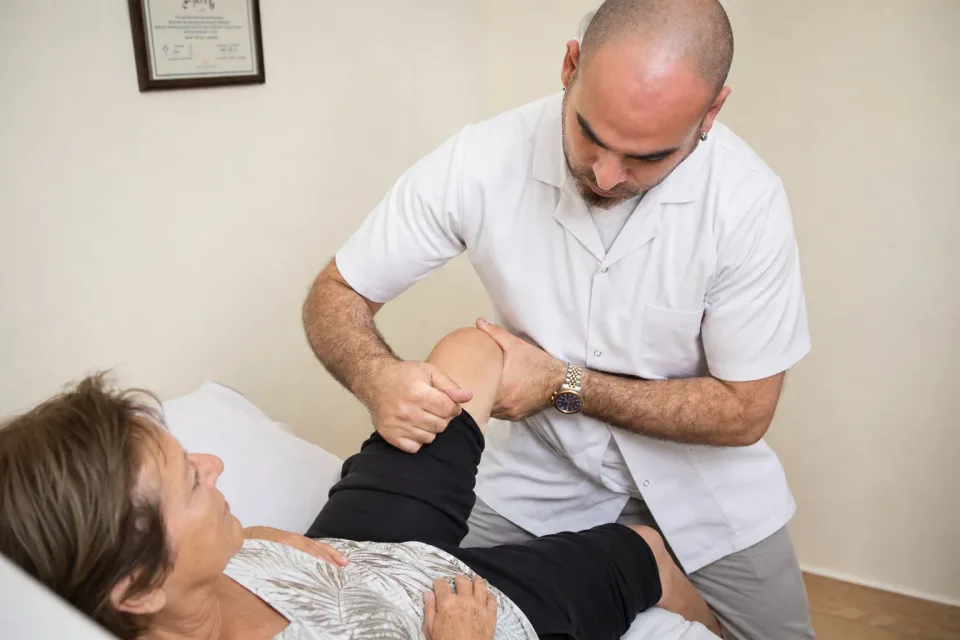
- Pain in the groin and buttocks‚ and pain that travels down the leg.
- A feeling of pressure in the ribs and diaphragm and difficulty breathing deeply in the last months.
- Neck and shoulder pain‚ especially in women who work at a computer.
- Preparing the pelvis and back for birth‚ and treating the body after birth.
In Which Trimester Does Pregnancy Osteopathy Start?
You can come to an osteopath during pregnancy at any stage‚ and the treatment changes according to the trimester. There is no need to wait for the pain to get worse: the earlier you come‚ the easier it is to change a pattern of load before it becomes fixed.
The First Trimester - Gentleness and Coordination With Your Doctor
In the first weeks‚ before most women think of a pregnancy osteopath‚ the body is busy mainly with hormonal changes‚ nausea and tiredness‚ and most women do not yet suffer from mechanical load. When there is back pain that started before the pregnancy or got worse at its start‚ pregnancy osteopathy in the first trimester is especially gentle‚ and usually takes place after the doctor or midwife has already seen you.
The Second Trimester - The Most Comfortable Time for Most Women
In the second trimester the belly starts to grow‚ the lower back curves more‚ and the ligaments that softened under the influence of the hormones start to be felt in the pelvis. This is usually the stage at which women come to a pregnancy osteopath for the first time‚ and it is comfortable for treatment because it is still relatively easy to lie down and turn over.
Osteopathy during pregnancy in the second trimester makes it possible to work on both the back and the pelvis within a relatively wide range of movement‚ and to give you tools before the belly grows further. Women who start at this stage usually reach the last months with less pain and a better understanding of their body.
The Third Trimester - Relief and Preparation for Birth
In the last months the load on the pelvis‚ the ribs and the legs is at its highest‚ and many women look for an osteopath during pregnancy at this point. Pregnancy osteopathy at this stage focuses on easing pain‚ improving breathing and the mobility of the pelvis toward birth‚ in short sessions and in especially comfortable positions.
Even if until now you did not feel a need for osteopathy during pregnancy‚ you can come to a pregnancy osteopath in the last weeks only. One or two sessions before the birth can help with sleep‚ breathing and the movement of the pelvis‚ and give you useful positions for the time of contractions.
Common Pains That Bring Women to an Osteopath During Pregnancy
I have written a separate‚ detailed article about each of these pains that bring women to pregnancy osteopathy. Here you will find a short picture of each one‚ what a pregnancy osteopath checks‚ and where to continue reading.
Back Pain in Pregnancy
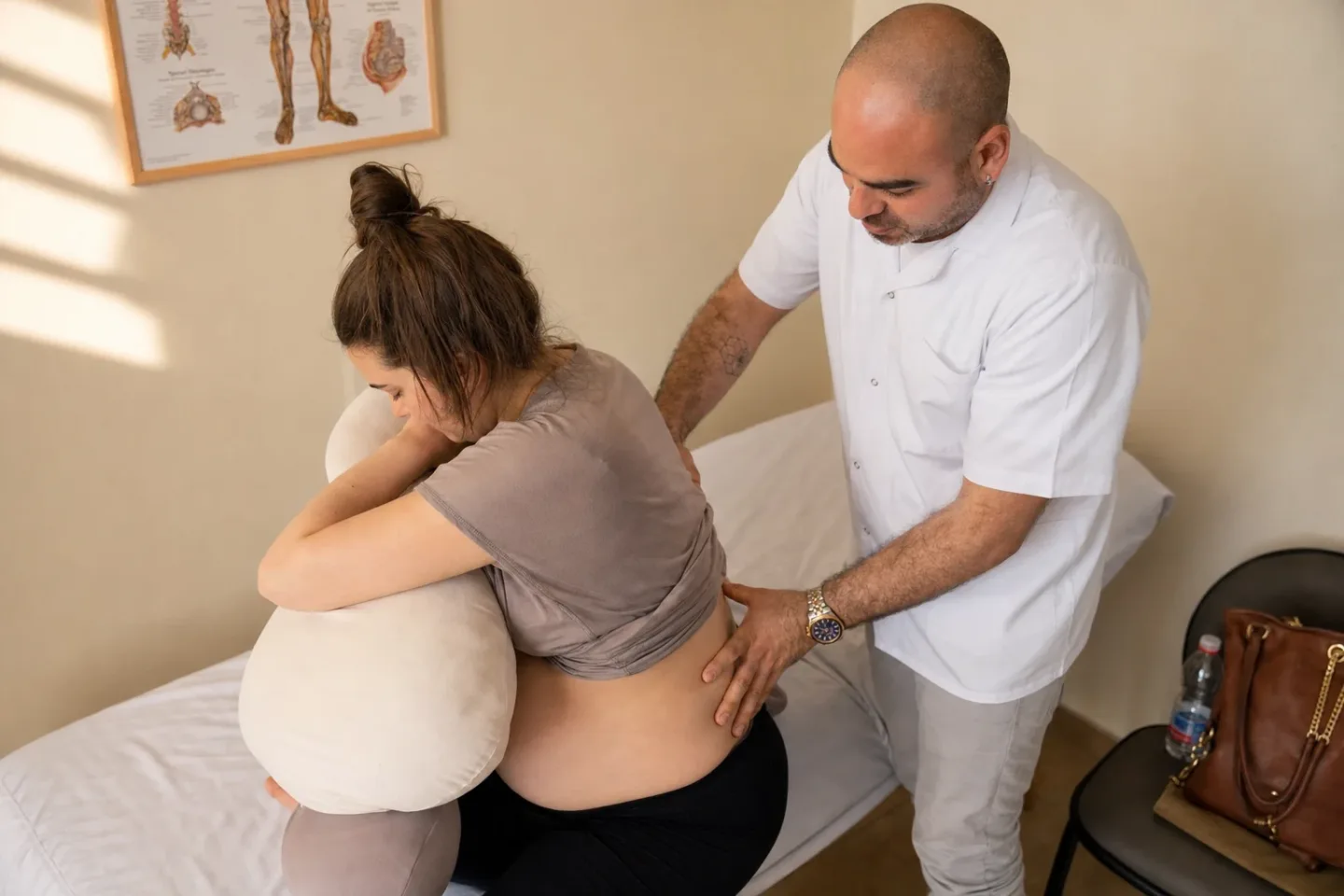
Lower back pain is the most common complaint in pregnancy. It usually comes from the change in the curve of the back‚ the temporary weakening of the abdominal muscles and the load that moves to the muscles along the spine. Pregnancy osteopathy for this kind of pain focuses on the mobility of the lower back and pelvis and on your posture habits in daily life.
Some women feel it as early as the first weeks‚ and others only in the third trimester. If you feel back pain in early pregnancy‚ you will find in this article what causes it‚ what you can do at home and when to see a doctor.
Pain in the Back of the Pelvis and the Buttocks
A deep pain at the back‚ on one side of the sacrum or on both sides‚ that gets worse when walking‚ climbing stairs or turning over in bed is usually related to the sacroiliac joints. Sometimes it travels to the buttock and the back of the thigh and resembles sciatic pain.
In this situation pregnancy osteopathy works on the mobility of the joints and the deep muscles of the pelvis‚ and teaches you how to turn over and get up without strain. You will find more detail about the causes and ways to ease it in the article on posterior pelvic pain in pregnancy.
Tailbone Pain
Tailbone pain‚ a common reason for osteopathy during pregnancy‚ is felt mainly when sitting for a long time‚ when moving from sitting to standing and in the last weeks‚ when the baby's head descends into the pelvis. For some women the pain stays after the birth as well.
Osteopathy during pregnancy in this area is done gently‚ working on the muscles and ligaments attached to the tailbone and on the pelvic floor from the outside. A full explanation of tailbone pain in pregnancy and of sitting positions that ease it is in a separate article.
Groin Pain
A sharp stab in the groin during a sudden movement‚ a cough or standing is familiar to many women in the second trimester. It is usually related to stretching of the ligaments that hold the uterus‚ and sometimes to load on the hip joint or the pubic bone.
A pregnancy osteopath checks where the pain comes from and adapts the treatment: work on the pelvis‚ the inner thigh muscles and the lower belly from the outside. If you feel groin pain during pregnancy‚ you will find in the full article when it is normal and when you need to get checked.
Symphysiolysis - Pain at the Front of the Pelvis
Symphysiolysis is pain in the joint that connects the two halves of the pelvis at the front‚ related to the loosening of the ligaments under the influence of pregnancy hormones and to an uneven load on the joint. It shows up as pain in the pubic bone and difficulty spreading the legs‚ climbing stairs or putting a leg into trousers.
Here pregnancy osteopathy combines gentle work on balancing the pelvis with practical guidance: how to get out of the car‚ how to turn over and how to place a pillow between your knees. For details‚ read about relief for symphysiolysis‚ including recommendations for the rest of the pregnancy and for the birth with this condition.
The Pubic Bone and the Front Joint of the Pelvis
Many women who come for osteopathy during pregnancy ask what exactly hurts them at the front. The pubic bone is the front part of the pelvis‚ and at its center is the joint called the symphysis‚ which loosens during pregnancy together with the other ligaments.
I have written separately about the bone itself‚ known in medical terms as the pubis‚ and about the causes of pain in it. When the pain is focused in the joint and gets worse when walking and standing on one leg‚ it is also worth reading about tests and treatment options in the article on pubic symphysis pain.
The Pelvis Widening Toward Birth
The pelvis starts to change from the first months‚ but the widening is felt mainly in the third trimester: a feeling of "opening"‚ unsteadiness when walking and pressure downward.
The hormone relaxin loosens the ligaments‚ and the baby descending into the pelvis adds pressure. If you are wondering about pelvis widening during pregnancy‚ you will find in this article the timeline and the sensations typical of each stage. Pregnancy osteopathy does not stop the widening‚ but it can help the muscles around the pelvis support it better.
Leg Pain‚ Cramps and Swelling
Night cramps in the calf‚ heavy legs at the end of the day and pain that runs from the buttock down the leg are part of the picture of the last months. Some of them are related to blood flow and swelling‚ and some to mechanical load on the pelvis and back.
An osteopath for pregnancy can work on the muscles and on the mobility of the pelvis to ease the mechanical part. Full information about leg pain in pregnancy‚ including the signs that require an immediate check-up‚ is in a separate article.
What Does Treatment With a Pregnancy Osteopath Look Like?
The first session with a pregnancy osteopath lasts about an hour and starts with a conversation: when the pain started‚ what makes it worse‚ how your nights go‚ which week you are in and what your latest tests show. After that I check your posture‚ your walking and the movement of the back‚ pelvis and hips.
Only after the conversation and the examination does the pregnancy osteopathy treatment itself begin‚ and it usually continues until the last minutes of the session. Follow-up sessions are shorter‚ about 45 minutes‚ and they are scheduled according to need‚ not according to a fixed plan set in advance.
Lying on Your Side and Sitting - The Treatment Positions
From the second trimester onward‚ most of the work in pregnancy osteopathy is done lying on your side‚ with a pillow between your knees and support under the belly. That way the pelvis and back can be worked on without pressure on the belly‚ and without lying on your back for long‚ which at the end of pregnancy can cause dizziness and weakness.
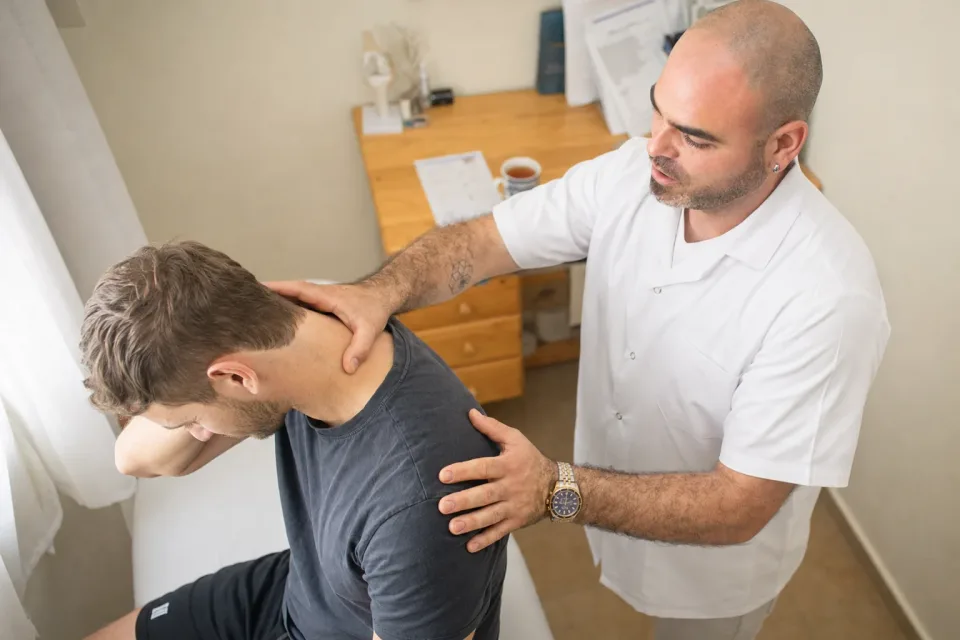
In osteopathy during pregnancy‚ part of the work on the neck‚ shoulders and ribs is done sitting‚ and sometimes lying on your back for a short time with your upper body raised. If a certain position is uncomfortable‚ we simply change it: your body sets the pace.
Exercises and Guidance for Home
Good pregnancy osteopathy does not end on the treatment table. At the end of every session you leave with two or three simple things: a sleeping position with pillows‚ a way to get out of bed by rolling to the side‚ a gentle stretch for the back or a breathing exercise.
There is no need for an hour of practice a day. Small habits that repeat themselves‚ such as sitting with both feet on the floor or switching sides when carrying a bag‚ often make a bigger difference than any exercise.
How to Prepare for Osteopathy During Pregnancy?
It is worth coming in comfortable clothes that let you move‚ and bringing visit summaries‚ anatomy scan results or letters from your doctor if you have them. If you have a pregnancy pillow you like‚ you can bring it too.
Before the session it is worth writing down when the pain appears‚ what eases it and what makes it worse‚ and how it has changed in the last weeks. Details like these help an osteopath during pregnancy to aim the treatment from the very first session.
Pregnancy Osteopathy as Preparation for Birth
In the last weeks many women ask whether it is possible to "prepare the pelvis". Pregnancy osteopathy does not promise a shorter or easier birth‚ but it can help the pelvis‚ the lower back and the diaphragm move more freely‚ and reduce pain that makes it hard to move and sleep.
In osteopathy during pregnancy sessions before the birth‚ I work on the balance between the two sides of the pelvis‚ on the deep muscles of the hip and on the chest‚ and show you positions that are comfortable during contractions: sitting on a ball‚ standing while leaning on support and lying on your side. If you come to the birth already knowing these positions from home‚ you find them faster when you need them.
When the baby is in a breech position‚ the decision about an external version or about the way of giving birth belongs to the doctor alone. Pregnancy osteopathy can help with the pain that comes with this period‚ but it is not a method for turning a baby.
Osteopathy After Birth - The Pelvis‚ the Back and Getting Back to Routine
After birth the body does not return to its previous state all at once. The ligaments stay relatively loose for several months‚ the abdominal and pelvic floor muscles get stronger gradually‚ and at the same time a new kind of physical work begins: lifting‚ carrying and breastfeeding dozens of times a day.
Osteopathy after birth suits you when pelvic pain does not pass‚ when the lower back or tailbone hurts when sitting‚ or when new pain appears in the neck and shoulders. After a vaginal birth you can come as early as the first weeks‚ and after a cesarean section you wait for the scar to heal and for your doctor's approval‚ usually about six weeks.
Back Pain After Birth and Carrying Your Baby
Back pain after birth often comes from the new habits: bending over the crib‚ holding the baby on one hip‚ breastfeeding with a rounded back and carrying a car seat in one hand. Pain in the pelvis and lower back after birth also comes from the fact that the abdominal muscles do not yet support you as before.
When you see an osteopath postpartum‚ I work on the back‚ the pelvis and the chest‚ and check together with you how you lift‚ breastfeed and carry. A small change‚ such as a nursing pillow at the right height or a carrier that spreads the weight over both shoulders‚ takes a lot of load off your day.
When there is a separation of the abdominal muscles‚ urine leakage or a feeling of heaviness in the pelvic floor‚ the right address is a pelvic floor physiotherapist‚ and the two treatments can work well together.
Pelvic Pain After Birth
For some women pelvic pain that started in pregnancy continues after the birth‚ and for others it appears only afterward‚ mainly after a long labor‚ an instrumental delivery or a birth in which the legs were held apart for a long time. The pain is felt in the pubic bone‚ the back of the pelvis or the tailbone‚ and gets worse when walking‚ lifting the baby and sitting.
Osteopathy after birth works on balancing the pelvis‚ the muscles around it and the lower back‚ gently and at a pace that suits a body that is still healing. Lower back pain after birth also often improves when the pelvis moves symmetrically again.
Your Baby Is Welcome Too
I also treat babies from their first weeks of life‚ so a mother and baby often come to the same clinic. If your baby prefers one side‚ finds it hard to feed on a certain side or does not settle‚ you can read about my work as a baby osteopath and check whether gentle treatment suits your baby too.
When Should You See a Doctor First and Not an Osteopath During Pregnancy?
Most pain that brings women to pregnancy osteopathy is mechanical and familiar‚ but there are signs that require you to contact your doctor‚ your midwife or the labor ward immediately‚ and not to have hands-on treatment. In these situations pregnancy osteopathy is not the right address:
- Vaginal bleeding or leaking fluid.
- Regular contractions before week 37‚ or strong and continuous abdominal pain.
- Fewer baby movements.
- A strong headache‚ blurred vision or sudden swelling of the face and hands.
- Swelling‚ warmth and pain in one calf.
- Fever‚ burning when you urinate or pain in the side of the lower back on one side.
- Loss of sensation in the groin area‚ weakness in a leg or difficulty controlling urine.
- A fall or a blow to the belly.
After the birth too‚ fever‚ redness or discharge from the scar‚ bleeding that increases and strong pain in a leg require a medical check-up. An osteopath during pregnancy and after birth has to know when to treat and when to send you to a doctor‚ and whenever in doubt I prefer to send you for a medical check-up rather than treat.
Frequently asked questions
Is Osteopathy Safe During Pregnancy?
When it is done by an osteopath who works with pregnant women‚ with a gentle touch and no pressure on the belly‚ alongside regular medical follow-up‚ pregnancy osteopathy is considered a conservative and safe treatment. It is important to tell me about any diagnosis‚ complication or instruction you have received from your doctor.
From Which Week Can I Start Osteopathy During Pregnancy?
You can come in any week‚ including the first trimester‚ when the treatment is especially gentle and coordinated with your medical follow-up. Most women come in the second or third trimester‚ when the load on the back and pelvis increases.
In Which Position Does a Pregnancy Osteopath Work?
Mainly lying on your side with pillows‚ and sometimes sitting. Lying on your belly is not needed‚ and lying on your back is done only for a short time and with your upper body raised‚ to prevent dizziness.
How Many Sessions of Pregnancy Osteopathy Are Needed?
Usually two to four sessions of osteopathy during pregnancy are enough to know whether there is improvement‚ and after that you come as needed. If there is no change after a few sessions‚ we stop and reassess instead of continuing endlessly.
Does Osteopathic Treatment in Pregnancy Hurt?
It shouldn't. Osteopathic treatment in pregnancy is gentle: there may be pleasant pressure in tight areas‚ and if something is uncomfortable‚ I change the technique or the position. After the treatment you may feel slightly tired or sensitive for a short time.
Can I Be Treated in a High-Risk Pregnancy?
It depends on the reason. In a high-risk pregnancy‚ on prescribed bed rest or with a low-lying placenta‚ you first get approval from your doctor‚ and sometimes it is better to postpone osteopathy during pregnancy. I ask about this at every session.
What Is the Difference Between Pregnancy Massage and Osteopathy?
Pregnancy massage focuses on relaxation and releasing muscles. A pregnancy osteopath also checks the movement of the joints‚ the pelvis and the spine and looks for the source of the load‚ so it is especially suitable when there is a focused pain that keeps coming back.
What Is the Difference Between Physiotherapy in Pregnancy and Osteopathy?
Physiotherapy in pregnancy‚ and especially pelvic floor physiotherapy‚ focuses on exercise and strengthening. Pregnancy osteopathy works mainly through hands-on touch on the mobility of the tissues and joints. The two complement each other‚ and I refer to physiotherapy when needed.
When Can I Start Osteopathy After Birth?
After a vaginal birth you can come as early as the first weeks‚ when you feel generally well. After a cesarean section you usually wait about six weeks‚ until the scar has healed and your doctor has approved.
Does Pregnancy Osteopathy Help With Shortness of Breath and Rib Pain?
In the last months the uterus pushes upward‚ and the diaphragm and lower ribs lose some of their movement. Gentle work on the chest‚ the diaphragm and the upper back can ease the feeling of pressure. Sudden or severe shortness of breath requires a medical check-up.
Can I Come Even Without Pain?
Yes. Some women come for one or two sessions of pregnancy osteopathy before the birth to check the mobility of the pelvis and back and to learn positions for the time of contractions‚ even without a specific pain. If the examination is normal‚ we do not continue with treatments just to be on the safe side.
Can I Come With My Baby?
Yes. When you come for osteopathy after birth‚ your baby can be with you in the room‚ and we can stop for breastfeeding or soothing during the session.
Does Insurance Cover Pregnancy Osteopathy?
Some private insurance companies refund part of the cost of osteopathy during pregnancy. It is worth checking your policy in advance for the terms and which documents are needed.
Table of Contents
- What Is Pregnancy Osteopathy and Why Does It Suit This Time?
- Osteopathy During Pregnancy - Why Is It Considered Gentle and Safe?
- A Pregnancy Osteopath Alongside Your Doctor and Midwife
- Back Pain and Other Pain in Pregnancy - What Can Osteopathy During Pregnancy Help With?
- In Which Trimester Does Pregnancy Osteopathy Start?
- The First Trimester - Gentleness and Coordination With Your Doctor
- The Second Trimester - The Most Comfortable Time for Most Women
- The Third Trimester - Relief and Preparation for Birth
- Common Pains That Bring Women to an Osteopath During Pregnancy
- Back Pain in Pregnancy
- Pain in the Back of the Pelvis and the Buttocks
- Tailbone Pain
- Groin Pain
- Symphysiolysis - Pain at the Front of the Pelvis
- The Pubic Bone and the Front Joint of the Pelvis
- The Pelvis Widening Toward Birth
- Leg Pain‚ Cramps and Swelling
- What Does Treatment With a Pregnancy Osteopath Look Like?
- Lying on Your Side and Sitting - The Treatment Positions
- Exercises and Guidance for Home
- How to Prepare for Osteopathy During Pregnancy?
- Pregnancy Osteopathy as Preparation for Birth
- Osteopathy After Birth - The Pelvis‚ the Back and Getting Back to Routine
- Back Pain After Birth and Carrying Your Baby
- Pelvic Pain After Birth
- Your Baby Is Welcome Too
- When Should You See a Doctor First and Not an Osteopath During Pregnancy?
- Frequently asked questions