
Pubic Symphysis - Treatment for Front Pelvic and Groin Pain
23 min read
Does every step‚ every climb up the stairs or every turn in bed come with a sharp pain over the pubic bone? Is it hard to get into the car‚ put on trousers standing up or stand on one leg without your pelvis "screaming"? Did the pain start in pregnancy‚ after the birth or from sports training‚ and are you looking for treatment that eases it without making it worse?
I am Roman Kibler‚ an osteopath (D.O) at my clinic in Kiryat Tivon‚ and I treat pain at the front of the pelvis with gentle techniques that look at the pelvis‚ the back and the hips as one system and are suitable in pregnancy too.
Leave your details or call me‚ and together we will check what is loading the front joint of your pelvis and how to ease it gently and step by step!
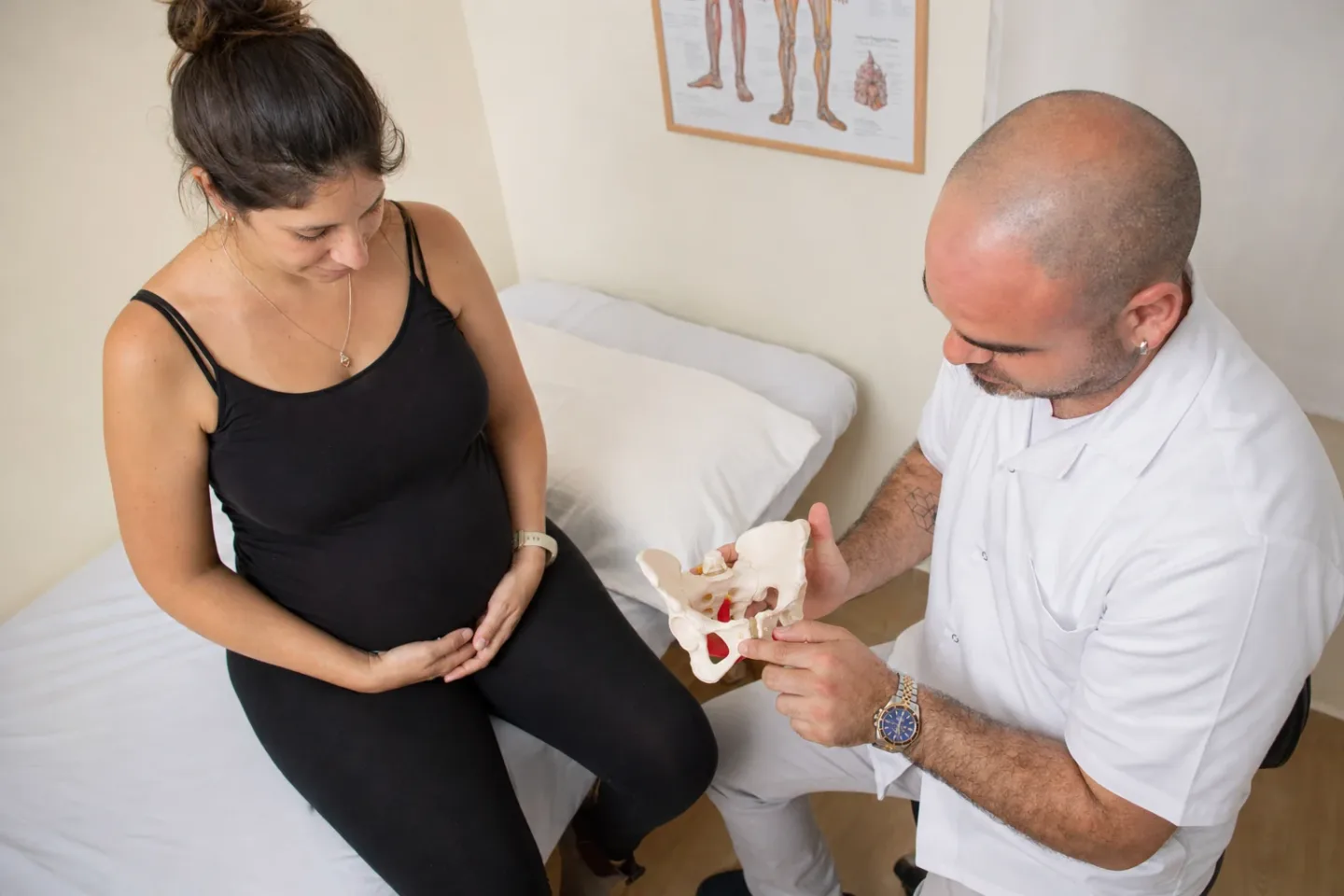
The pubic symphysis is the front joint of the pelvis‚ which joins the two pubic bones at the center of the front of the body. It is a strong cartilage joint whose job is to keep the pelvis stable and connect its two sides while you stand‚ walk‚ change position and carry weight.
Pain in this area is best known from pregnancy‚ but it also appears after the birth‚ in athletes whose sport involves kicking‚ running and changes of direction‚ and sometimes after a fall or unusual load. Treating the symphysis pubis starts with understanding what loads the joint‚ not just with trying to calm the painful spot.
It is important to know that not all front pelvic pain comes from this joint. When the pain is focused over the pubic bone and gets worse with movements that separate the legs or shift weight from side to side‚ it is worth checking this possibility properly.
What Is the Pubic Symphysis and Why Does It Hurt?
The pelvis is built like a ring: the two hip bones join the sacrum at the back‚ and at the front they join each other through the pubic symphysis. Between the ends of the two bones there is a disc of cartilage‚ surrounded by strong ligaments that keep it stable.
In simple anatomical terms‚ the pubic bone is the bone itself‚ and the symphysis is the joint between its two halves. This is not a joint designed to move freely like the shoulder or the hip; it allows only a very small movement that absorbs load when you walk and run.
How Does the Pubic Symphysis Work in Movement?
With every step your weight passes from one leg to the other‚ and the two sides of the pelvis move slightly against each other. The pubic symphysis absorbs this small shift‚ and thanks to the cartilage and the ligaments it brings the ring back to stability with every new step.
When you stand on one leg‚ climb a step or kick a ball‚ the forces on the joint increase‚ because one side carries all the weight and the other side "hangs". That is why single-leg actions hurt the most when the symphysis pubis is sensitive.
Why Does the Front Joint Become Sensitive?
Pubic symphysis pain usually appears when the load on the joint rises‚ or when the stability around it drops. In pregnancy this happens because the ligaments soften and weight increases‚ and in athletes because of the repeated pull of the abdominal and inner thigh muscles on both sides of the pubic bone.
In many people with pubic symphysis pain‚ one side of the pelvis works more than the other‚ the lower back compensates or the hips are limited in movement. The unbalanced load concentrates in the pubic symphysis‚ which is the meeting point of the two sides of the ring.
Who Suffers from Pubic Symphysis Pain?
The groups in which the pain is more common:
- Pregnant women‚ mainly in the second and third trimesters.
- Women after the birth‚ especially after a long labor or the birth of a large baby.
- Athletes in sports with kicking‚ sprints and changes of direction‚ such as football‚ running and hockey.
- People who have had a fall on the pelvis or a direct injury.
- People with a marked difference between the two sides of the body‚ for example after an old hip or knee injury.
Symptoms of Pubic Symphysis Pain
Pubic symphysis pain tends to appear at the front of the pelvis‚ over the pubic bone or slightly to the sides‚ and sometimes it spreads to the inner thigh‚ the groin or the lower abdomen. It can feel like pressure‚ pulling‚ stabbing‚ burning or a sense of instability.
Actions that usually make pubic symphysis pain worse:
- Walking‚ especially with long or fast strides.
- Going up and down stairs.
- Standing on one leg‚ for example when putting on trousers or shoes.
- Getting in and out of the car.
- Turning over in bed and moving from lying to sitting.
- Spreading the legs‚ kicking or a sharp change of direction.
Some people with symphysis pubis pain feel a "click" or a grinding sensation in the area when they walk. For some the pain appears mainly at the end of the day‚ while for others moving between positions is the main difficulty.
Pain on One Side or Both Sides
Some people feel pubic symphysis pain exactly in the center‚ over the pubic bone‚ and some feel it mainly on one side‚ spreading to the inner thigh on the same side. One-sided pain often suggests that one side of the pelvis works harder or moves differently from the other.
This distinction matters for the examination and the treatment‚ because it points to the areas that need releasing or strengthening. Pain that moves from side to side or spreads to many areas calls for a wider examination.
Symphysis Pubis Pain at Night
Many people with pubic symphysis pain say the hardest part comes at night. Turning from side to side means moving the two sides of the pelvis at different moments‚ and when the pubic symphysis is irritated‚ this movement triggers a sharp pain that wakes you up.
A pillow between the knees‚ turning with the knees together and moving slowly from side to side help a great deal. Night pain that is not related to movement and does not change in any position is not typical‚ and calls for a medical workup.
It is also worth noticing the pattern over the week. Pain that gets worse after especially active days and calms down after rest fits mechanical load‚ while pain that is not related to activity at all needs a broader workup.
Pubic Symphysis Pain in Pregnancy
In pregnancy‚ pubic symphysis pain usually starts gradually‚ as a feeling of pressure or pulling‚ and gets worse as the weeks go on. Many women describe difficulty turning over in bed at night and needing to "hold" the pelvis in order to move.
Women often search for "pubic symphysis pain pregnancy" when the pain appears together with pain in the groin‚ the inner thigh or the lower back. When groin pain during pregnancy appears‚ it is important to check whether the source is the front joint‚ the adductor muscles of the thigh‚ the ligaments of the uterus or the hip joints.
Symptoms in Athletes
In athletes‚ pubic symphysis pain usually appears gradually‚ at first only after training and later also while running‚ kicking or sprinting. It is felt over the pubic bone and in the groin‚ and sometimes more on one side than the other.
A condition in which the joint and the pubic bone around it are irritated by repeated load is called osteitis pubis. Telling it apart from pain in the adductor tendon‚ an inguinal hernia or a problem in the hip joint is done in the examination.
Symptoms After the Birth
After the birth‚ pain in the symphysis pubis can last for a few weeks‚ especially if there was pain already in pregnancy. In most cases it improves gradually as the ligaments regain their stability.
Very strong pubic symphysis pain immediately after the birth‚ real difficulty standing or walking‚ or a feeling of a "gap" at the pubic bone call for a medical examination. In rare cases the pubic symphysis separates more than usual during the birth‚ and this is a condition handled by the medical team.
The Pubic Symphysis in Pregnancy and Symphysiolysis
In pregnancy‚ under the influence of hormonal and mechanical changes‚ the ligaments around the pelvis become softer and more flexible. This is a natural process that prepares the body for the birth‚ and during it the gap at the pubic symphysis grows slightly.
The term symphysiolysis describes pain or instability around the symphysis pubis‚ mainly in pregnancy or after the birth. It does not always mean a significant separation of the bones‚ and in most cases the pain comes from a combination of local sensitivity‚ mechanical load and changes in stability.
When the pain makes walking‚ stairs or turning in bed hard‚ you will find a practical guide to everyday relief and to preparing for the birth in the article on relief for symphysiolysis. Treatment of the pubic symphysis in pregnancy focuses on reducing load‚ improving the mobility of the pelvis and the back and guidance for everyday movement.
What Counts as a Natural Change and What Needs Treatment?
The pelvis does not "open" all at once. The hormonal change starts in the first weeks‚ and the mechanical load grows over time‚ so stretching sensations‚ mild discomfort and strain after a long day are a familiar part of pregnancy.
Knowing when the pelvis widens in pregnancy matters precisely because it helps tell natural adaptation apart from a load that needs help. Sharp pain‚ limited walking‚ difficulty putting weight on a leg or pain that gets worse quickly are not "a normal part of pregnancy"‚ and a natural change should not stop you from functioning day to day.
The Symphysis Pubis During and After the Birth
In most cases pain at the symphysis pubis does not prevent a vaginal birth‚ but it is worth preparing for it. Tell the team in the delivery room about the pain and ask them to check in advance how far you can spread your legs without pain‚ so that this range is not exceeded during the birth.
Positions such as lying on your side or kneeling on all fours sometimes reduce the load on the pubic symphysis. After the birth you start moving gradually‚ using the same habits that helped in pregnancy: getting up through your side‚ short steps and carrying the baby symmetrically.
Treatment of the pubic symphysis after the birth also includes guidance for breastfeeding and carrying in positions that do not load the pelvis. A nursing pillow‚ symmetrical sitting and switching sides help no less than any exercise.
The Pelvis as a Ring: the Front‚ the Back and the Buttocks
Since the pelvis is one ring‚ pain at the front often appears together with pain at the back. What doctors call posterior pelvic pain in pregnancy is felt over the joints between the sacrum and the hip bones‚ and sometimes spreads to the buttocks and the thigh.
The back and the legs are affected too. Many women with back pain during pregnancy also have leg pain‚ and both are often linked to the same load on the pelvis‚ so a good examination checks the front of the pelvis‚ its back and the lower back together.
Some women also have pain around the tailbone‚ mainly when sitting. Here too‚ tailbone pain during pregnancy is treated with a similar approach of reducing load‚ but its source is different‚ so it is important to identify each area separately.
The Pubic Symphysis in Athletes
In athletes‚ the load on the pubic symphysis comes mainly from the repeated pull of two muscle groups: the abdominal muscles‚ which attach to the pubic bone from above‚ and the adductor muscles of the thigh‚ which attach to it from below. When these forces are out of balance‚ the joint absorbs repeated pulls.
Sports with kicking‚ sprints‚ sudden stops and changes of direction‚ such as football‚ basketball‚ hockey and running‚ put particular load on the area. A restriction in the movement of the hip joints or the lower back also increases the load on the symphysis pubis.
Osteitis Pubis‚ Tendons and Other Sources of Pain
With long-term load‚ the bone around the pubic symphysis and the tendons that attach to it can become irritated. Irritation at the point where a tendon attaches to the bone is called enthesitis‚ and it can also appear in the tendons of the inner thigh and the abdominal muscles.
Pain at the side of the hip‚ over the outer bony bump‚ usually comes from another source. Hip bursitis‚ for example‚ shows up as pain when lying on your side and when climbing stairs‚ so the exact location of the pain helps tell these conditions apart.
Strengthening and Prevention
Strengthening the deep abdominal muscles‚ the adductors and the buttock muscles is a central part of prevention. Exercises such as squeezing a ball between the knees‚ a bridge on your back and stabilizing exercises lying on your side build stability around the pubic symphysis without loading it.
Risk Factors in Athletes
Not every athlete who kicks or runs will develop pubic symphysis pain. The factors that often appear in those who do suffer from it include:
- A sudden rise in training load‚ for example at the start of a season.
- Limited mobility of the hip joints‚ especially in internal rotation.
- An imbalance between the abdominal muscles and the inner thigh muscles.
- A lot of training on hard surfaces or a sudden change of surface.
- Not enough rest between training sessions and games.
Identifying these factors is a central part of treating the pubic symphysis in athletes. Without changing them‚ the pain tends to come back even after a long period of rest.
Returning to Sport After Pubic Symphysis Pain
With pubic symphysis pain‚ the return to sport is gradual‚ guided by the pain and not by a fixed timetable. You usually start with walking and easy running in a straight line‚ and only later add changes of direction‚ sprints and kicks.
At the same time we work on the balance between the abdominal and inner thigh muscles‚ on the mobility of the hip joints and on the stability of the pelvis. Returning too fast is one of the most common reasons the pain comes back after a good period.
How Is Pubic Symphysis Pain Diagnosed?
The diagnosis starts with a conversation: where the pain is‚ when it started‚ which actions make it worse and whether it is related to walking‚ stairs‚ sleep or training. I also ask about the stage of pregnancy‚ earlier births‚ physical activity‚ earlier back pain‚ injuries and your general medical condition.
Then I gently check the movement of the back‚ the pelvis and the hips and the way you shift weight from side to side. Gentle pressure over the pubic symphysis‚ standing on one leg and strength tests of the adductor muscles help show whether the source is the joint itself.
What Should You Tell Me in the Examination?
Come with answers to a few simple questions: when the pain started‚ whether a specific event came before it‚ which actions make it worse and at what time of day it is strongest. In pregnancy it is important to mention the week of pregnancy‚ earlier births and any recommendation from your treating doctor.
If you have had X-rays or other tests‚ bring them. Athletes should describe their training routine over the last few months‚ because a change in load is often the key to understanding symphysis pubis pain.
When Is Imaging Needed?
In most cases the diagnosis of mechanical pubic symphysis pain is clinical‚ that is‚ based on a conversation and a physical examination. In pregnancy‚ unnecessary tests are avoided.
The doctor may refer you for an X-ray‚ an ultrasound or an MRI when a significant separation of the joint is suspected after the birth or after an injury‚ in an athlete whose pain does not improve‚ or when the picture does not fit ordinary load.
Conditions That Need to Be Ruled Out
Pain at the front of the pelvis and in the groin can have several sources‚ so before treating the pubic symphysis I also check these possibilities:
- An inguinal hernia‚ which sometimes shows up as a bulge that appears with effort or coughing.
- A problem in the hip joint‚ with deep pain in the groin and limited hip rotation.
- An injury to a tendon or to an adductor muscle of the thigh.
- A urinary tract infection‚ with burning or frequent urination.
- Pain spreading from the lower back.
Treatment for the Pubic Symphysis: The Options
There is no single treatment that suits everyone. Treatment of pubic symphysis pain usually combines reducing load‚ adapted movement‚ gradual strengthening and sometimes external support‚ and the choice depends on the source of the pain‚ the stage of pregnancy or the sport.
Medical and Conservative Treatment
Medical treatment includes diagnosis‚ ruling out conditions that need a different intervention‚ a recommendation for relative rest and less load‚ and sometimes medication that suits the condition‚ in pregnancy only by a doctor's decision. Physiotherapy helps strengthen the stabilizing muscles and teaches correct movement.
A good belt for pubic symphysis pain is worn low‚ around the upper part of the thigh bones and over the pubic bone‚ not around the waist. It should give a feeling of stability without pressing on the belly‚ and it is usually worn mainly when walking and standing and taken off at rest.
A pelvic belt can ease things for some pregnant women and some athletes‚ mainly when walking and standing. In especially hard cases‚ when walking itself is very painful‚ the doctor may recommend crutches for a while.
Osteopathic Treatment for the Pubic Symphysis: What Does It Include?
Osteopathic treatment for the pubic symphysis focuses on reducing load‚ not on force. I check the mobility of the lower back‚ the joints at the back of the pelvis‚ the hips‚ the diaphragm and the muscles around the pelvis‚ and look for the areas where extra load makes the front joint work too hard.
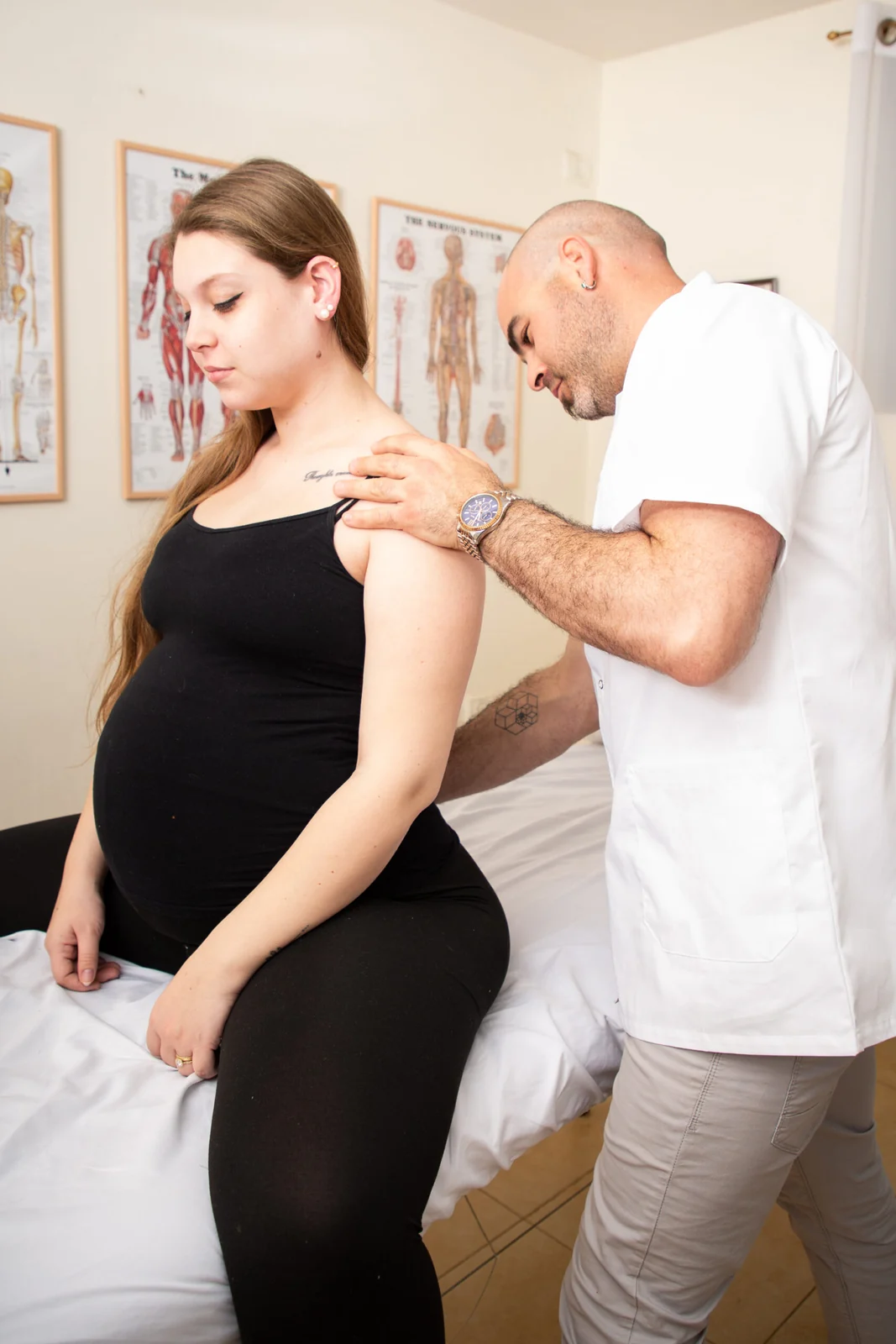
The treatment includes gentle manual work on the soft tissues‚ improving mobility in nearby joints‚ balancing the two sides of the pelvis and reducing tension in the adductor muscles and the lower abdominal muscles. In pregnancy it is done in comfortable positions‚ such as lying on your side‚ with techniques suited to the week of pregnancy.
Women looking for osteopathy during pregnancy usually come because of pain at the front of the pelvis‚ in the lower back or in the buttocks‚ and sometimes several of these together. At every session I check what has changed since the previous one and adjust the treatment to the week of pregnancy and to how you feel that day.
With pubic symphysis pain‚ the guidance is sometimes the most important part: how to turn over in bed‚ how to get up from sitting‚ how to get into the car and how to avoid spreading the legs wide. Such treatment does not promise that the pain will disappear immediately‚ but it can improve function and reduce local irritation.
The first treatment takes about an hour‚ and follow-up treatments about 45 minutes. Some private insurance companies refund part of the cost.
Treating the Symphysis Pubis in Stages
In the acute stage‚ when every step hurts‚ the aim is to calm the pubic symphysis: less load‚ guidance for safe movement‚ a pelvic belt if it helps and very gentle manual treatment of the surrounding areas. At this stage there is no forceful strengthening and no stretching.
When the pain calms down‚ gentle stabilizing exercises are added gradually‚ along with better mobility of the hips and the back and work on balancing the two sides of the pelvis. For athletes this is also the stage when a return to easy running begins.
In the last stage we build endurance and load: fuller strengthening‚ a return to normal activity and‚ for athletes‚ a graded return to kicking and changes of direction. Treatment of the symphysis pubis that skips stages often ends in a flare-up.
What Do You Feel After the Treatment?
Many people describe a greater sense of stability in the pelvis after the treatment and more comfort when walking and turning in bed. Sometimes mild tenderness or tiredness appears for a day‚ which is a familiar reaction that passes.
If the pain clearly gets worse after a treatment‚ tell me at the next session‚ so I can adjust the techniques and the intensity. In treating the pubic symphysis‚ gentleness is part of the method‚ not a compromise.
How Is Osteopathy Different from Conventional Treatment?
The medical approach is important when it has to be confirmed that there is no other problem‚ or when the pain is very significant. In my view‚ gentle osteopathic treatment does not replace it‚ but adds a look at the way the body spreads load: instead of focusing only on the painful joint‚ I check how the back‚ the hips‚ the back of the pelvis and breathing affect it.
I studied osteopathy for five years‚ including 1,000 clinical hours‚ I have worked as an osteopath at Maccabi Tivi since 2022 and I am a member of the Israeli Osteopathic Association. My experience with pregnant women and with athletes lets me adapt treatment of the pubic symphysis to each situation.
Pubic Symphysis Care at Home
A large part of the relief comes from the way you move during the day. The main principle is simple: keep your legs close together and shift your weight symmetrically.
- Get out of bed with your knees together‚ roll onto your side and only then sit up.
- Turn over in bed "in one piece"‚ with your knees together.
- Get into the car by sitting down first and then bringing both legs in together.
- Put on trousers‚ socks and shoes sitting down.
- Climb stairs slowly‚ and with strong pain put both feet on each step.
- Walk with short‚ controlled steps.
- Avoid carrying weight on one side‚ such as a child on your hip.
The Pubic Symphysis at Work and in Daily Life with Children
If you work standing up‚ lift small children or spend a lot of time in the car‚ you feel the pubic symphysis every hour of the day. Lifting a child from the floor in a wide squat‚ carrying him on your hip and lifting him into a car seat with a twist are among the actions that hurt the most.
Ask an older child to climb onto the sofa or the chair by himself before you lift him‚ carry a small child in front of your body and not on your side‚ and put him into the car while facing the seat. At work‚ a low stool under one foot and switching between sitting and standing reduce the load on the joint.
Sleep and Rest
When you sleep on your side‚ a pillow between your knees and ankles keeps the pelvis in a symmetrical position. Pregnant women also find a pillow under the belly helpful‚ and some find that a mattress that is too soft makes turning harder.
A few minutes of local cold over the pubic bone eases symphysis pubis pain for some people‚ while others prefer heat. Use whatever feels more relieving‚ always through a cloth and never directly on the skin.
Gentle Exercises
With pubic symphysis pain‚ gentle movement is better than complete rest‚ as long as it does not make the pain worse. Exercises that help many people are a gentle tightening of the deep abdominal and pelvic floor muscles‚ a light squeeze of a pillow between the knees while lying down and slow breathing.
If an exercise‚ a stretch or a long walk clearly makes the pain worse‚ it is a sign that the load does not suit you right now. The aim of exercise is a feeling of confidence and movement within a comfortable range‚ not overcoming the pain by force.
What Should You Avoid?
- Spreading the legs wide‚ such as sitting in a straddle or stretching the inner thigh.
- Standing on one leg for a long time.
- Breaststroke swimming‚ in which the legs open to the sides.
- Sports with kicking and changes of direction while the pain is active.
- Lifting heavy loads.
These limits are temporary. As the pain calms down and the muscles around the pelvis get stronger‚ you gradually go back to the actions you avoided‚ and at every stage you check the body's response the next day and not only during the activity itself.
When Should You See a Doctor?
Mechanical pain at the pubic symphysis can be very strong‚ but there are situations in which manual treatment is not enough. See a doctor if the pain comes with any of these:
- In pregnancy: bleeding‚ leaking fluid‚ regular contractions or fewer baby movements.
- Fever‚ burning when urinating or a general feeling of illness.
- Very sharp pain that does not improve with rest or gets worse quickly.
- Real difficulty putting weight on a leg or walking.
- Weakness in the legs‚ reduced sensation or a change in bladder or bowel control.
- Pain after a fall or a direct injury.
- A bulge in the groin that appears with effort.
If the pain does not improve after a few weeks of reduced load and treatment‚ it is time to go back to the doctor and check whether there is another source. Sometimes it turns out that the pain comes from the hip joint‚ a tendon or a hernia‚ and then the treatment changes accordingly.
After the birth too‚ if the pain lasts‚ gets worse or interferes with walking and caring for the baby‚ it is worth having it assessed. In most cases the pain improves with time‚ but it is not right to wait for months without help.
The Bottom Line on Pubic Symphysis Treatment
The pubic symphysis is the central joint at the front of the pelvis‚ and it can become sensitive in pregnancy‚ after the birth‚ in athletes or after an injury. The pain shows up as difficulty walking‚ climbing stairs‚ turning in bed and moving between positions‚ and it sometimes appears together with pain in the back‚ the groin or the hips.
Treatment of the symphysis pubis suits you especially when the pain is related to functional load and there are no signs that call for an urgent medical workup. A combination of gentle manual treatment‚ adjusted load and everyday guidance helps reduce pain‚ improve movement and keep you functioning better‚ also in the busy periods of pregnancy‚ after the birth and when returning to sport.
Frequently asked questions
What is the pubic symphysis?
It is the front joint of the pelvis‚ which joins the two halves of the pubic bone. It is a stable cartilage joint that allows only a very small movement and absorbs load when you walk and run.
Is pubic symphysis pain dangerous for the baby?
No. The pain is related to the load on the mother's pelvis and does not harm the baby. However‚ pain with bleeding‚ contractions or fewer baby movements requires seeing a doctor immediately.
How long does pubic symphysis pain last after the birth?
For most women the pain improves gradually in the weeks and months after the birth. Pain that lasts a long time or limits walking is worth having checked.
Can I have a vaginal birth with symphysis pubis pain?
In most cases yes. Talk to the medical team in advance about comfortable birth positions and about avoiding spreading the legs too wide.
Does a pelvic belt help with pubic symphysis pain?
For many women it eases the pain‚ mainly when walking and standing. The type of belt and how to use it are best adjusted with a professional.
How many treatments does pubic symphysis pain need?
It depends on the source of the pain and on the stage of pregnancy or rehabilitation. Some people feel a change after one or two treatments and for others the relief is more gradual‚ and in pregnancy some women continue with a treatment every few weeks until the birth.
Is osteopathic treatment safe in pregnancy?
Gentle treatment adapted to the week of pregnancy is generally considered safe when there are no warning signs. If there is a complication in the pregnancy‚ consult your treating doctor first.
Can I walk when the front of my pelvis hurts?
Yes‚ even with pubic symphysis pain you can walk‚ with short steps and over distances that do not make the pain worse. If walking clearly increases the pain‚ shorten it and get advice.
Which exercises should I avoid with pubic symphysis pain?
It is best to avoid spreading the legs wide‚ standing on one leg for a long time‚ breaststroke and exercises with kicking or jumping. Stop any exercise that clearly increases the pain.
Will pubic symphysis pain come back in my next pregnancy?
In some women it comes back‚ sometimes earlier. Treatment and guidance from the start of the next pregnancy help reduce the load.
What is the difference between the symphysis pubis and symphysiolysis?
The symphysis pubis is the name of the joint itself. Symphysiolysis is a name that describes pain or instability in the joint‚ mainly in pregnancy and after the birth.
Can athletes keep training with pubic symphysis pain?
Usually you can continue activity that does not cause pain‚ such as easy cycling or adapted strengthening. Fast running‚ kicking and changes of direction are put off until the pain calms down.
Can the pubic symphysis hurt in men too?
Yes. In men the pain appears mainly in athletes in sports with kicking and changes of direction‚ or after a fall or an injury to the pelvis. The examination and the treatment are similar‚ with an emphasis on muscle balance and a graded return to sport.
Can pubic symphysis pain start early in pregnancy?
In some women yes‚ especially from the second pregnancy on or in those who had pelvic pain before. In most women the pain appears in the second or third trimester.
When should I start treatment for the symphysis pubis?
As early as possible. When treatment and guidance start at the first signs‚ it is easier to prevent a flare-up than to calm pain that already limits walking.
Does massage help pubic symphysis pain?
Gentle massage of the surrounding muscles‚ such as the inner thigh‚ the buttocks and the lower back‚ eases things for some people. No direct‚ strong pressure is applied to the joint itself.
Does treatment of the pubic symphysis hurt?
The treatment is gentle and adapted to your level of pain. If a movement or technique hurts‚ tell me straight away and I will change it.
Can I drive with pubic symphysis pain?
In most cases yes‚ as long as you can press the pedals without sharp pain. Getting in and out of the car with both legs together helps a lot.
Do painkillers help with symphysis pubis pain?
They can ease the pain‚ but in pregnancy and in any other medical condition they are taken only on a doctor's advice. They do not replace reducing load and moving correctly.
Can pubic symphysis pain appear without pregnancy or sport?
Yes‚ for example after a fall‚ after surgery in the area‚ with unusual load at work or when there is a marked imbalance between the two sides of the body. In these cases too‚ the examination starts by ruling out other sources of pain.
Can physiotherapy and osteopathy work together?
Yes‚ and this is often the right combination. Osteopathy focuses on mobility and on how load is spread‚ physiotherapy on strengthening and exercise‚ and together they complement each other.
Do I need a doctor's referral for treatment?
You do not have to have one‚ but if you have had tests or X-rays‚ bring them. When there are warning signs‚ I will ask you to have a medical workup first.
Is treatment of the symphysis pubis after the birth different from treatment in pregnancy?
The principles are similar‚ but after the birth strengthening of the abdominal and pelvic floor muscles can be added gradually. The treatment is also adapted to the new load of carrying and breastfeeding.
Table of Contents
- What Is the Pubic Symphysis and Why Does It Hurt?
- How Does the Pubic Symphysis Work in Movement?
- Why Does the Front Joint Become Sensitive?
- Who Suffers from Pubic Symphysis Pain?
- Symptoms of Pubic Symphysis Pain
- Pain on One Side or Both Sides
- Symphysis Pubis Pain at Night
- Pubic Symphysis Pain in Pregnancy
- Symptoms in Athletes
- Symptoms After the Birth
- The Pubic Symphysis in Pregnancy and Symphysiolysis
- What Counts as a Natural Change and What Needs Treatment?
- The Symphysis Pubis During and After the Birth
- The Pelvis as a Ring: the Front‚ the Back and the Buttocks
- The Pubic Symphysis in Athletes
- Osteitis Pubis‚ Tendons and Other Sources of Pain
- Strengthening and Prevention
- Risk Factors in Athletes
- Returning to Sport After Pubic Symphysis Pain
- How Is Pubic Symphysis Pain Diagnosed?
- What Should You Tell Me in the Examination?
- When Is Imaging Needed?
- Conditions That Need to Be Ruled Out
- Treatment for the Pubic Symphysis: The Options
- Medical and Conservative Treatment
- Osteopathic Treatment for the Pubic Symphysis: What Does It Include?
- Treating the Symphysis Pubis in Stages
- What Do You Feel After the Treatment?
- How Is Osteopathy Different from Conventional Treatment?
- Pubic Symphysis Care at Home
- The Pubic Symphysis at Work and in Daily Life with Children
- Sleep and Rest
- Gentle Exercises
- What Should You Avoid?
- When Should You See a Doctor?
- The Bottom Line on Pubic Symphysis Treatment
- Frequently asked questions
