
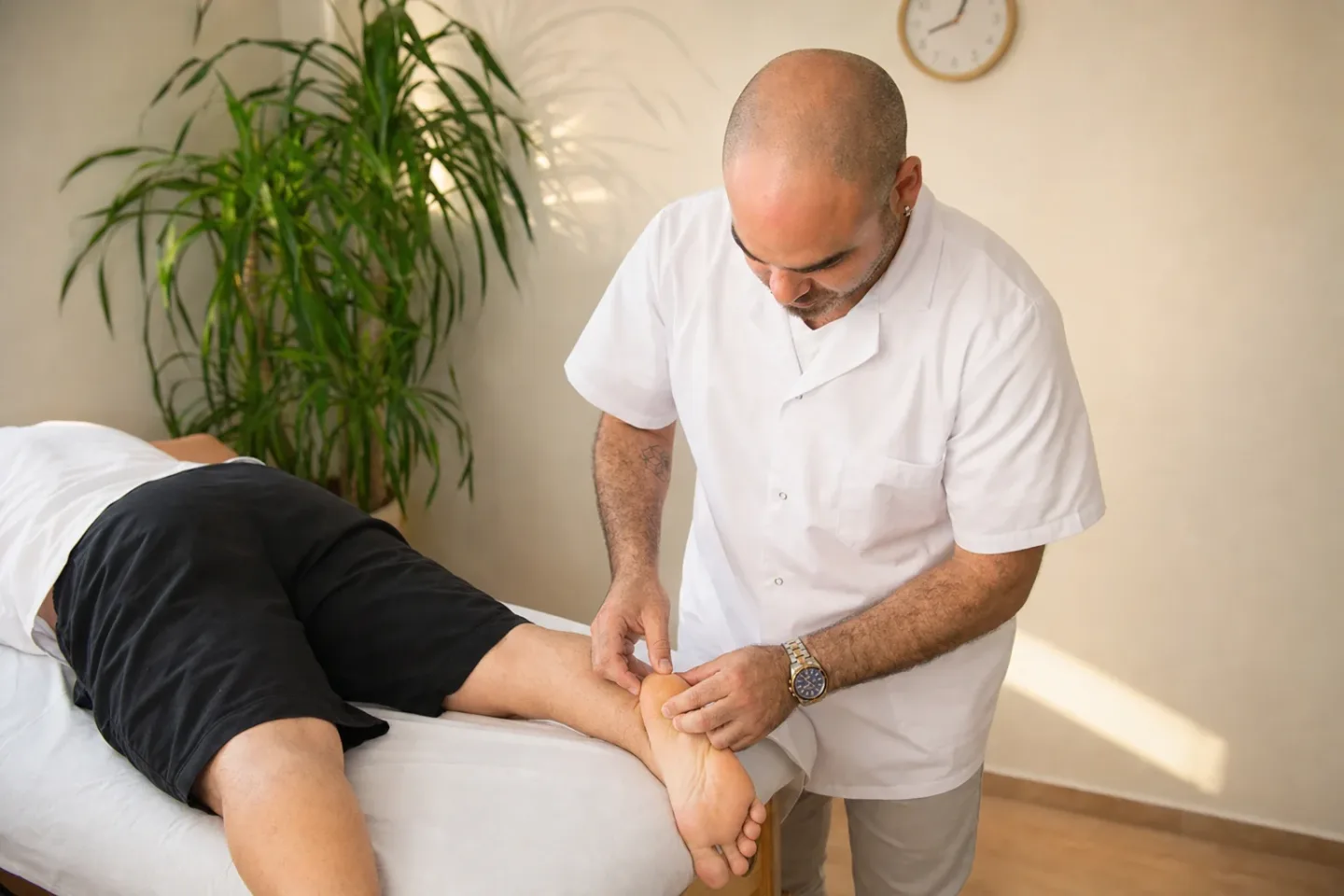
Enthesitis - Pain Where Tendon Meets Bone: What Can Help?
12 min read
Do you feel a sharp pain in your heel with the first steps of the morning? Does it hurt exactly at the spot where the tendon attaches to the bone‚ and does the pain come back every time you try to return to running or long walks? Were you told it is enthesitis‚ and you are not sure what that means or what can really help?
I am Roman Kibler‚ an osteopath D.O. with a clinic in Kiryat Tivon‚ and I examine the whole movement chain that loads the attachment point‚ not only the painful spot‚ and I know when it is right to treat and when to refer you for a medical check first.
Leave your details or call me‚ and I will check with you what is overloading your tendon and how we can ease it!
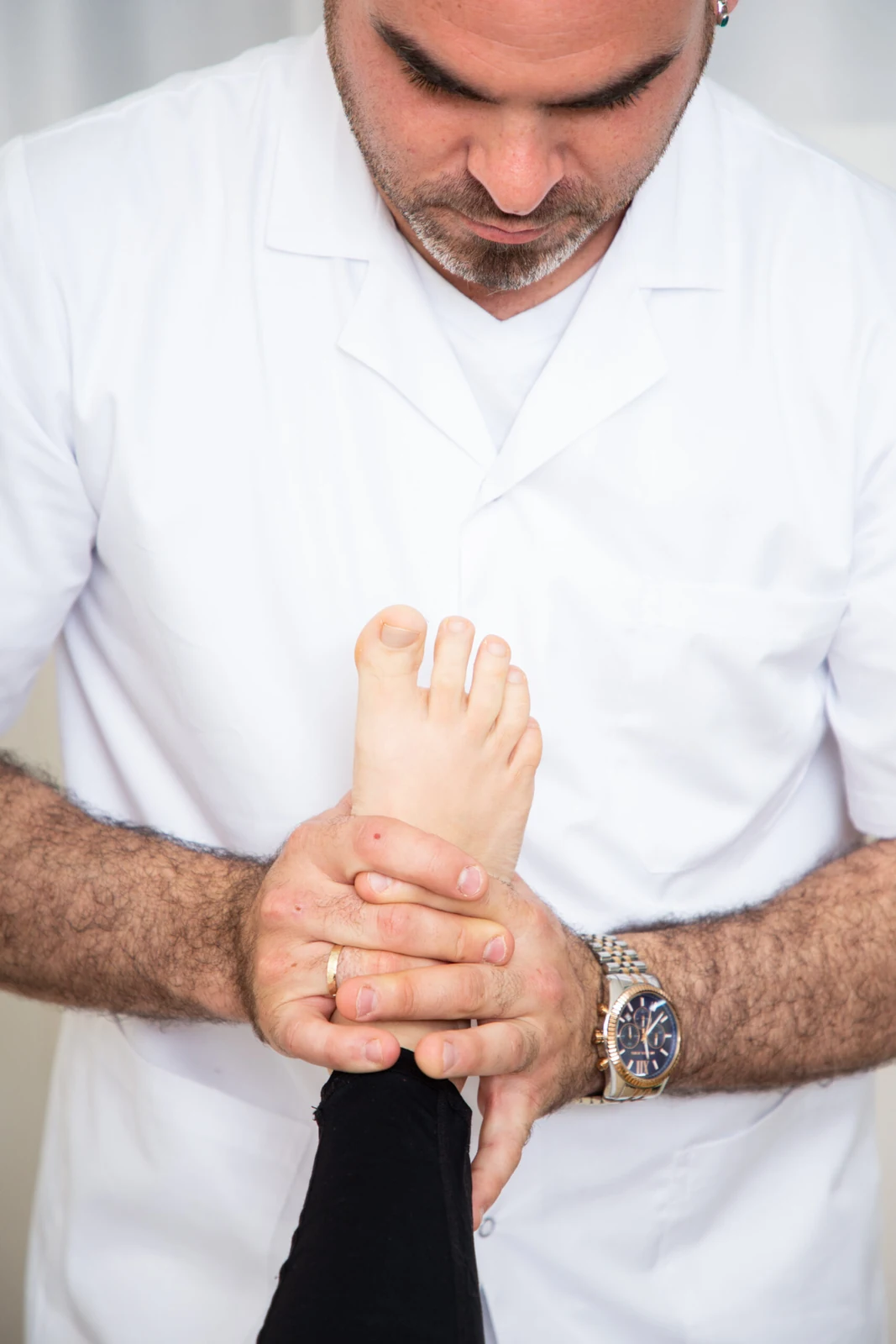
Enthesitis is a condition in which pain appears at the enthesis‚ the point where a tendon‚ a ligament or a sheath of connective tissue attaches to the bone. It is a relatively small area‚ but it carries very large loads when you walk‚ run‚ climb stairs‚ do physical work or repeat the same movement again and again.
When this attachment is irritated‚ overloaded or goes through an inflammatory process‚ you may get local pain‚ tenderness to touch‚ stiffness and sometimes limited movement. In the medical literature you will also meet the term enthesopathy‚ a broader name for disorders of the attachment point‚ and in everyday use the two names often describe the same problem.
What Is Enthesitis and Why Can a Tendon Attachment Hurt?
The enthesis is a transition zone between soft tissue and bone‚ and that is exactly where enthesitis develops. Functionally it has to transmit force: the muscle contracts‚ the tendon pulls‚ and the force passes through the attachment point into the skeleton.
When the load matches what the tissue can handle‚ the body adapts and even gets stronger. When the load is too sudden‚ repeats too often or lands on tissue that is already sensitive‚ enthesitis may develop at the attachment.
The pain does not always come from the tendon itself. Sometimes it is also related to a nearby bursa‚ to connective tissue‚ to a neighbouring joint or to local nerve sensitivity‚ so a diagnosis of enthesitis starts with an accurate understanding of where the pain comes from.
It is important to understand that enthesitis is not always a simple local problem. Sometimes there is a clear mechanical load‚ such as returning to activity too fast or changing shoes‚ and sometimes there is a link to posture‚ to a nearby joint or to an unbalanced movement pattern.
Enthesitis Symptoms: What Does It Feel Like?
In some patients the pain is worse at the start of movement and then eases a little after warming up. In others it gets worse after activity‚ in the evening or on the following day.
Some people feel a very precise pain when the area is pressed‚ while others describe a pulling‚ burning or vague deep sensation around the bone. These differences matter‚ because they help show whether the enthesitis is mainly a mechanical overload‚ an active inflammatory process or pain influenced by several systems together.
Common enthesitis symptoms include:
- Pain focused on the point where a tendon or ligament attaches to the bone
- Tenderness to pressure and sometimes mild swelling over the area
- Stiffness in the morning or after sitting for a long time
- Pain that increases when climbing stairs‚ running or lifting
- Limited movement of the nearby joint
Enthesitis in the Heel and the Achilles Tendon
The heel is one of the most common places for enthesitis. The pain may appear where the Achilles tendon attaches to the heel bone‚ or where the tissues of the sole attach to the bone‚ and it stands out especially in the first steps of the morning. When the problem sits at the insertion of the Achilles tendon itself‚ doctors often call it insertional tendinopathy.
The Achilles tendon continues the calf muscle‚ so a short‚ stiff calf increases the pull on the attachment point. A mild injury to the calf fibres that causes calf muscle pain also changes the way you step for a while and increases the load on the heel attachment‚ so it is worth treating the calf together with the heel.
Enthesitis Around the Knee
The knee is a place where loads from the thigh‚ the lower leg‚ the ankle and the pelvis meet. That is why pain around the knee does not always start in the knee itself‚ and enthesitis can appear where the quadriceps tendon attaches above the kneecap or where the patellar tendon attaches below it.
Sometimes a load from the ankle changes the way you step‚ the hip does not stabilize well‚ or the pelvis does not distribute loads in a balanced way. When the pain is focused around the kneecap‚ it is worth reading about kneecap pain as well‚ because the structure and movement of the kneecap affect the pull of the tendons around it.
Enthesitis in the Pelvis‚ Hip and Shoulder
In the pelvis and the hip the pain can be related to the loads of walking‚ running‚ long sitting or compensation for the lower back. Pain on the side of the hip does not always come from the tendon: sometimes it is an irritated bursa‚ and anyone with this kind of pain will find a detailed explanation on the page about hip bursitis.
In the shoulder‚ tendon attachment points can be affected by repeated movements‚ lifting loads or a posture that increases tension around the shoulder girdle. If the chest is stiff‚ breathing is shallow or the upper back is restricted‚ the shoulder has to work harder‚ and an attachment that is already irritated is more likely to turn into enthesitis.
In many cases it is hard to tell enthesitis in the shoulder apart from inflammation along the tendon itself. The differences are explained in detail in the article on shoulder pain and tendinitis‚ and both conditions call for an examination of the whole shoulder girdle.
Causes of Enthesitis: Mechanical Load or an Inflammatory Process
The causes fall broadly into two groups: a mechanical load on a specific attachment point‚ and a general inflammatory process that affects several attachment points in the body. The distinction between them sets the whole direction of treatment for enthesitis.
Enthesitis Caused by Repeated Mechanical Load
One of the common causes of pain at the attachments is repeated load. It happens to runners‚ people who train in the gym‚ people who stand for many hours‚ people who do physical work‚ and anyone who suddenly changes the type of activity they do.
Even a change that seems small‚ such as new shoes‚ a different training surface or a return to activity after a period of rest‚ can change how the load is shared between the tendons and ligaments. The enthesis does not like sharp jumps in load‚ and many cases of enthesitis start right after one: the tissue can adapt‚ but it needs time.
When a person keeps loading despite the pain‚ the body may respond with stiffness‚ sensitivity and muscle guarding. This is how enthesitis that started as a mild irritation turns into stubborn pain that keeps coming back.
Enthesitis as Part of an Inflammatory Disease
Enthesitis is also one of the known signs of inflammatory diseases from the spondyloarthritis family‚ such as psoriatic arthritis and ankylosing spondylitis. Enthesitis in psoriatic arthritis and in similar conditions usually appears at several attachment points‚ comes with long morning stiffness and is not always linked to a specific activity.
In these cases the diagnosis belongs to a doctor‚ and sometimes to a rheumatologist. Manual treatment does not replace medical treatment of an inflammatory disease‚ but it can be combined with it when the treating doctor approves.
When Does Enthesitis Need a Medical Check?
Not every pain at a tendon attachment needs blood tests or imaging‚ but there are situations in which it is important to see a doctor before any other treatment. Signs that justify a medical check:
- Pain that appears in several areas at the same time
- Long morning stiffness and clear swelling
- Pain that gets worse at rest or at night
- Fever‚ weight loss or unusual tiredness
- A background of psoriasis‚ inflammatory bowel disease or inflammatory disease in the family
- Pain that started after an injury‚ or real difficulty putting weight on the foot
When a general inflammatory process is suspected‚ blood tests can help the doctor see whether there are signs of inflammatory activity in the body. A result of high ESR does not diagnose enthesitis or any particular disease on its own‚ but it can be part of a wider picture that includes symptoms‚ a physical examination and other markers of inflammation.
That is why a blood test should not be read separately from the clinical picture‚ and you should not assume that every tendon pain is only "overload" when there are systemic signs. Sometimes the doctor will also refer you for an ultrasound‚ which shows the changes of enthesitis at the attachment areas well.
Osteopathic Enthesitis Treatment
When enthesitis comes mainly from mechanical load or unbalanced function‚ osteopathic treatment can be part of a conservative process. The aim is not to "erase inflammation" by touch‚ but to reduce unnecessary loads‚ improve movement and give the tissue better conditions for healing.
Osteopathic treatment looks at the body as one movement system‚ in which joints‚ muscles‚ tendons‚ breathing‚ posture and movement habits all influence each other. Instead of focusing only on the painful area‚ I look for what keeps the load on the enthesis going: the walking pattern‚ stiffness in the hip‚ a restricted ankle‚ tension in the back or a load that repeats in daily activity.
What Happens in the First Treatment?
If you are looking for an osteopath in Kiryat Tivon because of recurring pain at a tendon attachment‚ the first treatment lasts about an hour and includes questions about your medical background‚ a functional examination of the whole movement chain and tailored manual treatment. Follow-up treatments are shorter‚ about 45 minutes‚ and focus on progress and on adjusting the load.
The treatment may include gentle work on soft tissues‚ moving joints within a comfortable range‚ improving the mobility of nearby areas and guidance for a gradual return to activity. I studied osteopathy for five years‚ including 1,000 clinical hours‚ and since 2022 I have worked as an osteopath at Maccabi Tivi.
In many cases the guidance matters no less than the hands-on work. If a patient keeps doing the same activity that irritates the area‚ the pain may return even after a successful treatment‚ so we check together what can be changed: training load‚ rest time‚ technique‚ shoes and the work environment.
Caution in Treating Enthesitis and Warning Signs
Manual treatment has to fit the patient's condition. Not every case of enthesitis suits direct touch‚ not every inflammation suits mobilization‚ and not every patient needs the same technique.
When there is very sharp pain‚ significant swelling‚ local heat‚ an active inflammatory disease or the use of certain medications‚ I approach it with great care. If you want to understand the risks of osteopathy in depth‚ that page explains what is safe and when I do not treat.
A professional osteopath does not promise that a treatment suits everyone and does not use strong techniques when the body is in a sensitive state. When the picture is not clear‚ the right step is to refer you to a doctor before going on.
What Can You Do at Home with Enthesitis?
At first it is worth reducing the activity that makes the pain worse‚ but not necessarily stopping all movement. Complete rest for a long time is not always the answer‚ because the tissue needs graded movement to get back to normal function.
You can start with comfortable ranges‚ easy walking if it does not make things worse‚ and gentle movement. If a certain activity causes a clear flare that lasts for hours or into the next day‚ that is a sign the load was too high.
It is not advisable to put strong stretches on a painful area just because "a tendon needs stretching". Sometimes too much stretching of a sensitive area actually increases the irritation‚ and strong massage directly on the attachment point is not right for every case of enthesitis either.
At the same time‚ it is worth checking simple everyday factors:
- Worn-out shoes or a sudden change in the type of shoe
- The surface you train on and the height of your chair at work
- How long you stand without a break and your weekly training volume
- Movement habits that repeat themselves‚ such as carrying a bag on the same shoulder
Returning to Activity After Enthesitis
The return to activity after enthesitis should be gradual. If the pain has eased with rest‚ that still does not mean the tissue is ready for a full load straight away.
It is best to start with a small volume‚ increase the load gradually‚ watch how you respond on the next day and not rush back to running‚ jumping or heavy strength training. With enthesitis‚ a good measure is not only whether it hurt during the activity‚ but whether there was a flare afterwards.
If you train regularly‚ it is worth reviewing the whole training plan: recovery days‚ how fast the load goes up‚ the balance between the two sides and your technique. If you do not train‚ a return to long walks or physical work is also a significant load‚ and getting back to movement should respect the tissue rather than test it by force every single day.
The Bottom Line: Pain at a Tendon Attachment Needs a Wide View
Enthesitis is pain or irritation at the place where a tendon‚ a ligament or soft tissue attaches to the bone. It can appear after repeated load‚ a change in activity‚ movement compensation or as part of a wider inflammatory picture‚ so it is important to tell a mechanical overload apart from signs that need a medical check.
When the picture fits conservative care‚ combining load management‚ gentle manual treatment and a gradual return to activity can help reduce pain and improve function over time. The osteopathic approach to enthesitis treatment does not replace conventional medicine‚ but adds to it a functional view of the body as one system.
Frequently asked questions
Does enthesitis go away on its own?
When enthesitis comes from a mild mechanical load‚ it often improves with less load and graded movement. When the pain lasts for weeks‚ keeps coming back or appears in several places‚ it is worth finding out the cause rather than waiting.
What is the difference between enthesitis and tendinitis?
Tendinitis describes irritation or inflammation along the tendon itself‚ while enthesitis is focused on the point where the tendon or ligament attaches to the bone. Sometimes the two conditions appear together‚ and the examination helps show where the core of the problem is.
Is enthesitis a sign of an inflammatory disease?
Not always. For many people it is a purely mechanical load‚ but when there is pain at several attachment points‚ long morning stiffness or a background of psoriasis‚ it is right to see a doctor for an inflammatory work-up.
Which tests help diagnose enthesitis?
The diagnosis starts with questions and a physical examination. If needed‚ the doctor can refer you for blood tests‚ an ultrasound or other imaging that shows changes at the attachment area.
Is osteopathic treatment suitable for enthesitis?
It can be suitable when the pain is related to load‚ posture or a movement pattern‚ and there are no warning signs that call for a medical check. With an active inflammatory disease‚ treatment is given only in coordination with the treating doctor and very gently.
How many treatments does enthesitis need?
There is no fixed number. Usually we see how you respond after one or two treatments‚ and then decide together whether to continue‚ change direction or refer you for further checks.
Can I keep training with enthesitis?
Usually you can continue with adapted activity that does not make the pain worse‚ and temporarily reduce whatever irritates the area. The simple rule: if the pain goes up on the next day‚ the load was too high.
Do ice or heat help?
Some people feel relief from brief cooling after activity‚ and others prefer heat before moving in the morning. With enthesitis‚ these are only ways to get temporary relief‚ and they do not replace dealing with the cause that is loading the attachment point.
Can shoes make heel pain worse?
Yes. A worn-out shoe‚ a very flat shoe or a sudden switch to a different type of shoe changes the pull on the Achilles tendon and on the tissues of the sole. That is why one of the first questions in the examination is what changed in your footwear and walking surface in the period before the pain started.
Does private insurance cover osteopathic treatment?
Some private insurance companies refund part of the cost of osteopathic treatment. It is worth checking the terms of your policy before the first treatment.
Table of Contents
- What Is Enthesitis and Why Can a Tendon Attachment Hurt?
- Enthesitis Symptoms: What Does It Feel Like?
- Enthesitis in the Heel and the Achilles Tendon
- Enthesitis Around the Knee
- Enthesitis in the Pelvis‚ Hip and Shoulder
- Causes of Enthesitis: Mechanical Load or an Inflammatory Process
- Enthesitis Caused by Repeated Mechanical Load
- Enthesitis as Part of an Inflammatory Disease
- When Does Enthesitis Need a Medical Check?
- Osteopathic Enthesitis Treatment
- What Happens in the First Treatment?
- Caution in Treating Enthesitis and Warning Signs
- What Can You Do at Home with Enthesitis?
- Returning to Activity After Enthesitis
- The Bottom Line: Pain at a Tendon Attachment Needs a Wide View
- Frequently asked questions
