
Kneecap Pain - The Patella‚ Its Role and What Helps
13 min read
Do you feel a dull pain behind your kneecap every time you go down the stairs? After a film or a long drive‚ does your knee hurt when you get up‚ and do the creaks when you squat worry you? Have you gone back to running or training‚ and the pain at the front of your knee won't let go?
I'm Roman Kibler‚ an osteopath D.O. at my clinic in Kiryat Tivon‚ and I examine the patella together with the thigh‚ pelvis‚ ankle and foot‚ because the load on the kneecap often starts far away from it.
Leave your details or call me‚ and I'll check with you what is loading your knee and how we can ease it!
The patella is a relatively small bone‚ but a very important one for how the knee works. It is also known as the kneecap‚ and it sits at the front of the joint‚ inside the tendon system of the quadriceps muscle. It is easy to think of it as a lid for the knee‚ but its role is much wider.
The kneecap helps transfer force between the thigh and the shin‚ makes straightening the knee more efficient‚ protects the front of the joint and takes part in smooth movement when you walk‚ climb stairs‚ get up from a chair‚ squat and run.
Kneecap pain can appear in athletes‚ people who work on their feet‚ older adults‚ women during pregnancy and after birth‚ cyclists‚ and also in people who have returned to activity after a long period without movement. To understand what causes kneecap pain‚ I examine not only the knee itself but also the hip‚ ankle‚ pelvis‚ back and everyday movement patterns.
What Is the Patella and What Is Its Role in the Knee?
The patella is a sesamoid bone‚ meaning a bone embedded inside a tendon. It sits within the straightening mechanism of the knee‚ between the quadriceps muscle and the patellar tendon‚ which attaches to the shinbone.
When the front thigh muscle contracts‚ the kneecap helps transfer the force more efficiently‚ so the knee can straighten. That is why it matters so much in simple actions such as walking‚ getting up‚ going down stairs and keeping the body stable when you stand.
During movement the patella glides in a dedicated groove at the end of the thighbone. This movement should be smooth and balanced‚ but when there is overload‚ weakness‚ stiffness‚ a change in posture or an inefficient movement pattern‚ pain around kneecap can appear. Patella pain doesn't always mean serious damage‚ but it does signal that the knee is struggling to cope with the load.
Patella Pain and Anterior Knee Pain: How Does It Feel?
Patella pain can feel like a dull pain behind the kneecap‚ pressure at the front of the knee‚ sensitivity when going up or down stairs‚ difficulty squatting or pain after sitting for a long time with bent knees. Some patients with kneecap pain describe creaking‚ clicks or discomfort with movement.
Not every noise in the knee points to a significant problem. Its meaning is decided by a combination of pain‚ swelling‚ functional limitation and the findings of the physical examination.
Kneecap pain can build up gradually after repeated load‚ such as running‚ strength training‚ a lot of stairs or work on your feet. In other cases it appears after a sharp change in activity: going back to training‚ new shoes‚ weight gain or a period when the body was less active.
When patella pain continues or keeps coming back‚ it is worth checking your movement pattern rather than settling for temporary rest. Rest calms kneecap pain for a while‚ but the same movement usually brings it back.
Common Patella Problems
Under the heading of anterior knee pain there are several different conditions‚ and each of them needs a slightly different approach:
- Patellofemoral pain syndrome - pain around and behind the kneecap under bending load‚ without clear structural damage.
- Softening or wear of the cartilage behind the patella‚ called chondromalacia.
- Inflammation or overload of the patellar tendon‚ below the patella‚ which is common in jumpers and runners.
- A kneecap that sits higher than usual‚ a condition that can affect its stability in the groove.
- Dislocation or partial dislocation of the kneecap‚ usually outward‚ after a sharp twist or an injury.
A dislocated patella‚ a feeling that it moves out of place or quick swelling after an injury need an examination by a doctor. In situations of overload without injury‚ treatment of patella pain relies mainly on movement‚ strengthening and managing load.
What Can Make Kneecap Pain Worse?
Kneecap pain‚ like other anterior knee pain‚ tends to get worse under bending load: going down stairs‚ squatting‚ getting up from a low chair‚ running downhill or sitting for a long time. Weakness of the thigh and hip muscles‚ overtraining or relative shortening of the tissues around the knee can change how the kneecap moves and increase the pressure on it‚ which you feel as patella pain.
Sometimes kneecap pain combines with sensitivity in nearby soft tissues. When there is local swelling‚ tenderness to touch or pain that increases with direct pressure on a particular spot‚ other conditions need to be considered too.
For example‚ a condition such as knee bursitis is related to irritation of a bursa‚ a small sac that reduces friction between tissues. This is a different condition from patellofemoral pain‚ so telling them apart is important when choosing treatment.
Why Doesn't Kneecap Pain Always Start in the Knee Itself?
With kneecap pain‚ remember that the knee sits in the middle of a long movement chain. Above it are the thigh and pelvis‚ and below it the shin‚ ankle and foot.
If the hip doesn't stabilize well‚ if the ankle doesn't move well or if the pelvis passes on uneven load between the sides‚ the kneecap may move along a less efficient track. In this situation the knee absorbs repeated load‚ and patella pain appears even if the source of the problem is not inside the joint.
In some patients‚ especially at an older age‚ complaints such as knee pain in older adults don't come only from wear or age‚ but also from loss of strength‚ changes in balance‚ stiffness in the hips‚ load from the back or reduced ankle movement. So the right treatment asks not only what is happening in the knee‚ but how the whole body passes weight when you stand‚ walk and get up.
Calf Pain and Its Link to How the Patella Works
Kneecap pain can cause a small change in the way you put your foot down‚ and in response the calf works harder. Sometimes it goes the other way: load in the calf muscles or the ankle changes how the knee moves and makes the kneecap travel less efficiently‚ which leads to patella pain.
When load in the calf appears after activity‚ and the question of tight calf muscles comes up together with kneecap pain‚ it is important to check whether these are ordinary tight spots after effort or compensation created by unbalanced movement. A local release can help‚ but if the ankle is stiff or the hip doesn't stabilize well‚ the kneecap will keep absorbing repeated load.
What Is the Link Between the Hip‚ the Pelvis and the Patella?
The patella is strongly affected by how the thigh moves. When the thigh tends to turn inward while walking‚ running or going down stairs‚ the knee collapses slightly inward and the kneecap can move along a less balanced track.
This increases pressure on the front of the knee and creates patella pain that comes back in everyday actions. The pelvis has an effect too: poor pelvic stability can load the knee with every step.
When you feel load in your thigh and are trying to understand how to release a tight thigh muscle‚ it is important to check whether the muscle is tight because of local activity or because it is compensating for instability around the pelvis and knee. Sometimes the front of the thigh overworks because of kneecap pain‚ and sometimes the side hip muscles are weak or tired.
Load on the Legs and a Gradual Return to Activity
Returning to activity after a break is one of the times when kneecap pain often appears. The body may remember the activity‚ but the tissues need time to adapt again‚ and a fast rise in running volume‚ a lot of stairs or intensive leg workouts create a mix of muscle fatigue and reduced control.
In this situation‚ reading about tight leg muscles can be a good starting point‚ but it is not always enough. If the tightness comes back after every activity‚ I check the training load‚ recovery times‚ ranges of movement‚ strength and the way you put your feet down.
Sometimes it is better to reduce the load for a while and only then return gradually to full activity. A gradual return protects you from kneecap pain coming back every time you train.
Kneecap Pain‚ Pregnancy and Changes in Posture
During pregnancy the body goes through changes in posture‚ weight and fluids. The center of gravity shifts‚ the pelvis organizes itself differently‚ and sometimes the knees‚ calves and feet are affected too. Not every leg pain in pregnancy is related to the patella‚ but a change in walking or standing can increase the load on the knees and cause kneecap pain.
In pregnancy‚ kneecap pain usually gets worse going down stairs and getting up from a low chair‚ and a higher chair‚ holding the handrail and gentle strengthening of the thigh and buttock make it easier. Kneecap pain is only part of the picture for women looking for information on leg pain during pregnancy‚ and swelling in one calf‚ redness or local warmth need a doctor the same day‚ before any treatment.
How Does an Osteopath Examine Kneecap Pain?
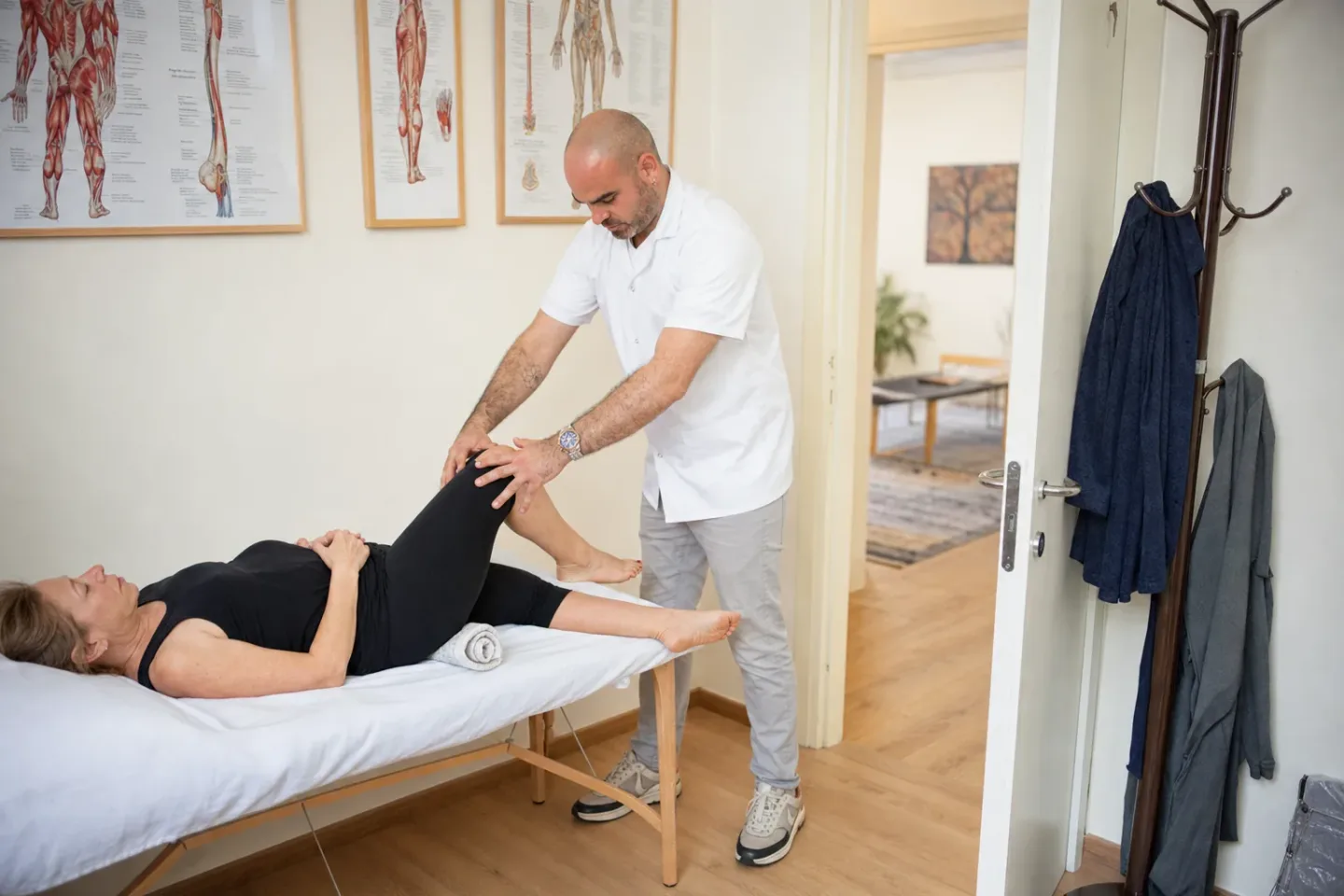
The examination starts with questions: when the patella pain began‚ exactly where you feel it‚ what makes it worse‚ whether there is swelling‚ whether there was an injury and what has changed recently. Then I check movement: standing‚ walking‚ squatting‚ getting up from a chair‚ the knee's range of movement‚ how the hip and ankle work and sometimes the back and pelvis as well.
The aim is not just to find a painful spot‚ but to understand the pattern of load behind your kneecap pain. Does the kneecap move in a balanced way? Does the hip control the movement?
Does the ankle allow a good step? Is one side overloaded? The answers let me build a treatment that fits the person and not just the name of the diagnosis.
How Is Osteopathic Treatment Different From Conventional Treatment?
Conventional treatment for kneecap pain can include a medical examination‚ medication for pain or inflammation‚ a referral to physiotherapy‚ imaging when needed and advice on reducing load. When there is an injury‚ significant swelling‚ a suspected tear‚ a locked knee‚ warmth or redness‚ that is the right and safe direction.
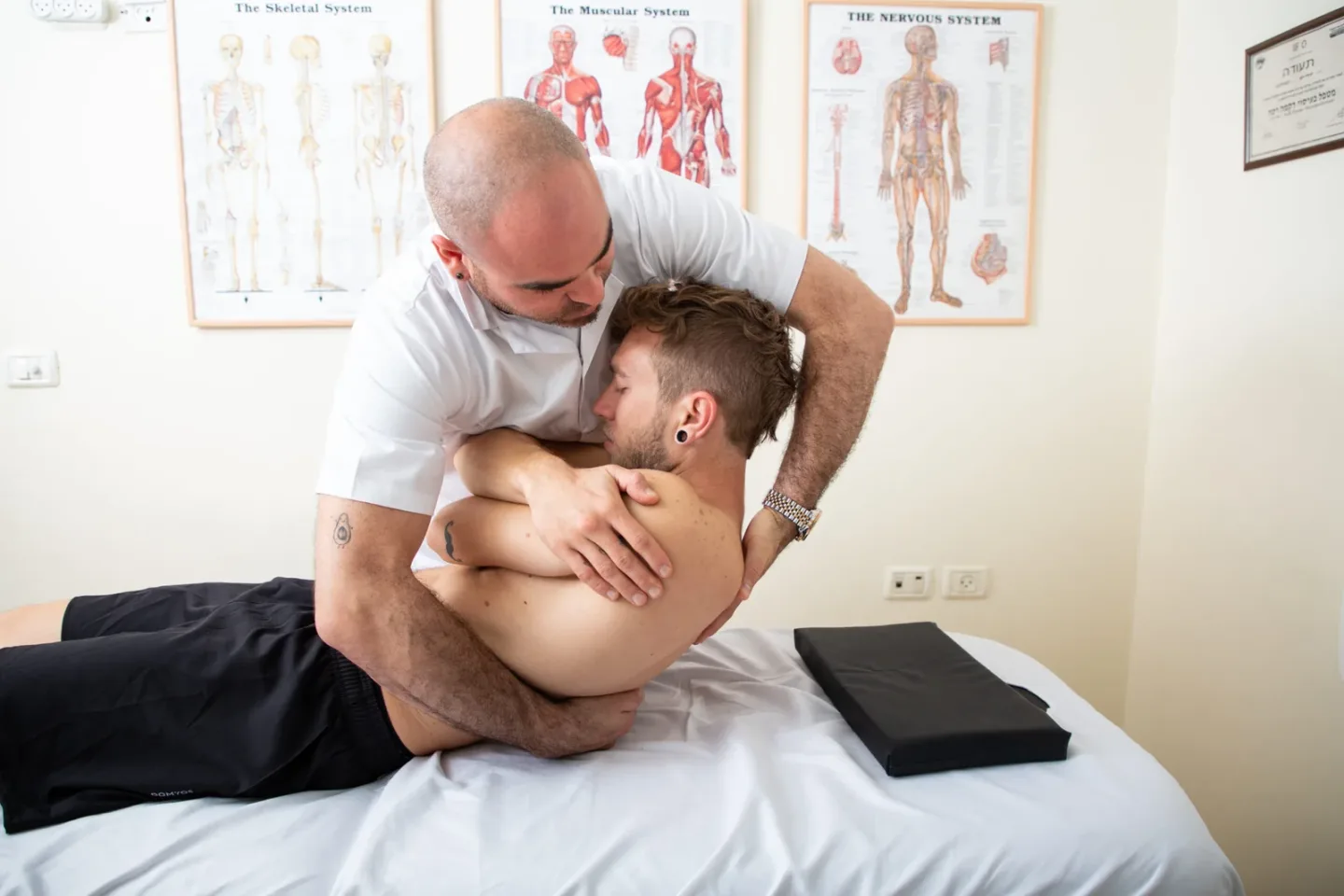
The osteopathic approach focuses on the relationships between parts of the body. Instead of looking only at the patella‚ I examine the way the ankle‚ hip‚ pelvis and back affect the knee.
Treatment for patella pain can include gentle work on soft tissues‚ improving joint mobility‚ reducing load around the hip and calf and guidance for better movement. There is no promise here to put a kneecap back in place or to solve every pain‚ but an attempt to improve the conditions in which the knee works. The first treatment lasts about an hour‚ and follow-up treatments about 45 minutes.
When Can Movement-Based Treatment Be Suitable?
Movement-based treatment is suitable when kneecap pain is related to load‚ posture‚ a return to activity or repeated use of the knee. Rest alone may calm patella pain for a short time‚ but if you go back to exactly the same movement the pain can come back.
So we gradually build better function: comfortable ranges of movement‚ control around the hip and knee‚ suitable strengthening and better walking and running patterns. This is usually how I approach pain behind the kneecap when there is no injury.
In the first stage you don't always need complex exercises. Sometimes we start with simple movement that doesn't make kneecap pain worse‚ a temporary reduction in load and changing habits that load the kneecap.
Later we add strengthening‚ balance practice and a graded return to activity. The right path depends on your age‚ activity level‚ how long you have had kneecap pain and the findings of the examination. Patients from Tivon and the surrounding area who are looking for an osteopath in Kiryat Tivon get a plan like this from the very first session.
When Is It Important to See a Doctor?
There are situations in which manual or movement-based treatment doesn't start without a medical assessment:
- Sharp pain after an injury or a feeling that the patella moves out of place.
- Quick swelling‚ significant local warmth or redness.
- Difficulty putting weight on the leg‚ a locked knee or clear instability.
- Unusual night pain or a sudden drop in function.
Also when there are background conditions‚ regular medication or a history of joint problems‚ it is worth making sure the pain is suitable for conservative treatment. In most cases of kneecap pain‚ when there are no warning signs‚ it is possible to work in a conservative‚ graded way.
A correct diagnosis is important so as not to miss another condition around the knee‚ such as a problem in a tendon‚ a bursa‚ the cartilage‚ a ligament‚ or pain referred from other areas. Good treatment starts with listening to the story‚ continues with an examination and only then moves on to deciding on a course of action.
Kneecap Pain and the Patella - The Bottom Line
The patella is an important part of the knee's movement mechanism. It takes part in straightening the knee‚ transferring force and protecting the front of the joint‚ so repeated load‚ weakness‚ a change in movement or compensation from the hip and ankle can all cause kneecap pain.
Osteopathic treatment fits in when patella pain matches a functional picture and there are no warning signs. At the same time‚ when there is an injury‚ unusual swelling‚ warmth‚ redness or difficulty putting weight on the leg‚ see a doctor. A combination of a correct diagnosis‚ load management and tailored movement-based treatment helps the knee work better and more safely.
Frequently asked questions
What is the patella?
The patella is the medical name for the kneecap‚ a small bone at the front of the knee that sits inside the tendon of the quadriceps muscle. It helps straighten the knee and protects the joint.
Why does my kneecap hurt going down the stairs?
Going down‚ the muscles brake the body and the pressure between the patella and the thighbone rises. When there is weakness in the thigh or hip‚ or stiffness in the ankle‚ this pressure is shared less well and you feel it as kneecap pain.
Are creaks in the kneecap a sign of a problem?
Not necessarily. Creaks without pain and without swelling are very common. When they come with pain‚ swelling or limitation‚ it is worth having them checked.
What do I do when the patella moves out of place?
A dislocated patella needs a medical examination‚ especially the first time it happens. Don't try to push it back by force‚ and see a doctor or go to the emergency room.
Can I keep training with pain around the kneecap?
Usually you can continue with adapted activity that doesn't make patella pain worse‚ such as cycling or swimming‚ while reducing squatting and jumping load. The adjustment depends on how strong the pain is and on the findings of the examination.
How long does it take for patella pain to improve?
It depends on how long you have had the pain‚ the factors that feed it and how consistently you do the exercises. Pain that built up over months usually improves gradually‚ and at every session we check the progress together.
Is osteopathic treatment suitable for kneecap pain?
It can be suitable when the pain is related to load‚ movement and posture‚ after an injury or a condition that needs other medical treatment has been ruled out. Alongside the manual treatment you get exercises to continue at home.
Do a knee brace or tape help with anterior knee pain?
For some people a soft knee brace or taping eases kneecap pain during activity‚ mainly in the short term. They don't replace strengthening and improving the movement pattern‚ and it is worth getting advice before regular use.
Which exercises suit kneecap pain?
Usually we start by strengthening the thigh and buttock muscles in ranges that don't hurt‚ such as straight leg raises‚ a glute bridge and standing on one leg. Later we gradually add knee bends and stair practice‚ according to how the knee responds.
Is kneecap pain common in pregnancy?
Yes‚ weight gain and the change in posture increase the load on the front of the knee‚ especially on stairs and when getting up from a chair. Gentle movement and supportive shoes help‚ and sudden swelling in one leg needs a doctor.
Table of Contents
- What Is the Patella and What Is Its Role in the Knee?
- Patella Pain and Anterior Knee Pain: How Does It Feel?
- Common Patella Problems
- What Can Make Kneecap Pain Worse?
- Why Doesn't Kneecap Pain Always Start in the Knee Itself?
- Calf Pain and Its Link to How the Patella Works
- What Is the Link Between the Hip‚ the Pelvis and the Patella?
- Load on the Legs and a Gradual Return to Activity
- Kneecap Pain‚ Pregnancy and Changes in Posture
- How Does an Osteopath Examine Kneecap Pain?
- How Is Osteopathic Treatment Different From Conventional Treatment?
- When Can Movement-Based Treatment Be Suitable?
- When Is It Important to See a Doctor?
- Kneecap Pain and the Patella - The Bottom Line
- Frequently asked questions
