
Knee Pain in Older Adults - Find the Source and Move Again
15 min read
Has going down the stairs become a task you plan in advance? Are your knees stiff in the morning and sore after a short walk or a long time sitting? Did you go back to running and find knee pain after running that does not go away even after a few days of rest?
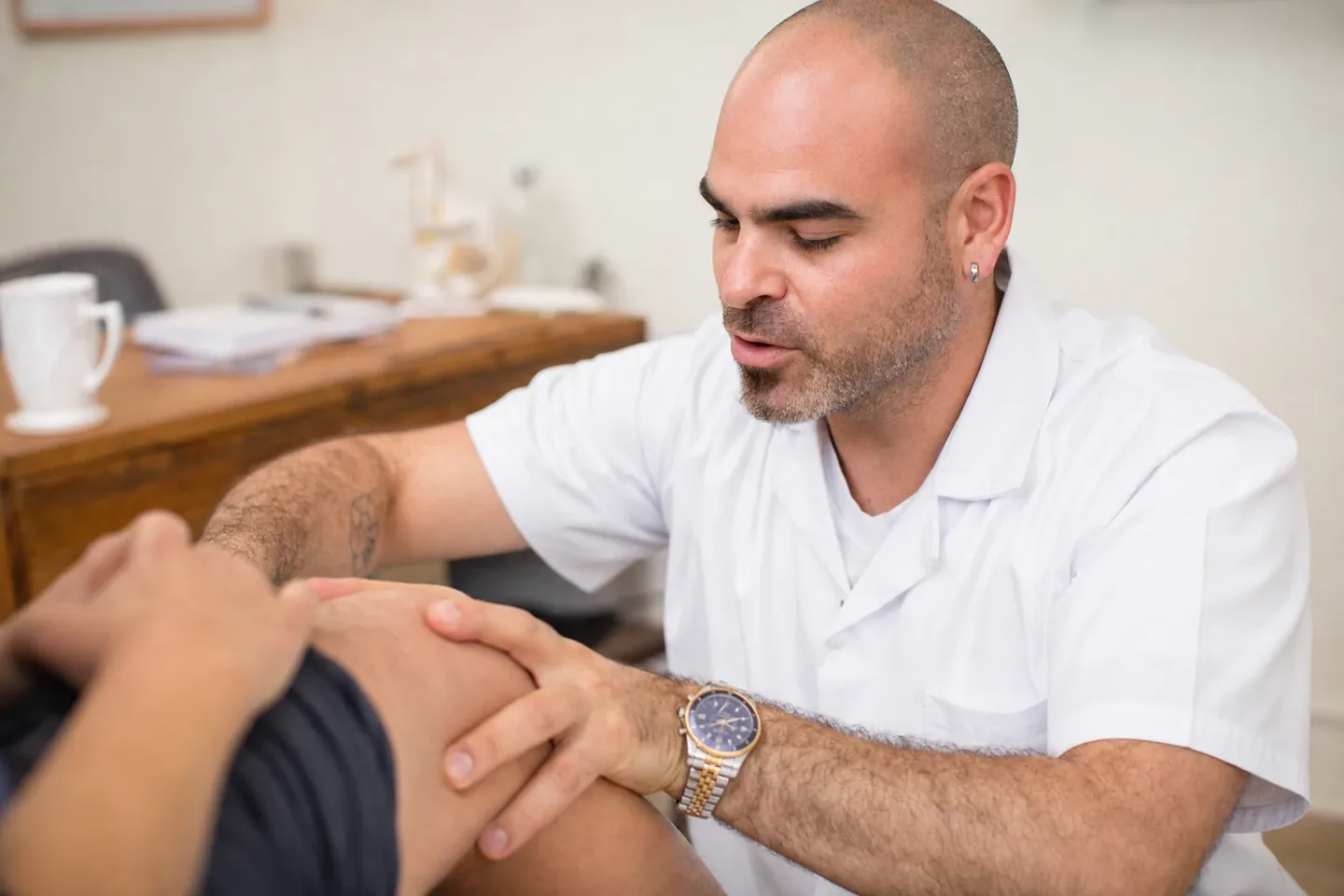
I am Roman Kibler‚ an osteopath (D.O) at my clinic in Kiryat Tivon‚ and I examine the knee together with the hip‚ the pelvis and the ankle‚ to find where the load that reaches the joint is created and not only where it hurts.
Leave your details or call me‚ and I will check with you what is behind the pain in your knees and what can ease it!
Knee pain in older adults is one of the most common complaints at the clinic. The knee carries the weight of the body with every step‚ on the stairs‚ when getting up from a chair and when kneeling‚ and over the years it collects wear‚ old injuries and changes in the way we move.
At the same time‚ age is not a verdict. In many people‚ knee pain in later life is affected no less by muscle weakness‚ weight‚ restricted movement in the hip or ankle and movement habits‚ and all of these can be worked on. This guide explains where the pain comes from‚ when to see a doctor and which kinds of knee pain treatment can help.
Why Does Knee Pain Appear in Older Adults?
The knee is a complex joint that connects the thigh bone to the shin bone‚ and the kneecap is part of it too. Between the bones there is cartilage and menisci that absorb shocks‚ and around them there are ligaments‚ tendons and small fluid-filled sacs. Each of these structures can be a source of pain‚ and sometimes several of them together.
Knee pain in older adults usually comes from a combination of natural changes in the tissues with a load that the knee finds hard to carry. That is why the examination starts with the question of what has changed: weight gain‚ less movement‚ a new activity‚ an old injury or a change in walking because of pain somewhere else. These are the most common knee pain causes I see.
Cartilage Wear and Arthrosis of the Knee
The best-known cause of knee joint pain in later life is gradual wear of the joint cartilage‚ called arthrosis or osteoarthritis. The pain usually appears with effort‚ going up and down stairs and getting up after sitting‚ and it sometimes comes with short morning stiffness and creaking.
It is important to know that a finding of wear on an X-ray does not always match how strong the pain is. Some people have marked wear and little pain‚ and some have mild changes and significant pain. In this gap there is often the space in which movement‚ strengthening and manual treatment can help.
The Kneecap‚ the Meniscus and the Tendons
Pain at the front of the knee is often linked to the path the kneecap travels on the thigh bone. You will find more about this structure and its problems in the article on kneecap pain.
The menisci also wear with age‚ and small degenerative tears are a common cause of knee pain in older adults‚ with pain on the inner side of the knee and a catching feeling.
Tendons such as the patellar tendon and the tendons on the inner side of the knee react to repeated load with local pain‚ especially at the start of movement. Knee pain in older adults that appears after a sudden change in activity‚ for example new long walks or gardening on your knees‚ is often linked to the tendons and not to the cartilage.
Bursitis‚ Gout and Inflammatory Conditions
Around the knee there are small sacs that reduce friction. When one of them is irritated and swells‚ it is an inflammation called knee bursitis‚ which often appears in people who kneel a lot.
A warm‚ red swelling of the knee with strong pain that came on all at once can also point to an attack of gout or of another inflammatory disease. In inflammatory conditions like these‚ diagnosis and treatment are first of all with the doctor‚ and manual treatment comes‚ if at all‚ only at a later stage.
Knee Pain That Starts in the Hip‚ the Back or the Foot
Not all knee pain starts in the knee. A problem in the hip joint can send pain to the knee‚ and so can irritation of nerves in the lower back. Knee pain in older adults sometimes appears together with pain on the outer side of the hip‚ for example hip bursitis‚ which changes the walking pattern and loads the knee.
A foot that collapses inward‚ an ankle that has been stiff since an old sprain or shortened calf muscles also change the angle at which the knee receives the weight. This is one reason why knee pain when walking can come from below the knee as well.
When knee pain in older adults comes together with lower back pain‚ numbness or weakness in the leg‚ its source may be a nerve and not the joint. An organized list of such signs appears on the page about a herniated disc‚ which also explains when to see a doctor.
Pain that runs from the buttock along the back of the thigh to below the knee‚ with a feeling of electric current or burning‚ sometimes fits irritation of the sciatic nerve. You will find a detailed explanation in the article on sciatica‚ and in that case I examine the lower back and the pelvis and not only the knee.
Symptoms of Knee Pain in Older Adults and When to See a Doctor
Knee pain in older adults shows up in different ways‚ and an accurate description helps direct the check:
- Pain going up or down stairs and getting up from a chair.
- Stiffness in the morning or after long sitting‚ which improves after a few minutes of movement.
- Creaking or a rubbing feeling during movement.
- Swelling that appears after effort.
- A feeling that the knee catches or locks.
- Instability‚ or a feeling that the knee may give way.
Most knee pain in older adults is not an emergency‚ but see a doctor when the pain comes with significant swelling‚ warmth and redness‚ fever‚ locking of the knee‚ clear instability‚ or after a direct blow. Pain that wakes you from sleep‚ pain that gradually gets worse despite rest or a sudden difficulty putting weight on the leg also need an examination.
In such cases the doctor can decide on imaging‚ blood tests or a referral to an orthopedist. Only when the picture is clear and no urgent medical treatment is needed is there room for movement-based and manual treatment.
Knee Pain After Running
Knee pain after running is one of the most common complaints among runners‚ from amateurs starting a training plan to experienced athletes who increase their load or change their route. Older adults who go back to running after many years also meet it often‚ and sometimes it joins knee pain that was already there before.
Sometimes the pain appears only at the end of the workout‚ and sometimes it starts during the run and continues in the following days.
Knee pain does not necessarily point to a serious injury‚ but it is a sign that the body is finding it hard to cope with the load. A proper check of the source and attention to the mechanical factors can prevent it from getting worse and turning into chronic knee pain.
Common Causes of Knee Pain in Runners
During a run‚ strong forces act on the knee again and again‚ mainly at the moment of landing. Accumulated load can irritate the cartilage‚ tendons‚ ligaments or soft tissues around the joint.
Common causes include patellofemoral pain syndrome at the front of the knee‚ inflammation of the patellar tendon‚ load on the IT band on the outer side‚ and sometimes early cartilage wear. Often the source of the problem is also in the hip‚ the ankle or the foot‚ which affect how the forces are distributed during the run.
The Link Between Poor Biomechanics and Knee Pain
Running is a cyclical action that combines coordination between muscles‚ joints and the nervous system. When there is a slight deviation in hip mobility‚ weakness in the glute muscles or a restriction in the ankle‚ the knee may absorb excess load. The knee collapsing inward on landing‚ for example‚ loads the front of the joint.
Shortening of the front or back thigh muscles may also change the path of the kneecap. A sudden change in training volume‚ a switch to hill running or new shoes can affect how the loads are distributed and lead to pain.
The key principle in returning to running is load management. Going back to full activity too quickly can bring the pain back‚ so the volume is reduced for a while‚ targeted strength training is added and the running technique is reviewed.
Knee Pain Treatment - What Really Helps?
Knee pain treatment depends on the source of the pain‚ but there are some principles that repeat in almost every case. The accepted advice for knee pain in older adults combines adapted movement‚ muscle strengthening‚ weight management and‚ when needed‚ medical treatment.
The first step in any knee pain treatment is to understand what exactly hurts: the cartilage‚ the tendons‚ the meniscus or a structure outside the knee. When the source is clear‚ you can choose the right tools rather than try everything at once.
So it is worth coming to the examination with an organized description: when the pain started‚ in which movements it appears and what has already been tried.
Movement and Muscle Strengthening for Knee Pain in Later Life
The muscles around the knee‚ especially the quadriceps‚ the hamstrings and the glutes‚ act as shock absorbers. When they are weak or tired‚ the knee carries a higher load. Strengthening them gradually is one of the most important tools for knee pain relief in later life.
Complete rest over a long time actually weakens the muscles and increases stiffness. Moderate activity such as walking on level ground‚ riding a stationary bike and swimming lets the knee move without high pressure.
Body Weight and the Load on the Knee
Every extra kilogram increases the load on the knees with every step‚ especially on the stairs‚ so weight is a central factor in knee pain in older adults. In older adults who carry excess weight‚ moderate weight loss is a recognized part of treatment and can reduce the pain and improve function. It is best done with the guidance of a doctor or a dietitian.
Medical Treatment
The doctor may recommend painkillers‚ anti-inflammatory drugs for a short period‚ injections into the joint or a referral to physiotherapy. In advanced stages of wear‚ when the pain greatly limits life‚ the orthopedist will also discuss surgical options.
These decisions belong to the treating doctor‚ and manual treatment fits in alongside them. Even when knee pain in later life is treated with medication or injections‚ strengthening and movement remain an important part of the plan.
Osteopathic Treatment for Knee Pain in Older Adults
As an osteopath‚ I look at the knee as part of a whole movement chain. The examination does not focus only on the joint itself‚ but includes an assessment of the mobility of the hip‚ the pelvis‚ the ankle and the foot‚ and even the lower back. The aim is to find where there is a restriction that passes load on to the knee.
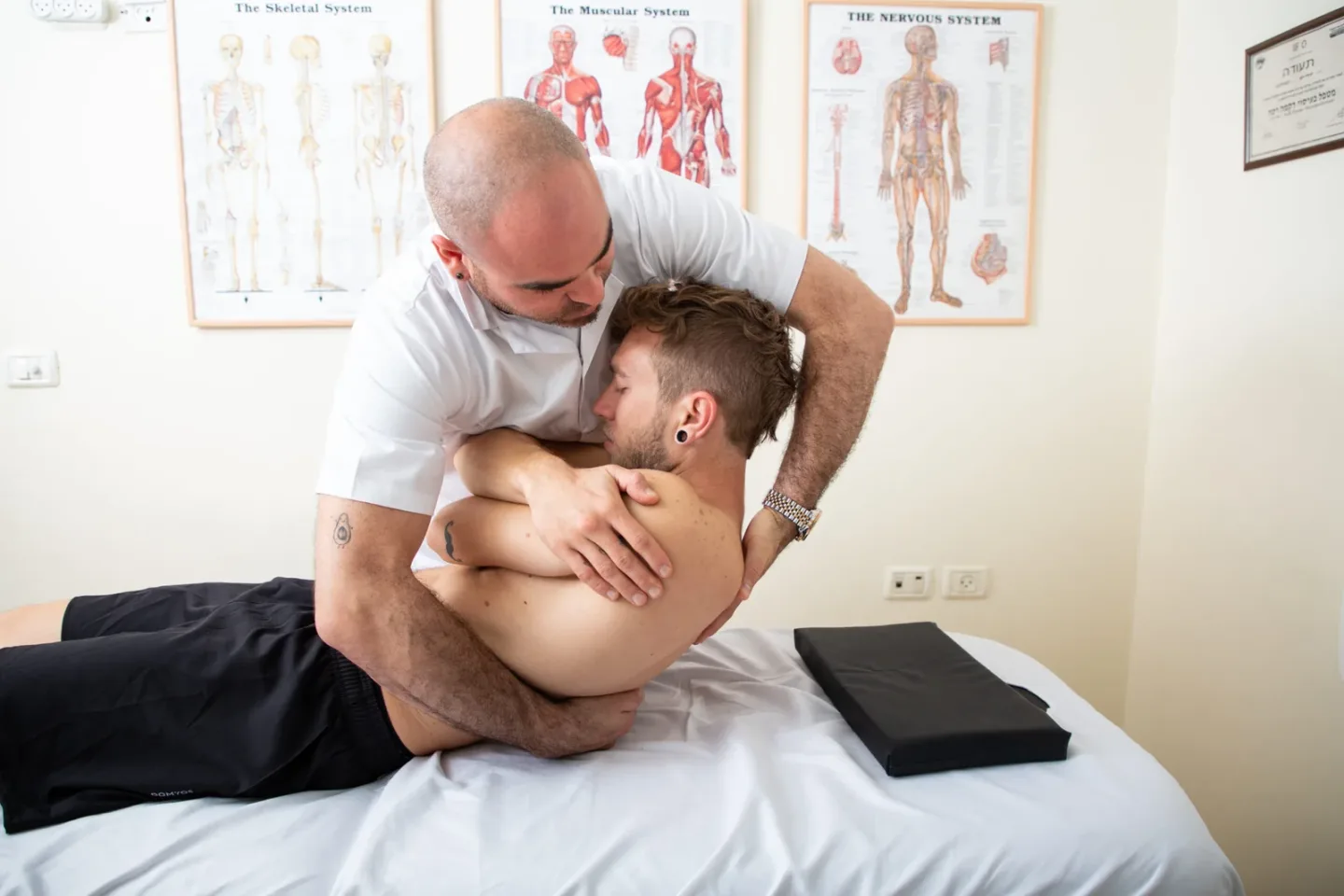
In the manual treatment I work on improving joint mobility‚ reducing muscle tension and restoring balance to the soft tissues. When knee pain in older adults comes from repeated load and functional restriction‚ improving the distribution of forces and the quality of movement may reduce the load on the joint.
The first session lasts about an hour and includes a full assessment‚ and follow-up sessions last about 45 minutes. Alongside the manual work you will get simple exercises for home‚ because the treatment does not replace strengthening practice but complements it.
The Muscles and Fascia in Preventing Repeated Load
The fascia connects muscle groups and passes tension along the whole leg. Manual treatment may ease the feeling of tension and stiffness in the tissues‚ but its effect is temporary if exercise is not added to it.
Better range of motion together with consistent strengthening allows more comfortable walking and running‚ and it is the exercise that reduces the chance of the pain coming back over time. In older adults‚ whose tissues are less flexible‚ this is a significant part of treating knee pain in older adults.
How Is the Osteopathic Approach Different from the Conventional One?
Conventional medicine focuses first of all on an accurate diagnosis and on ruling out serious conditions. In cases of overload without significant structural damage‚ the usual treatment includes relative rest‚ ice‚ anti-inflammatories and sometimes a referral to physiotherapy. The osteopathic approach does not oppose these measures but adds a view of the whole body.
Instead of focusing only on the painful spot‚ I check how movement patterns‚ posture and breathing affect the knee. In many cases‚ improving the mobility of the hip or pelvis reduces the load on the knee.
This is especially true for knee pain in later life‚ when the hip and ankle have lost some of their mobility over the years. If you are torn between the approaches‚ you will find a comparison in the article on physiotherapy or osteopathy.
Common Situations of Knee Pain in Older Adults
Knee Pain Going Down Stairs
Going down stairs loads the front of the knee more than going up‚ because the muscles have to brake the body. This is one of the first complaints in knee pain in older adults‚ and it is often linked to the kneecap and to weak quadriceps. Holding the rail‚ going down slowly and gradually strengthening the thigh muscles help most people.
Knees That Hurt at Night
Pain that appears at night after an active day usually comes from accumulated load‚ and a pillow between the knees when lying on your side sometimes helps. On the other hand‚ constant night pain that wakes you up‚ especially with swelling or warmth‚ is not a normal part of knee pain in later life and calls for a doctor's examination.
Stiffness After Long Sitting
Many people describe a stuck knee when getting up after a movie or a long drive‚ which loosens after a few steps. Short stiffness like this is typical of knee pain in older adults with wear‚ and the good way to reduce it is to get up and move from time to time rather than sit for hours in a row.
Swelling After Walking or Gardening
Mild swelling that appears after effort and goes away after rest usually shows that the load was too high for the knee at that stage. It is worth splitting the effort into short parts‚ avoiding long kneeling and using a knee pad. Large or warm swelling‚ or swelling that does not go down‚ is a reason to see a doctor.
Pain in Both Knees or in One Knee
Pain in both knees fits general wear or a shared load such as weight and shoes better. Pain in only one knee sometimes points to a local problem or to a factor in the hip‚ ankle or back on the same side. This distinction helps direct the examination of knee pain in older adults.
Daily Habits for Knee Pain Relief in Later Life
Small changes in your routine ease knee pain in older adults and reduce the load during the day:
- Stable shoes with good shock absorption‚ at home too.
- A rail on the stairs‚ and going up with the less painful leg first.
- A chair at a height that lets you get up without bending deeply.
- Short movement breaks when you sit for a long time.
- A short warm-up before walking or activity.
- Ice for a few minutes after an effort that caused swelling‚ according to your doctor's advice.
If these changes are not enough and the pain keeps limiting you‚ it is time for a proper examination. Patients come to me from Tivon‚ the valleys and Haifa when they are looking for osteopathic treatment in the north of Israel that fits in with their doctor's advice.
The Bottom Line: Knee Pain in Older Adults Is Not Fate
Knee pain in older adults usually comes from a combination of natural wear‚ muscle weakness‚ weight and restrictions in the movement chain. A medical check is important when there is swelling‚ warmth‚ locking‚ instability or pain that gets worse‚ but when there are no such signs there is a lot that can be done.
Paying attention not only to the knee itself but also to the hip‚ the pelvis and the ankle makes it possible to understand where the load comes from. A combination of load management‚ suitable exercise and precise manual work may improve function and reduce pain over time‚ in later life and after running alike.
Frequently asked questions
Is knee pain in older adults always a sign of wear?
No. Cartilage wear is common with age‚ but the pain can also come from tendons‚ the meniscus‚ an irritated bursa‚ or from the hip and the back. A proper examination helps you understand the source in your case.
Should I stop walking when my knees hurt?
In most cases‚ no. Complete rest weakens the muscles and increases stiffness. It is better to adjust the distance and pace and choose a comfortable surface‚ and to see a doctor if the pain gets worse.
When does knee pain need a doctor's examination?
When there is significant swelling‚ warmth and redness‚ locking of the knee‚ instability‚ pain after a blow or difficulty putting weight on the leg. Pain that gets worse despite rest also needs an examination.
Is osteopathic treatment suitable for knee pain in later life?
It can be suitable when there is an element of overload‚ restricted movement or muscle imbalance‚ after the doctor has ruled out a condition that needs other medical treatment. The treatment is gentle and adapted to your age and the condition of the joint.
How long does it take to feel an improvement in knee pain?
It depends on the source of the pain‚ how long it has been there and how consistently you do the exercises. After the first assessment I will be able to describe the plan‚ and I will check your progress with you at every session.
What should I do when knee pain appears after running?
Reduce your running volume for a while‚ add strength training for the hips and glutes‚ and check your shoes and route. If the pain does not improve within a short time or comes with swelling and locking‚ go for an examination.
Can I keep running at an older age?
Many people run at an older age too‚ provided the load is adapted and the body is ready for it. A gradual return‚ muscle strengthening and listening to the pain matter more than age itself.
Does insurance refund osteopathic treatment?
Some private insurance companies refund part of the cost. It is worth checking the terms of your policy in advance.
Which exercises suit knee pain in older adults?
Usually you start with simple exercises to strengthen the quadriceps and glutes‚ such as straight leg raises while lying down and getting up from a chair‚ and progress gradually. The exercises should be adapted personally‚ so that they do not increase the pain.
Does knee pain in older adults go away on its own?
Some pain‚ especially after unusual load‚ improves within a few weeks once activity is adjusted. Knee pain linked to wear tends to change over time‚ and movement and strengthening help maintain function even when the pain does not disappear completely.
Does cold weather make knee pain in later life worse?
Many people report that their knees hurt more on cold or damp days‚ although research on the subject is not clear-cut. A short warm-up‚ warm clothing and moderate movement help many people feel better on such days.
What is the difference between knee pain in older adults and knee pain after running?
Knee pain after running is linked mainly to the training load and technique‚ and usually improves when they are adjusted. Knee pain in older adults is linked more to changes in the tissues over the years‚ but in that case too‚ load management and strengthening are the foundation.
Is water exercise suitable for people with knee pain?
Yes‚ walking in water‚ swimming and pool exercise let you strengthen the muscles and move the joint while the water carries part of your body weight. It is a good way to stay fit even in periods when walking on a hard surface hurts.
Table of Contents
- Why Does Knee Pain Appear in Older Adults?
- Cartilage Wear and Arthrosis of the Knee
- The Kneecap‚ the Meniscus and the Tendons
- Bursitis‚ Gout and Inflammatory Conditions
- Knee Pain That Starts in the Hip‚ the Back or the Foot
- Symptoms of Knee Pain in Older Adults and When to See a Doctor
- Knee Pain After Running
- Common Causes of Knee Pain in Runners
- The Link Between Poor Biomechanics and Knee Pain
- Knee Pain Treatment - What Really Helps?
- Movement and Muscle Strengthening for Knee Pain in Later Life
- Body Weight and the Load on the Knee
- Medical Treatment
- Osteopathic Treatment for Knee Pain in Older Adults
- The Muscles and Fascia in Preventing Repeated Load
- How Is the Osteopathic Approach Different from the Conventional One?
- Common Situations of Knee Pain in Older Adults
- Knee Pain Going Down Stairs
- Knees That Hurt at Night
- Stiffness After Long Sitting
- Swelling After Walking or Gardening
- Pain in Both Knees or in One Knee
- Daily Habits for Knee Pain Relief in Later Life
- The Bottom Line: Knee Pain in Older Adults Is Not Fate
- Frequently asked questions
