
Knee Bursitis - When Swelling and Pain Stop You Kneeling
14 min read
Has your knee swollen at the front‚ and suddenly every time you kneel or lean on it hurts? Does the pain wake up on the stairs‚ when you get up from a chair or when you lie on your side? And you are not sure whether it is just another bout of strain that will pass or something that needs checking?
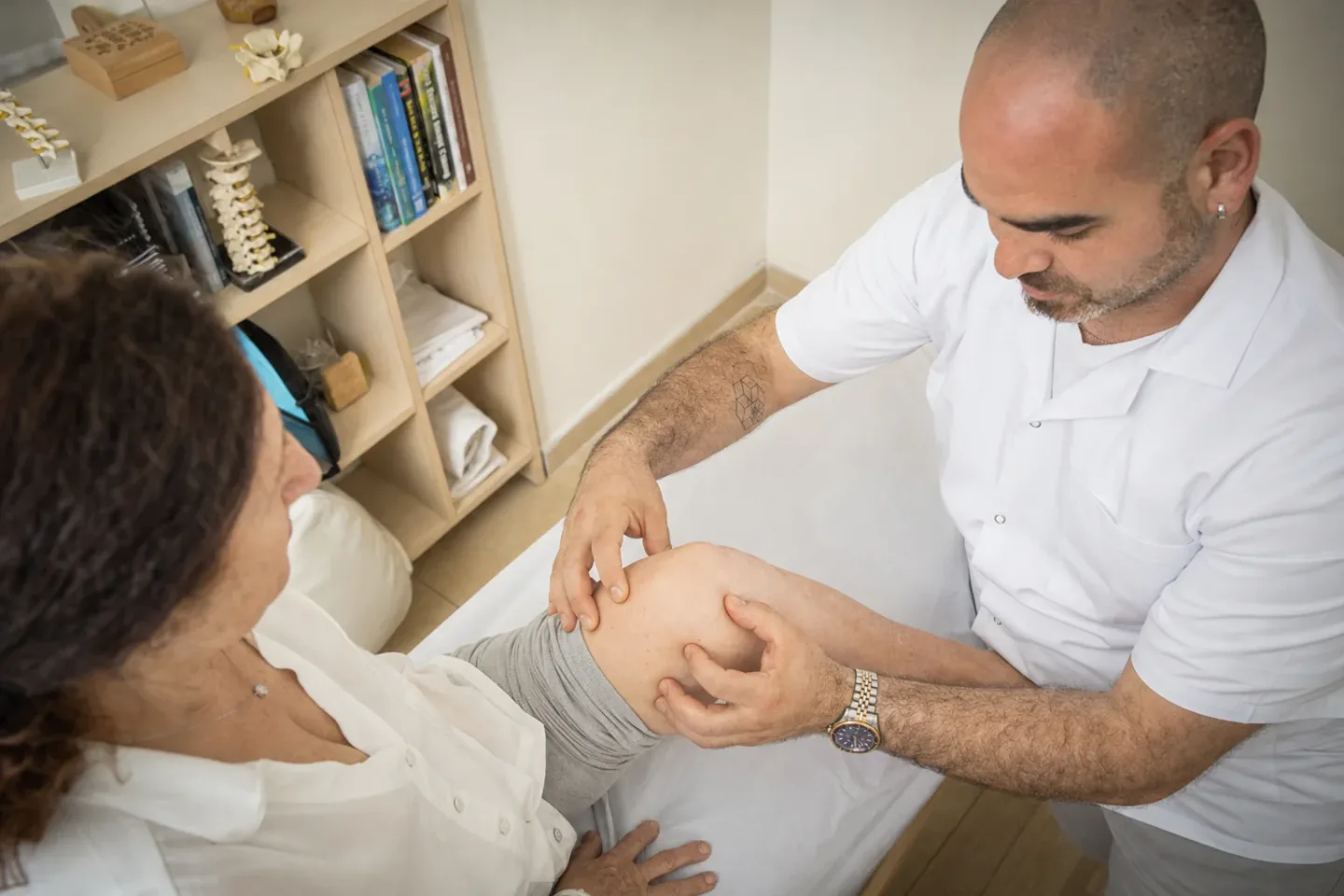
I'm Roman Kibler‚ an osteopath D.O at my clinic in Kiryat Tivon‚ and I examine the knee together with the ankle‚ thigh and pelvis to understand why the bursa keeps getting irritated.
Leave your details or call me‚ and I'll check with you what is loading your knee and how to get it moving again without pain!
Knee bursitis is a condition in which one of the bursae around the knee becomes sensitive‚ irritated or inflamed. A bursa is a small sac filled with fluid whose job is to reduce friction between bones‚ tendons‚ muscles and soft tissues in moving areas‚ and there are several of them around the knee.
When there is repeated load‚ local pressure‚ an injury‚ long kneeling or ongoing irritation‚ the knee bursa can swell and cause pain‚ tenderness and sometimes limited movement. In many cases bursitis of the knee can be improved by adjusting the load‚ relative rest and the right treatment‚ but it is important to know the signs that need a medical check too.
What Is Knee Bursitis and How Does It Develop?
Knee bursitis develops when a bursa in the knee area becomes irritated. The irritation can be sudden‚ for example after a blow or a fall onto the knee‚ but it often builds up gradually through repeated load.
Kneeling work‚ sport that loads the knees‚ running with a sharp change in training volume‚ long sitting in awkward positions or repeated pressure on the front of the knee are common knee bursitis causes. In these situations the knee bursa fills with fluid and becomes more painful during movement or touch.
It is important to understand that knee bursitis is not always "a knee-only problem". The knee is part of a movement system that includes the foot‚ ankle‚ shin‚ thigh‚ pelvis and lower back‚ and when one of these areas does not work in a balanced way‚ the knee absorbs repeated load.
Underlying Conditions Linked to Knee Bursitis
Load is not always the cause of knee bursitis. Inflammatory diseases such as rheumatoid arthritis‚ lupus‚ ankylosing spondylitis or scleroderma can irritate the bursae‚ so knee bursitis that keeps coming back without clear strain‚ or appears together with pain in other joints‚ calls for a doctor's workup.
Uric acid crystals can also build up in the bursa above the kneecap‚ so when the knee suddenly swells and becomes warm‚ the doctor sometimes checks for gout as well.
People with a weakened immune system‚ for example with diabetes‚ on steroid treatment or chemotherapy‚ or after heavy drinking over a long time‚ are at higher risk of an infected bursa. For them any red swelling of the knee calls for an early check.
Types of Knee Bursitis by Where It Hurts
Where the swelling and pain sit helps show which knee bursa is involved. This distinction matters‚ because each type of knee bursitis has its own typical causes‚ and the treatment and home advice are adapted to them.
Swelling Above the Kneecap: Prepatellar Bursitis
The knee bursa that lies over the kneecap is the one that swells most visibly‚ sometimes like a soft ball at the front of the knee. This prepatellar bursitis is common in people who work on their knees‚ such as tilers‚ gardeners and cleaners‚ and in people who fell directly onto the knee. That is why it has long been called housemaid's knee.
When the pain sits around the kneecap itself and not in the sac above it‚ it may come from the joint between the kneecap and the thigh bone. You will find information about this structure and the kneecap pain linked to it in a separate article‚ which helps tell the two conditions apart.
Pain Below the Kneecap: Infrapatellar Bursitis
Below the kneecap‚ around the tendon that connects it to the shin‚ there are more bursae. Infrapatellar bursitis‚ another form of knee bursitis‚ appears more in athletes who jump and run‚ and in people who kneel a lot with the body upright.
The pain is felt mainly when kneeling on one knee‚ walking down stairs and landing from a jump. It is often confused with inflammation of the patellar tendon‚ so the examination checks the tendon itself and not only the swelling.
Knee Bursitis on the Inner Side: Pes Anserine Bursitis
On the inner side of the knee‚ a little below the joint‚ there is a bursa that lies under the tendons of three thigh muscles. Pes anserine bursitis‚ knee bursitis in this area‚ causes pain when climbing stairs‚ getting up from a chair and at night when the knees touch each other.
It is more common in women‚ in people who are overweight and in people with wear in the knee joint. When there is also morning stiffness and deep pain in the joint‚ it is worth reading about osteoarthritis‚ because the two conditions often appear together.
Swelling Behind the Knee
Swelling at the back of the knee is usually a cyst of joint fluid‚ often called a Baker's cyst‚ and not knee bursitis in the classic sense. It feels like pressure or fullness when you bend the knee‚ and it is sometimes linked to a problem inside the joint that calls for a doctor's check.
When such a cyst ruptures‚ the fluid leaks into the calf and causes pain‚ swelling and sometimes redness at the back of the leg. This picture resembles a blood clot in a vein‚ so sudden swelling of the calf needs a medical check on the same day.
Knee Bursitis Symptoms Worth Knowing
Knee bursitis symptoms include local pain‚ soft swelling‚ tenderness to touch‚ a feeling of warmth in the area‚ difficulty kneeling or pain when bending and straightening the knee. Sometimes the pain is felt mainly when direct pressure is put on the knee‚ for example when kneeling‚ and in other cases it grows after long walking‚ climbing stairs or repetitive activity.
- Local swelling you can see or feel‚ usually on one side of the knee.
- Pain when kneeling‚ leaning on the knee or under the pressure of tight trousers.
- Pain when climbing stairs or getting up from sitting.
- Tenderness at night‚ when lying on your side or when the knees touch each other.
- The knee itself usually keeps its movement‚ but full bending is uncomfortable.
Septic Knee Bursitis - When Should You See a Doctor at Once?
When there is significant local warmth‚ marked redness‚ strong pain that gets worse quickly‚ fever‚ discharge or an open wound in the knee area‚ it is important to see a doctor the same day. Knee bursitis can be linked to an infection‚ especially after a scratch or a wound at the front of the knee‚ and in these situations manual treatment is not the answer.
Also after a significant injury‚ a fall or a suspected fracture‚ rapid swelling of the whole joint or being unable to put weight on the leg‚ a medical workup is needed before any complementary treatment.
Signs of septic bursitis of the knee are local warmth and strong tenderness‚ and sometimes a body temperature above 38 degrees and chills (but there is not always a fever‚ so its absence does not rule out infection)‚ redness that spreads over the skin around the knee and pain that does not settle with rest.
The doctor sometimes draws a little fluid from the bursa to identify the bacteria‚ and treats with antibiotics that must be taken to the end even when you feel better.
Knee Bursitis Compared With Other Problems Around the Joint
Knee pain can come from many sources: a tendon‚ ligament‚ cartilage‚ the joint‚ a muscle‚ a nerve or a bursa. Knee bursitis tends to be fairly localized‚ and sometimes clear tenderness and soft swelling can be found in a specific area.
In contrast‚ deep joint pain‚ locking of the knee‚ a feeling of instability or sharp pain after a sudden twist point to another source that needs a different examination.
How Is Knee Bursitis Diagnosed?
The diagnosis starts with a conversation and an examination: where the swelling is‚ whether it is soft and localized‚ whether there is local warmth and which movements make the pain worse. In most cases the physical examination is enough to suspect bursitis of the knee‚ and when in doubt the doctor can refer you for an ultrasound that shows the sac and the amount of fluid.
When an infection or an inflammatory joint disease is suspected‚ the doctor may draw a little fluid for testing or order blood tests. An X-ray is needed mainly after an injury or when joint wear is suspected‚ not to see the bursa itself.
Calf Pain That Is Confused With Knee Pain
When the pain appears after running‚ climbing stairs or a leg workout‚ it is important to check whether it comes from the knee‚ the calf or the whole movement pattern. Pain behind the knee and in the upper calf after a sprint or a jump can be gastrocnemius pain from a strained muscle‚ because this muscle attaches to the thigh bone just above the joint.
If the knee is sensitive‚ the body changes the stride length or the way the foot lands‚ and then the calf muscles work differently and load themselves more. The right treatment checks both the knee and the calf‚ and does not assume in advance that all the pain comes from the same place.
The Hip‚ the Pelvis and Hip Bursitis
The knee sits in the middle of the leg's movement chain‚ so it is strongly affected by the hip and the pelvis. When the hip does not move freely or the pelvis does not stabilize well‚ the knee takes an unbalanced load with every step.
Pain on the side of the hip that gets worse when lying on your side and on stairs can be hip bursitis‚ a similar condition in another area. The link to the knee matters: if the hip hurts‚ walking changes and the load moves to the knee‚ and if the knee hurts‚ the hip starts to compensate.
Knee Bursitis Treatment: Doctor‚ Osteopath and What Lies Between
Conventional knee bursitis treatment focuses on diagnosis‚ ruling out infection and reducing inflammation and pain: relative rest‚ ice‚ raising the leg and gentle compression. As the doctor decides‚ it can also include medication‚ draining the fluid‚ a local injection or antibiotics when there is an infection.
When the pain comes back again and again‚ it is worth knowing all the options. You will find a broad overview of treatment and rehabilitation in the article on knee pain treatment‚ which also suits people whose pain does not come from the knee bursa.
Injection‚ Drainage and Surgery: When Are They Considered?
When the swelling of the knee bursa is large and painful‚ the doctor can drain the fluid with a needle‚ and after drainage it is best to avoid physical effort for a day or two. A steroid injection into the bursa is considered when the pain does not improve with conservative treatment‚ only after infection has been ruled out‚ and a limited number of times a year in the same area.
The injection has possible side effects‚ such as thinning of the tissue or a change in skin color over the spot. When knee bursitis does not improve after about two months‚ or when there are repeated infections‚ the doctor refers you to an orthopedist or a rheumatologist‚ and in rare cases surgical removal of the bursa is considered.
The Osteopathic Approach to Knee Bursitis
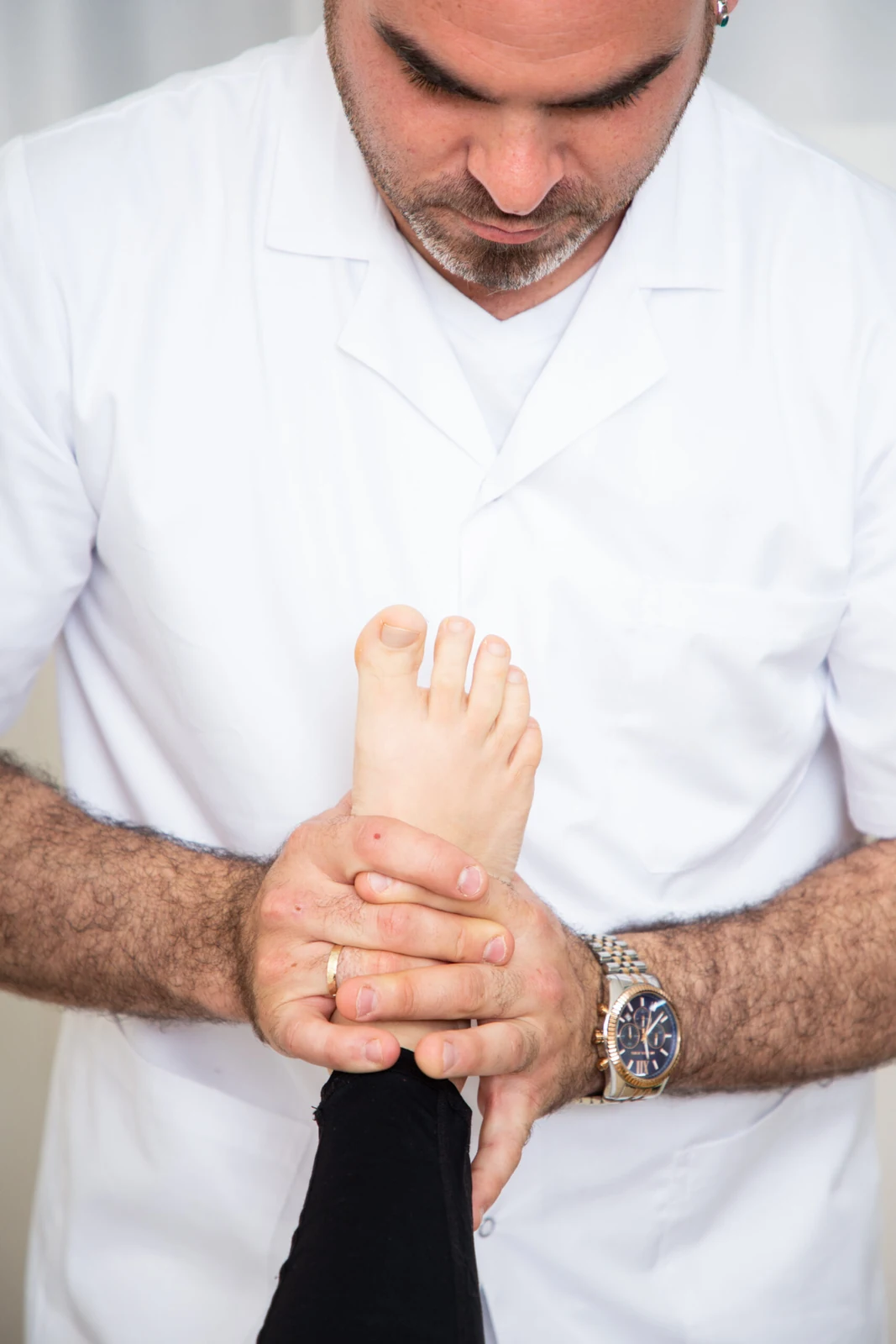
Osteopathic treatment does not claim to "make inflammation disappear" instead of medical treatment‚ and it is not suitable when an infection‚ a significant injury or an acute inflammatory condition is suspected. When the picture fits conservative treatment‚ I examine the knee as part of a system: the foot‚ ankle‚ shin‚ thigh‚ pelvis and lower back.
Treatment may include gentle manual work to improve mobility‚ reducing tension in the tissues around the thigh and calf‚ checking the walking pattern and guidance on everyday load.
The advantage lies in looking at the reason for the load: whether the knee takes pressure because of a stiff ankle‚ whether the hip does not stabilize enough‚ or whether the work pattern repeats the same movement.
Osteopathic Treatment in the North at My Kiryat Tivon Clinic
I studied osteopathy for five years‚ including 1,000 clinical hours‚ I have worked as an osteopath at Maccabi Tivi since 2022 and I have been doing therapeutic massage since 2017. If you are looking for osteopathic treatment in the north for knee bursitis‚ you will get a first session of about an hour with a thorough examination‚ and follow-up sessions of about 45 minutes.
What Can You Do at Home for Knee Bursitis?
As a first step‚ reduce activity that makes the pain worse‚ especially kneeling‚ direct pressure on the knee or a repetitive movement that increases the swelling. If you work on your knees‚ use a cushion or knee pads and change position often.
- Ice wrapped in a towel for short periods of 10-15 minutes‚ several times a day.
- Raising the leg while resting‚ especially at the end of a day on your feet.
- A knee sleeve or a gentle bandage that does not cause numbness or a change in color.
- A pillow between the knees when sleeping on your side‚ when the pain is on the inner side.
- Asking a doctor or pharmacist before using painkillers‚ especially if you have underlying conditions.
When the pain starts to ease‚ the return to movement should be gradual: comfortable ranges‚ short walks‚ gentle exercise and adapted strengthening. A clear flare-up‚ growing swelling or pain that lasts hours after activity are signs that the load was too high.
Gentle Release of the Legs
Strong stretches are not always the answer when there is knee bursitis‚ especially if the bursa is irritated and the knee is sensitive to pressure. Sometimes it is better to start with gentle movement‚ a light warm-up and improving the range of movement‚ and if your whole leg feels stiff‚ you will find guidance in the article on tight leg muscles.
Preventing Knee Bursitis and Returning to Activity
Someone who has had knee bursitis once is at risk of it coming back‚ especially if their work or sport has not changed. A few simple habits take load off the bursae:
- Knee pads or a cushion for any work on your knees‚ and breaks to get up and move.
- A gradual increase in training volume‚ without sharp jumps from week to week.
- Strengthening the thigh and pelvic muscles‚ which stabilize the knee with every step.
- Keeping the back of the thigh‚ the front of the thigh and the calf flexible.
- Caring for every scratch or wound at the front of the knee‚ to prevent infection from entering the bursa.
A return to running‚ jumping or kneeling work should come only when the swelling has gone down‚ the pain under direct pressure has almost disappeared and the strength in both legs is similar.
Warm-Up‚ Shoes and Breaks
A warm-up of about ten minutes before intense training‚ good running or walking shoes and regular breaks in work that repeats the same movement reduce the risk of knee bursitis. After the pain has passed‚ gradual strengthening of the muscles around the knee helps it return to full load without irritating the bursa again.
If you work standing or kneeling all day‚ you can take a short break every hour‚ get up‚ walk a few steps and move your knees within a comfortable range. A small habit like this spreads the load and prevents constant pressure on the same knee bursa.
The Bottom Line: Knee Bursitis as a Sign of Strain
Knee bursitis is a condition in which a bursa around the knee becomes sensitive‚ irritated or inflamed‚ usually after repeated load‚ local pressure‚ an injury or an unbalanced movement pattern. The pain is localized and clear‚ but the function of the ankle‚ shin‚ thigh‚ pelvis and back strongly affects the way load passes through the joint.
When there are no warning signs‚ managing the load‚ gentle treatment and graded exercise help most people return to movement. When there is fever‚ redness‚ unusual swelling‚ a wound or a rapid worsening‚ see a doctor first.
Frequently asked questions
How long does knee bursitis take to go away?
In mild cases‚ with less load and the right treatment‚ the pain and swelling go down within a few weeks. When the cause of the load continues‚ or when knee bursitis keeps coming back‚ recovery can take longer.
Does knee bursitis go away on its own?
Sometimes it does‚ especially when you stop the direct pressure on the knee. If the swelling remains after a few weeks‚ keeps coming back or comes with redness and warmth‚ see a doctor.
What is the difference between knee bursitis and fluid in the joint?
In knee bursitis the swelling sits in one sac outside the joint‚ for example above the kneecap‚ and the knee itself still bends. Fluid inside the joint swells the whole knee‚ limits bending and straightening and needs a medical check.
Can I walk and exercise with knee bursitis?
Normal walking and activity that does not hurt are usually allowed‚ and they even help keep the muscles strong. It is best to avoid kneeling‚ jumping and any activity that increases the swelling for a while.
Is ice or heat better?
In the stage when there is swelling and tenderness‚ ice for short periods eases things for most people. When the swelling has gone down and mainly stiffness is left‚ mild heat before movement may feel more pleasant.
Can an osteopath help with knee bursitis?
When there is no infection or acute injury‚ an osteopath can help reduce the load on the knee by working on the ankle‚ hip‚ pelvis and walking pattern. The treatment complements the medical diagnosis and does not replace it.
Who is at risk of knee bursitis?
The risk is higher in people who work on their knees‚ in athletes in running and jumping sports‚ in people who are overweight and in people with wear in the knee joint. A wound or a scratch at the front of the knee also raises the risk of an infected bursa.
When does a knee bursa need draining?
The decision to drain is the doctor's‚ usually when the swelling is large and very painful or when an infection is suspected and the fluid needs testing. In most cases treatment starts conservatively.
Do I need an ultrasound or MRI for knee bursitis?
In most cases no. The diagnosis is made from the examination and the history‚ and an ultrasound or MRI is needed mainly when an infection is suspected‚ when the diagnosis is unclear or when the pain does not improve with treatment.
Can bursitis of the knee come back?
Yes‚ especially when you keep kneeling without protection or when the cause of the load has not been dealt with. Knee pads‚ breaks and a better movement pattern greatly reduce the risk of it coming back.
Which painkillers suit knee bursitis?
Paracetamol or anti-inflammatories such as ibuprofen usually ease the pain and swelling. Before using them for more than a few days‚ and especially if you have underlying conditions or take regular medication‚ ask a doctor or pharmacist.
Table of Contents
- What Is Knee Bursitis and How Does It Develop?
- Underlying Conditions Linked to Knee Bursitis
- Types of Knee Bursitis by Where It Hurts
- Swelling Above the Kneecap: Prepatellar Bursitis
- Pain Below the Kneecap: Infrapatellar Bursitis
- Knee Bursitis on the Inner Side: Pes Anserine Bursitis
- Swelling Behind the Knee
- Knee Bursitis Symptoms Worth Knowing
- Septic Knee Bursitis - When Should You See a Doctor at Once?
- Knee Bursitis Compared With Other Problems Around the Joint
- How Is Knee Bursitis Diagnosed?
- Calf Pain That Is Confused With Knee Pain
- The Hip‚ the Pelvis and Hip Bursitis
- Knee Bursitis Treatment: Doctor‚ Osteopath and What Lies Between
- Injection‚ Drainage and Surgery: When Are They Considered?
- The Osteopathic Approach to Knee Bursitis
- Osteopathic Treatment in the North at My Kiryat Tivon Clinic
- What Can You Do at Home for Knee Bursitis?
- Gentle Release of the Legs
- Preventing Knee Bursitis and Returning to Activity
- Warm-Up‚ Shoes and Breaks
- The Bottom Line: Knee Bursitis as a Sign of Strain
- Frequently asked questions
