
Gout - Joint Pain‚ Flare-Ups and Supportive Care
19 min read
Did you wake up at night with a red‚ hot‚ swollen big toe‚ so sensitive that even the blanket hurts? Has the attack passed‚ but it is still hard to put weight on the foot‚ so you limp and overload your knee and back? Are you asking yourself what else you can do besides the medication‚ so you can move again without fear?
I am Roman Kibler‚ an osteopath (D.O.) in Kiryat Tivon and an osteopath at Maccabi Tivi since 2022‚ and I help people with gout in the stage after the attack‚ with the aim of improving walking and movement alongside their medical treatment.
Leave your details or call me‚ and I will check with you how your body is coping after the attack and what we can improve right now!
Gout is a type of arthritis that causes sharp attacks of pain‚ swelling‚ redness and high sensitivity in a joint. It is best known for attacks in the big toe‚ but it can also involve the ankle‚ the knee‚ the hand‚ the fingers or the elbow.
Gout pain can come on suddenly‚ often at night‚ and be so strong that it is hard to stand‚ walk or bear even the light touch of a blanket on the area. In Hebrew gout disease is also called shigadon‚ and both names describe the same condition.
It is important to understand that gouty arthritis is an inflammatory medical condition‚ not "overload" or a "locked muscle". Osteopathic care does not replace medical treatment‚ but it can be added as support once the acute attack has calmed down‚ to improve movement‚ reduce load and help the body return to its routine.
What Is Gout and How Does It Affect the Joints?
Gout develops when uric acid builds up in the blood over time‚ and in some situations urate crystals form inside the joint or around it. The body reacts to the crystals with inflammation‚ so a gout attack can be very intense even without an obvious knock or injury.
Gout pain is different from ordinary mechanical pain: it is sharp‚ burning or throbbing‚ and it comes with swelling and local heat. The joint can feel as if it is "on fire"‚ and in many cases it is very hard to move.
Uric Acid and Crystals in the Joint
In gout disease‚ uric acid is a natural breakdown product of substances found in the body and in food. When the body produces more of it or clears less of it through the kidneys‚ the level in the blood rises‚ and in some people it reaches the point where crystals form.
Not everyone with high uric acid will develop gout‚ and not every attack comes with a high value at that moment. That is why the diagnosis is a medical one‚ based on the whole picture rather than on a single number in a test.
A Single Attack or Repeated Attacks
Some people have a single gout attack‚ while others have repeated attacks. When gout is not under control‚ the attacks can come more often‚ involve more joints and leave stiffness behind them.
Even after the acute inflammation calms down‚ the body often keeps "protecting" the painful area by limping‚ stiffening or shifting the weight to the other side. This is where functional‚ supportive care alongside medical follow-up becomes important.
Risk Factors for Gout
Gout usually develops from a combination of several factors‚ not from one cause. The uric acid level rises when the body produces more of it‚ when the kidneys clear less of it‚ or when both happen together.
- A genetic and family tendency to clear uric acid slowly.
- Reduced kidney function‚ including the natural decline that comes with age.
- Certain medications‚ mainly diuretics‚ and some of the drugs given after a transplant.
- Excess weight‚ diabetes and high blood pressure.
- A high intake of red meat‚ seafood‚ sweetened drinks and alcohol.
Only a small share of people with high uric acid actually develop gout. The risk grows the higher the level is and the longer it stays high‚ so follow-up over the years matters more than a single test.
Gout in Older Age
In older age gout attacks are more common‚ partly because of reduced kidney function and the use of several regular medications. Some drugs for heart failure and blood pressure raise uric acid‚ while others actually help lower it‚ so any adjustment is made only with the doctor.
In older people‚ an attack in the knee or ankle quickly affects balance and walking. When knee pain in older adults caused by wear is added to this‚ the limp after the attack can lengthen the recovery and raise the risk of a fall.
Gout Symptoms You Should Not Ignore
The classic gout symptoms include strong pain in a joint‚ swelling‚ redness‚ local heat and sensitivity to touch. The pain often comes on suddenly‚ peaks within hours and then eases gradually over days.
- Sudden‚ strong pain in one joint‚ usually the big toe.
- Swelling‚ redness and local heat over the joint.
- Unusual sensitivity to touch‚ even from clothing or a blanket.
- Difficulty moving the joint or putting weight on it.
- After repeated attacks: stiffness and sometimes lumps under the skin around the joint.
What Triggers a Gout Flare-Up?
In some people gout attacks appear after a heavy meal‚ alcohol‚ dehydration‚ an illness‚ physical strain‚ a change in medication or a stressful period. Still‚ a clear trigger cannot always be found‚ and a gout flare-up can come on a completely ordinary day.
Other Joints That Gout Can Involve
Beyond the toe‚ gout can appear in the ankle‚ the top of the foot‚ the knee‚ the elbow‚ the wrist and the fingers. When the thumb is involved‚ it sometimes looks like a swollen and painful thumb‚ so it is important to find the cause and not assume in advance that it is an injury.
In the knee‚ inflammatory swelling can look similar to other conditions such as knee bursitis‚ and in the wrist it can be confused with overload or tendon inflammation. Telling these apart is the doctor's job‚ and after that a proper rehabilitation plan can be built.
Warning Signs That Require Seeing a Doctor Urgently
If there is a fever‚ widespread redness‚ very unusual pain‚ general weakness‚ a wound near the joint or a suspicion of infection‚ see a doctor urgently. Gout can look like other medical conditions‚ including an infected joint‚ so it is not right to rely on manual treatment when the picture is acute or unclear.
Gout Diagnosis‚ Blood Tests and Medical Treatment
Why Is a Medical Assessment Important?
A gout diagnosis is based on the clinical picture‚ a medical examination and sometimes blood tests or other tests. The uric acid level in the blood helps to understand the picture‚ but during an acute attack the value does not always tell the whole story.
In some cases the doctor will consider further tests‚ such as testing fluid from the joint or imaging‚ to tell gout apart from another inflammation‚ an infection‚ a joint injury or a rheumatic disease. This assessment also matters for choosing the right medication.
When there is joint pain with swelling or a general feeling of inflammation‚ blood tests help show whether there is inflammatory activity in the body. Within such an assessment‚ a question such as the causes of a high ESR can be relevant‚ but on its own it does not diagnose gout‚ just as a single gout blood test does not.
Joint Fluid Testing‚ Ultrasound and Imaging
The most accurate test for the diagnosis is drawing fluid from the joint and examining it under a microscope to identify urate crystals. The test is usually done by a rheumatologist‚ preferably during an attack‚ when there is fluid in the joint.
An ultrasound of the joint can show crystal deposits on the surface of the cartilage‚ and in some cases a special CT scan that identifies the makeup of the crystals is also done. An X-ray helps mainly in long-standing disease‚ when there are already changes in the bone around the joint.
Because the uric acid level in the blood may be normal during an attack‚ the doctor usually repeats the blood test a few weeks after the attack has passed. Sometimes a kidney ultrasound and a urine collection are also requested‚ to understand whether the body produces too much or clears too little.
Medical Gout Treatment and What It Aims to Achieve
During an acute attack‚ the main goal of medical gout treatment is to reduce pain and inflammation. Depending on the patient's condition and medical judgment‚ anti-inflammatory drugs‚ colchicine or steroids may be used.
Not every medication suits every person‚ especially when there is kidney disease‚ heart disease‚ high blood pressure‚ blood thinners or other regular medications. That is why it is important not to take medication on your own without proper advice.
Preventing Repeated Attacks
When gout attacks keep coming back or there is a risk of complications‚ the doctor may consider treatment that lowers uric acid levels over time. Such treatment is not meant for immediate relief‚ but to prevent repeated attacks and future joint damage.
Good management of gout usually includes regular follow-up‚ periodic blood tests and adjusting lifestyle habits. When gout is under control‚ many people live for many years with very few attacks.
Medications That Lower Uric Acid in Gout
Regular treatment to lower uric acid is usually considered when there are two or more attacks a year‚ joint damage on an X-ray‚ kidney stones or deposits under the skin. The oldest and best-known drug is allopurinol‚ and there are also alternatives that the doctor chooses according to kidney function‚ other medications and side effects.
The aim is to reach a target uric acid value set by the doctor‚ usually below 6 mg/dL‚ and to keep it there over time. In the first months the crystals start to dissolve and attacks may actually appear‚ so low-dose colchicine is sometimes given as protection.
Gout treatment of this kind usually lasts for years and sometimes for life. Stopping it on your own when there are no attacks is one of the common reasons the attacks come back‚ so any change should be made together with the doctor.
What Does Manual Treatment Not Do?
It is important to stress: manual treatment does not lower uric acid and does not dissolve urate crystals. Its value lies elsewhere: improving movement‚ reducing load‚ rebuilding walking patterns and supporting function‚ once the acute stage allows it.
Gout Complications When It Is Not Under Control
Gout is a chronic disease‚ and most people who have one attack will have more later on. When the uric acid level stays high for years‚ the attacks become more frequent‚ the breaks between them get shorter‚ and sometimes pain remains in the periods between attacks.
Tophi: Deposits Under the Skin
In long-standing‚ untreated gout‚ urate deposits called tophi can build up under the skin. They look like hard lumps around the finger joints‚ the elbow‚ the foot or the ear‚ and in advanced cases they damage the joint itself and limit movement.
Tophi are not lumps that can be "released" or massaged. They shrink gradually only when the uric acid level goes down over time with medical treatment‚ so manual work around them is done carefully and without direct pressure.
Kidney Stones and Kidney Damage
Uric acid can also settle in the urinary tract and form kidney stones. In some people with gout‚ repeated stones are part of the picture‚ and over time kidney function may decline.
That is why the doctor treats the kidneys as part of the care: checking how they work‚ adjusting medication doses and making sure you drink enough. Sharp pain in the side of the back or the lower abdomen‚ blood in the urine or a fever require a quick medical examination.
Gout and Heart Health
Gout is often linked to high blood pressure‚ diabetes‚ excess weight and heart and blood vessel disease. The inflammation during the attacks themselves also puts a strain on the body‚ so controlling gout disease matters not only for the joints.
For this reason the right care combines the family doctor‚ the rheumatologist and sometimes also a cardiologist or a nephrologist. Gradual weight loss‚ regular physical activity and control of background conditions are part of treating the disease itself.
How Does Osteopathy Fit Alongside Gout Treatment?
During an acute attack‚ when the joint is hot‚ swollen‚ red and very painful‚ direct manual treatment of the area is not the right choice. At that stage the focus is on the diagnosis‚ on reducing the inflammation and on the doctor's instructions.
After the gout attack calms down‚ many people are left with stiffness‚ fear of movement‚ a limp or compensating load on other joints. This is the stage at which osteopathic care for gout can be relevant.
What Is Checked in the Session?
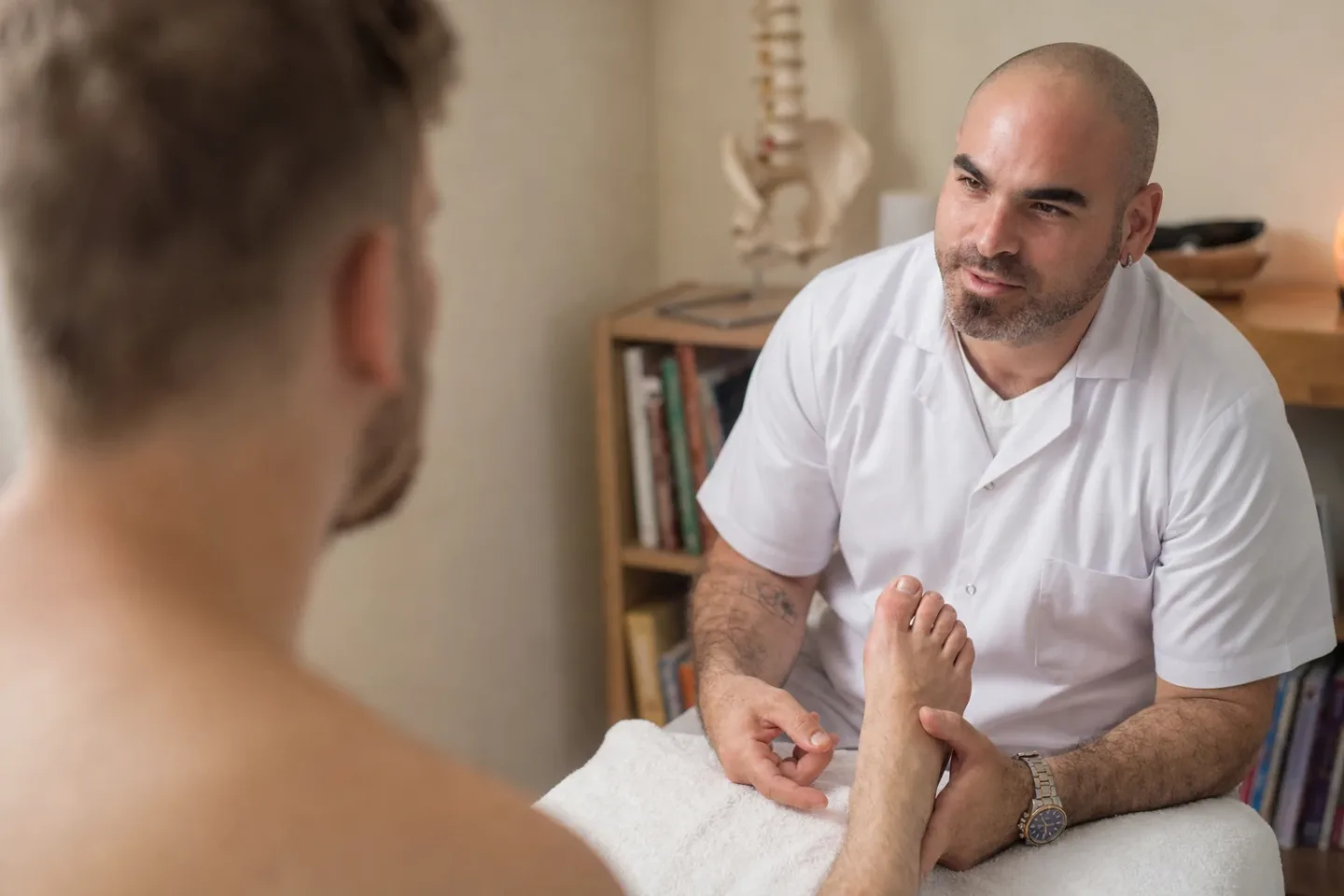
I check how you stand‚ walk and shift your weight‚ whether the foot moves comfortably‚ whether the ankle is restricted and whether the knee or the hip is compensating. I also check whether the lower back or the pelvis is taking part in the load because of the change in walking.
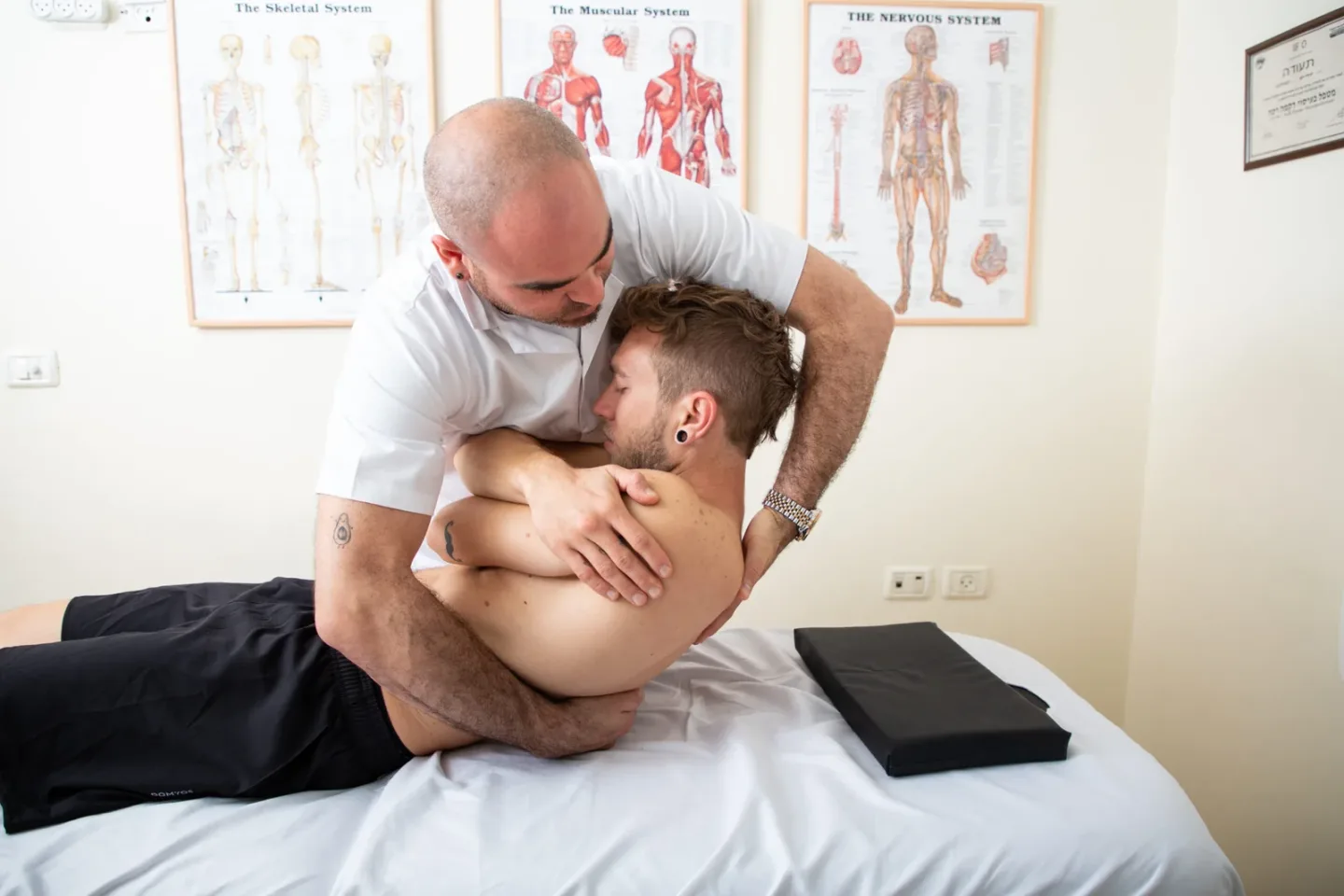
The treatment can include gentle soft tissue work‚ improving mobility in joints that are not in an inflammatory stage‚ guidance for a gradual return to load and changing habits that load the same area again and again. The goal is not to "cure" gout‚ but to help you move better in your own body.
Session Length and What You Get
The first session takes about an hour and includes a conversation‚ an examination and treatment‚ and follow-up sessions take about 45 minutes. If you are looking for osteopathic treatment in the north‚ you can come to the clinic at 6 Karkom Street in Kiryat Tivon‚ and some private insurance plans refund part of the cost.
Gout After the Attack: Load‚ Chronic Pain and the Limits of Treatment
Joint Stability and Repeated Load
After a painful gout attack‚ the body tends to avoid moving the affected area. Sometimes this lasts for weeks‚ even when the joint itself already looks completely normal.
If the pain was in the foot or the ankle‚ you may start to step differently‚ and if it was in the knee‚ you may lock the joint or shorten your steps. If the attack appeared in the hand‚ you may change the way you grip and use it.
In that case wrist joint pain can appear even after the inflammation itself has passed‚ because of compensating load on the tendons and muscles. Each such change makes sense in the short term‚ but over time it can create secondary loads.
In people with gout that comes back several times a year‚ these patterns become fixed and remain even in the calm periods.
The Foot and Ankle After an Attack in the Toe
A gout attack in the big toe changes the whole push-off phase of walking. To avoid stepping on the toe‚ many people roll the foot outward‚ shorten the step and shift the weight to the heel‚ so the calf and ankle muscles work in an unfamiliar pattern.
When this pattern goes on for weeks‚ pain in the arch of the foot‚ stiffness in the ankle or load on the knee of the same side sometimes appear. In the examination I check the movement of the toe joint‚ the ankle and the calf muscles‚ and build with you a gradual return to a full push-off from the toe‚ only once the joint is no longer inflamed.
Chronic Joint Pain‚ Wear and Better Function
Not every chronic joint pain is gout‚ and not every joint pain comes from active inflammation. Some people have a combination of several factors: past attacks‚ mechanical load‚ wear‚ reduced range of motion‚ relative weakness or fear of movement.
In such a case it is important to separate an acute gouty arthritis attack from chronic pain that remains even in calmer periods. Each of them needs a different approach‚ and sometimes both exist in the same person.
Joint Wear Alongside Gout
Gout and wear often meet in the same joint: repeated attacks can damage the cartilage‚ and crystals tend to settle precisely in joints that are already worn. When osteoarthritis is added‚ it is important to distinguish between the structural change and daily function.
Osteopathic care does not promise to "restore cartilage" and does not change the structure of the joint. Still‚ it can help you use your joints better‚ reduce unnecessary load and build a more comfortable routine.
With gouty arthritis too‚ this functional view is especially important in the periods between attacks.
Pain That Lasts Beyond the Gout Attack Itself
For some people with gout‚ the pain does not disappear completely between attacks. Sometimes sensitivity remains‚ sometimes there is a fear of stepping on the foot‚ and sometimes the body keeps behaving as if the attack were still active.
With long-lasting pain‚ the body and the nervous system can become more sensitive. If the pain goes on for months even between attacks‚ it is worth reading about chronic pain syndrome‚ which shows how pain is not only a local event in the joint.
Good care also takes into account sleep‚ stress‚ fear of pain and the return to activity.
What Is the Difference Between Osteopathic and Medical Care for Gout?
When it comes to gout‚ medical treatment focuses on the diagnosis‚ on treating the inflammation during an attack‚ on reducing pain and on preventing repeated attacks by controlling uric acid. This is the most important basis of treating gout disease‚ and it must not be replaced by manual treatment.
Osteopathic care focuses on how the body functions around the disease: how you move after an attack‚ which joint takes too much load‚ whether there is a limp and whether the lower back stiffens because of the change in walking. That is why it suits as supportive care in periods without acute inflammation‚ not instead of medical treatment but alongside it.
Situations in Which I Do Not Treat Manually
If the joint is red‚ hot‚ swollen and very painful‚ if there is a fever‚ if the pain appeared after an injury or if there is a complex background illness‚ a medical assessment is needed before manual treatment. Even when treatment is suitable‚ the touch is adapted to the state of the joint‚ the age and the medical background.
When a patient checks the risks of osteopathy in advance‚ that is a responsible approach. Every treatment should make clear what it can do‚ what it cannot do and when a certain sign requires a doctor‚ and with gout caution is especially important because of the inflammatory nature of the attacks.
Living With Gout: What Can You Do Day to Day?
Managing load is an important part of coping with gout‚ especially in the periods between attacks. Once the pain calms down‚ it is best to return to movement gradually and not all at once.
- Short walks that get longer gradually‚ in comfortable shoes that are wide at the front of the foot.
- Gentle movement of the joint that was sensitive‚ without sharp pain.
- Drinking enough throughout the day‚ especially on hot days.
- Cutting down on alcohol and foods that your doctor or dietitian advised you to limit.
- Paying attention to a limp‚ which can load the knee‚ the hip‚ the pelvis and the back.
Shoes‚ Walking and a Movement Routine
After an attack in the toe or the ankle‚ the shoe makes a big difference to comfort. A shoe with a wide front‚ a moderately flexible sole and good heel support reduces pressure on the sensitive joint and allows a fuller step.
It is worth building a routine of regular walking‚ even if short‚ instead of long walks once in a while. A body that moves every day copes better with load‚ and small changes in the way you walk are noticed sooner and corrected in time.
If you work standing for long hours‚ you can take short breaks‚ change the surface you stand on and make sure you drink enough. Even small habits like these reduce the build-up of load on the foot and the knee.
Lifestyle habits should be set individually‚ together with a doctor or a dietitian. Keeping a healthy weight‚ adjusting your diet and managing background conditions can be part of the picture‚ and osteopathy complements them by helping you return to activity safely.
Diet With Gout: What to Limit and What to Prefer?
Diet does not cure gout‚ but it can lower the uric acid level a little‚ lengthen the time between attacks and help control the conditions that come with it. The following advice is general‚ and a personal plan is best built with a clinical dietitian.
Foods and Drinks to Limit
- Red meat and organ meats such as liver and kidneys.
- Seafood‚ and fish only in moderate amounts (not cut out completely‚ because of the omega 3).
- Alcohol‚ especially beer and spirits. In periods of frequent attacks it is best to avoid it completely.
- Sweetened drinks and fruit juices‚ because of the large amount of fructose in them.
- Large amounts of very sweet fruit‚ grapes and dried fruit such as dates and figs.
Foods Found to Be More Suitable
- Vegetables‚ legumes and nuts as a source of plant protein.
- Low-fat dairy products‚ one or two servings a day.
- Coffee in moderation‚ up to about three or four cups a day‚ which has been linked to lower uric acid levels.
- Foods rich in vitamin C‚ such as citrus fruit.
- Water throughout the day‚ to help the kidneys clear uric acid.
Home Remedies: Cherries‚ Ginger and Celery
Many people with gout ask about cherries‚ ginger‚ celery or nettle tea. Some of them may have a small effect on uric acid‚ but none of them is enough to stop a strong attack or prevent repeated attacks.
You can include them in your diet if they suit you‚ as long as they do not take the place of medical treatment. Before starting any food supplement‚ check with your doctor that it does not affect your regular medications.
The Bottom Line on Gout
Gout is an inflammatory medical condition that causes sharp joint pain‚ swelling‚ redness and high sensitivity. During an attack the main treatment is medical‚ and afterwards many people are left with stiffness‚ a change in walking‚ fear of movement or secondary loads on other joints.
Osteopathic care can be added as support when there are no signs that require an urgent assessment‚ to improve movement and function. It does not lower uric acid and does not replace medication‚ but it helps you understand how the body compensates and how to return to your routine safely.
Frequently asked questions
Is gout a chronic disease?
Gout is considered a long-term condition‚ because the tendency to high uric acid levels remains over time. With suitable treatment and follow-up‚ many people have very few attacks and lead normal lives.
How long does a gout attack last?
A typical gout attack peaks within hours and eases gradually over a few days to a week or two. Early medical treatment usually shortens the attack and reduces the intensity of the pain.
Can I have osteopathic treatment during an attack?
During an acute attack the inflamed joint is not treated manually. It is sometimes possible to work gently on distant areas that take on load‚ but the main treatment at that stage is medical.
Does gout affect only the big toe?
No. The big toe is the most common place‚ but gout can also involve the ankle‚ knee‚ elbow‚ wrist and fingers.
What is the difference between gout and shigadon?
There is no difference: shigadon is the Hebrew name of the same disease. Both names are used in medical publications and in conversations with the doctor.
Is diet alone enough to control gout?
A suitable diet is important‚ but for many people it is not enough on its own. The decision about medication is made with the doctor‚ according to how often the attacks come and the uric acid levels.
When can I return to sport after an attack?
Once the inflammation has calmed down and the joint is no longer hot and swollen‚ you can return gradually. It is best to start with light activity such as walking‚ swimming or cycling‚ and to increase the load according to how the joint responds.
What should I do if a limp remains after the attack?
A limp that remains for weeks after the attack loads the knee‚ the hip and the back. It is worth checking the movement of the foot and the ankle and building a gradual return to normal walking‚ with professional guidance.
Is gout hereditary?
Gout has a family component‚ and people whose relative had it are at a slightly higher risk. Still‚ lifestyle habits‚ weight‚ medications and kidney health also play a part‚ so the risk is not set by family alone.
Is gout more common in men?
Yes‚ gout is more common in men‚ especially from middle age. In women it usually appears after menopause‚ when the hormonal effect that helps clear uric acid declines.
Does ice help during an attack?
Gentle cooling for a few minutes‚ through a towel‚ sometimes eases the pain and swelling during an attack. Resting and raising the joint also help‚ but they do not replace seeing a doctor and choosing suitable medication.
Is gout linked to other diseases?
Gout often appears together with high blood pressure‚ excess weight‚ diabetes or kidney disease. That is why the doctor usually checks these conditions too‚ and treating them is part of the overall control.
Can I drink coffee if I have gout?
Most likely yes. Moderate coffee drinking has been linked in studies to lower uric acid levels‚ but if you have heart disease‚ an irregular heartbeat or sleep problems‚ the right amount is best set with your doctor.
Can I stop the medication when there are no attacks?
It is not a good idea to stop on your own. The medication prevents attacks precisely because it keeps the uric acid level low‚ and when you stop it the level rises again and the attacks come back‚ sometimes after a few months.
Why did an attack appear just after I started medication?
In the first months of treatment to lower uric acid‚ the crystals in the joint start to break down‚ and this can trigger an attack. It is not a reason to stop the treatment‚ so the doctor sometimes gives a preventive drug during this period.
Does beer make gout worse?
Yes‚ beer and spirits are linked to attacks more than other drinks. In periods of frequent attacks it is best to avoid them completely‚ and in calm periods to keep to a small amount‚ in agreement with the doctor.
What should I bring to the first session?
Bring visit summaries‚ recent blood tests and a list of your medications. This way we can understand what stage your gout is at and adapt the manual treatment to the state of the joint.
Does insurance cover osteopathic treatment?
Some private insurance plans refund part of the cost of osteopathic treatment. It is worth checking the terms of your policy before the session.
Table of Contents
- What Is Gout and How Does It Affect the Joints?
- Uric Acid and Crystals in the Joint
- A Single Attack or Repeated Attacks
- Risk Factors for Gout
- Gout in Older Age
- Gout Symptoms You Should Not Ignore
- What Triggers a Gout Flare-Up?
- Other Joints That Gout Can Involve
- Warning Signs That Require Seeing a Doctor Urgently
- Gout Diagnosis‚ Blood Tests and Medical Treatment
- Why Is a Medical Assessment Important?
- Joint Fluid Testing‚ Ultrasound and Imaging
- Medical Gout Treatment and What It Aims to Achieve
- Preventing Repeated Attacks
- Medications That Lower Uric Acid in Gout
- What Does Manual Treatment Not Do?
- Gout Complications When It Is Not Under Control
- Tophi: Deposits Under the Skin
- Kidney Stones and Kidney Damage
- Gout and Heart Health
- How Does Osteopathy Fit Alongside Gout Treatment?
- What Is Checked in the Session?
- Session Length and What You Get
- Gout After the Attack: Load‚ Chronic Pain and the Limits of Treatment
- Joint Stability and Repeated Load
- The Foot and Ankle After an Attack in the Toe
- Chronic Joint Pain‚ Wear and Better Function
- Joint Wear Alongside Gout
- Pain That Lasts Beyond the Gout Attack Itself
- What Is the Difference Between Osteopathic and Medical Care for Gout?
- Situations in Which I Do Not Treat Manually
- Living With Gout: What Can You Do Day to Day?
- Shoes‚ Walking and a Movement Routine
- Diet With Gout: What to Limit and What to Prefer?
- Foods and Drinks to Limit
- Foods Found to Be More Suitable
- Home Remedies: Cherries‚ Ginger and Celery
- The Bottom Line on Gout
- Frequently asked questions
