
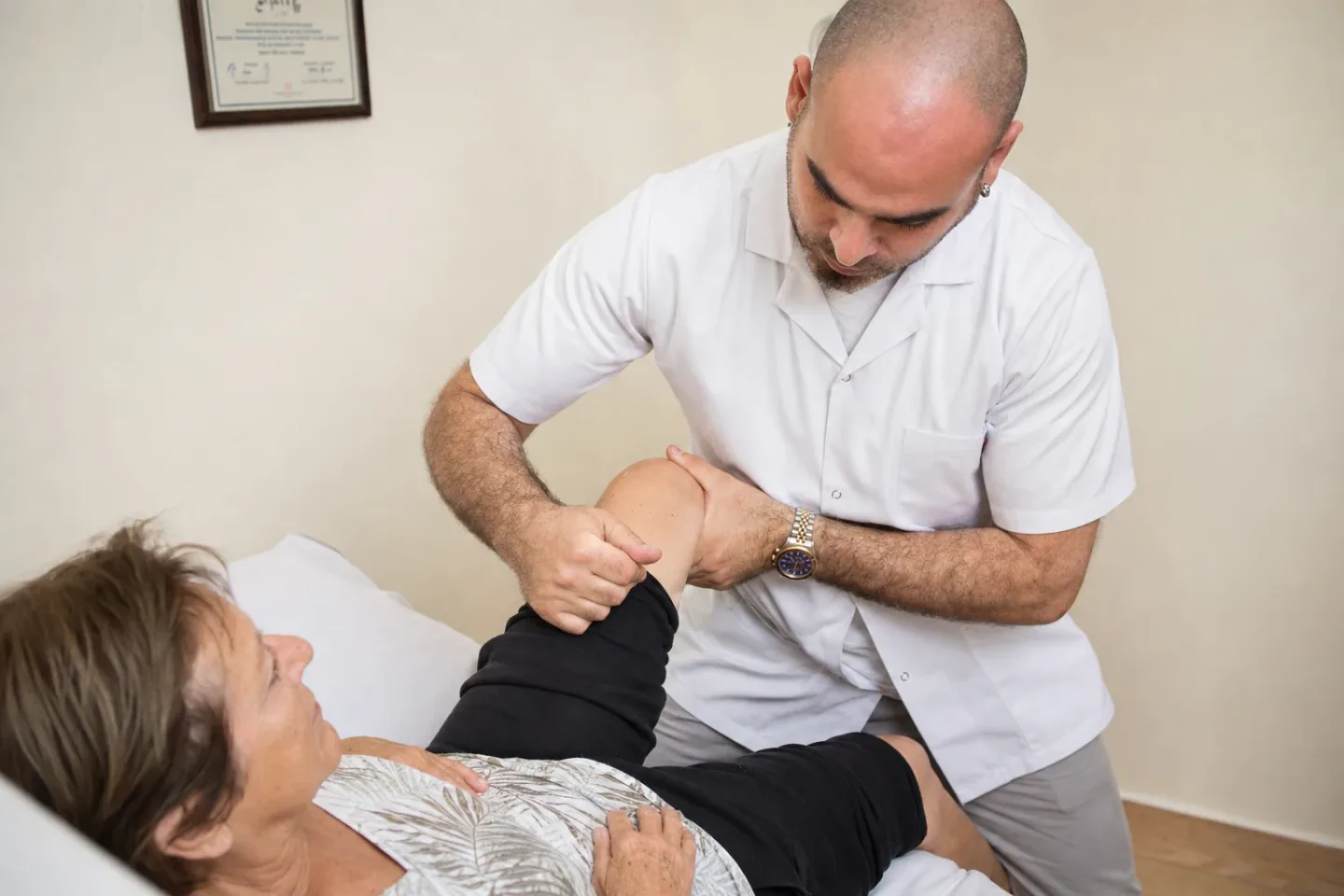
Osteoarthritis - How to Ease Pain and Keep Joints Moving?
8 min read
Were you told you have "cartilage wear"‚ and since then you have been afraid of every step and every stair? Do your knee‚ hip or shoulder hurt after walking and feel stiff in the morning? Are you wondering whether osteoarthritis means you have to stop moving?
I am Roman Kibler‚ an osteopath D.O. in Kiryat Tivon‚ and I combine gentle manual treatment with guidance for graded movement‚ so that the joint can carry load with confidence again.
Leave your details or call me‚ and together we will check how to ease the pain and keep you moving!
Osteoarthritis‚ also called arthrosis or degenerative joint disease‚ is a process in which the joint cartilage‚ the bone beneath it‚ the joint capsule and the surrounding tissues change. Cartilage covers the ends of the bones‚ and its role is to spread loads and allow smooth movement.
Contrary to the common belief‚ osteoarthritis is not just "wear and tear" of a material that gets ground down. It is a complex biological change in living tissue‚ which responds to loads‚ to movement and to changes in the body over the years.
What Is Arthrosis and How Does It Develop?
Cartilage is constantly building and breaking itself down. When this balance shifts‚ because of unsuitable load‚ long periods without movement‚ a previous injury‚ metabolic changes or genetic factors‚ the structure of the joint gradually changes‚ and arthrosis develops.
The joint responds by thickening the bone beneath the cartilage‚ and sometimes by forming bony outgrowths called osteophytes. An X-ray sometimes also shows narrowing of the space between the bones‚ but even then it does not necessarily mean a "bone on bone" situation.
Cartilage Wear Is Not a Reason to Stop Moving
Cartilage needs load to stay healthy: cyclical pressure and graded movement nourish it and preserve its ability to carry weight. Avoiding movement out of fear of "wear" weakens the muscles‚ impairs movement control and over time makes osteoarthritis symptoms worse.
That is why the right way to deal with osteoarthritis is not to protect the joint by avoiding movement‚ but to teach it to carry load in a controlled and gradual way.
Which Joints Are Affected by Osteoarthritis?
Osteoarthritis is especially common in weight-bearing joints such as the knees and hips‚ but it also appears in the shoulders‚ the fingers‚ the base of the thumb and the spine. In the knee‚ arthrosis often shows up as pain that gets worse going down stairs‚ getting up from a chair and after a long walk.
Osteoarthritis Symptoms and Their Effect on Function
The main symptom is mechanical pain: pain that gets worse with effort and improves with rest. Sometimes there is also short morning stiffness‚ usually less than half an hour‚ a creaking feeling in the joint‚ mild swelling and a reduced range of movement.
Many people describe knee pain in older adults that gets stronger after a long walk or going down stairs. When the front of the knee is involved‚ the joint between the kneecap and the thigh bone can also hurt‚ and I wrote about this structure in my article on kneecap pain.
In osteoarthritis of the knee‚ strong thigh muscles help in particular‚ because they absorb part of the load with every step. When the muscles weaken‚ the knee "absorbs" more‚ so graded strengthening is a central part of osteoarthritis treatment‚ at any age.
When osteoarthritis involves the shoulder‚ raising the arm above the head‚ putting on a shirt or sleeping on your side become difficult. Not all shoulder pain comes from wear‚ so it is important to check the tendons‚ the shoulder blade and the upper back as well.
Pain and Wear Are Not the Same Thing
One of the common myths is that the more wear there is‚ the more pain there is. In fact there is a large gap between imaging findings and the intensity of pain: many people with signs of osteoarthritis on an X-ray feel no pain at all.
On the other hand‚ significant pain sometimes appears when the structural changes are relatively mild. Pain does not equal damage: it is also affected by the nervous system‚ movement patterns‚ everyday load‚ stress and our beliefs about the body.
Our Beliefs Shape the Pain
Someone who hears that they have "cartilage wear" often develops a feeling that the joint is ruined and that every movement does harm. This is how a cycle forms: fear of movement‚ less activity‚ weaker muscles‚ higher sensitivity to pain and a stronger belief that the joint "is falling apart".
When you understand that the joint can carry graded load‚ the cycle reverses: the muscles get stronger‚ stability improves and the pain eases. A diagnosis of arthrosis is not a sentence; it is a description of the state of the tissue.
Osteoarthritis of the Spine
When the process appears in the joints between the vertebrae‚ spinal osteoarthritis is part of a wider picture of degenerative changes‚ which in the neck is called cervical spondylosis. The process includes changes in the discs and in the small joints between the vertebrae.
Such changes are very common over the years and do not necessarily cause pain. When pain appears in the neck or the back‚ I look at loads‚ movement patterns and nerve sensitivity‚ and do not rely only on an X-ray finding.
In the back and the neck‚ as in the knee‚ the supporting muscles and everyday movement strongly affect how you feel. Long sitting without breaks‚ a hunched posture in front of a screen and inactivity increase stiffness‚ while walking‚ range-of-motion exercises and changing position during the day ease the pain for many people.
Diagnosis and Medical Treatment of Osteoarthritis
The diagnosis is based on the symptoms‚ the physical examination and sometimes an X-ray‚ which shows narrowing of the joint space and osteophytes. Sometimes people are referred for an MRI to examine the soft tissues‚ but imaging does not necessarily reflect the level of pain or function either.
Medical osteoarthritis treatment usually includes weight loss where needed‚ physiotherapy‚ painkillers and anti-inflammatories as directed by a doctor‚ and sometimes injections into the joint. In advanced cases joint replacement surgery is considered‚ and each of these steps has an important place.
The decision about what suits you is made with your doctor‚ according to the pain‚ your function and your goals.
A hot‚ red and very swollen joint‚ sharp pain after a fall‚ fever or pain that wakes you every night are not typical of osteoarthritis‚ and they require an examination by a doctor before any manual treatment.
How Does an Osteopath Approach Arthrosis?
Osteopathy sees the painful joint as part of an overall load pattern. Sometimes it is not the source of the problem‚ but the area that takes excess load because of stiffness or weakness elsewhere in the body.
An osteopath examines posture‚ ranges of movement‚ muscle function and the neighbouring joints. The aim is not to "renew" cartilage‚ because no manual treatment restores worn cartilage‚ but rather:
- To improve the distribution of load between the joints.
- To balance the work of the muscles around the joint.
- To improve movement in the neighbouring joints.
- To reduce the sensitivity of the tissues.
- To restore confidence in movement.
The Treatment Itself
The treatment includes gentle mobilizations of the joint‚ soft tissue work and improving the movement of the neighbouring joints. Alongside the hands-on work you get guidance: exercises to strengthen the supporting muscles‚ balance work and adjustments to your daily habits.
Combining manual treatment with active exercise helps keep the result over time‚ which is the realistic goal of arthrosis treatment. The first treatment lasts about an hour‚ and follow-up treatments about 45 minutes.
What Can You Do at Home When You Have Osteoarthritis?
- Daily movement in the right dose: walking‚ swimming or a stationary bike.
- Strengthening the thigh and buttock muscles‚ which support the knee and the hip.
- Short breaks when standing or walking for a long time‚ instead of giving them up.
- Keeping a healthy weight‚ which eases the load on the weight-bearing joints.
- Local heat before activity‚ when the joint is stiff in the morning.
A simple rule for load: mild pain that passes within an hour or two after activity is usually fine. Pain that is worse the next day shows that the load was too high‚ and you should reduce it a little rather than stop completely.
Comfortable shoes with a cushioning sole‚ a walking stick held on the healthy side on difficult days and adjusting the height of the chair and the bed take load off the joints. Small changes like these are a practical form of osteoarthritis pain relief‚ and they let you keep moving even in periods when the pain gets stronger.
The Bottom Line: Move Wisely and Do Not Be Afraid
Osteoarthritis is the joint's process of adapting to loads over time‚ and the pain is not always a direct result of the structural change. Avoiding movement out of fear makes the condition worse‚ while graded load‚ strengthening and controlled movement are the heart of dealing with arthrosis.
When medical follow-up‚ gentle manual treatment and the right exercise are combined‚ it is possible to reduce pain‚ improve function and break the cycle of fear. My clinic is at 6 Karkom Street in Kiryat Tivon‚ and you can leave your details to arrange a first examination and build an adapted plan together.
Frequently asked questions
Is Osteoarthritis Only a Disease of Older Age?
It is more common with age‚ but it can also appear at a younger age‚ mainly after a joint injury‚ repeated load or excess weight.
What Is the Difference Between Arthrosis and Arthritis?
Arthritis is a general name for inflammation in a joint‚ such as rheumatoid arthritis. In arthrosis the process is mostly degenerative‚ and the pain is usually mechanical‚ with short morning stiffness.
Does Osteoarthritis Always Get Worse Over Time?
Not necessarily. In many people the symptoms stay stable for years‚ and even improve with the right movement‚ strengthening and keeping a healthy weight.
Is Walking Harmful for a Knee With Cartilage Wear?
No. Walking in the right dose nourishes the cartilage and strengthens the muscles. If the pain is worse the next day‚ shorten the distance‚ but do not stop walking.
Can Osteopathic Treatment Restore Cartilage?
No. Manual treatment does not restore cartilage‚ but it can reduce pain‚ improve movement and help the body distribute load better.
Do Dietary Supplements Help With Osteoarthritis?
Studies on cartilage supplements are not conclusive‚ and for most people the effect is small. Before starting a supplement‚ consult your doctor‚ especially if you take other medication.
Heat or Cold for Osteoarthritis?
Local heat usually eases stiffness‚ especially in the morning or before activity. Cold helps more when the joint is swollen and warm after effort. Choose what eases the pain for you.
When Should You Think About Surgery?
When the pain is strong‚ greatly limits your life and does not respond to conservative treatment over time. The decision is made with the orthopaedist‚ according to the full picture and what matters to you in your daily life.
Table of Contents
- What Is Arthrosis and How Does It Develop?
- Cartilage Wear Is Not a Reason to Stop Moving
- Which Joints Are Affected by Osteoarthritis?
- Osteoarthritis Symptoms and Their Effect on Function
- Pain and Wear Are Not the Same Thing
- Our Beliefs Shape the Pain
- Osteoarthritis of the Spine
- Diagnosis and Medical Treatment of Osteoarthritis
- How Does an Osteopath Approach Arthrosis?
- The Treatment Itself
- What Can You Do at Home When You Have Osteoarthritis?
- The Bottom Line: Move Wisely and Do Not Be Afraid
- Frequently asked questions
