
Neck Pain - What Is Behind It and How Can You Find Relief?
12 min read
Did you wake up in the morning with a locked neck that is hard to turn? After a day at the computer‚ does the pain climb up to the back of your head and your shoulders? Did you get an imaging report with the words spondylosis or osteophytes‚ and you are not sure what it says about you?
I am Roman Kibler‚ an osteopath (D.O.) with a clinic in Kiryat Tivon‚ and I treat neck pain by examining the neck together with the upper back‚ the shoulders and the breathing‚ not only the spot that hurts.
Leave your details or call me‚ and I will check with you what is loading your neck!

Neck pain is one of the most common complaints among people who work at a computer‚ drive a lot‚ sleep in an awkward position‚ deal with stress or have degenerative changes in the cervical spine. Sometimes it is muscle pain that passes within a few days‚ and sometimes the pain keeps coming back‚ limits movement and radiates to the shoulders.
It is important to know that imaging findings do not always match the intensity of the pain. One person can receive a report describing degenerative changes and still function well‚ while another suffers from significant neck pain even when the imaging is not dramatic.
Neck Pain Causes: Where Does It Come From?
Most neck pain is related to mechanical load: muscles that work too hard‚ small joints between the vertebrae that become stiff and soft tissues that react to a fixed posture. It is usually felt as stiffness‚ a pulling sensation‚ difficulty turning the head or a load that spreads from the back of the neck to the shoulder blades.
The pain often gets worse when you stay in the same position for a long time‚ for example at a computer or while driving‚ and improves after gentle movement‚ warmth or rest. Such a pattern usually points to a functional source rather than a serious structural injury.
Everyday Neck Pain Causes
- Sitting at a screen for a long time with the head pushed forward.
- Holding the phone between the shoulder and the ear‚ or looking down at the phone for a long time.
- Sleeping on a pillow that is too high or too low‚ or on the stomach with the head turned.
- Long drives with raised shoulders.
- Stress and shallow breathing‚ which make the neck and shoulder muscles work harder.
- Unsuitable training or returning to activity too quickly.
Neck Pain on One Side
Neck pain on one side only is often linked to a fixed habit: a screen placed to the side‚ a phone always held in the same hand or sleeping on the same side. A shoulder that is constantly raised or a heavy bag on one shoulder also creates an uneven load.
When one-sided pain comes with pain radiating to the arm on the same side‚ the nerve roots also need to be checked. When it stays local and changes with position‚ it is usually muscle or joint pain.
Neck Pain in the Morning
Neck pain that appears mainly in the morning and improves within an hour of movement is usually related to the sleeping position‚ the pillow or stiffness of the small joints. Long morning stiffness that lasts for hours and comes with pain in other joints‚ such as arthritis in the neck and elsewhere‚ justifies an assessment by a doctor.
Acute Neck Pain Versus Chronic Neck Pain
Acute neck pain appears all at once‚ for example after a sudden movement or a night in an awkward position‚ and usually improves within days. Neck pain that lasts more than three months is considered chronic neck pain‚ and then it is important to check not only the tissues but also the habits‚ the stress and the sleep that keep feeding the pain.
Neck Pain That Radiates to the Head‚ Shoulders and Hands
The neck is connected to the base of the skull‚ to the shoulder girdle and to the nerves that run down to the hands‚ so neck pain does not always stay in one place. The way it radiates is an important clue: where the pain reaches‚ when it appears and what eases it.
Neck Pain and Headache
Tension in the muscles at the base of the skull can cause a headache that starts at the back and spreads to the temples and the forehead. Many people with neck pain say the headache gets worse at the end of a workday at a screen and improves after movement or a good night's sleep.
A new headache‚ a very strong one or one that is different from usual needs a medical examination first‚ even if the neck is stiff. You can read about the headache warning signs and the link between the back of the neck and the head in a separate article.
Neck Pain and Dizziness
Some people feel unsteady‚ foggy or slightly dizzy when the neck is stiff‚ especially when turning the head or after sitting for a long time. In such cases doctors speak of cervical vertigo‚ a diagnosis made only after a doctor has ruled out other causes of dizziness.
Dizziness that comes with a disturbance in speech‚ vision or swallowing‚ weakness on one side of the body or a sudden headache requires going to the emergency room right away. This is true even if you have a known history of neck pain.
Neck Pain Radiating to the Shoulder‚ Arm and Fingers
When neck pain radiating to the shoulder continues down the arm‚ it is necessary to tell apart muscle overload‚ a problem in the shoulder itself and an irritated nerve root in the neck. If your main difficulty is shoulder pain‚ it is worth checking both areas together.
Pain that gets worse when you tilt your head back or toward the painful side‚ and improves when you rest your hand on your head‚ sometimes points to the involvement of a nerve root. Pain that gets worse when you raise your arm above your head points rather to the shoulder.
Tingling‚ burning or reduced sensation in the fingers suggests nerve involvement. The article on tingling in the hands explains when this is related to the neck and when to another source‚ and weakness in the hand always requires a medical examination.
Cervical Spondylosis: What Do Degenerative Changes Mean?
Spondylosis is a general term for degenerative changes in the spine. In the neck these changes can involve the discs‚ the small joints between the vertebrae‚ the ligaments and sometimes also the channels through which the nerves pass.
In many people such changes develop with age and do not always cause pain. That is why the words cervical spondylosis or degenerative disc disease in the neck in a report do not necessarily mean there is a serious problem or that you should avoid movement.
When there is pain‚ the important question is how the finding connects to function: whether the neck is limited when turning‚ whether there is pain radiating to the shoulder or hand‚ whether there is stiffness in the morning and whether computer work makes it worse. These answers matter more than the heading of the report.
Cervical Spondylosis and the Upper Back
With cervical spondylosis‚ some vertebrae move less‚ and other vertebrae work harder to compensate. When the upper back is also stiff‚ the chest barely takes part in the movement and the shoulders are held high‚ so the neck has to do extra work every time you turn your head.
That is why treatment that focuses only on the painful spot may give only temporary neck pain relief. If you also suffer from stiffness between the shoulder blades and episodes of back spasms‚ it is worth reading more about them‚ because the two areas work as one unit.
Bone Spurs in the Neck: Do They Always Cause Pain?
Osteophytes are bone spurs that appear as part of a degenerative process in the joints and vertebrae. Cervical osteophytes‚ or bone spurs in the neck‚ are often described in X-ray‚ CT or MRI reports‚ even in people who have no pain at all.
Not every osteophyte causes symptoms. In many cases it is an incidental finding‚ and the actual neck pain is related more to stiffness‚ muscle overload‚ reduced mobility or tension around the shoulders.
When bone spurs in the neck narrow the passage of a nerve or combine with other changes such as a bulging disc‚ there may be pain radiating to the hand‚ numbness‚ weakness or pain that gets worse in certain positions. In such a case a medical assessment is needed‚ and manual treatment is given only if the doctor found no reason to avoid it.
Neck Pain After an Accident or a Sudden Movement
Pain that appears after a car accident‚ a fall‚ a sports injury or a sudden movement needs a different approach from pain that developed gradually. Sometimes the symptoms appear immediately‚ and sometimes they develop hours or days after the event.
The neck pain can include stiffness‚ limited head rotation‚ headaches‚ shoulder pain‚ fatigue or dizziness. Information about whiplash after a car accident helps you understand what to watch for‚ but after an injury you see a doctor first‚ and osteopathic care is added only after an injury that needs medical treatment has been ruled out.
How Does an Osteopath Examine and Treat Neck Pain?
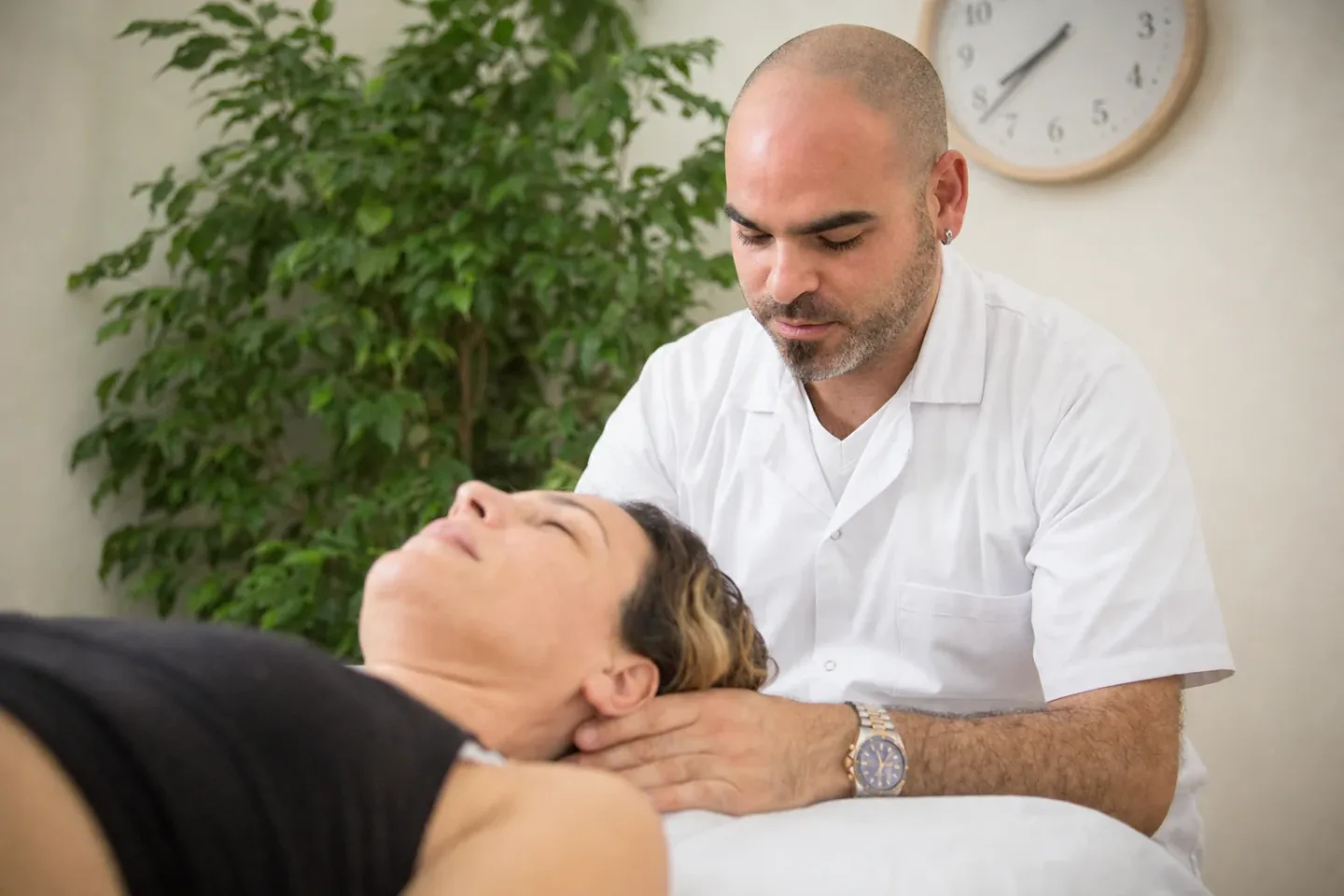
The examination of neck pain starts with a conversation: when the pain started‚ whether there was an injury‚ what makes it worse and what eases it‚ whether there is radiating pain or numbness and what the imaging showed. Then I check the movement of the neck‚ the upper back‚ the shoulders‚ the chest and the breathing‚ and sometimes also the pelvis and the lower back.
The examination is not aggressive or painful. When nerve involvement is suspected‚ I carefully check strength‚ sensation and reflexes‚ and if the picture does not suit conservative care‚ the right decision is a referral to a doctor.
What Does Neck Pain Treatment Include?
Neck pain treatment can include gentle work on muscles and soft tissues‚ adapted joint mobilizations‚ improving the mobility of the upper back‚ work on breathing and the movement of the chest‚ and guidance for sitting‚ sleeping and working at a computer. The first session takes about an hour‚ and follow-up sessions take about 45 minutes.
Osteopathic treatment does not make osteophytes "disappear" and does not reverse degenerative changes. The aim is to improve how the body functions despite the changes‚ reduce the load on sensitive tissues and help you understand which habits make the neck pain worse.
The Difference From the Conventional Approach
Conventional medicine is essential for diagnosis‚ for ruling out dangerous conditions‚ for referral to imaging and for medication. In cases of acute pain‚ an injury‚ neurological signs or a systemic disease‚ this is the basis that must not be skipped.
At the same time‚ people who have had neck pain for a long time without warning signs also need a functional answer: how to move‚ how to sit and what in the body keeps feeding the pain. This is where the osteopathic approach completes the picture‚ without replacing the doctor.
What Can You Do at Home for Neck Pain Relief?
The first step toward neck pain relief is to avoid staying in the same position for a long time. Even a "correct" posture becomes a load if you stay in it for hours without moving.
Working at a Computer and Driving
Raise the screen to eye level‚ bring the keyboard closer and get up for a short break every half hour to an hour. In the break‚ a few gentle shoulder rolls‚ some deep breaths and light movement of the upper back are enough.
When driving‚ make sure your head is not pushed forward and your shoulders are not held tense. A properly adjusted headrest and a seat close enough to the wheel reduce the load on the neck on long drives.
Sleep‚ Warmth and Exercise
A pillow that fills the gap between the shoulder and the head when lying on your side‚ or a lower pillow when lying on your back‚ helps the neck rest without bending. Sleeping on your stomach with the head turned to one side is one of the common causes of a locked neck in the morning.
Gentle warmth helps when neck pain is muscular and stiff‚ but after an injury or a sharp worsening it is better to consult first. If a certain movement increases radiating pain‚ numbness or weakness‚ stop and get checked.
When Should You See a Doctor?
It is worth seeking treatment when neck pain keeps coming back‚ limits movement‚ disturbs your sleep or creates an ongoing load in the shoulders and shoulder blades. Treatment is suitable even when there is a finding such as spondylosis‚ as long as there are no signs that require urgent medical care.
See a doctor if there is pain after trauma‚ weakness in the arm or leg‚ ongoing numbness‚ a disturbance in walking or balance‚ pain that gets worse quickly‚ fever‚ unexplained weight loss‚ unusual night pain or a change in bladder or bowel control. Sharp neck pain with a strong‚ sudden headache‚ fever or stiffness that prevents bringing the chin to the chest requires going to the emergency room right away.
Neck Pain Is a Reason to Check the Whole System
Neck pain‚ spondylosis and osteophytes can appear together‚ but the imaging finding is not always the only cause of the pain. It is necessary to connect the imaging‚ the symptoms‚ the physical examination and daily function‚ and not to settle for the name of the diagnosis.
When there are no warning signs and the pain is related to load‚ stiffness‚ posture or breathing‚ gentle care can help reduce the load and return you to movement. If you are looking for osteopathic treatment in the north‚ the clinic in Kiryat Tivon is open for booking an examination.
Frequently asked questions
How long does neck pain last?
Muscle-related neck pain after a bad night's sleep or a busy day usually passes within a few days to a few weeks. Neck pain that keeps coming back or lasts for months requires checking the factors that keep loading the neck.
Is spondylosis a progressive disease?
Spondylosis is a general name for changes that develop with age‚ and in many people it causes no symptoms. What matters is function: movement‚ pain and nerve signs‚ not the word in the report.
Can cervical spondylosis be treated without surgery?
In most cases the treatment is conservative: adapted movement‚ reducing load‚ physiotherapy or manual treatment and medication as needed. Surgery is considered only in certain situations with significant pressure on a nerve or the spinal cord‚ and the decision is a medical one.
Do bone spurs in the neck go away?
No‚ bone spurs do not disappear with manual treatment or exercise. It is possible to improve the movement around them and reduce the load on the tissues‚ and in this way ease the pain.
Can neck pain cause headaches?
Yes‚ tension in the muscles at the base of the skull and stiffness of the upper vertebrae are a known cause of a headache that starts at the back of the neck. A new‚ strong or unusual headache requires a medical examination.
Which pillow is best for neck pain?
There is no single pillow that suits everyone. The pillow should keep the head in line with the back‚ so that when lying on your side it fills the gap between the shoulder and the ear‚ and when lying on your back it is lower.
Is neck pain related to stress?
Yes‚ stress increases the tension in the neck and shoulder muscles and changes the breathing pattern. Many people feel the pain gets worse in busy periods‚ so the treatment also includes work on breathing and relaxation.
Heat or cold for neck pain?
For stiff‚ muscular neck pain‚ gentle warmth is usually more soothing. After a new injury or when there is swelling‚ it is better to consult before using heat.
Is osteopathic treatment of the neck safe?
The treatment is adapted to your age‚ the findings and how your body responds‚ and it uses mainly gentle techniques. Before the treatment I ask about warning signs‚ and in case of doubt I refer you to a doctor.
How many sessions are usually needed?
It depends on how long the pain has lasted and what is causing it. New pain sometimes improves after a few sessions‚ while long-standing pain needs a longer process that also includes changing habits at home.
Table of Contents
- Neck Pain Causes: Where Does It Come From?
- Everyday Neck Pain Causes
- Neck Pain on One Side
- Neck Pain in the Morning
- Acute Neck Pain Versus Chronic Neck Pain
- Neck Pain That Radiates to the Head‚ Shoulders and Hands
- Neck Pain and Headache
- Neck Pain and Dizziness
- Neck Pain Radiating to the Shoulder‚ Arm and Fingers
- Cervical Spondylosis: What Do Degenerative Changes Mean?
- Cervical Spondylosis and the Upper Back
- Bone Spurs in the Neck: Do They Always Cause Pain?
- Neck Pain After an Accident or a Sudden Movement
- How Does an Osteopath Examine and Treat Neck Pain?
- What Does Neck Pain Treatment Include?
- The Difference From the Conventional Approach
- What Can You Do at Home for Neck Pain Relief?
- Working at a Computer and Driving
- Sleep‚ Warmth and Exercise
- When Should You See a Doctor?
- Neck Pain Is a Reason to Check the Whole System
- Frequently asked questions
