
Back Spasms - What to Do When Your Back Locks Up
14 min read
Did you get up in the morning and your back simply locked‚ until even putting on socks became a mission? Did you bend down to pick up something light and feel a sharp pain that has not let go for several days? Does your back lock up again and again‚ every time after a busy week at the computer?
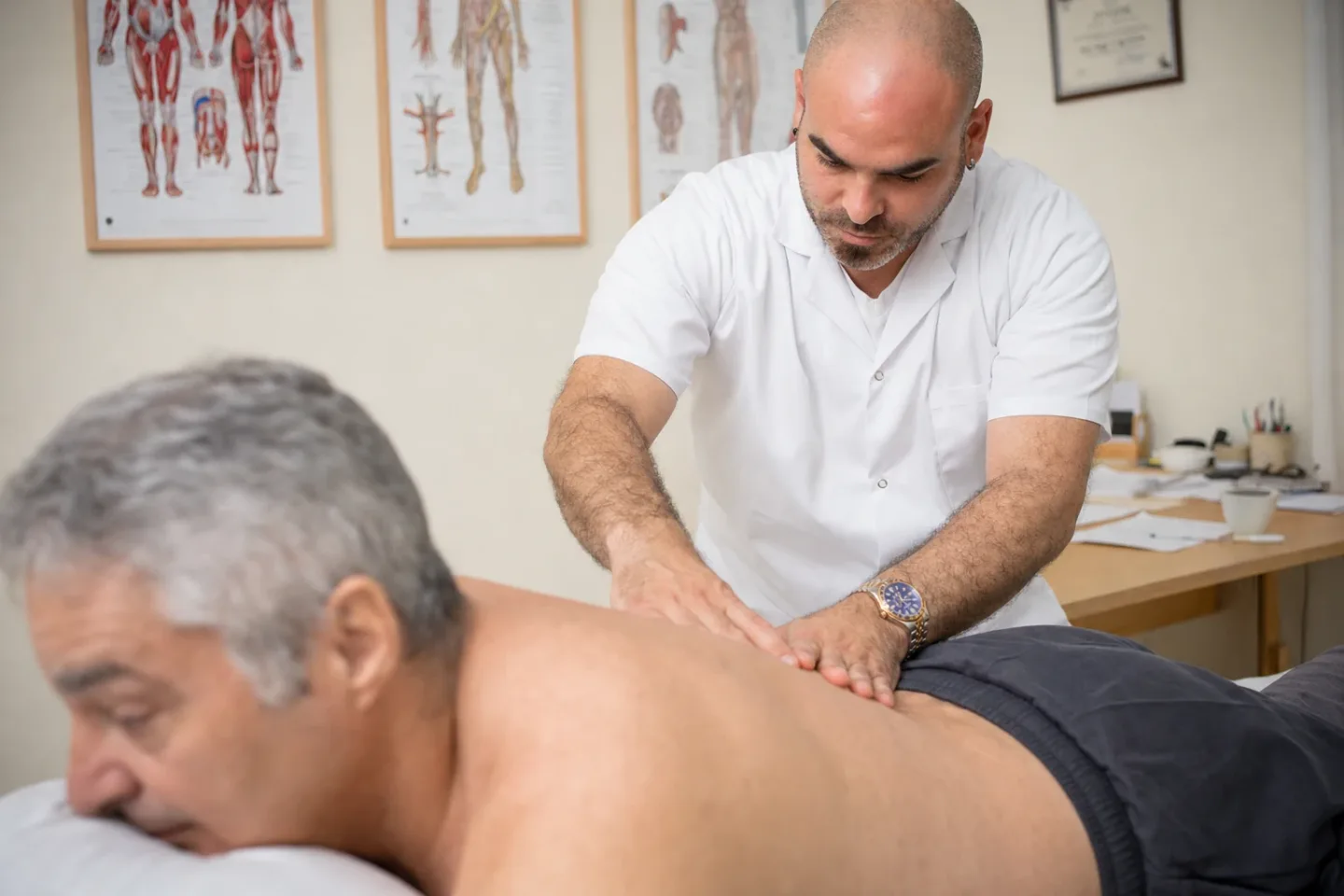
I am Roman Kibler‚ an osteopath D.O. with a clinic in Kiryat Tivon and a massage therapist since 2017‚ and I treat back spasms with gentle manual techniques and also check the pelvis‚ the hips and the chest so that your back does not lock up again in the same pattern.
Leave your details or call me‚ and I will check with you what locked your back and how to release it safely!
A locked back is one of the most common problems that send people looking for quick relief. Sometimes it starts after a sudden movement‚ lifting a weight‚ a workout‚ long sitting or sleeping in an awkward position‚ and sometimes you simply get up in the morning and feel that your back has locked.
The pain of a tight back can be mild and annoying‚ but in other cases it limits walking‚ bending‚ deep breathing‚ getting into the car or even moving from lying down to sitting. Despite the dramatic feeling‚ in most cases back spasms are linked to mechanical load‚ muscle tension‚ restricted movement or a protective reaction of the body‚ and not necessarily to serious damage.
A tight back is not one precise diagnosis but a description of a feeling. Behind it there may be muscles that went into a protective contraction‚ small joints in the spine that struggle to move‚ load on a disc or compensation coming from the pelvis and the hips. So the right treatment does not only ask how to release the back‚ but also what created the load and what needs to change so the pain does not come back.
Back Spasms - Why Does the Body React with Pain and Restriction?
Back spasms often start like this: when the body detects a sudden load‚ an unfamiliar movement or a possible threat to an area‚ the muscles around that area contract to protect it. The contraction is useful for a short time‚ but when it goes on it creates stiffness‚ pain and restriction.
The back's reaction is also influenced by your general state: tiredness‚ stress‚ lack of sleep‚ long hours of sitting at work‚ lower fitness or a sudden physical load. That is why two people can do exactly the same movement‚ and only one of them ends up with back spasms. The treatment deals not only with the event itself but also with the background in which it happened.
A Muscle Spasm in Back Muscles and the Link Between Contraction and Protection
When you feel a muscle spasm in back muscles‚ it is easy to think the solution is just to press on it or stretch it. In fact‚ a muscle that goes into a contraction sometimes does so to protect an area it senses as unstable or overloaded. Pressing too hard without understanding why it contracted may give only short relief and can even increase the sensitivity.
Osteopathic treatment treats the muscle as part of a system. I check whether the contraction is linked to a joint restriction‚ a load at work‚ shallow breathing‚ long sitting or compensation from another area‚ and only then work gently on the tissues and give the body a real reason to let go.
Back Spasms - What to Do in the First Hours and Days?
When your back locks up‚ the natural tendency is to look for one movement that will solve everything at once. In practice‚ in most cases it is better to start gently and give the body a sense of safety:
- Slow‚ deep breaths that relax the belly and the waist.
- A short walk at home every hour or two.
- Gradual changes of position‚ without sitting or lying for hours in a row.
- Local heat‚ if it helps.
- Movement in a range that does not trigger sharp pain.
When there are no warning signs‚ moderate movement is usually better than lying in bed for a long time. Most cases of back spasms improve gradually within days to weeks‚ especially when you get back to movement at the right pace.
How to Release a Locked Back Fast Without Making the Pain Worse?
If you are asking how to relieve back spasms fast‚ you should know that the fast way is usually the soft one. Strong stretches or trying to crack your back yourself are not a good idea‚ especially when the pain is sharp or spreads. If a certain movement clearly makes the pain worse‚ stop and choose a smaller movement.
Simple movements that suit most people are small pelvic tilts lying on your back with bent knees‚ gently rocking the knees from side to side and slow walking. When the pain starts to ease‚ increase the range gradually.
How Do You Release a Locked Back When It Is Hard to Get Out of Bed?
Difficulty getting out of bed is one of the well-known signs of a locked back. A sharp move from lying to sitting loads the lower back and causes sharp pain‚ so it is better to get up in stages: roll onto your side‚ lower your legs off the bed and push gently with your hands until you are sitting.
The same principle works for getting in and out of the car: sit down first and only then bring your legs in‚ and the other way round when getting out. Small actions like these reduce the load and help you start the day without fighting the pain.
Back Spasm Relief with Movement‚ Heat and Breathing
How do you get back spasm relief without harming the back? The principle is to combine three things: movement the back agrees to‚ relaxing the muscles with heat and breathing‚ and temporarily reducing the load that caused the problem. Even a severe back spasm usually responds to this combination‚ and you need no special equipment‚ only patience and listening to your body.
Breathing affects back spasms more than you might think. When the diaphragm moves well‚ the belly and the waist relax‚ and when breathing is shallow the muscles around the spine stay on guard. A few minutes of slow breathing lying on your side or on your back are a good part of any release.
How to Release a Tight Muscle in the Back at Home?
When it is a contracted muscle with no warning signs‚ you can combine local heat‚ gentle massage‚ movement in a comfortable range and frequent changes of position. How do you release a tight back muscle without making it worse? Do not press hard on the painful spot and do not stretch into pain‚ but look for a movement the muscle allows and widen it gradually.
Similar principles apply to other muscles in the body‚ and the article on how to release tight muscles covers this in more detail. If the muscle locks again and again in the same place‚ it is a sign that it is worth checking what is feeding the load.
Lower Back Spasms
Lower back spasms feel like a lock around the waist‚ sharp pain when bending or difficulty straightening up after sitting. Sometimes the pain stays local‚ and sometimes it spreads to the buttock or the leg.
With lower back spasms‚ it is not worth rushing to conclude that it is a disc herniation just because the pain is strong. The strength of the pain does not always reflect how serious the problem is‚ and a protective muscle contraction can be very painful even without significant damage.
Thrown Out Back - What Happened Before?
When people say they have a thrown out back‚ I check what came before it: lifting‚ a workout‚ long sitting‚ a long drive‚ emotional load or a repeated movement. The lower back is strongly influenced by the pelvis and the hips‚ so treatment that looks only at the vertebrae may be incomplete. A good examination also looks at the movement of the pelvis‚ the ranges of the hip and the walking pattern.
How to Release a Tight Lower Back?
How do you release a tight lower back safely? Start with small movements: gentle pelvic tilts lying down‚ gently pulling one knee towards the chest‚ a short walk and a change of position every few minutes. If the pain is very sharp or spreads significantly‚ avoid aggressive exercises and get checked.
A Muscle Spasm in the Lower Back or Something Else?
A muscle contraction in the lower back is usually felt as local tension on one side of the waist‚ which gets worse with movement and improves with rest and heat. Pain that runs down the leg‚ with numbness or weakness‚ points more to nerve irritation‚ and then it is worth reading about sciatic nerve pain and seeing a doctor.
Releasing the Lower Back and the Link to the Pelvis and Hips
Releasing the lower back needs more adaptation than the back in general‚ because the area is involved in almost every change of position. A lower back that struggles to move loads the hips‚ and the other way round: stiff hips make the lower back work too hard. That is why osteopathic treatment reduces load across the whole movement chain and does not only release a muscle in one place.
Treating a Bulging Disc in the Lower Back and the Link to a Locked Back
A bulging disc can be a significant finding in some people‚ while in others it shows up on imaging without explaining all the pain. So I connect the finding‚ the symptoms and the functional examination‚ and anyone with spreading pain‚ weakness or reduced sensation needs a medical check. You will find more information in the article on the herniated disc.
When a locked back of this kind suits conservative care‚ treating a bulging disc in the lower back focuses on reducing load‚ improving movement‚ guidance for sitting and lifting and a gradual return to activity. The aim is not to put a disc back in place with an unfounded promise‚ but to improve function and reduce the loads that increase pain.
A Tight Upper Back and Its Effect on the Neck‚ Shoulders and Breathing
A tight upper back is usually felt between the shoulder blades‚ around the chest or in the area that connects to the neck and shoulders. It appears after hours at the computer‚ work with the arms forward‚ long drives‚ emotional stress or shallow breathing. When the chest moves less well‚ the neck and shoulders work harder and the contraction spreads upwards‚ and sometimes neck pain joins in.
An Upper Back Spasm Between the Shoulder Blades
An upper back spasm is sometimes felt as a painful point near the shoulder blade‚ which gets worse with deep breathing or turning. Sometimes the source of the feeling is actually between the ribs‚ so it is worth reading about a tight muscle in the chest as well. Upper back pain that comes with shortness of breath‚ chest pain or sweating needs an immediate visit to a doctor.
How to Release a Tight Upper Back Step by Step?
How do you release a tight upper back? Start with gentle movement of the chest and the shoulder blades: deep breathing‚ slowly opening the arms to the sides‚ small rotations of the upper back and short breaks during the working day. Avoid sharp movements‚ especially if there is pain spreading to the arms‚ numbness or weakness.
Treating Upper Back Pain
In some people back spasms in the upper back come again and again because of sitting and breathing habits rather than a local problem. Treating upper back pain includes an examination of the neck‚ the shoulder blades‚ the ribs and the lower back‚ gentle manual work to improve mobility and adjusting the workstation. Changing habits is an important part of the result‚ no less than the treatment itself.
A Locked Back in Pregnancy
In pregnancy the back and the pelvis deal with changes in posture‚ in the centre of gravity and in the mobility of the pelvic joints. A locked back in pregnancy can be local‚ but sometimes it appears together with pain at the front of the pelvis‚ load in the groin or difficulty walking. You can read about the early stages in the article on back pain in early pregnancy.
When there is also pelvic pain during pregnancy‚ I check whether the lower back is really the source of the problem or part of a wider picture of loads on the pelvis. Adjusting sleeping positions‚ getting up through your side and avoiding steps that are too big help many women.
Osteopathic treatment in pregnancy is gentle and adapted to the stage of the pregnancy. It does not replace follow-up with your gynaecologist‚ and any unusual pain‚ bleeding‚ contractions or fewer baby movements need immediate medical attention.
Treating Back Spasms with an Osteopathic Approach
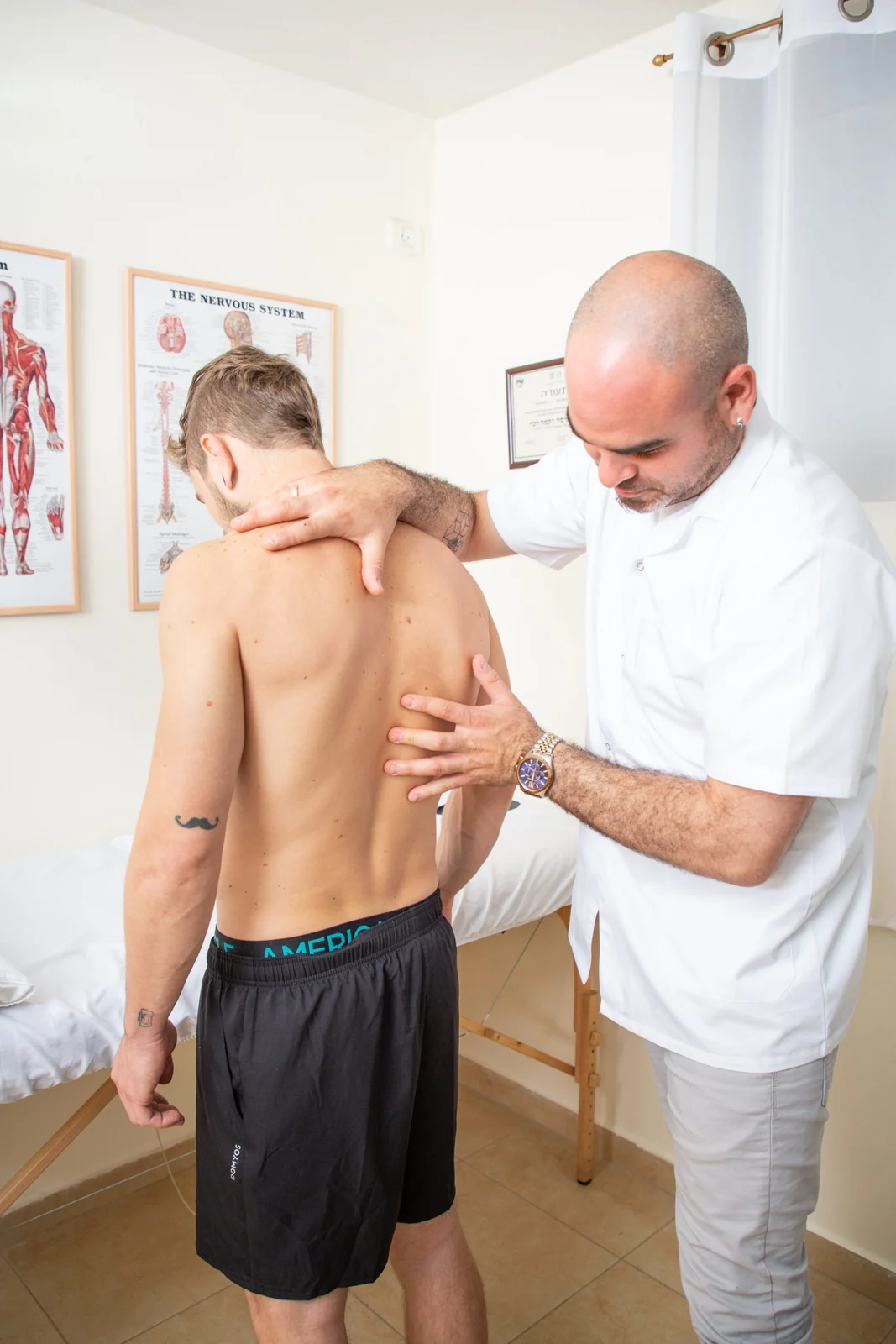
Treatment for back spasms starts with questions and an examination: when the pain started‚ where it is‚ whether it spreads‚ what makes it worse and what eases it‚ and whether there are signs that call for a medical check. After that I check the movement of the back‚ the pelvis‚ the hips‚ the chest and the neck.
The treatment includes gentle manual work on soft tissues‚ improving joint mobility‚ work on breathing and guidance for getting back to movement. The first treatment lasts about an hour‚ and follow-up treatments about 45 minutes.
The approach suits especially people whose back locks again and again because of load‚ posture or a movement pattern‚ and patients come to me from across the valley and from Haifa when they look for osteopathic treatment.
When Your Back Is Locked and You Cannot Move - When Does It Need a Check?
When your back is locked to the point that it is hard to move‚ the feeling is very frightening‚ but even strong pain is not always a sign of something dangerous. If the pain started after a familiar movement or load‚ stays local and improves gradually‚ it is probably a muscular or mechanical reaction.
See a doctor if the pain appeared after a significant injury or if it comes with one of the following signs:
- Weakness in the legs or loss of sensation in the groin area.
- Loss of control over urine or stool.
- Fever or unexplained weight loss.
- Unusual night pain or worsening that does not improve.
Releasing a Locked Back and a Gradual Return to Activity
Releasing a locked back is a process‚ even when the back spasm relief comes fast. Once the pain goes down you do not go straight back to the full load‚ but gradually add walking‚ movement exercises and adapted strengthening‚ and change the habits that loaded the back in the first place.
In treatment you learn how to get up from a chair‚ how to lift things‚ how to sit at work and how to go back to training without fear of movement. Good treatment gives the patient more confidence and not more dependence‚ and that lowers the chance that back spasms will come back in the same pattern.
Back Spasms - The Bottom Line
Back spasms can be painful and limiting‚ but in most cases they are linked to mechanical load‚ a protective contraction‚ restricted movement or compensation between the back‚ the pelvis and the legs. The right way to deal with them is graded movement‚ adjusting loads and an examination that finds what made the back lock‚ not a strong stretch or complete rest.
Osteopathic treatment is especially suitable when a muscle spasm in back muscles locks the back because of load‚ posture or a recurring pattern. When the pain is very sharp or comes with unusual signs‚ see a doctor before any manual treatment.
Frequently asked questions
How long do back spasms last?
In most cases back spasms improve gradually within a few days to a few weeks. Moderate movement and a gradual return to routine usually shorten the process‚ and if there is no improvement or things get worse‚ get checked.
Is heat or cold better for a locked back?
For most people local heat relaxes the muscles and eases the pain. If heat increases the pain or there was an injury‚ you can try cold for short periods.
Should I stay in bed with back spasms?
A short rest in the first hours is fine‚ but long periods lying down usually slow recovery. It is better to combine short walks and changes of position during the day.
How do I release a locked back at night?
Lying on your side with a pillow between your knees‚ or on your back with a pillow under your knees‚ reduces the load on the lower back. Before sleep it helps to combine local heat and slow breathing.
When does a locked back need a doctor?
When there is weakness in the legs‚ loss of sensation in the groin‚ a problem controlling urine or stool‚ fever‚ pain after an injury or pain that gets worse despite rest. In these situations do not wait.
How many treatments does a tight back need?
It depends on the source of the pain and how long it has been there. A back that locked once usually responds quickly‚ and a back that locks again and again also needs work on habits and movement.
Can I train with back spasms?
In the acute stage it is better to stick to walking and gentle movement. After the pain goes down‚ return to training gradually‚ starting with low weights and comfortable ranges.
Does insurance cover osteopathic treatment for the back?
Some private insurance companies refund part of the cost. It is worth checking the terms of your policy in advance.
Can a locked back be a herniated disc?
Sometimes‚ but in most cases a locked back is a muscle contraction and mechanical load‚ not a disc herniation. Pain that spreads to the leg with numbness or weakness needs an examination to tell the conditions apart.
Why does my back lock up again and again?
Recurring back spasms usually point to a constant load: long sitting‚ little movement‚ weak abdominal and buttock muscles or lifting the wrong way. To break the pattern‚ I look at the habits and do not only release the muscle.
Does massage help when the back locks up?
Gentle massage can ease the muscles and calm the pain‚ especially after the first hours. When a stiff back keeps coming back‚ it is worth checking the causes too and not relying on massage alone.
Can stress cause back spasms?
Emotional stress raises muscle tone and affects breathing and sleep‚ so it can contribute to back spasms‚ mainly in the upper back. Slow breathing‚ movement breaks and regular sleep help reduce this load.
Table of Contents
- Back Spasms - Why Does the Body React with Pain and Restriction?
- A Muscle Spasm in Back Muscles and the Link Between Contraction and Protection
- Back Spasms - What to Do in the First Hours and Days?
- How to Release a Locked Back Fast Without Making the Pain Worse?
- How Do You Release a Locked Back When It Is Hard to Get Out of Bed?
- Back Spasm Relief with Movement‚ Heat and Breathing
- How to Release a Tight Muscle in the Back at Home?
- Lower Back Spasms
- Thrown Out Back - What Happened Before?
- How to Release a Tight Lower Back?
- A Muscle Spasm in the Lower Back or Something Else?
- Releasing the Lower Back and the Link to the Pelvis and Hips
- Treating a Bulging Disc in the Lower Back and the Link to a Locked Back
- A Tight Upper Back and Its Effect on the Neck‚ Shoulders and Breathing
- An Upper Back Spasm Between the Shoulder Blades
- How to Release a Tight Upper Back Step by Step?
- Treating Upper Back Pain
- A Locked Back in Pregnancy
- Treating Back Spasms with an Osteopathic Approach
- When Your Back Is Locked and You Cannot Move - When Does It Need a Check?
- Releasing a Locked Back and a Gradual Return to Activity
- Back Spasms - The Bottom Line
- Frequently asked questions
