
How to Release Tight Muscles - and When to Get Checked?
11 min read
Did your neck or back "lock up" this morning so you cannot turn without pain? Does the same muscle tighten again and again‚ even after stretches‚ massage and pills? Are you looking for how to release tight muscles without making things worse and without waiting weeks for it to pass on its own?
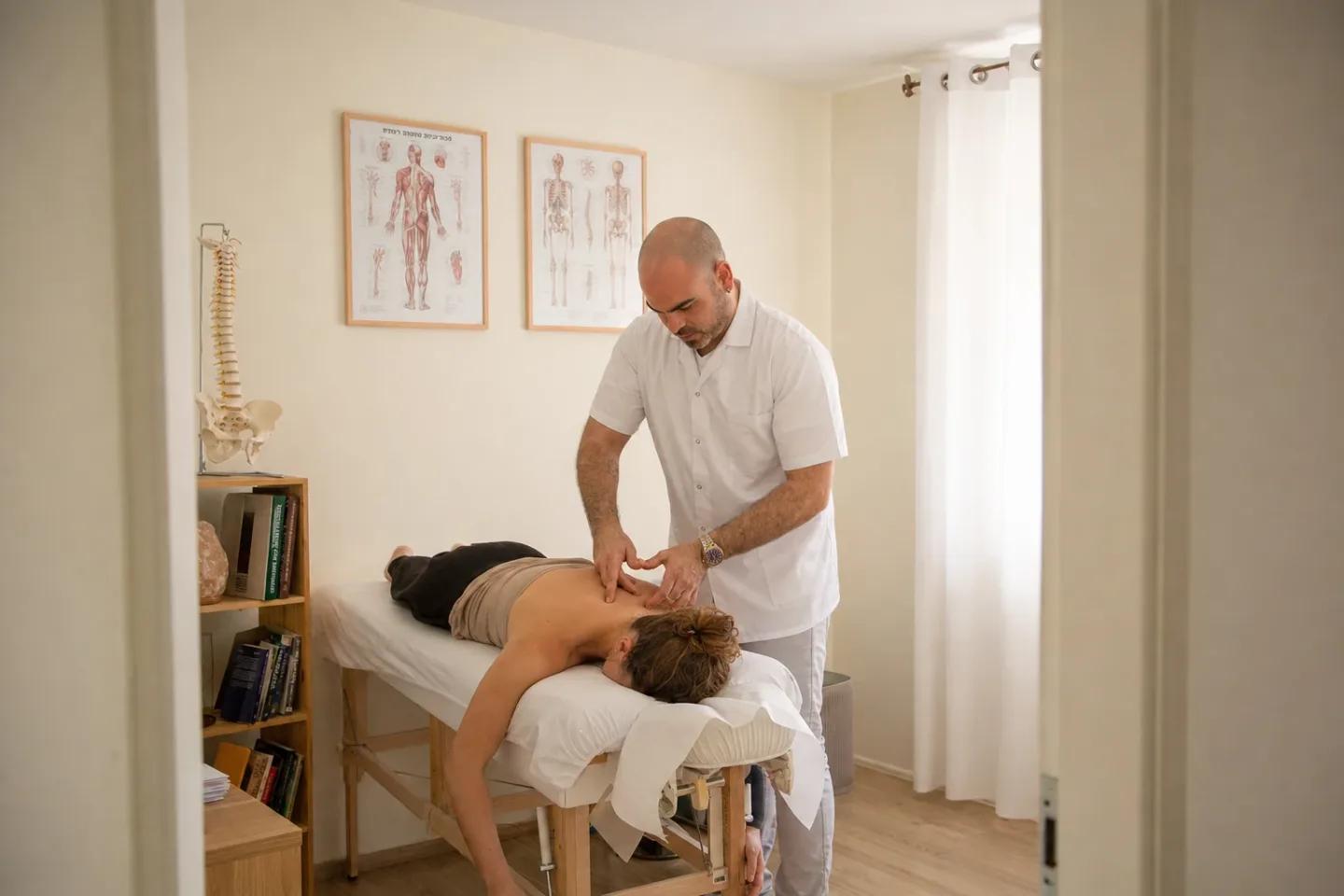
I am Roman Kibler‚ an osteopath (D.O) and a therapeutic massage therapist since 2017‚ and at my clinic in Kiryat Tivon I treat tight muscles by checking what loads them and not only the spot that hurts.
Leave your details or call me‚ and together we will check why your muscle tightened and how to release it so it does not come back!
Tight muscles are one of the most common complaints among people who work at a computer‚ train‚ lift loads‚ sleep in an awkward position or deal with long-term daily strain. The feeling can be stiffness‚ a cramp-like contraction‚ local pain‚ limited movement or a "pull" that appears when you try to move.
In most cases this is the muscle's response to load‚ fatigue‚ stress or unbalanced movement. When a muscle contracts like this‚ it is trying to protect a certain area‚ so the question is not only how to release tight muscles‚ but also why they got into this state in the first place.
Why Do Muscles Get Tight?
Sometimes the contraction appears after a clear effort‚ such as a workout‚ a long walk or physical work. In other cases it builds up gradually because of a long-held posture‚ shallow breathing‚ emotional stress‚ lack of sleep or compensation for pain somewhere else.
The common causes of tight muscles include:
- Long hours sitting at a screen‚ with raised shoulders and the head pushed forward.
- A new workout‚ a return to training after a break or more effort than usual.
- Sleeping in an awkward position or on an unsuitable pillow.
- Ongoing stress and shallow breathing that keep the body tense.
- Compensation for pain or a restriction in a nearby joint.
- A sudden movement‚ an unbalanced lift or a sharp twist.
Ongoing muscle tension of this kind often shows up as tender spots that people call muscle knots or trigger points. They are a sign of a muscle that is working too hard‚ not a separate disease.
Tight Muscles After Exercise
After physical activity‚ muscles may feel stiff or tender because of a new load or work in which the muscle lengthens under effort. Delayed soreness after a workout is a familiar phenomenon‚ and it should improve gradually within a few days.
When the pain is very sharp‚ focused‚ comes with swelling or bruising‚ or makes it clearly hard to put weight on the leg and move‚ it is worth checking whether this is a strain or a tear and not just ordinary tight muscles.
How to Release Tight Muscles Without Making the Pain Worse?
When a muscle feels tight‚ the natural urge is to stretch it hard‚ press on it or try to "break" the pain. Sometimes this eases things for a short time‚ but an approach that is too aggressive often makes the body contract even more.
A tight muscle is not always a "short" muscle. Sometimes it is a muscle that works too much to stabilize a weak area‚ protect a sensitive joint or compensate for limited movement somewhere else‚ so tight muscle relief starts with calming things down‚ not with force.
Steps to Relieve Tight Muscles at Home
When there are no warning signs‚ these are steps that help most people:
- Gentle movement within a range that does not make the pain worse‚ several times a day.
- Local heat‚ such as a hot shower or a heating pad‚ if it feels pleasant.
- Cold for a few minutes if the pain appeared after a knock or a sharp effort.
- Slow breathing with a long exhale‚ to lower your level of alertness.
- Light walking and changing position instead of lying down for long periods.
- Gentle stretching only‚ without sharp pain and without "bouncing".
There is no single rule that suits everyone: some people respond better to heat and some feel relief from cold. Notice what makes it better and what makes it worse‚ because that is the best tool for knowing how to relieve tight muscles in your own body.
If after two or three days of steps like these there is no improvement‚ it is time to ask how to loosen tight muscles in a different way‚ and to check what keeps loading them.
Stretching‚ Foam Rolling and Self-Massage for Tight Muscles
Stretches can help‚ but only when they are done gently. If the muscle "fights" the stretch‚ the body may be trying to protect the area‚ and it is better to work with small movements‚ breathing and gradual relaxation.
Rolling on a foam roller or gentle pressure with a ball can ease things for some people‚ and many use them to get rid of muscle knots. The pressure should be bearable‚ a few dozen seconds on each spot‚ and never up to sharp pain or bruises.
People who search for how to get rid of muscle knots often press harder and harder. With tight muscles‚ softer and slower usually works better than force.
How Do You Release Tight Muscles by Area of the Body?
Good release starts with understanding the link between the muscle and the rest of the body. A muscle in the neck can contract because of load from the upper back‚ a muscle in the thigh because the pelvis is not working in a balanced way‚ and a muscle in the calf because of a change in the way you walk.
How to Release Tight Muscles in the Back?
The back reacts quickly to long sitting‚ unbalanced lifting‚ stress and fatigue. If you are looking for back spasm relief‚ you will find a detailed explanation there of the upper and lower back and of what to do when the back locks up.
Back pain that spreads to the leg‚ comes with numbness or weakness and gets worse when you cough is not ordinary tight muscles. In that situation releasing the muscle is not the solution‚ and nerve involvement needs to be checked.
How to Relax Tight Muscles in the Neck and Shoulders?
The neck reacts fast to screen work‚ stress‚ shallow breathing and uncomfortable sleep. When the muscles of the neck and shoulder blades are contracted‚ the pain can spread to the head and shoulders‚ so I release the upper back and the chest too and not only the neck itself.
Releasing Tight Muscles in the Chest and the Diaphragm
Tension in the chest muscles and between the ribs is sometimes felt as pressure‚ pain on a deep breath or stiffness in the shoulders. The article on tight chest muscles explains the differences between muscle strain and pain that needs to be checked.
The diaphragm‚ the main breathing muscle‚ can also be tight in people under stress or after an illness with a long cough. If you are dealing with a tight diaphragm‚ you will find gentle breathing exercises there.
Chest pain with shortness of breath‚ sweating or pain spreading to the arm requires seeing a doctor immediately.
Releasing Tight Muscles in the Calf and the Foot
The calf muscle usually tightens after running‚ a long walk or with night cramps. With tight calf muscles‚ a gentle calf stretch and light walking usually help more than complete rest.
How to Release Tight Muscles in the Buttock‚ Thigh and Groin?
The buttock and thigh muscles tighten in people who sit for many hours‚ in runners and after long walks uphill. The pain is felt deep in the buttock or at the side of the thigh‚ and it sometimes gets worse when sitting on a hard surface or climbing stairs.
Releasing tight muscles in this area starts with light walking‚ gentle pressure with a ball and a soft stretch lying on your back. Pain that travels from the buttock to below the knee‚ with numbness‚ is not ordinary tight muscles and needs an examination.
In the groin and inner thigh‚ muscles tighten in athletes‚ after splits-type movements or in pregnancy. An explanation of groin pain during pregnancy helps tell muscle strain apart from pain that comes from the pelvis or the hip.
When Are Tight Muscles a Sign of Another Problem?
Not every pain that feels like a tight muscle comes only from the muscle. Pain that starts in the lower back or the buttock and continues down the leg can be related to nerve irritation‚ such as sciatica or a herniated disc‚ and then a strong stretch of the painful muscle may make it worse.
Leg pain that appears when walking and eases when sitting‚ especially at an older age‚ can also come from narrowing of the spinal canal. Long-lasting stiffness in the neck with pain and numbness spreading to the hands needs a check for a nerve or degenerative source.
See a doctor urgently when there is:
- Significant weakness‚ a sharp drop in sensation or spreading numbness.
- Loss of control over urine or stool.
- Fever‚ a general feeling of illness or strong pain that does not change with rest.
- Pain after a fall‚ an accident or a significant injury.
- Swelling‚ redness and warmth in one calf.
- Chest pain with shortness of breath.
Releasing Tight Muscles in Osteopathic Treatment
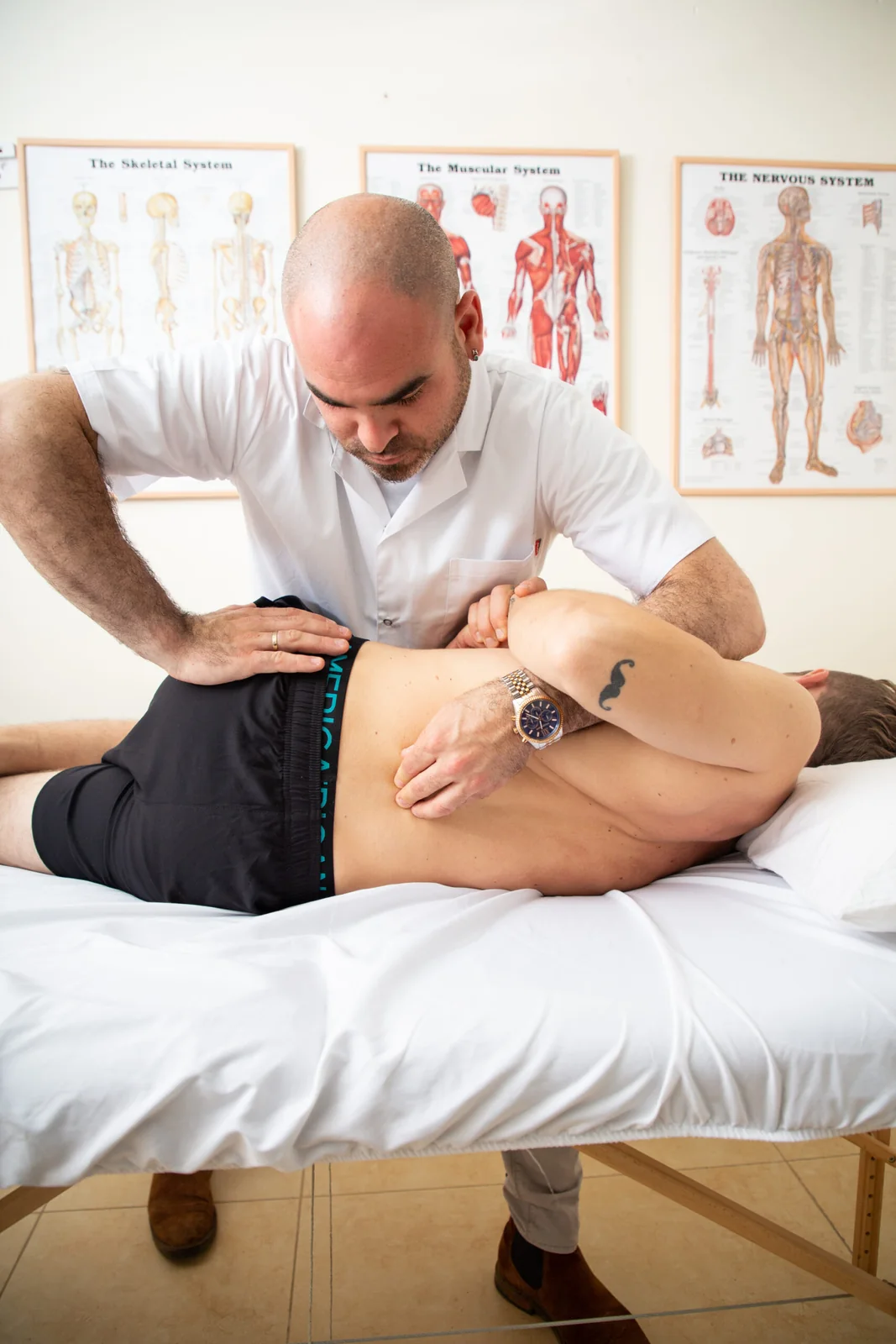
As an osteopath I check the wider movement pattern: how you stand and breathe‚ how the pelvis moves‚ whether the back is restricted and what is happening in the nearby joints. Instead of asking only which muscle hurts‚ I ask why this particular muscle is working too hard.
Releasing tight muscles in treatment includes gentle manual work on soft tissues‚ improving joint mobility‚ reducing tension around the loaded area and guidance on changing habits that load the same muscle again and again. The aim is not only relief in that moment‚ but to lower the chance that the tightness comes back.
How Is This Different from Standard Care for Tight Muscles?
The usual care for tight muscles includes relative rest‚ heat or cold‚ painkillers as needed‚ physiotherapy and graded activity. This approach has an important place‚ especially with acute pain or when an injury has to be ruled out.
However‚ for people whose muscles tighten again and again in the same area‚ general advice is not always enough. In that case‚ osteopathic treatment adds a check of the cause: a restriction in a nearby joint‚ a posture that loads one side‚ shallow breathing or a pelvis that does not take part in movement.
The first treatment takes about an hour‚ and follow-up treatments about 45 minutes. Some private insurance companies refund part of the cost.
How Do You Stop Muscles from Getting Tight Again?
Once releasing your tight muscles has worked‚ the task is to keep them from tightening again. Small habits do most of the work here:
- A movement break of a minute or two every 30-45 minutes of sitting.
- A short warm-up before training and a gradual rise in load.
- Drinking enough and sleeping regularly.
- A workstation with the screen at eye level and a chair that supports your back.
- Breathing exercises on stressful days.
Going back to activity after tight muscle relief should be slow‚ especially if the pain appeared after a workout or physical work. Too much load too early can bring the contraction back and turn a simple problem into lasting pain.
In Summary
Tight muscles are not always a simple problem of a "short muscle". Very often they are a response to load‚ compensation‚ stress or a restriction in another area‚ so the answer to how to release tight muscles also includes understanding the movement pattern that created the contraction.
When the pain is local‚ mild and improving‚ releasing tight muscles with gentle movement‚ heat and relative rest works well. When the pain keeps coming back‚ spreads‚ comes with numbness or weakness‚ or interferes with daily function‚ it is important to check whether this is something beyond muscle stiffness.
Frequently asked questions
How do you release a tight muscle fast?
Local heat‚ gentle movement and slow breathing ease things for many people within hours. There is no way to "break" a contraction by force‚ and pressure that is too strong may make it worse.
Heat or cold for tight muscles?
Heat usually suits a contracted‚ stiff muscle better‚ and cold suits sharp pain after a knock or a sudden effort better. Use whatever feels more relieving.
How long does it take to release tight muscles?
Ordinary tight muscles usually improve within a few days. Pain that lasts more than a week or two‚ or that keeps coming back‚ is worth having checked.
Does massage help release tight muscles?
Gentle massage helps many people reduce tension and feel better. When the tightness keeps coming back‚ it is worth adding a check of the cause rather than only massaging the painful spot.
Can I train with tight muscles?
Light activity that does not make the pain worse is allowed and often even helps. Intense training or heavy weights are best put off until the pain has calmed down.
How do you release a stiff neck after sleep?
A hot shower‚ slow head movements within a comfortable range and shoulder movements usually help. If the neck "locks" again and again‚ check your pillow‚ your sleeping position and your upper back.
Why does the same muscle keep getting tight?
Usually because it works too hard to compensate for another area‚ or because the same habit loads it again and again. A check of your movement pattern helps find the reason.
How to relieve muscle tension before sleep?
A hot shower‚ a few minutes of gentle stretches and slow breathing lying down help the body relax. For many people‚ releasing stiff muscles in the evening also improves the quality of their sleep.
Do pills help with tight muscles?
Painkillers or muscle relaxants are taken on the advice of a doctor or pharmacist‚ and usually for a short time. They ease the pain‚ but they do not change what made the muscle tighten.
When do tight muscles need a doctor?
When there is weakness‚ spreading numbness‚ loss of bladder or bowel control‚ fever‚ pain after an injury or chest pain with shortness of breath. In these situations see a doctor before any other treatment.
Table of Contents
- Why Do Muscles Get Tight?
- Tight Muscles After Exercise
- How to Release Tight Muscles Without Making the Pain Worse?
- Steps to Relieve Tight Muscles at Home
- Stretching‚ Foam Rolling and Self-Massage for Tight Muscles
- How Do You Release Tight Muscles by Area of the Body?
- How to Release Tight Muscles in the Back?
- How to Relax Tight Muscles in the Neck and Shoulders?
- Releasing Tight Muscles in the Chest and the Diaphragm
- Releasing Tight Muscles in the Calf and the Foot
- How to Release Tight Muscles in the Buttock‚ Thigh and Groin?
- When Are Tight Muscles a Sign of Another Problem?
- Releasing Tight Muscles in Osteopathic Treatment
- How Is This Different from Standard Care for Tight Muscles?
- How Do You Stop Muscles from Getting Tight Again?
- In Summary
- Frequently asked questions
