
Tight Chest Muscles: How to Release Them and When to Worry?
16 min read
Does it hurt between your ribs every time you turn or take a deep breath? Do you feel that your chest "does not open" all the way‚ and your shoulders pull forward after a day at the computer? Have you tried stretching and massaging on your own‚ and you still do not know how to release a tight muscle in your chest without making it worse?
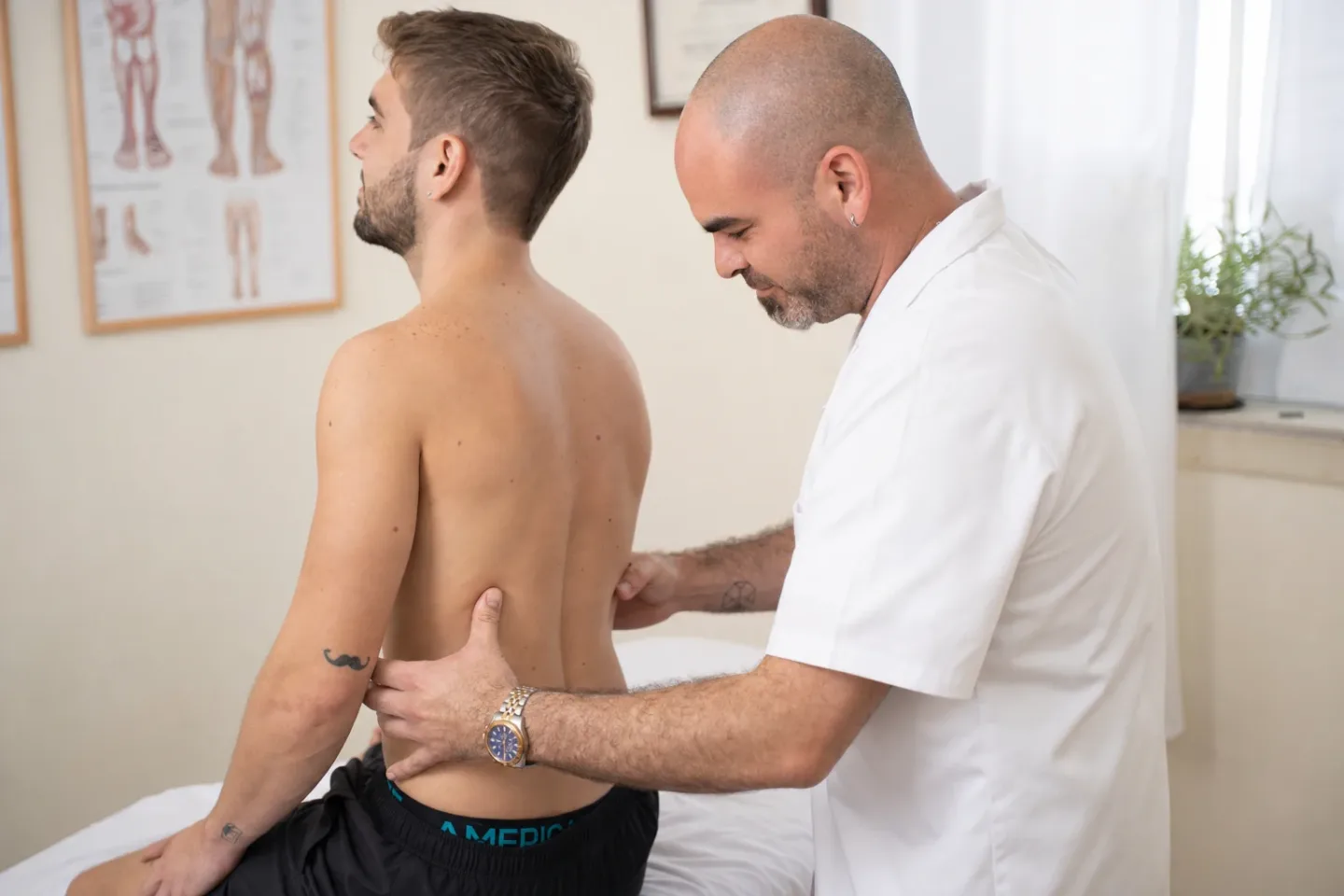
I am Roman Kibler‚ an osteopath (D.O.) with a clinic in Kiryat Tivon‚ and I examine the ribs‚ the upper back‚ the neck and the breathing together‚ and treat with gentle touch only once it is clear that the pain does not need a medical assessment.
Leave your details or call me‚ and we will check together what is tightening your chest and how to release it safely!
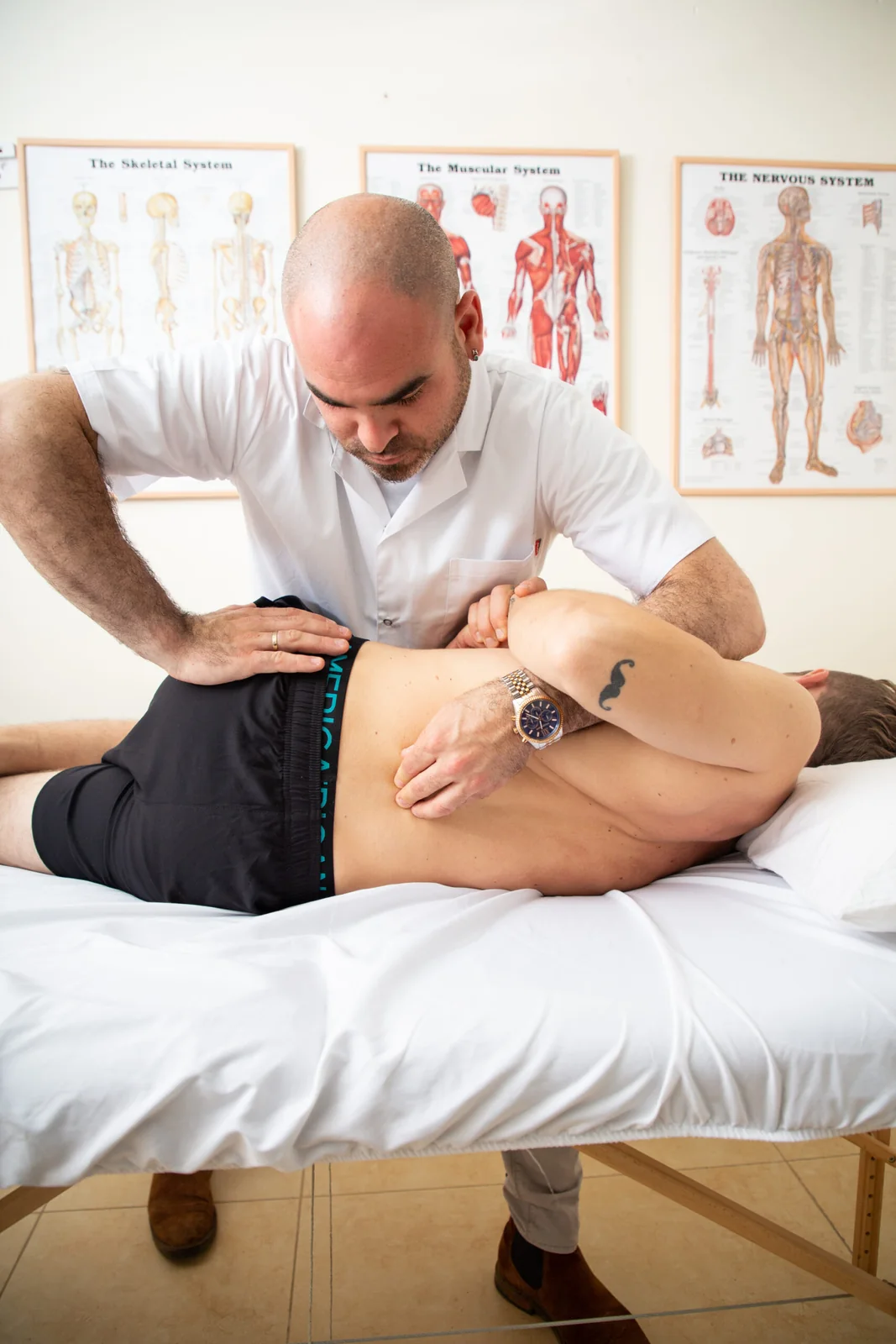
Tight chest muscles create a feeling of pressure‚ pulling‚ pain in the ribs and difficulty taking a full breath‚ and sometimes they also limit the movement of the shoulders and the neck. Chest muscle pain of this kind appears after training‚ long hours at a computer‚ shallow breathing‚ emotional strain‚ sleeping in an awkward position or a sudden effort of the upper body.
It is important to say right at the start: any chest pain calls for caution. Even if the pain feels "muscular"‚ you cannot decide on your own that it does not come from the heart‚ the lungs or another medical source‚ so before looking for ways to ease chest muscle pain‚ check that there are no warning signs.
Tight Chest Muscles: Why Does It Happen and How Does It Feel?
The chest is not just a "cage" that protects the heart and the lungs. It is a very mobile area‚ made up of ribs‚ upper back vertebrae‚ the breastbone‚ cartilage‚ muscles‚ connective tissue and the diaphragm.
With every breath the ribs move gently to let the lungs expand‚ and tight chest muscles limit exactly this movement. When the chest muscles‚ the intercostal muscles between the ribs‚ the neck muscles or the upper back muscles are under high tension‚ this movement is limited‚ and the person feels they are breathing "half a breath".
Common Causes of a Pulled Chest Muscle
- Sitting for a long time with rounded shoulders and the head leaning forward
- Chest training or heavy pulling without a warm-up or after a break
- A long cough after a cold or pneumonia
- Shallow breathing during stress
- Sleeping on the stomach or on one side with an arm under the pillow
- A sudden movement‚ such as lifting a load while twisting or slipping
Sometimes there is no single clear event‚ but a build-up of small loads that make the chest less flexible and the muscles around it work under constant tension. This is how chest muscle pain often develops without anyone noticing when it started.
How Does a Pulled Chest Muscle Feel?
A pulled chest muscle usually causes pain that changes with movement: it gets worse with a deep breath‚ a cough‚ turning the upper back or raising the arms. Sometimes there is a sensitive spot that you can press and reproduce the pain.
These pulled chest muscle symptoms fit muscle pain‚ but they are not proof. Even pain that changes with movement needs an assessment when it is new‚ strong or comes with general symptoms.
Chest Muscle Pain on the Left or the Right Side
Pain on the left side of the chest is especially frightening‚ because the first thought is the heart. A chest muscle strain can appear on either side‚ and it is usually on the side of the dominant hand or the side you sleep on‚ but location alone does not tell muscle pain apart from heart pain.
What decides is how the pain behaves and which symptoms come with it. So even when it seems to be tight chest muscles on the left side‚ new or pressing pain is checked by a doctor first.
Warning Signs: When Is Chest Pain Not a Tight Muscle?
See a doctor or an emergency center right away‚ and do not try to release a muscle‚ when the chest pain:
- Is new‚ strong‚ pressing or widespread
- Appears with effort and eases with rest
- Radiates to the arm‚ the jaw‚ the back or the abdomen
- Comes with shortness of breath‚ sweating‚ nausea‚ dizziness or unusual weakness
- Appeared after an injury‚ or comes with fever and an unusual cough
Even when the pain is mild and local but there is no certainty about its source‚ it is worth getting medical advice. Osteopathic treatment for chest muscle pain is suitable only when the picture points to a load on the musculoskeletal system.
How to Relieve Tight Chest Muscles Safely?
When chest muscle pain fits a muscular picture and there are no warning signs‚ the first step is not to fight the body by force. Strong stretches‚ deep pressure on a painful spot or trying to "open" the chest aggressively can increase the irritation instead of calming it.
A good start includes gentle movement‚ calm breathing‚ local warmth and a change in your working position. These are the basic steps for anyone looking for how to relieve tight chest muscles at home.
Slow Breathing Into the Ribs
Sit or lie comfortably‚ place your hands on the sides of your chest and try to feel a gentle expansion to the sides as you breathe in. There is no need to breathe hard or reach maximum volume: five to ten slow breaths‚ a few times a day‚ are enough to bring back soft movement.
If a deep breath makes chest muscle pain sharper or significant pressure appears in the chest‚ stop and get a medical examination.
A Gentle Doorway Stretch
Stand in a doorway‚ place your forearms on the frame at shoulder height and shift your weight forward slowly‚ until you feel a light stretch in the chest. Hold for about 20 seconds and breathe normally‚ without bouncing and without reaching pain.
This stretch suits tight chest muscles from long sitting‚ and also tight pectoral muscles in people who train‚ but not the first days after a sharp injury. If a sharp pain appeared during effort‚ it is worth checking first that it is not an injury such as a muscle tear in the chest.
Warmth‚ Movement and Breaks
What helps here is actually simplicity: gentle local warmth‚ a warm shower and slow shoulder rolls calm a chest muscle spasm. A short break every half hour to an hour at the computer is no less important than any exercise.
Upper Back Rotation Lying on Your Side
Lie on your side with your knees bent and your arms straight in front of you‚ one on top of the other. Slowly open the top arm to the other side‚ like opening a book‚ and let your head and chest turn with it without forcing the range.
Five to eight repetitions on each side move the ribs and the upper back together. This is one of the most comfortable exercises for anyone looking for how to release tight chest muscles without direct pressure on the painful area.
Self-Release With a Soft Ball
Stand facing a wall with a soft ball between the wall and the muscle below the collarbone‚ and press gently while breathing slowly. The pressure should feel pleasant‚ not painful‚ and the ball is not placed on the ribs themselves or on the breastbone.
If chest muscle pain gets stronger during the release or afterwards‚ stop. A strained chest muscle responds better to gentle‚ consistent touch than to strong pressure once.
What Should You Not Do With a Pulled Chest Muscle?
- Do not press hard with a ball or your fingers on a very painful spot
- Do not return to heavy chest training or push-ups while the pain is sharp
- Do not stretch into pain thinking you "need to break the tightness"
- Do not ignore pain that gets worse or new symptoms
How Do You Release a Pulled Muscle in the Ribs?
Rib muscle pain comes from the intercostal muscles‚ the rib joints‚ the cartilage‚ a breathing load‚ a long cough or a sudden movement of the upper body. Sometimes the pain is focused on one spot and appears mainly when turning‚ and in other cases it is widespread and feels like a belt around the chest.
If you are asking how to release a pulled muscle in the ribs‚ you should know that this difference matters‚ because not every rib pain needs the same approach. When the pain behaves like intercostal muscle pain from overload‚ small upper back rotations‚ gentle opening of the shoulders and calm breathing are combined.
A simple exercise for home: sit on a chair‚ place one hand on the painful ribs and slowly raise the other arm above your head while leaning slightly to the opposite side. Breathe into the hand on your ribs for three to five breaths‚ and slowly return to the center.
The exercise should feel like a pleasant stretch‚ not a stabbing pain‚ even with a strained chest muscle. If it causes sharp pain‚ stop‚ and give the body another day or two of relative rest and light movement.
Intercostal Muscle Strain After Coughing or Effort
A long cough loads the intercostal muscles and the diaphragm‚ and after a few days of coughing every deep breath hurts‚ a typical intercostal muscle strain. The diaphragm is the main breathing muscle‚ and if you feel tension at the base of the chest‚ you will find practical directions in the article on a tight diaphragm.
With a pulled chest muscle‚ in the first days it is best to avoid lifting heavy loads‚ strong chest exercises and sharp twists. If the pain is very sharp‚ appeared after an injury or does not improve‚ see a doctor to rule out an injury to a rib or the lungs.
Pain Where the Ribs Meet the Breastbone
Some chest pain comes from irritation of the cartilage that connects the ribs to the breastbone. When there is local sensitivity in this area‚ costochondritis can be part of the differential diagnosis‚ and it usually gets worse with a deep breath‚ a cough and local pressure.
Such a condition is not related to the heart‚ but the feeling can be similar to more important conditions. That is why you should not rely on a feeling alone to decide that it is all chest muscle pain.
Tight Chest Muscles and the Link to the Neck‚ Shoulder Blades and Shoulder
The chest‚ the neck‚ the shoulder blades and the shoulders work together in almost every action of the upper body. When tight chest muscles keep the chest stiff and the shoulders pull forward‚ the shoulder blade moves less well‚ and the shoulder takes on load when lifting‚ pushing or turning.
When there is a feeling of pressure or a pinch when raising the arm‚ shoulder pain can be part of a picture of a loaded neck‚ stiff shoulder blades and a chest that does not move well enough. Sometimes better movement of the chest reduces the load on the shoulder and allows freer movement.
Posture‚ Computer Work and Neck Load
Long sitting at a computer‚ long phone use‚ driving and shallow breathing create a pattern in which the head leans forward‚ the shoulders round and the chest closes. Tight chest muscles become relatively short‚ the neck muscles work harder‚ and over time pain appears in the neck‚ the back of the head and the upper ribs.
The breathing also changes in this position: when the chest is closed and the belly is pressed against the desk‚ the diaphragm moves less‚ and the muscles between the ribs and in the neck take on a larger share of the work of breathing. That is why a higher screen and a chair that lets you sit upright without effort often also ease the upper ribs and the feeling of pressure in the chest.
The Upper Back as Part of the Problem
At the back of the same ribs lies the upper back. When there are tight chest muscles at the front‚ the muscles between the shoulder blades are stretched and become painful‚ and anyone who also feels back spasms between the shoulder blades is actually describing the other side of the same pattern.
That is why treating chest muscle pain almost always also includes the thoracic spine and the shoulder blades. Releasing only one side usually gives short relief.
Headaches‚ Numbness and Emotional Stress
Ongoing tension from tight chest muscles and the neck also affects the head. When the breathing is shallow and the shoulders are raised‚ the neck and the muscles at the back of the head work harder than usual‚ and pressure around the head or heaviness at the back of the neck appears.
When the pain is described as constant pressure rather than sharp pain‚ pressure-type headaches may be related‚ among other things‚ to muscle tension in the neck and shoulders. A new and unusual headache‚ with vision disturbances‚ weakness‚ confusion or vomiting‚ requires a medical examination‚ and the headache warning signs are explained in a separate article.
Numbness in the Arm Together With Chest Pain
Pain in the chest and the shoulder that comes with numbness‚ tingling‚ burning or electric sensations in the arm needs a more careful assessment. Numbness in the arm together with chest pain‚ on the left or the right side‚ does not fit the picture of tight chest muscles alone‚ and when the pain is pressing‚ appeared with effort or comes with shortness of breath and sweating‚ call Magen David Adom (101) right away.
Once the doctor has ruled out a heart cause‚ it is necessary to understand whether the source is the neck‚ a nerve‚ posture or something else‚ and in some cases to refer for further assessment. Reduced strength‚ ongoing worsening or significant chest pain require seeing a doctor.
Emotional Stress‚ Anxiety and Breathing
During emotional stress‚ breathing moves up into the upper chest‚ and the muscles between the ribs and in the neck work without a break. In some people this creates a cycle of chest muscle spasm: the stress tightens the muscles‚ and the feeling of tightness in the chest increases the worry.
Slow breathing with a long exhale helps calm the system‚ and there is research examining the link between this kind of breathing and stimulation of the vagus nerve‚ although the findings are still limited. When the worry is strong or ongoing‚ it is worth talking about it with your family doctor too.
Osteopathic Treatment for Tight Chest Muscles
As an osteopath‚ I do not focus only on the painful spot in the chest. The examination includes the movement of the ribs‚ the upper back‚ the neck‚ the shoulder blades‚ the shoulders‚ the diaphragm and the breathing pattern‚ because sometimes the painful muscle is only the result of a system that is working under strain.
The treatment of chest muscle pain includes gentle manual techniques to improve mobility‚ reduce tension in soft tissues‚ work around the ribs and shoulder blades‚ and guidance for exercising at home. In an area related to breathing and chest pain there is no need for forceful treatment: precise‚ gentle work suits it better.
What Happens in the First Treatment?
The first treatment takes about an hour and includes questions about your chest muscle pain‚ about tests that have already been done and about your work and training‚ a functional examination and treatment. Follow-up treatments take about 45 minutes‚ and in each of them I check what has changed.
I studied osteopathy for five years‚ including 1000 clinical hours‚ I have been working as an osteopath at Maccabi Tivi since 2022‚ and I worked as a massage therapist from 2017. If you are looking for an osteopath in Kiryat Tivon to treat tight chest muscles‚ you are welcome at my clinic at 6 Karkom Street.
Chest Muscle Strain in People Who Train
Among people who train in the gym‚ climbers‚ swimmers and martial artists‚ chest muscle strain and tight chest muscles are a common complaint. Many pressing exercises without a balance of pulling and upper back work shorten the chest muscles and pull the shoulders forward.
In the treatment of a strained chest muscle I also check the training plan: the ratio between pushing and pulling‚ the warm-up and the recovery times. A small change in the plan often prevents a pulled chest muscle that comes back after every heavy workout.
The Osteopathic Approach Alongside Conventional Medicine
The conventional approach is especially important when heart‚ lung‚ inflammatory or neurological causes need to be ruled out‚ and no manual treatment replaces a medical assessment when there are warning signs. The osteopathic approach comes in afterwards‚ when the picture fits a functional load.
It then tries to understand what creates the recurring chest muscle spasm: breathing‚ working posture‚ stiffness in the upper back or a load on the neck.
How Do You Prevent Chest Muscle Pain From Coming Back?
After chest muscle pain has calmed down‚ the important question is how not to end up in the same place again. A few simple habits help:
- Get up from the chair every half hour to an hour and move your shoulders
- Raise the screen to eye level so your head does not drop forward
- Warm up the upper body before chest training or pulling
- Balance chest training with work for the upper back and the shoulder blades
- Practice slow breathing into the ribs once or twice a day
It is important not to measure success by "how hard you stretch". Sometimes the improvement comes precisely from reducing the load‚ from small‚ consistent movement and from sleeping in a position in which the chest and the shoulder are not squeezed.
In Summary
Tight chest muscles cause pain in the ribs‚ a feeling of pressure‚ limited breathing and difficulty moving the shoulders and the neck. Sometimes it is a chest muscle strain created by posture‚ shallow breathing or physical activity‚ but chest pain always calls for caution and an assessment when there is doubt.
The answer to the question of how to release tight chest muscles starts with understanding what causes them. An examination of the chest‚ the neck‚ the shoulder blades and the breathing makes it possible to build gentle treatment that improves movement‚ reduces load and supports a return to comfortable function.
If chest muscle pain keeps coming back‚ limits your breathing or disturbs your work and sleep‚ it is time for a proper examination. Sometimes a small change in your working position or your training plan‚ together with a few gentle treatments‚ makes the difference.
Frequently asked questions
How can I release a tight chest muscle quickly?
There is no safe way to "break" the tightness in a second‚ but local warmth‚ slow breathing into the ribs and gentle shoulder movement usually ease it within hours to days. Before all of this‚ make sure there are no warning signs that require a doctor.
How do I know if chest pain comes from a muscle or the heart?
You cannot know for sure on your own. Pain that changes with movement and pressure fits a muscle better‚ but any new‚ pressing or radiating pain‚ or pain with shortness of breath and sweating‚ requires seeing a doctor right away.
How long does a pulled chest muscle last?
A mild pulled chest muscle usually improves within a few days to a week. Pain that lasts for weeks‚ keeps coming back or gets worse justifies an examination.
How do I release a pulled muscle in the ribs after coughing?
Calm breathing‚ local warmth‚ a comfortable sleeping position and gentle movement of the upper back. If the cough continues or there is a fever‚ the cause needs to be treated first by a doctor.
Can I train with tight chest muscles?
With a chest muscle strain you can continue with light activity such as walking‚ but it is better to postpone heavy chest training until the pain calms down. Return gradually and with light weights.
Does a massage ball help?
Gentle pressure with a soft ball on tight chest muscles can bring relief‚ as long as it does not hurt. Strong pressure on a very sensitive spot or on the ribs themselves can make it worse.
Why does a tight chest muscle make breathing harder?
Because the muscles between the ribs and in the chest take part in every breath‚ so a pulled chest muscle is felt with each one. When they are tense‚ the ribs move less and the breath feels short‚ even when the lungs are healthy.
Can emotional stress cause tight chest muscles?
Yes‚ shallow breathing and ongoing tension load the chest and neck muscles and cause chest muscle pain. Still‚ a feeling of pressure in the chest needs a medical assessment before it is attributed to emotional stress.
When should I see an osteopath?
When the doctor has ruled out a medical cause and the pain keeps coming back‚ limits breathing and movement or is related to work and posture. A functional examination helps understand what creates the load‚ and at the end of the first treatment you also get a few simple home exercises adapted to your work and routine.
Can chest muscle pain radiate to the back?
Yes‚ because the ribs connect to the spine at the back‚ and the chest and upper back muscles work together. Still‚ pain that radiates from the chest to the back‚ the jaw or the arm requires a medical examination first.
Which sleeping position suits a pulled muscle in the ribs?
It is usually more comfortable to sleep on your back or on the side that does not hurt‚ with a pillow between your arms to keep the shoulder from falling forward. Sleeping on your stomach loads the ribs and the neck.
Are tight chest muscles related to gym training?
Often yes: chest muscle strain is common especially after a heavy bench press‚ a sharp rise in training volume or a return to training after a break. A good warm-up and balance with back training reduce the risk.
Does a topical cream help a strained chest muscle?
Warming or cooling creams give some people temporary relief from chest muscle pain. They do not treat the cause‚ so it is worth combining them with movement‚ breathing and changing the habits that created the load.
Can a pulled chest muscle come back?
Yes‚ if the cause remains: long sitting‚ shallow breathing or unbalanced training. Dealing with these habits greatly reduces the chance that the tightness will return.
Does insurance cover osteopathic treatment?
Some private insurance companies refund part of the cost of the treatment. It is worth checking the terms of your policy before the first treatment.
Table of Contents
- Tight Chest Muscles: Why Does It Happen and How Does It Feel?
- Common Causes of a Pulled Chest Muscle
- How Does a Pulled Chest Muscle Feel?
- Chest Muscle Pain on the Left or the Right Side
- Warning Signs: When Is Chest Pain Not a Tight Muscle?
- How to Relieve Tight Chest Muscles Safely?
- Slow Breathing Into the Ribs
- A Gentle Doorway Stretch
- Warmth‚ Movement and Breaks
- Upper Back Rotation Lying on Your Side
- Self-Release With a Soft Ball
- What Should You Not Do With a Pulled Chest Muscle?
- How Do You Release a Pulled Muscle in the Ribs?
- Intercostal Muscle Strain After Coughing or Effort
- Pain Where the Ribs Meet the Breastbone
- Tight Chest Muscles and the Link to the Neck‚ Shoulder Blades and Shoulder
- Posture‚ Computer Work and Neck Load
- The Upper Back as Part of the Problem
- Headaches‚ Numbness and Emotional Stress
- Numbness in the Arm Together With Chest Pain
- Emotional Stress‚ Anxiety and Breathing
- Osteopathic Treatment for Tight Chest Muscles
- What Happens in the First Treatment?
- Chest Muscle Strain in People Who Train
- The Osteopathic Approach Alongside Conventional Medicine
- How Do You Prevent Chest Muscle Pain From Coming Back?
- In Summary
- Frequently asked questions
