
Muscle Tear - Proper Recovery and a Safe Return to Movement
14 min read
Did you feel a sharp pull or a "kick" in a muscle in the middle of a run‚ a jump or a lift? Does the muscle hurt and look swollen‚ and you are not sure whether it is just a tight muscle or a muscle tear? Did you try to go back to training‚ only for the pain to return at exactly the same spot?
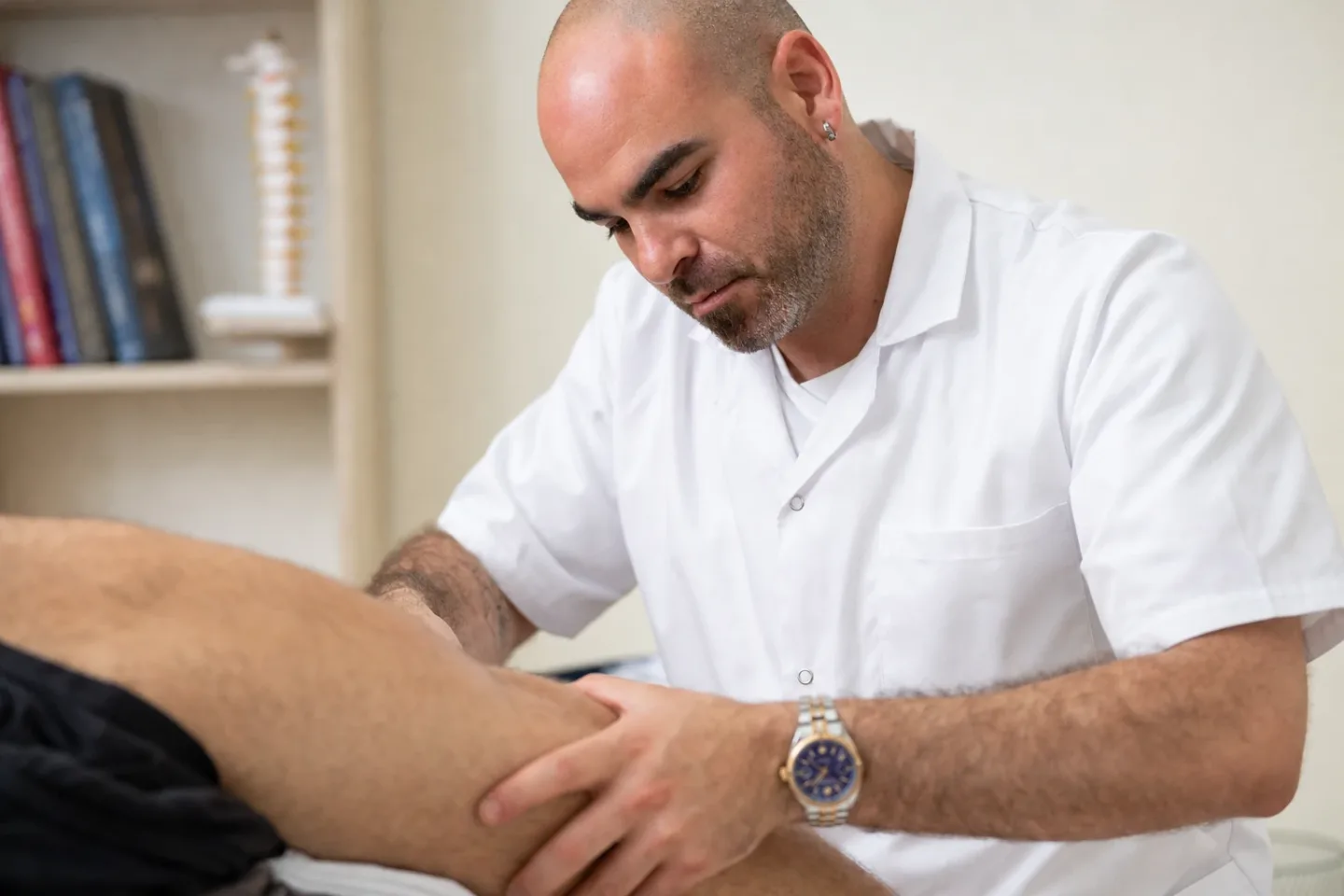
I am Roman Kibler‚ an osteopath (D.O) at my clinic in Kiryat Tivon‚ and I examine not only the injured muscle but also what overloaded it‚ and build with you a graded return to movement so the injury does not come back.
Leave your details or call me‚ and I will check with you which stage of recovery you are in and what the next safe step is!
A muscle tear is an injury in which some of the muscle fibers are damaged by a load that is too high‚ a sharp movement‚ a sudden effort or a return to activity without enough preparation. Sometimes it is a relatively mild muscle strain‚ felt as local pain and stiffness after activity‚ and in other cases there is a significant tear with sharp pain‚ swelling‚ bruising and a reduced ability to use the muscle.
The difference between the grades of injury matters a great deal‚ because it affects the nature of the recovery‚ the need for a medical workup and the right pace of returning to movement. A torn muscle needs time to heal‚ but it also needs graded movement so that it does not stay stiff‚ weak or oversensitive.
What Is a Muscle Tear and How Does It Happen?
A muscle tear happens when the load on the muscle is greater than the muscle fibers can withstand. It can happen when running‚ jumping‚ lifting a weight‚ changing direction quickly‚ slipping or going back to an activity too fast after a period of lower fitness.
Sometimes the injury appears at a very clear moment: a feeling of a "pull"‚ sharp pain or even a feeling of being hit in the muscle. In other cases the pain develops gradually‚ mainly after repeated load.
Most of these injuries happen when the muscle lengthens and contracts at the same time‚ for example when braking at the end of a sprint or landing from a jump. That is the moment when the load on the muscle fibers and on the junction between muscle and tendon is at its highest.
Risk Factors for a Muscle Tear
Any muscle that works under high load or when tired can be injured. The factors that raise the risk of a muscle tear include:
- Not enough warm-up before fast activity
- A sharp rise in training volume or intensity
- An imbalance between muscle groups‚ for example a strong front thigh against a weak back thigh
- Fatigue‚ lack of sleep and stress at work
- An earlier injury to the same muscle that was not fully rehabilitated
- Limited movement in a nearby joint that shifts load onto the muscle
Muscle Tear Symptoms by Grade of Injury
Muscle injuries are usually divided into three grades. The division helps you understand what to expect after a muscle tear‚ but only a professional examination determines which grade it is.
A Mild Muscle Tear
In a mild injury‚ usually called a muscle strain or a pulled muscle‚ the pain appears mainly when the muscle contracts or stretches. There is local tenderness‚ a feeling of stiffness and some difficulty with activity‚ but you can usually keep walking and using the area.
A Moderate or Grade 2 Muscle Tear
In a grade 2 muscle tear the pain is more significant‚ swelling sometimes appears‚ the range of motion drops and using the muscle becomes hard. Sometimes bruising appears and spreads downward over the following days.
A Severe Muscle Tear
In a severe injury there may be very sharp pain‚ extensive bruising‚ clear weakness and sometimes a feeling of a "dip" or a change in the shape of the muscle. In this situation see a doctor straight away‚ because imaging is sometimes needed and occasionally an assessment by an orthopedic doctor as well.
Pain that keeps getting worse in the hours after the injury‚ with very tense swelling‚ numbness or a pale limb‚ requires going to the emergency room immediately to rule out compartment syndrome. Pain and swelling in the calf that appeared without a clear injury require an examination the same day‚ to rule out a blood clot in a vein.
It is important not to rely only on how strong the pain is. Some people carry on functioning despite a significant injury‚ while others feel strong pain even with a relatively superficial one‚ so torn muscle symptoms alone do not tell you the grade.
A Muscle Tear or a Tight Muscle: How Do You Tell Them Apart?
Not every muscle pain is a muscle tear. After unusual activity‚ a hard workout or a new load‚ muscles can be tight‚ stiff and sore for a few days.
Pain like this tends to appear gradually‚ often hours after the activity‚ and it improves with light movement‚ relative rest and a gradual return. A muscle tear‚ by contrast‚ often appears suddenly‚ with a clear painful point and a feeling that the muscle "went" during a particular action.
If you are asking how to release tight muscles‚ first make sure this is not a fresh injury to the muscle fibers. With ordinary tightness‚ gentle movement‚ a light warm-up and good sleep help‚ while with a tear a strong stretch or deep massage at an early stage may increase the sensitivity.
Muscle Tear vs Strain: Is There a Difference?
People often search for muscle tear vs strain as if they were two different injuries. In fact a muscle strain is the mild grade of the same injury‚ in which only a few fibers are damaged‚ while a larger number of damaged fibers is called a partial tear.
A Torn Muscle in Common Areas of the Body
The muscles that are injured most often are the calf‚ the back of the thigh‚ the front of the thigh‚ the groin and the back. In each area the injury looks a little different‚ and the return to movement is adjusted to the muscle's role.
A Torn Calf Muscle
The gastrocnemius‚ the main calf muscle‚ works when you walk‚ run‚ jump‚ climb stairs and push the body forward. A sudden sprint‚ running uphill‚ a change of shoes or returning to training too fast can cause sharp pain at the back of the lower leg.
It is worth checking whether the pain started all at once or built up gradually‚ whether there is swelling or bruising and whether you can rise onto your toes. The differences between such an injury and ordinary load are explained in the article on calf muscle pain‚ and when calf pain comes with severe difficulty putting weight on the foot‚ an Achilles tendon injury also has to be ruled out.
A Muscle Tear in the Back or Front of the Thigh
The hamstrings at the back of the thigh are injured mainly in fast running and kicking‚ and the front thigh muscles in kicking and jumping. The pain usually appears in the middle of the thigh or close to the buttock‚ and sometimes it is hard to sit or bend forward.
Once the acute stage has passed‚ the muscles around the area tend to stiffen and protect it. If you are dealing with this‚ you will find practical tips in the article on how to release a tight thigh muscle‚ provided the injury itself is already well into recovery.
A Pulled Muscle in the Groin or the Back
Groin injuries are common in football‚ tennis and any sport with sharp changes of direction. Not every pain in the groin is a tear‚ and sometimes it is repeated load that causes a dull ache.
Groin pain also has causes that have nothing to do with sport: groin pain during pregnancy‚ for example‚ is usually related to the pelvis and its ligaments and not to a torn muscle. So it is worth knowing the background before you decide what to do.
In the back‚ a strain or a small tear in the muscles along the spine sometimes happens when lifting with a twist. The pain can be very strong and limit movement‚ but most cases improve with graded movement‚ and if you are wondering what to do about a locked back‚ you will find guidance there for the first days.
The Stages of Muscle Tear Recovery
A muscle heals in stages: first a natural inflammatory response that clears the area‚ then the building of new tissue‚ and finally the reorganization of the tissue according to the loads it receives. That is why the right movement is different at each stage‚ and what suits the third week may do harm on the second day.
The First Days After the Injury
At the first stage the aim is to reduce the load on the area‚ let the tissue start healing and prevent it from getting worse. It is usually advised to avoid activity that increases pain‚ keep up light movement that does not worsen the symptoms and keep an eye on swelling‚ bruising and how well you can function.
In some cases short spells of cooling may ease pain and swelling‚ but it should not become the only treatment. The common mistake is complete rest for too long on the one hand‚ or a return to activity that is too aggressive on the other.
Even at an early stage‚ depending on how severe the injury is‚ gentle movements within a pain-free range can sometimes be added. If every movement clearly increases the pain‚ or if the pain gets worse from day to day‚ you need an examination.
Muscle Tear Recovery Time and a Gradual Return to Movement
So how long does a torn muscle take to heal? The muscle tear recovery time depends on the grade of injury‚ the muscle involved‚ your age and your fitness.
A mild muscle strain usually improves within days to a few weeks‚ while a moderate or severe muscle tear needs longer and sometimes close follow-up.
The return to movement should be graded according to how your body responds and not according to a fixed timetable that suits everyone. At first you look for comfortable movement without sharp pain and without a flare-up afterwards‚ then you add light load‚ control exercises and gentle strengthening‚ and only when the muscle responds well do you move on to faster activity.
At this stage‚ the question of how to deal with tight leg muscles should also be looked at in relation to the stage of recovery. Sometimes the right way to "release" is actually to restore confidence in movement: easy walking‚ graded exercise‚ calm breathing and better mobility in the nearby joints.
Osteopathic Muscle Tear Treatment
Osteopathic treatment does not replace a medical diagnosis when a significant injury is suspected. If there is a large tear‚ you cannot put weight on the leg‚ or there is unusual swelling‚ extensive bruising or very sharp pain‚ it is important to see a doctor first.
When the injury is mild to moderate‚ or at a stage when there are no warning signs and you are already starting to move again‚ muscle tear treatment in my clinic can be part of conservative rehabilitation. The osteopathic approach looks at the whole chain: the joints above and below the area‚ the walking pattern‚ load coming from the back or the pelvis‚ training habits and the way you distribute your weight.
Sometimes the muscle was injured because it worked too hard due to a restriction somewhere else‚ for example an ankle that does not move well‚ a stiff hip or an unbalanced pelvis. In such a case local treatment alone will ease things partly‚ but will not deal with the cause of the load.
What Does Treatment at My Clinic Include?
The first treatment takes about an hour and includes questions about how the injury happened‚ a functional examination and gentle manual treatment: work on the soft tissues around the area‚ improving the mobility of nearby joints and guidance for exercise at home. Follow-up treatments take about 45 minutes and are adjusted to the stage of recovery.
I studied osteopathy for five years‚ including 1,000 clinical hours‚ I have worked as an osteopath at Maccabi Tivi since 2022 and I worked as a massage therapist from 2017. If you are looking for osteopathic treatment after a pulled muscle that keeps coming back‚ you are welcome at my clinic in Kiryat Tivon.
Pain After Treatment and When to Stop
After manual treatment some patients feel immediate relief‚ while others feel temporary tenderness in the area or general tiredness. A mild‚ passing reaction is reasonable‚ but sharp pain‚ new swelling‚ weakness or lasting numbness are not things to ignore.
A detailed explanation of osteopathy side effects helps you understand what to expect and what not. Manual treatment is not an endurance test‚ and with an acute torn muscle I choose gentle techniques and avoid direct load on an area that is too sensitive.
Returning to Sport After a Muscle Tear
Common Mistakes During Recovery
The first mistake is going back to activity too early. When the pain eases a little‚ it is easy to think the muscle has healed‚ but the muscle fibers and the tissues around them are still sensitive to high load.
The second mistake is stretching too hard at an early stage‚ which can increase irritation rather than improve healing. Strong massage or self-release tools are not always suitable at the acute stage either.
Another mistake is focusing only on the painful area. If a torn calf muscle was caused by load coming from the ankle‚ the hip or the running pattern‚ local treatment alone will not be enough.
When Is the Muscle Ready to Return to Sport?
A return to sport after a muscle strain or a tear should be based on ability‚ not only on a general feeling. Before fast running‚ jumping or changes of direction‚ make sure you have:
- A full range of motion compared with the other side
- Enough strength and the ability to do basic exercises without pain
- Walking and easy running without a limp
- A good response to light load the next day as well
At the same time‚ it is important to check what led to the injury: a sharp rise in training volume‚ lack of sleep‚ unsuitable shoes‚ inefficient technique or an earlier injury that did not fully heal. A safe return is not only about "when the pain went away"‚ but also about "whether the body is ready for the load ahead of it".
In Summary
A muscle tear calls for a combination of caution and gradual movement: at first you reduce the load and watch for warning signs‚ and then you return to movement‚ strengthen and check what created the load in the first place. Not every muscle pain is a tear‚ but not every "tight muscle" is a simple matter that should be stretched hard either.
The osteopathic approach checks movement‚ posture‚ loads and compensations‚ and helps build a safe return to your routine and your activity. The aim is not to push the body by force‚ but to let it heal in a graded way that is adapted to you.
If a muscle tear keeps coming back in the same place‚ it is a sign to check the whole movement chain and not only the muscle itself. A proper examination helps you understand what has changed since the previous injury and what is still loading the area.
Frequently asked questions
How do I know if I have a muscle tear?
The typical signs are sharp pain that appeared at a specific moment during activity‚ a clear painful point‚ swelling and sometimes bruising. The exact diagnosis is made in a physical examination‚ and sometimes with an ultrasound or an MRI.
How long does a torn muscle take to heal?
It depends on the grade of injury and the muscle involved. A mild injury usually improves within days to a few weeks‚ and a severe tear needs longer and sometimes medical follow-up.
Does a muscle tear heal on its own?
Most partial tears heal with conservative treatment: less load‚ graded movement and strengthening. A complete tear or a tear at the junction between muscle and tendon needs a doctor's assessment‚ and more rarely surgery.
Can I walk with a torn muscle in my leg?
With a mild injury you can usually walk at a comfortable pace‚ as long as the pain does not get worse. If you cannot put weight on the leg‚ the limp is obvious or the pain is very sharp‚ have it examined.
Ice or heat after a muscle tear?
In the first days‚ short cooling can ease pain and swelling. Heat suits a later stage better‚ when the muscle is stiff and there is no fresh swelling any more.
Does massage help a muscle tear?
Deep massage directly on a torn muscle at the acute stage is not recommended. Later on‚ gentle touch around the area and releasing nearby muscles can help movement come back.
How do I prevent another muscle tear?
A good warm-up‚ a gradual rise in load‚ strengthening the injured muscle and the muscles around it‚ and enough sleep. It is just as important to deal with the restriction that caused the load‚ or the injury tends to come back in the same place.
When should I see a doctor?
When there is very sharp pain‚ extensive bruising‚ a dip in the shape of the muscle‚ clear weakness or difficulty putting weight on the leg. Pain that does not improve after a few days also justifies an examination.
What is the difference between a muscle strain and a muscle tear?
A muscle strain is basically the mild grade of the same injury‚ in which only a few fibers are damaged. The more fibers are damaged‚ the more it is called a partial tear‚ and in rare cases a complete tear of the muscle.
Can I train with a torn muscle?
You can and should keep training the rest of the body‚ for example the upper body when the injury is in the leg. The injured muscle is brought back to load gradually‚ according to how it responds the next day.
Can a muscle tear happen without a knock or a fall?
Yes‚ in most cases it happens without any contact‚ during fast running‚ braking or jumping. Fatigue and a sharp rise in load are far more common causes than a direct knock.
Does insurance cover osteopathic treatment?
Some private insurance companies refund part of the cost of treatment. Check the terms of your policy before the first treatment.
Table of Contents
- What Is a Muscle Tear and How Does It Happen?
- Risk Factors for a Muscle Tear
- Muscle Tear Symptoms by Grade of Injury
- A Mild Muscle Tear
- A Moderate or Grade 2 Muscle Tear
- A Severe Muscle Tear
- A Muscle Tear or a Tight Muscle: How Do You Tell Them Apart?
- Muscle Tear vs Strain: Is There a Difference?
- A Torn Muscle in Common Areas of the Body
- A Torn Calf Muscle
- A Muscle Tear in the Back or Front of the Thigh
- A Pulled Muscle in the Groin or the Back
- The Stages of Muscle Tear Recovery
- The First Days After the Injury
- Muscle Tear Recovery Time and a Gradual Return to Movement
- Osteopathic Muscle Tear Treatment
- What Does Treatment at My Clinic Include?
- Pain After Treatment and When to Stop
- Returning to Sport After a Muscle Tear
- Common Mistakes During Recovery
- When Is the Muscle Ready to Return to Sport?
- In Summary
- Frequently asked questions
