
Herniated Disc - Symptoms‚ How Long It Lasts and Relief
15 min read
A sharp pain in your lower back that runs down into your buttock and leg‚ and you are not sure whether these are herniated disc symptoms? Does the numbness in your foot or hand worry you‚ and you keep asking yourself when it will pass? Have sitting‚ getting out of bed and bending forward become an operation‚ and you are looking for a way to ease it without making it worse?
I am Roman Kibler‚ an osteopath (D.O) at my clinic in Kiryat Tivon and an osteopath at Maccabi Tivi‚ and I examine the back‚ the pelvis and the legs together and build gentle treatment that fits the stage you are in.
Leave your details or call me‚ and I will check with you what is behind the pain and how it can be eased safely!
A herniated disc is one of the best-known conditions in the field of back pain‚ and also one of the terms that causes the most confusion. Many people hear the words "herniated disc" or "slipped disc" and immediately imagine something permanent‚ dangerous or bound to end in surgery‚ but in practice the picture is more complex.
What really matters is not only the name of the finding on the scan‚ but the herniated disc symptoms in the person themselves: where the pain is felt‚ whether it radiates to the leg‚ whether there is numbness or weakness‚ what makes it worse and what eases it. A sound osteopathic approach does not ignore the medical finding‚ but it also does not assume that every back pain comes from the disc.
What Is a Herniated Disc‚ and What Happens in the Spine?
Between the vertebrae of the spine sit the intervertebral discs‚ built of a relatively tough outer ring and a softer inner material. Their job is to absorb shocks and allow movement between the vertebrae.
Over the years‚ because of repeated loads‚ long sitting‚ sharp movements‚ poor lifting‚ an injury or natural degenerative changes‚ a disc can lose some of its flexibility. When the inner material is pushed outward and presses on or irritates a nearby structure‚ a disc herniation forms.
It is important to know that not every herniated disc causes pain‚ and not every back pain points to a herniation. Some people have a disc finding on an MRI without any herniated disc symptoms at all. On the other hand‚ when the disc irritates a nerve root‚ the pain can be sharp‚ radiating and very limiting.
Herniated Disc‚ Bulging Disc and Ruptured Disc: What Is the Difference?
A bulging disc is a condition in which the disc bulges beyond the edges of the vertebra‚ but its outer layer is still intact. In a herniated disc‚ sometimes called a ruptured disc‚ the inner material passes through the outer ring‚ so the chance of irritating a nerve root is higher.
In practice‚ the difference in the name matters less than the symptoms and the clinical examination. If you suffer from a bulge in the lower back‚ you will find more information about treating it and about releasing a locked back in a separate article.
Risk Factors: Who Is More Prone to a Herniated Disc?
A herniated disc can happen to anyone‚ but some factors raise the risk. They include a family tendency‚ excess weight‚ smoking‚ relatively weak back and abdominal muscles‚ long sitting or a lot of driving‚ and work that involves repeated lifting and bending.
Lack of physical activity also has an effect‚ because the discs and the muscles around them benefit from regular movement. Age and heredity are out of our control‚ but weight‚ fitness and work habits can be changed‚ and for anyone who has already had herniated disc symptoms they matter all the more in preventing another episode.
Herniated Disc Symptoms: What Do You Feel?
Herniated disc symptoms vary with the location of the herniation and with how much the nerves are involved. Some people feel mainly back pain‚ while in others the back pain has almost gone‚ but the leg or the arm keeps hurting.
These are herniated disc symptoms‚ also known as slipped disc symptoms‚ that come up again and again in my patients:
- Pain in the lower back or the neck‚ sometimes sharp and sudden.
- Pain that radiates to the buttock‚ thigh‚ calf or foot‚ or from the neck to the shoulder and arm.
- Numbness‚ tingling or a burning feeling along the leg or arm.
- Weakness in certain muscles‚ for example difficulty standing on your heel or on your toes.
- Worsening when sitting‚ bending‚ coughing or sneezing.
- Some relief when lying down or during a short walk.
How Do Herniated Disc Symptoms Change During the Day?
Herniated disc symptoms are not constant through the day. In many people the pain is stronger in the morning‚ with initial stiffness‚ and improves after a few minutes of gentle movement‚ while in others it is long sitting at work or a car ride that increases the radiating pain toward evening.
Simply tracking the hours when the symptoms get worse helps a lot in the examination. For a few days‚ write down what you did before the pain went up‚ how long you sat and how you slept‚ because this information guides the treatment and the advice for your routine.
Herniated Disc in the Lower Back: Typical Symptoms
Herniated disc lower back pain often begins after lifting‚ bending or a period of a lot of sitting. At first the pain is located in the back‚ and after hours or days it can "travel down" to the buttock and the leg.
The symptoms of a lumbar disc herniation sometimes also include morning stiffness‚ difficulty straightening up after sitting and a need to move carefully. When the pain starts radiating below the knee‚ it is a sign that the nerve involvement is worth checking.
A Herniated Disc with Leg Pain
When a nerve root in the lower back is irritated‚ the pain does not always stay in the back. It continues along the path of the nerve and is felt in the thigh‚ calf or foot‚ even when the source of the irritation is in the spine.
This picture is very similar to sciatica‚ and anyone reading about it will recognize many of the sensations. A herniated disc with leg pain is one of the common causes of irritation of the sciatic nerve‚ but not the only one.
Sometimes a feeling of the leg falling asleep or of electric currents joins in‚ and anyone dealing with tingling in the hand or leg should notice whether it grows stronger‚ spreads or comes with weakness. A change like this calls for a medical examination.
Symptoms of a Herniated Disc in the Neck
With a herniated disc in the neck‚ the pain appears in the neck and radiates to the shoulder‚ the shoulder blade‚ the arm or the hand. Some people get numbness in the fingers‚ a weaker grip or pain that gets worse when tilting the head back.
Not every neck pain comes from a disc: neck pain often comes from muscle tension‚ sitting in front of a screen or degenerative changes in the joints. The distinction is made in an examination and not by the sensation alone.
Warning Signs That Need Urgent Care
Some symptoms do not wait for manual treatment. Go to the emergency room or see a doctor as soon as possible if one of these appears:
- Significant or increasing weakness in a leg or an arm.
- Loss of sensation in the groin‚ the buttocks or the inner thighs.
- New difficulty controlling the bladder or bowel.
- Pain after a fall or an accident.
- Fever‚ unexplained weight loss or unusual night pain that does not change with rest.
How Do You Tell Herniated Disc Symptoms from Other Pain?
Not every leg pain comes from a disc. Muscle overload‚ hip joint problems‚ local irritation around the buttock‚ blood vessel problems or the loads of pregnancy can all create very similar sensations.
In older people‚ leg pain that appears when walking and settles when sitting or bending forward may fit a narrowing of the spinal canal instead‚ which is called spinal stenosis. The difference matters‚ because the advice for movement and treatment is different.
How Are Herniated Disc Symptoms Diagnosed?
The diagnosis starts with a clinical examination by a doctor: questions about the course of the pain‚ testing the strength of the leg or arm muscles‚ testing sensation and reflexes‚ and simple tests such as raising the straight leg while lying down. An examination like this usually shows whether the symptoms come from irritation of a nerve root and at what level.
An MRI or CT scan is done when there are nerve signs‚ warning signs or pain that does not improve‚ and sometimes a nerve conduction study (EMG) is added. A finding on imaging does not prove on its own that it is the source of the pain: the symptoms have to match the finding‚ and only the combination of the two guides the treatment.
Symptoms Similar to a Herniated Disc in Pregnancy
Pregnancy changes the center of gravity‚ the load on the back and the movement of the pelvis. Weight gain‚ softening ligaments and changes in posture cause pain even without a herniated disc‚ so we do not jump to the conclusion that the disc is involved.
When back pain during pregnancy comes together with leg pain‚ it is important to tell natural load apart from clear radiating nerve pain‚ weakness or significant numbness. In such cases the treating doctor is involved‚ and osteopathic treatment in pregnancy uses only gentle techniques adapted to the week of pregnancy.
How Long Does a Herniated Disc Episode Last?
The length of an episode varies a lot from person to person. Some episodes improve within days to weeks‚ and in other cases radiating pain or nerve sensitivity lasts several months.
The strength of the nerve irritation‚ your activity level‚ quality of sleep‚ stress‚ your general physical condition and whether you keep doing things that make the pain worse all affect the pace of recovery. So there is no single answer to how long a herniated disc takes to heal‚ or to the herniated disc recovery time in general‚ but there are good signs to follow.
Instead of counting only days‚ it is worth following the trend of improvement. Is your walking distance growing‚ is the leg pain less sharp and is there less numbness? Is it easier to get up in the morning‚ and do you need fewer painkillers?
If there is no improvement at all after a few weeks‚ if the pain gets worse or if new symptoms appear‚ such as weakness or loss of sensation‚ you need to go back for a medical check.
When Do Herniated Disc Symptoms Get Worse‚ and When Do They Improve?
In the first weeks‚ the symptoms tend to change from day to day‚ and a good day can be followed by a hard one for no clear reason. An encouraging sign is when the pain "retreats" from the leg to the back‚ meaning the radiating pain gets shorter even if the back still hurts.
On the other hand‚ pain that spreads further down the leg‚ numbness that widens or new weakness are signs that call for a new medical examination. In that situation you do not keep waiting and you do not increase your activity.
Does a Herniated Disc Go Away‚ or Does It Stay for Life?
In many people‚ herniated disc symptoms improve over time with conservative treatment‚ load management and a gradual return to movement. Even when the finding on imaging remains‚ the pain can ease considerably and function can improve.
The body knows how to adapt‚ the nervous system can calm down and the mechanical load on the area can change for the better. So the answer to whether a herniated disc goes away is usually "the symptoms can pass".
Often the herniated material is also gradually absorbed and looks smaller on a repeat scan‚ although in some people the finding stays and the pain passes anyway.
Still‚ "goes away" does not mean ignoring the problem. If the same load patterns come back‚ such as long sitting‚ unsuitable lifting‚ relative weakness or ongoing tension‚ the pain may return‚ so treatment also includes understanding your daily habits.
Returning to Routine and Preventing Another Episode
When the pain settles‚ it is time to build what will protect the back later on. Gradual strengthening of the abdominal and back muscles‚ regular walking‚ keeping a healthy weight and short breaks during long sitting and driving reduce repeated load on the disc.
When lifting from the floor‚ bend your knees‚ hold the object close to your body and avoid twisting your back at the same moment. If the symptoms come back every time you try to increase activity‚ slow down and build the return with professional guidance.
How Can You Get Herniated Disc Pain Relief Without Making It Worse?
In the acute stage‚ the first goal is to reduce the irritation‚ not to "break" the pain. A short rest can help‚ but lying down for too long weakens the muscles and increases stiffness.
A few principles that help most patients:
- Gentle movement within the limits of the pain‚ such as short walks several times a day.
- Changing position every 20-30 minutes instead of sitting continuously.
- Avoiding heavy lifting and sharp twisting in the first weeks.
- Heat or cold‚ whichever feels more soothing.
- Lying on your side with a pillow between your knees‚ or on your back with a pillow under your knees.
It is important to listen to your body's response. If a certain movement eases the back pain but increases sharp leg pain or numbness‚ it is probably not suitable at this stage‚ and if a short walk reduces the load‚ you can lengthen it gradually.
It is also important not to copy random exercises from the internet. An exercise that helps one person can increase radiating pain in another‚ so herniated disc pain relief is decided by how your own body responds and not by a general video.
What Should You Avoid When You Have Herniated Disc Symptoms?
- Lying in bed for whole days.
- Lifting heavy weights or children from the floor with a bent back.
- Strong stretches that increase the leg pain.
- Intensive sports activity before the pain has settled.
Even when the pain starts to go down‚ the return to full activity is gradual. Symptoms that come back after too much effort are a sign that the body still needs time.
Herniated Disc Treatment: What Are the Options?
Treating herniated disc symptoms usually starts with a medical assessment and conservative treatment. Depending on the condition and the medical background‚ the doctor may recommend painkillers or anti-inflammatories‚ physiotherapy‚ guidance for movement and a gradual return to activity‚ and sometimes injections when the symptoms are severe.
Surgery is usually considered when there is significant weakness‚ neurological worsening‚ pain that does not improve over time or an urgent situation such as loss of sphincter control. Most people do not need surgery.
When the pain persists despite conservative treatment‚ the doctor can refer you to a pain clinic‚ where targeted injections around the nerve root and other methods are considered according to the situation. If you are weighing physiotherapy or osteopathy‚ a separate article compares the two approaches and how they work together.
Herniated Disc Treatment with an Osteopath: What Do I Examine?
The osteopathic approach fits into the conservative side of herniated disc treatment when there are no warning signs. It does not "put the disc back in place" and does not promise to make a finding on imaging disappear.
Instead‚ I examine the mobility of the spine‚ pelvis‚ hips‚ diaphragm and soft tissues in order to reduce the loads around the irritated area.
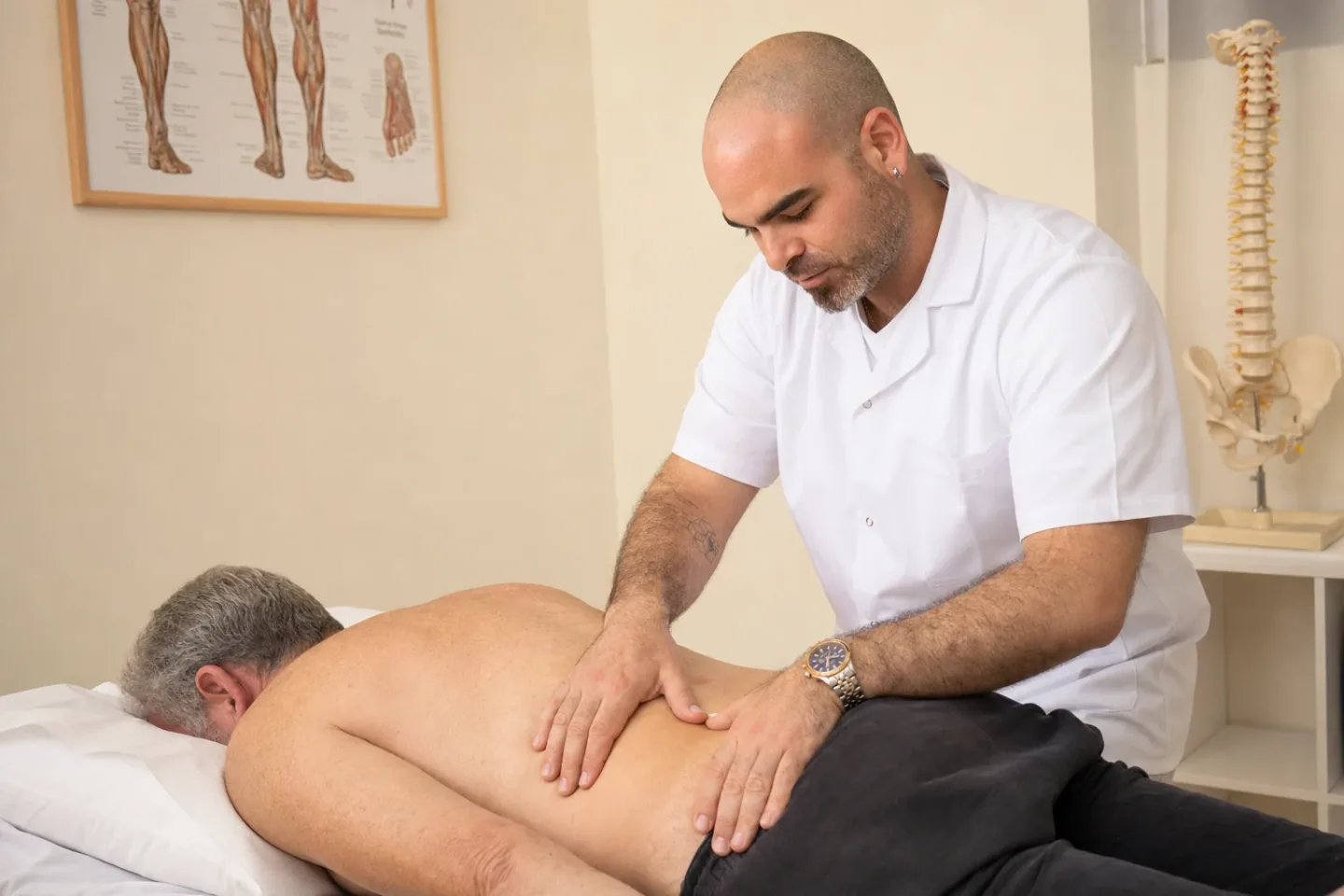
In the first session‚ which lasts about an hour‚ we start with a conversation about your herniated disc symptoms: when the pain started‚ what makes it worse‚ what eases it and whether there are signs that call for a referral to a doctor. Then comes a gentle movement examination that does not force movements that increase the radiating pain.
The treatment itself includes gentle techniques to improve mobility‚ work on soft tissues and practical guidance for your routine‚ such as moving correctly from lying to standing and a gradual return to walking. Follow-up sessions last about 45 minutes‚ and some private insurance companies refund part of the cost.
People looking for osteopathic treatment in the north of Israel because of radiating back pain are usually looking for someone who will look at the whole picture. I‚ Roman Kibler‚ studied osteopathy for five years‚ including 1,000 clinical hours‚ and I have been working as a therapeutic massage therapist since 2017.
Is Manual Treatment Safe with a Herniated Disc?
When there are no warning signs and the treatment is gentle and adapted‚ manual treatment is usually considered safe. If you want to read about the risks of osteopathy and its side effects‚ you will find there an explanation of what to expect after treatment and when to stop.
When a disc irritates a nerve‚ I do not use forceful or fast movements on the irritated area. If the leg pain increases after treatment or new weakness appears‚ you see a doctor.
In Summary
A herniated disc is a condition in which an intervertebral disc bulges or breaks through and may irritate a nerve root. Herniated disc symptoms include back pain‚ pain radiating to the leg or arm‚ numbness or weakness‚ but not every disc finding causes symptoms‚ and not every back pain comes from a disc.
In most people‚ the symptoms improve with conservative treatment‚ the right movement and adjusted loads. Osteopathic treatment can fit in when there are no warning signs‚ with the aim of reducing loads‚ improving mobility and helping the body return to function gradually.
Frequently asked questions
What are the first herniated disc symptoms?
Usually a sharp back pain appears after lifting‚ bending or long sitting‚ and then the pain can radiate to the buttock and leg. In some people the first symptom is actually numbness or leg pain without significant back pain.
Can herniated disc symptoms appear only in the leg?
Yes. Sometimes the back pain is mild or passes‚ and the pain‚ numbness or weakness are felt mainly in the thigh‚ calf or foot. This happens because the irritated nerve continues along the leg.
How do I know if it is a slipped disc or a pulled muscle?
A pulled muscle usually causes local pain that improves within days‚ without numbness and without pain radiating below the knee. Pain that runs down the leg‚ numbness or weakness fit herniated disc symptoms better‚ and they are worth checking.
How long does a herniated disc take to heal on average?
Many people see a clear improvement within a few weeks‚ while in others the process lasts months. Following the trend of improvement matters more than the number of days.
Do I need an MRI when I have herniated disc symptoms?
Not always. The diagnosis starts with a clinical examination‚ and the doctor decides on imaging mainly when there are nerve signs‚ warning signs or pain that does not improve.
Is it OK to walk with a herniated disc?
In most cases a short‚ relaxed walk is recommended and brings relief. If walking increases sharp leg pain or numbness‚ shorten it and get advice.
How should I sleep with a herniated disc?
Many people feel more comfortable lying on their side with a pillow between the knees‚ or on their back with a pillow under the knees. Try a few positions and choose the one that reduces the radiating pain.
Can herniated disc symptoms come back?
Yes‚ especially when you go back to the same load patterns. Staying active‚ gradual strengthening and breaks from sitting reduce the chance of another episode.
Can herniated disc symptoms appear in both legs?
This is less common‚ and the pain is usually on one side. Pain‚ numbness or weakness in both legs‚ especially with a change in bladder or bowel control‚ call for urgent medical care.
Do herniated disc symptoms get worse at night?
In some people they do‚ mainly in certain positions. Strong night pain that does not change in any position is not typical and calls for a medical check.
When does a herniated disc need surgery?
When there is significant or increasing weakness‚ loss of sphincter control or severe pain that does not improve despite long conservative treatment. The decision is made by a spine specialist.
Can an osteopath treat a herniated disc during pregnancy?
Yes‚ with gentle techniques adapted to the week of pregnancy‚ provided there are no warning signs. When there is weakness‚ significant numbness or unusual pain‚ the treating doctor is involved first.
Can a herniated disc be prevented?
Not always‚ because age and a family tendency play a part. Keeping a healthy weight‚ not smoking‚ strengthening the core muscles and moving regularly during the day reduce the risk of a herniation and the chance that herniated disc symptoms will come back.
Table of Contents
- What Is a Herniated Disc‚ and What Happens in the Spine?
- Herniated Disc‚ Bulging Disc and Ruptured Disc: What Is the Difference?
- Risk Factors: Who Is More Prone to a Herniated Disc?
- Herniated Disc Symptoms: What Do You Feel?
- How Do Herniated Disc Symptoms Change During the Day?
- Herniated Disc in the Lower Back: Typical Symptoms
- A Herniated Disc with Leg Pain
- Symptoms of a Herniated Disc in the Neck
- Warning Signs That Need Urgent Care
- How Do You Tell Herniated Disc Symptoms from Other Pain?
- How Are Herniated Disc Symptoms Diagnosed?
- Symptoms Similar to a Herniated Disc in Pregnancy
- How Long Does a Herniated Disc Episode Last?
- When Do Herniated Disc Symptoms Get Worse‚ and When Do They Improve?
- Does a Herniated Disc Go Away‚ or Does It Stay for Life?
- Returning to Routine and Preventing Another Episode
- How Can You Get Herniated Disc Pain Relief Without Making It Worse?
- What Should You Avoid When You Have Herniated Disc Symptoms?
- Herniated Disc Treatment: What Are the Options?
- Herniated Disc Treatment with an Osteopath: What Do I Examine?
- Is Manual Treatment Safe with a Herniated Disc?
- In Summary
- Frequently asked questions
