
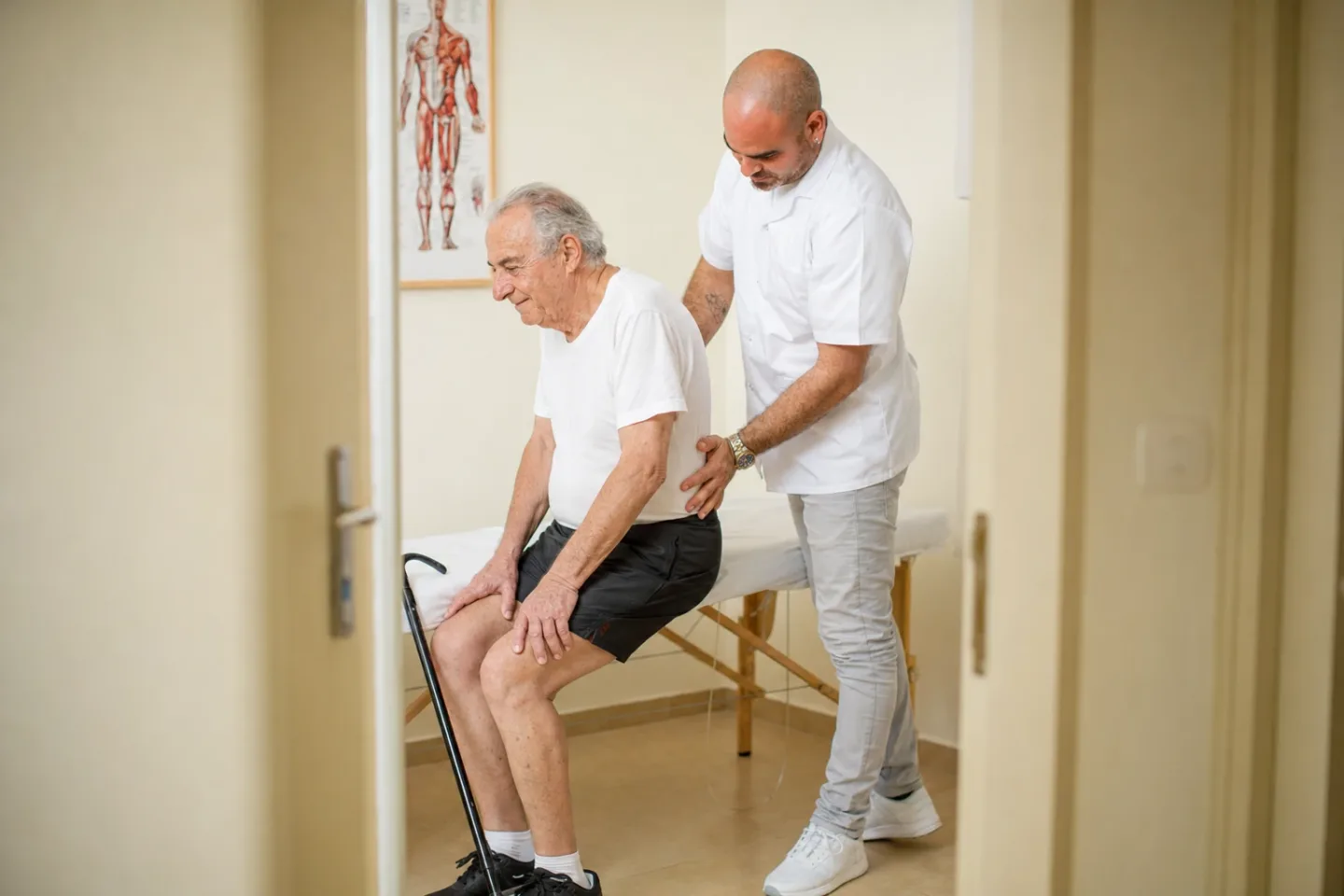
Spinal Stenosis - Symptoms‚ Diagnosis and Possible Treatment
12 min read
You go out for a walk‚ and after a few minutes your legs become heavy‚ numb or painful until you have to sit down? As soon as you sit or lean forward on the shopping cart the pain goes down‚ and then it comes back on the next walk? Did you get an MRI report with the word "stenosis" and you are not sure what it means or what to do now?
I am Roman Kibler‚ an osteopath (D.O) in Kiryat Tivon and an osteopath at Maccabi Tivi since 2022‚ and I support people with spinal stenosis through gentle manual treatment and building safe movement‚ alongside their medical follow-up.
Leave your details or call me‚ and we will check together what eases your symptoms‚ what makes them worse and how you can get back to walking more!
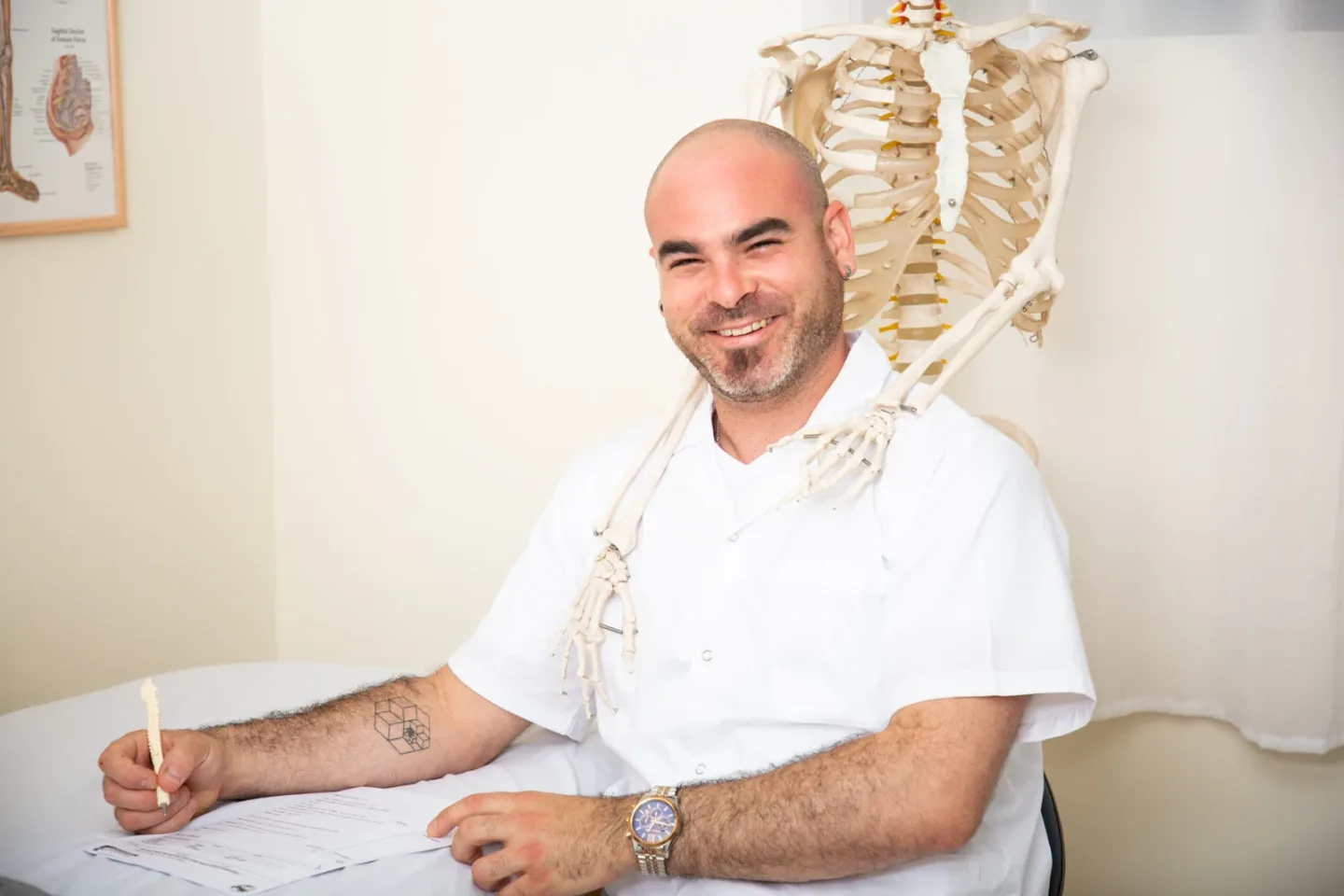
Spinal stenosis‚ also called stenosis of the spine‚ is a condition in which there is a narrowing in one of the areas of the spinal canal or in the openings through which the nerves leave the spine. When the space around the spinal cord or the nerve roots gets smaller‚ mechanical pressure or nerve irritation may develop.
In some people spinal stenosis shows on imaging with almost no symptoms‚ and in others it shows up as back pain‚ neck pain‚ numbness‚ weakness‚ difficulty walking or heaviness in the legs. That is why it is important not to rely only on a finding in an X-ray or an MRI‚ but to connect the complaints‚ the physical examination and the effect on function.
Spinal stenosis treatment depends on where the narrowing is‚ how severe the symptoms are‚ age‚ general health and whether there are significant neurological signs. Osteopathy can fit in‚ in suitable cases‚ as a conservative and functional approach‚ but it does not replace a medical diagnosis.
What Is Spinal Stenosis‚ and What Narrows in the Spine?
The word stenosis means narrowing. When people talk about spinal stenosis‚ they usually mean a narrowing of the central spinal canal‚ through which the spinal cord and the nerve roots pass‚ or of the side openings through which the nerves exit toward the limbs.
Central Narrowing and Narrowing of the Nerve Openings
In central narrowing the whole canal is narrower‚ and the symptoms usually appear in both legs or on both sides of the body. In narrowing of the side openings‚ one nerve root is compressed‚ and the pain or numbness is felt mainly on one side‚ along the path of the nerve.
Some people have both types together‚ and this is one of the reasons why spinal stenosis looks different in every patient. The examination helps you understand which type of narrowing is responsible for the complaints.
Why Does Spinal Stenosis Develop?
Spinal stenosis usually comes from degenerative changes that build up over the years: discs that lose height and bulge‚ small joints between the vertebrae that thicken‚ ligaments that thicken and bony spurs. Some people also have a structural tendency to a narrower canal from the start.
It is important to understand that narrowing on imaging does not always equal pain. Some people have significant MRI findings and mild symptoms‚ while others have moderate findings and suffer a lot‚ so the question is whether the symptoms match the finding.
Lumbar Spinal Stenosis: Typical Symptoms
When spinal stenosis appears in the lower back‚ the classic complaint is pain‚ heaviness‚ numbness or weakness in the legs while walking or standing for a long time. Doctors call this pattern neurogenic claudication. In many people the pain improves when sitting or bending forward‚ for example when leaning on a shopping cart.
The reason is that bending forward slightly increases the space in the spinal canal and temporarily reduces the pressure on the nerves‚ while standing upright and leaning back narrow it. That is why people with lumbar stenosis sometimes find it harder to walk downhill than uphill‚ and tend to walk slightly bent forward.
A Walking Distance That Keeps Getting Shorter
One of the most noticeable spinal stenosis symptoms is a walking distance that gets shorter over time: at first the pain appears after half an hour‚ and later after just a few minutes. Many people start planning outings around places where they can sit down.
It is worth noting the distance and the time after which the symptoms appear‚ and what exactly eases them. This information helps a lot‚ both the doctor and me.
Numbness‚ Heaviness and Weakness
Beyond the pain‚ people describe paresthesia in the legs‚ a feeling of "lead legs"‚ tingling in the feet or weakness that makes them stumble. When these symptoms appear while walking and disappear when sitting‚ they fit the picture of spinal stenosis.
Still‚ not every back pain that radiates to the leg is spinal stenosis. You need to tell it apart from muscle overload‚ a problem in the back joints‚ a bulging or herniated disc‚ a problem in the blood vessels of the legs and other conditions.
Cervical Spinal Stenosis
Narrowing in the lower back usually affects the legs and walking‚ while cervical spinal stenosis‚ in the neck‚ may affect the hands‚ sensation‚ strength and coordination. In significant cases there is difficulty with fine motor skills‚ such as buttoning a shirt or writing‚ and a feeling of unsteadiness when walking.
Signs like these call for a proper medical workup‚ because they may point to pressure on the spinal cord itself. When this is suspected‚ a referral to a doctor comes before any attempt at conservative treatment.
Degenerative Changes and Postural Load
In cervical stenosis of the spine‚ the area is especially sensitive‚ because the spinal cord‚ nerve roots and blood vessels pass through it. Long-term postural load‚ work in front of a screen and degenerative changes create local pain‚ pain radiating to the shoulder blades or hands‚ and sometimes headaches.
When there are degenerative changes in the neck‚ cervical spondylosis can also combine with postural load and restricted movement. A finding like this does not always explain all the complaints on its own‚ so the examination‚ the imaging and the clinical story are put together.
After a Neck Injury
Neck pain after an accident‚ a fall or a sharp movement needs careful attention‚ especially when there is a known narrowing. Pain that gets worse‚ numbness in the hands‚ weakness‚ unusual dizziness‚ a new and strong headache or confusion call for a medical workup before any manual treatment.
In a person with a known narrowing in the neck‚ even an injury that seems mild‚ such as whiplash in a car accident‚ justifies a medical examination‚ because a narrow canal leaves less room for the spinal cord. Symptoms sometimes appear only hours or days after the event‚ and gentle treatment fits in only after the doctor has ruled out nerve damage.
How Is Spinal Stenosis Diagnosed?
Spinal stenosis diagnosis starts with a conversation and a physical examination: when the pain appears‚ whether it radiates‚ what eases it‚ whether there is numbness or weakness and whether the walking distance has become shorter. The examination looks at range of motion‚ strength‚ sensation‚ reflexes and the walking pattern.
Imaging tests such as an MRI or CT help when significant narrowing is suspected or when the symptoms do not improve. Imaging is only part of the picture‚ and a good diagnosis of spinal stenosis connects the story‚ the examination and the imaging.
Telling It Apart: Disc‚ Nerve and Blood Vessels
Back pain that radiates to the leg can be caused by a range of conditions: nerve root irritation from a herniated disc‚ narrowing of the canal‚ or muscle and joint overload that produces radiating pain. The distinction matters‚ because each of these conditions behaves differently over time.
Anyone who asks whether a slipped disc goes away will find that disc symptoms often improve with conservative treatment and time‚ while degenerative narrowing tends to be a longer-lasting condition.
Anyone who compares what they feel with the symptoms of sciatica will find a lot of similarity‚ so the diagnosis between them is made in an examination and not by the name.
A problem in the blood vessels of the legs can also cause pain when walking that settles with rest. The difference is that with a blood vessel problem relief also comes when standing still‚ while with stenosis it usually needs sitting or bending forward‚ and only a doctor can check this in depth.
Spinal Stenosis Treatment with Osteopathy
Osteopathic treatment does not change the structure of the spinal canal and does not "open" a bony narrowing‚ so it is important to avoid inaccurate promises. Its value lies in reducing loads around the area‚ improving mobility in nearby joints‚ gentle work on soft tissues and guidance for movement that respects the nervous system.
The treatment is suitable mainly when the picture is stable‚ there are no warning signs‚ and the patient needs help improving movement and function. I examine the back‚ the pelvis‚ the neck‚ breathing‚ the walking pattern and the areas that compensate for the restriction.
Working Around the Sensitive Area
Sometimes the work is actually done around the hips‚ the chest or the pelvis. A stiff hip that does not allow a full step‚ for example‚ makes the lower back arch with every step‚ and this arch narrows the space in the canal.
When a stiff back limits walking‚ getting up from a chair or bending‚ local release alone is not enough in a person with spinal stenosis. I check which positions bring relief‚ such as sitting or bending slightly forward‚ and build a gradual return to walking and activity with them‚ while following the walking distance and standing time from session to session.
How Is the Osteopathic Approach Different?
Medical spinal stenosis treatment focuses on diagnosis‚ follow-up‚ pain management‚ physiotherapy‚ adjusting activity and sometimes injections or surgery when they are indicated. When there is significant pressure on nerves or neurological worsening‚ the medical approach is essential.
Osteopathy focuses on the question of how the body copes with spinal stenosis. Even when the structure cannot be changed‚ it is sometimes possible to improve the distribution of loads‚ reduce secondary stiffness and help the patient understand which positions ease the symptoms.
Session Length and the Clinic
When I treat spinal stenosis‚ the first session lasts about an hour and includes a thorough examination‚ and follow-up sessions last about 45 minutes. People looking for osteopathic treatment in the north of Israel come to my clinic at 6 Karkom Street in Kiryat Tivon‚ and some private insurance plans refund part of the cost.
Living with Spinal Stenosis: What Helps Day to Day?
With spinal stenosis‚ daily routine needs to be adapted to the symptoms. In some people a long walk makes the pain worse‚ but short‚ graded walking is actually helpful‚ and others feel relief when bending forward or sitting briefly.
- Short walks with planned breaks‚ instead of one long walk.
- Riding a stationary bike‚ where the back leans forward‚ which many people find comfortable.
- Gentle exercises for hip flexibility and for strengthening the abdomen and buttocks.
- Aids such as a walking stick or a cart‚ which allow you to lean slightly forward.
- Sleeping on your side with bent knees‚ or on your back with a pillow under your knees.
Be careful not to avoid movement completely‚ because fear of pain leads to stiffness‚ weakness and a drop in fitness. On the other hand‚ "pushing through the pain" is not a good solution either when there is nerve irritation‚ and the right way is a graded load‚ whatever the type of spinal stenosis.
Physical Activity and Spinal Stenosis Exercises
Regular physical activity is one of the most important tools for keeping function with spinal stenosis. Swimming‚ walking in water‚ cycling and adapted training in Pilates or at the gym suit many people‚ as long as they are done gradually.
When choosing spinal stenosis exercises‚ it is worth avoiding for a while exercises with a strong backward bend of the back‚ heavy overhead lifting and running on a hard surface if they make the symptoms worse. A good measure of progress is the walking distance and the standing time‚ and not only how strong the pain is.
When Does Spinal Stenosis Need a Doctor?
See a doctor when there is progressive weakness‚ a significant loss of sensation‚ difficulty controlling the bladder or bowel‚ pain that gets worse quickly‚ new difficulty walking‚ falls‚ fever‚ unexplained weight loss or pain after an injury. Signs like these are not suitable for waiting or for manual treatment.
Even when the pain is not acute but lasts and affects function‚ it is worth having a medical assessment. After it‚ a combination of osteopathic treatment‚ physiotherapy‚ adapted activity and medical treatment can be considered as needed.
What Is Important to Remember About Spinal Stenosis?
Spinal stenosis is a narrowing in the spinal canal or in the nerve openings‚ which can cause back or neck pain‚ pain radiating to the legs or arms‚ numbness‚ heaviness‚ weakness and difficulty walking. Not every finding on imaging causes symptoms‚ so the diagnosis combines a conversation‚ a physical examination and sometimes imaging.
Osteopathic treatment can fit in as part of a conservative and functional approach: it does not change the structure of the canal‚ but it helps reduce loads‚ improve movement and build a gradual return to activity.
Frequently asked questions
What is spinal stenosis in simple words?
Stenosis means narrowing. In the spine it refers to the canal or the openings through which the nerves pass‚ which become narrower and may press on the nerves.
Is stenosis of the spine the same as narrowing of the spinal canal?
Yes‚ these are two names for the same condition. In the lower back it is also called lumbar spinal stenosis‚ and in the neck cervical spinal stenosis.
Does spinal stenosis get worse over time?
In some people the condition stays stable for many years‚ and in others it gets worse gradually. Adapted activity and medical follow-up help maintain function.
Does spinal stenosis need surgery?
Most people start with conservative treatment. Surgery is considered when there is progressive weakness‚ loss of sphincter control or pain that is very limiting despite treatment‚ and the decision is made with a doctor.
Which exercises suit spinal stenosis?
Exercises that bend the back slightly forward‚ strengthening the abdomen and buttocks‚ hip flexibility and riding a stationary bike suit many people. It is worth building a personal plan with a professional.
Is osteopathic treatment safe with spinal stenosis?
When there are no warning signs and the treatment is gentle and adapted‚ it is safe for most patients. I do not perform strong manipulations in the area of the narrowing‚ and with any new neurological sign you see a doctor.
Why does walking hurt more than cycling with lumbar spinal stenosis?
When cycling‚ the back is bent slightly forward‚ and the space in the canal grows. When walking upright the space is smaller‚ so the symptoms appear sooner.
What does stenosis mean in an MRI report?
When an MRI report says stenosis‚ it means that the space in the canal or in one of the openings is narrower than normal. The report usually also describes the location and the grade‚ and the doctor explains what it means for the symptoms.
Does spinal stenosis cause pain at night?
Usually the symptoms are linked to standing and walking and settle with rest. Strong pain at night that does not change with position is not typical and needs a medical workup.
Can I keep working with spinal stenosis?
Most people keep working‚ sometimes with adjustments such as alternating sitting‚ short walking breaks and less long standing. In hard physical work‚ it is worth consulting the doctor about restrictions.
Does weight loss help with lumbar stenosis?
Losing excess weight reduces the load on the lower back and makes walking easier. It does not change the narrowing itself‚ but it improves function in many people.
How many sessions does spinal stenosis usually need?
It depends on how severe the symptoms are and on the goals. Usually it is a series of a few sessions alongside home exercise‚ and sometimes follow-up sessions over time.
Table of Contents
- What Is Spinal Stenosis‚ and What Narrows in the Spine?
- Central Narrowing and Narrowing of the Nerve Openings
- Why Does Spinal Stenosis Develop?
- Lumbar Spinal Stenosis: Typical Symptoms
- A Walking Distance That Keeps Getting Shorter
- Numbness‚ Heaviness and Weakness
- Cervical Spinal Stenosis
- Degenerative Changes and Postural Load
- After a Neck Injury
- How Is Spinal Stenosis Diagnosed?
- Telling It Apart: Disc‚ Nerve and Blood Vessels
- Spinal Stenosis Treatment with Osteopathy
- Working Around the Sensitive Area
- How Is the Osteopathic Approach Different?
- Session Length and the Clinic
- Living with Spinal Stenosis: What Helps Day to Day?
- Physical Activity and Spinal Stenosis Exercises
- When Does Spinal Stenosis Need a Doctor?
- What Is Important to Remember About Spinal Stenosis?
- Frequently asked questions
