
Sciatica - Why It Travels Down the Leg and How to Ease It
22 min read
Does a sharp pain run from your buttock down your leg every time you sit? Is it hard to bend down and put on your shoes in the morning‚ and at night no position brings relief? Have you been told it is sciatica‚ and you are not sure what that means or what you can do about it?
I'm Roman Kibler‚ an osteopath (D.O.) with a clinic in Kiryat Tivon and an osteopath at Maccabi Tivi‚ and I examine sciatica through the whole chain of the lower back‚ pelvis‚ buttock and leg‚ to understand what keeps irritating the nerve.
Leave your details or call me‚ and together we'll check what is behind the pain in your leg!
Sciatica‚ which many people also call ischias‚ is the name for pain that starts in the lower back‚ the buttock or the pelvis and travels along the leg. Sometimes it is a sharp‚ burning or stabbing pain‚ and sometimes a feeling of numbness‚ electric currents‚ tingling or relative weakness.
These words do not always describe one simple diagnosis‚ but a picture of symptoms that comes from irritation of the sciatic nerve or of the nerve roots that form it. That is why the answer to the question what is sciatica starts with understanding what exactly is irritating the nerve in your case.
What Is Sciatica and How Does It Feel?
Sciatica is a condition in which symptoms appear along the path of the sciatic nerve or of the nerve roots related to it. The pain can start in the lower back‚ move to the buttock and continue to the thigh‚ the calf and sometimes all the way to the foot.
For some of my patients the sciatica leg pain is stronger than the back pain itself‚ so they do not realize that the source may be in the spine or the pelvis. The sciatica symptoms include sharp pain‚ burning‚ currents‚ an electric feeling‚ numbness or a feeling that the leg is "weak" and does not respond as usual.
Sciatica - A Symptom or a Disease?
Anyone who asks what is sciatica usually discovers that it is a description and not a final diagnosis. The word describes where and how it hurts‚ but does not say what causes the irritation of the nerve.
That is why two people with the same sciatica can receive completely different treatment. In one the source is a disc in the lower back‚ and in another deep tension in the buttock muscles or load on the pelvic joints.
Ischias and Sciatica - Two Names for the Same Pain
In everyday Hebrew‚ as in several European languages‚ people often use the word ischias‚ which comes from the name of the bone near the path of the nerve. In medicine the name used is sciatica‚ and in practice it is the same phenomenon.
When someone says "I have ischias"‚ they usually describe sciatic pain that runs from the buttock to the back of the leg. It is worth remembering that here too it is the name of a symptom‚ and not an explanation of its source.
The Sciatic Nerve - The Way the Pain "Travels" to the Leg
The sciatic nerve is the thickest and longest nerve in the body. It is formed by several nerve roots that leave the lower back and the sacrum‚ passes through the buttock under deep muscles and continues to the back of the thigh.
Above the knee the nerve divides into branches that continue to the calf and the foot. When there is pressure‚ irritation or sensitivity along the path‚ sciatic nerve pain feels as if it "travels" along the leg‚ even when the source is much higher up.
Nerve Roots and the Map of Sciatica Leg Pain
Each nerve root that leaves the lower back is responsible for roughly a different area of the leg. When one root is involved‚ the pain and numbness usually appear in a certain strip: for example‚ on the outer side of the calf and the top of the foot up to the big toe‚ or at the back of the calf‚ the heel and the outer edge of the foot.
This map helps the examination estimate at which level of the back the irritation comes from. It is not accurate in every person‚ so it is combined with tests of strength‚ sensation and reflexes‚ and no conclusion is drawn from it alone.
The Sciatic Nerve in the Buttock
On its way to the leg the sciatic nerve passes very close to the deep muscles of the buttock‚ above all the piriformis muscle. When these muscles are under constant tension‚ for example after long sitting‚ driving or a one-sided load‚ they can irritate the nerve.
In such a situation the sciatic pain starts mainly in the buttock and gets worse when sitting‚ and sometimes there is almost no back pain. This distinction matters‚ because treating sciatic nerve pain in the buttock area is different from treating a nerve root in the lower back.
Inflammation of the Sciatic Nerve or Nerve Irritation?
When people describe inflammation of the sciatic nerve‚ they usually mean sciatica nerve pain that is burning‚ searing or radiating. Medically it is sometimes an inflammatory irritation around a nerve root‚ and sometimes mechanical pressure or nerve sensitivity without inflammation in the simple sense of the word.
So when you are told that your sciatic nerve is inflamed‚ it is worth asking what causes it and what makes it worse. Anti-inflammatory medication can bring relief according to a doctor's decision‚ but if the load that irritates the nerve stays‚ the sciatica pain may come back.
Sciatica Symptoms Worth Paying Attention To
The classic sciatica symptom is pain that travels along the leg‚ usually on one side only. Some people feel sciatica as a deep pain in the buttock‚ some describe currents along the thigh‚ and some feel mainly numbness in the foot.
- Pain that runs from the lower back or the buttock to the back of the thigh‚ the calf or the foot.
- A burning‚ electric or current-like feeling along the leg.
- Numbness‚ tingling or reduced sensation in part of the leg or the foot.
- Relative weakness‚ for example difficulty standing on your toes or on your heel.
- Pain that gets worse when sitting‚ coughing‚ sneezing or bending forward.
If you suffer mainly from tingling and a feeling that the leg is falling asleep‚ you will find a detailed explanation in the article on paresthesia. It also explains when the numbness is related to the back and when to another source.
Pain in One Leg or in Both Legs
In most cases sciatica pain appears in one leg only‚ because the irritation affects a nerve root on one side. Sometimes the side changes‚ or the back pain is central and radiates to both sides alternately.
Pain‚ numbness or weakness in both legs at the same time is not a usual picture. In such a situation‚ especially if the symptoms are getting worse‚ see a doctor soon and do not wait for it to pass.
Sciatica Pain - What Makes It Worse and What Helps?
Sciatica pain usually gets worse with long sitting‚ standing in one place‚ bending forward‚ lifting an object or after an effort. For some people easy walking actually helps‚ and for others every step increases the radiating pain.
This information about your sciatic nerve pain matters for the diagnosis. Pain that gets worse when sitting and bending sometimes suggests disc involvement‚ while pain that gets worse when standing and walking and improves when bending forward sometimes suggests a narrowing of the spinal canal.
Sciatic Pain Versus Muscle Pain
Sciatic pain is nerve pain: it travels along a certain path‚ feels burning or electric and is sometimes accompanied by numbness. Ordinary muscle pain tends to be more focused‚ related to movement or effort‚ and usually improves with a warm-up and gentle movement.
Not every pain in the leg is sciatica. Pain on the outer side of the hip‚ for example‚ can come from an irritated bursa and not from the nerve‚ a condition explained in the article on hip bursitis.
Other Conditions That Feel Like Sciatica
Several conditions cause leg pain that seems like sciatic nerve pain‚ but its source is different. It is important to know them‚ because their treatment is different:
- A problem in the hip joint itself‚ which causes pain in the groin and the front of the thigh.
- Load on the tendons of the hamstring muscles‚ felt mainly where they attach to the sitting bone.
- Knee pain that radiates a little up or down.
- Pain in the calves when walking that disappears right away when you stop and stand‚ which may come from a blood vessel problem and requires a check-up with a doctor.
During the examination the sources are told apart by the response to different movements‚ and by whether there are nerve signs such as numbness‚ changes in the reflexes or weakness along a certain path.
Warning Signs That Require Urgent Attention
There are situations in which sciatica requires an urgent medical assessment and not hands-on treatment. See a doctor or go to the emergency room immediately if any of these appear:
- Loss of sensation in the groin‚ the genitals or around the anus.
- New difficulty passing urine‚ or loss of control of urine or stool.
- Pain or weakness in both legs together that is getting worse.
- Significant weakness in the foot‚ for example a foot that "drags" when walking.
- Pain after an accident‚ fever‚ unexplained weight loss or unusual pain at night.
What Causes Sciatica?
The most common of all sciatica causes is a bulging or herniated disc in the lower back‚ which presses on a nerve root or irritates it. In this situation the pain in the leg is sometimes stronger than the back pain‚ as explained in the article on a herniated disc and leg pain.
Not every bulge seen on imaging causes sciatica pain‚ and not every pain in the leg comes from a disc. So what decides is the match between the finding‚ what you feel and what the examination shows.
In older people‚ narrowing of the canal through which the nerves pass can cause pain and heaviness in the legs when walking. This condition is called lumbar spinal stenosis‚ and it behaves a little differently from sciatica that comes from a disc.
Who Is at Higher Risk?
The chance of an irritated nerve root rises with age‚ because the discs and joints of the back change over the years. Work that includes repeated lifting‚ twisting with a load or long driving also loads the lower back.
A sedentary lifestyle‚ excess weight and weak abdominal and back muscles increase the load on the spine. Anyone who has already had back pain or a similar episode in the past is more likely to have it again‚ so prevention is especially important for them.
Other Factors That Irritate the Nerve
- Tension in the deep buttock muscles that surround the nerve on its way to the leg.
- Restricted movement of the back pelvic joints‚ which shifts load unevenly.
- Long sitting‚ especially on a wallet in a back pocket or on a hard surface.
- Pregnancy‚ because of the change in the center of gravity and the load on the pelvis.
- In rare cases‚ causes that are not mechanical‚ which is why unusual pain is always checked by a doctor.
With sciatica there is often a combination of several factors. A sensitive disc‚ a tense buttock and hours of sitting at a computer together create a picture in which none of them alone would have been enough to cause the pain.
Diagnosing Sciatica - Why Check the Whole Chain?
The aim of the examination is not only to confirm that there is sciatica‚ but to understand where it comes from and what keeps it going. Without that understanding it is hard to choose a treatment that suits the specific person.
Diagnosing sciatica is based on a conversation‚ a physical examination and sometimes further tests. I ask when the pain started‚ whether it appeared after an effort‚ where it travels‚ what makes it worse‚ whether there is weakness or numbness and whether there are signs that require an urgent assessment.
During the examination I look at the movement of the back‚ the movement of the pelvis‚ the ranges of the hip‚ muscle strength‚ sensation‚ reflexes and sometimes the response to a straight leg raise. This examination helps to tell whether it is a nerve root in the back‚ the nerve in the buttock area or a completely different source.
What Is Checked in the Physical Examination?
One of the well-known tests is the straight leg raise‚ lying on your back. If raising the leg reproduces the pain that runs below the knee‚ this supports the involvement of a nerve root.
In addition I check the strength of certain muscles‚ for example standing on your heels and on your toes‚ sensation to light touch and the reflexes at the knee and ankle. A change in one of them helps estimate how severe the irritation is and whether further assessment is needed.
Do You Need an MRI?
Imaging tests are not always necessary at the start of sciatica treatment. In many cases a conservative approach comes first when there are no warning signs‚ and the doctor refers you for imaging when the pain is very strong‚ lasts a long time‚ comes with weakness or when an invasive treatment is being considered.
A finding on imaging also does not always explain all of the pain. A disc bulge often appears in people without any pain too‚ so the imaging‚ the symptoms and the clinical examination have to be put together.
A Sciatica Attack - What to Do When the Pain Is Sharp and Limiting?
A sciatica attack can be very frightening. The pain comes on strongly‚ limits movement and makes you avoid sitting‚ walking or sleeping normally.
In the acute stage the goal is not to "beat" the pain by force‚ but to reduce the load‚ find positions that bring relief and return to movement gradually. A short rest helps‚ but lying down for a long time without movement can stretch out the recovery.
What Should You Avoid During an Attack?
During an acute attack many people try to "release" the pain with strong stretches‚ a deep massage on the painful spot or exercises they saw online. Actions like these can increase the irritation of the nerve and make the attack last longer.
It is also worth avoiding long drives without a break‚ lifting children or heavy shopping and repeated bending over a sink or a bed. If there is no choice‚ bend your knees and hold the load close to your body.
How to Relieve Sciatica Pain in the First Days?
- Find a position that brings relief‚ for example lying on your back with your legs raised on a chair‚ or lying on your side with a pillow between your knees.
- Get up for light movement several times a day‚ with a short walk that does not increase the radiating pain.
- Avoid lifting loads‚ sharp movements and long sitting without a break.
- Try heat or cold according to what helps you‚ for a short time each time.
- Ask your doctor or pharmacist about pain relievers that suit you.
Any action that increases sciatic pain‚ numbness or sharp pain should be stopped. If the pain travels further and further toward the foot‚ this is a sign that the nerve is more irritated‚ and it is worth reducing the load.
Getting Back to Work and Routine
Most people with sciatica can return to part of their routine even before the pain disappears completely. In office work it is worth getting up every half hour‚ working part of the time standing if possible and setting up a chair that supports the lower back.
In physical work it is worth talking to your employer about temporarily reducing lifting and twisting. A gradual return matters no less than the treatment itself‚ because it keeps you moving without overloading the nerve.
Natural Sciatica Pain Relief - What Can You Do Carefully?
With a conservative and gentle approach‚ natural sciatica pain relief includes adjusting loads‚ gradual movement‚ work on the mobility of the pelvis and back‚ less long sitting‚ suitable strengthening and guidance for daily function. No natural treatment promises to solve every case of sciatica‚ and no single exercise suits everyone.
What should you avoid? Strong stretches that increase radiating pain‚ ignoring weakness or reduced sensation‚ and continuing an activity that clearly makes the pain worse.
Sciatica Treatment - What Are the Options?
In conventional medicine‚ sciatica treatment includes adapted movement‚ medication for pain relief or to reduce inflammation according to medical judgment‚ physiotherapy‚ and in some cases injections or advanced assessment. When there are severe neurological signs or pain that does not improve over time‚ surgery is sometimes considered as well.
The advantage of the medical approach is the ability to diagnose conditions that require follow-up‚ medication or surgery. The osteopathic approach does not replace this‚ but adds a functional look at the back‚ pelvis‚ hips and breathing.
Treating Sciatic Nerve Pain With an Osteopath - What Does the Process Look Like?
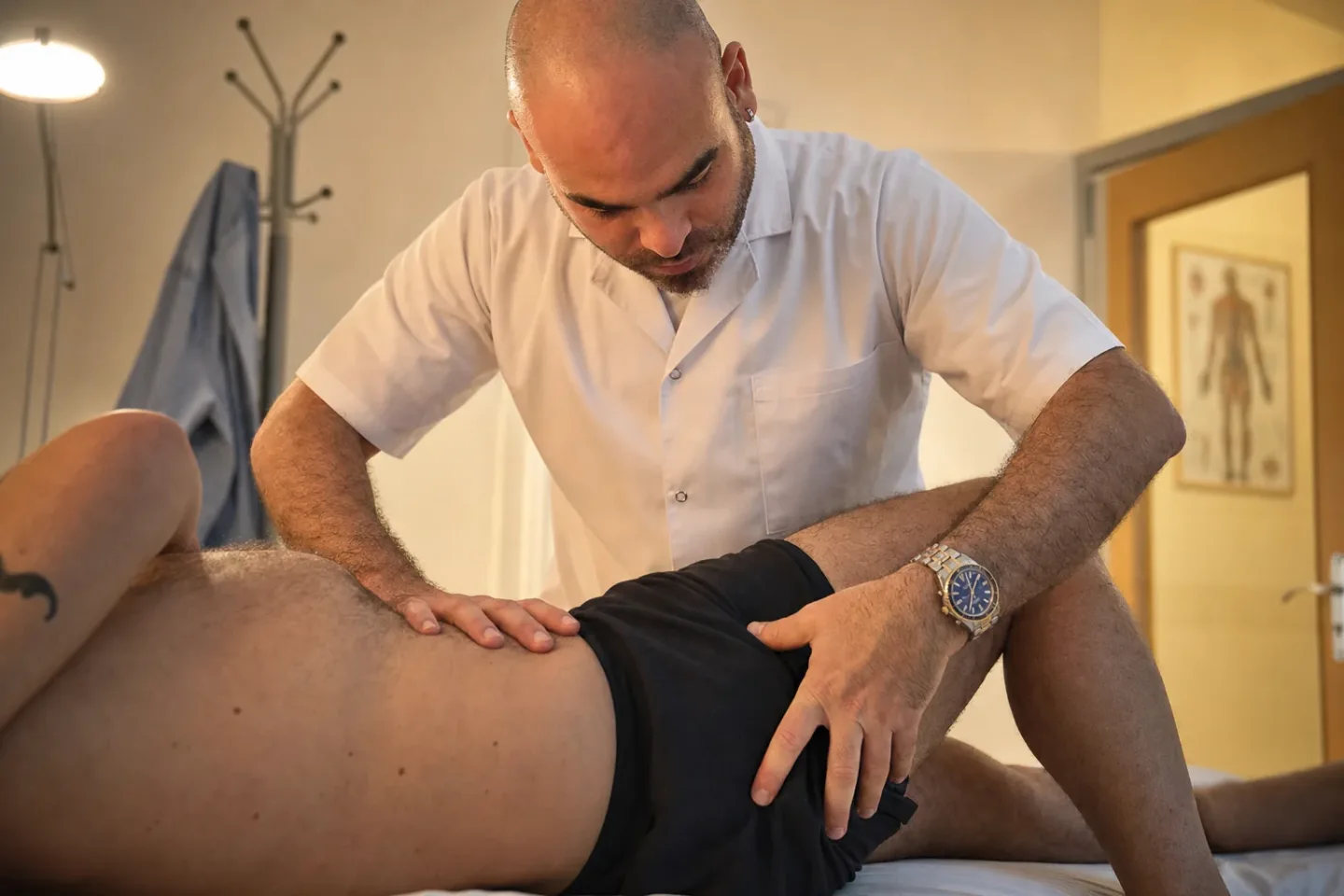
The session starts with an organized conversation: when the pain appeared‚ where it travels‚ what makes it worse‚ whether there is numbness or weakness and whether there were previous episodes. After that I examine the lower back‚ pelvis‚ hips‚ walking‚ breathing and the response to different movements‚ and if needed I recommend a medical assessment before continuing treatment.
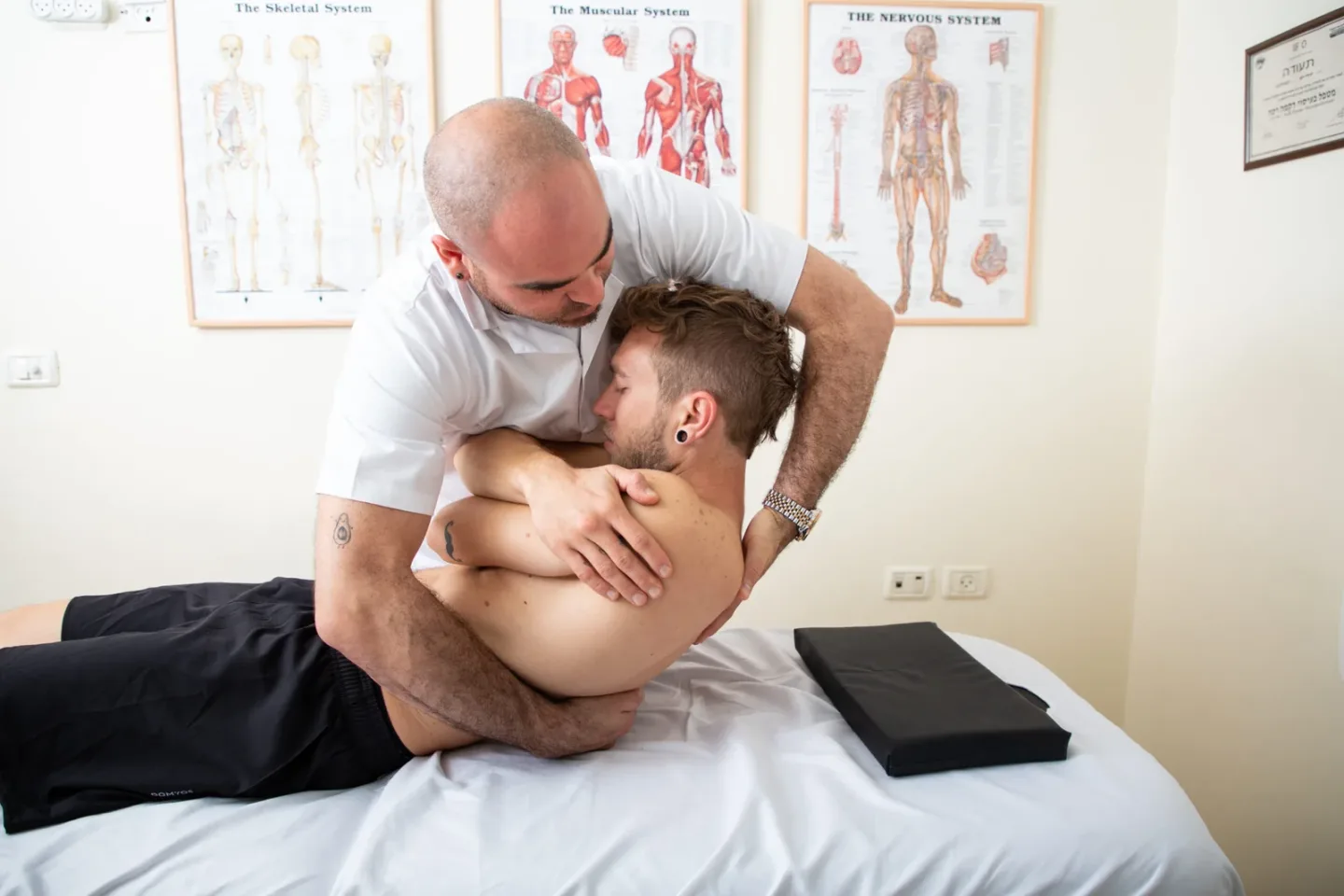
The treatment itself includes gentle work on soft tissues‚ improving the mobility of the pelvic and back joints‚ reducing the load around the hip and buttock‚ and guidance for daily movement. In the acute stage I choose gentle techniques that calm the system‚ not aggressive work.
The first session lasts about an hour‚ and follow-up sessions about 45 minutes. I studied osteopathy for five years‚ including 1000 clinical hours‚ and I am a member of the Israeli Osteopathic Association.
How Many Treatments Does Sciatica Need?
The number of sessions depends on how long the pain has lasted‚ how severe it is and what causes it. Pain that started recently sometimes improves after a few sessions‚ while pain that has lasted months requires a longer process‚ in which you take an active part in exercise and changing habits.
After the first examination you get a clear assessment: what is probably causing the pain‚ what the plan is and when we expect to see change. If the change does not come in the expected time‚ I look at the picture again and consider referring you for an assessment.
Working Together With Your Doctor
Osteopathic care fits in alongside medical follow-up and not instead of it. If your doctor recommended medication‚ imaging or physiotherapy‚ I adapt the hands-on treatment to that plan and do not contradict it.
When new signs appear during the treatments‚ such as weakness that increases or numbness that spreads‚ I refer you back to the doctor. That way you get both the advantage of the medical assessment and the functional work on the back and pelvis.
Treatment That Focuses on the Source and Not Only on the Painful Leg
Sciatic nerve pain is often felt in the leg‚ but treatment that focuses only on the leg may miss the source. If the nerve root is irritated in the lower back‚ a local massage of the calf will not solve the problem.
When the source is a disc bulge in the lower back‚ it is also worth reading about back spasms‚ because the muscles around the back often tighten as a protective reaction. If the radiating pain gets worse because of a walking pattern‚ I check the pelvis and hip‚ and if the pain is related to deep tension in the buttock‚ I look for what makes the muscle work in a protective way.
Exercises and Movement During Recovery
When the acute stage passes‚ movement becomes a central part of recovery. Regular walking‚ gentle exercises that mobilize the back and pelvis‚ and exercises that gently move the nerve along its path help many people.
Later I add strengthening of the abdominal‚ back and buttock muscles‚ so that the body returns to carrying loads with confidence. The exercises are adapted to your response: an exercise that increases radiating pain in the leg is replaced or made easier‚ and an exercise that reduces it is continued.
How Is Sciatica Healed?
For most people sciatica improves gradually with conservative treatment: reducing the load that irritates the nerve‚ adapted movement‚ strengthening and time. The aim of good treatment is not to promise a quick "cure"‚ but to create the conditions in which the body reduces the irritation and returns to function.
When the pain lasts for many months‚ the nervous system itself can become more sensitive‚ and the pain behaves differently. In such a situation it is worth getting to know the concept of chronic pain syndrome‚ because its treatment involves more than local work on the back.
How Do You Prevent the Pain From Coming Back?
- Get up from your chair at least once every half hour to hour.
- Lift loads by bending your knees‚ close to your body and without twisting.
- Keep up regular physical activity‚ even simple walking.
- Continue strengthening exercises even after the pain has passed.
- Get checked early when you feel the pain starting to come back.
Prevention does not guarantee that the pain will never come back‚ but it reduces the load that irritates the nerve and shortens the attacks if they do return.
Sciatica During Pregnancy - Why Is the Diagnosis More Delicate?
Sciatica during pregnancy can appear because of the change in the center of gravity‚ the load on the pelvis‚ tension in soft tissues and sometimes nerve irritation as well. Even so‚ not every pain that travels to the leg during pregnancy is true sciatica.
There is pelvic pain‚ sacroiliac joint pain‚ groin load‚ tailbone pain and muscle pain that feel similar. That is why the diagnosis in pregnancy is especially careful‚ and osteopathic treatment during pregnancy is done with gentle techniques‚ without strong manipulations and in positions that are comfortable for you.
What Helps at Home With Sciatica During Pregnancy?
Sleeping on your side with a pillow between your knees and under your belly reduces the twisting of the pelvis at night. During the day‚ short walks‚ sitting with support for the lower back and frequent breaks from sitting and standing help.
It is worth avoiding lifting loads and standing on one leg for long‚ and turning over in bed with your knees together. If the pain comes with weakness‚ numbness that spreads or any unusual sign in pregnancy‚ see your doctor or go to the labor ward.
Posterior Pelvic Pain That Feels Like Sciatica in Pregnancy
The sciatic nerve passes close to the back of the pelvis and the buttock‚ so load on the joints between the sacrum and the iliac bone can feel like nerve pain. Sometimes the pain starts on one side of the pelvis and travels to the back of the thigh‚ without any herniated disc.
In such situations‚ pain at the back of the pelvis in pregnancy appears alongside pain that feels like a nerve‚ especially when standing for long‚ walking and changing positions. Gentle treatment focuses on improving the mobility of the pelvis‚ reducing one-sided load and guidance for symmetrical movement.
The pain tends to get worse on one side‚ when standing on one leg or turning over in bed‚ and usually does not come with real numbness in the foot. When numbness or weakness appears‚ I also check the back.
Pain at the Front of the Pelvis or in the Tailbone
When the pain sits at the front of the pelvis and gets worse when walking‚ climbing stairs‚ turning over in bed or standing on one leg‚ it is not the sciatic nerve. In that case it is worth reading the article on symphysiolysis‚ where the emphasis is on the stability of the pelvis and not on the nerve.
This distinction changes the treatment: when the nerve is involved‚ the emphasis is on reducing irritation and the load on the back and pelvis‚ and when the front joint is involved‚ the emphasis is on stability‚ avoiding spreading the legs wide and symmetrical movement. In both situations there is a place for gentle treatment‚ but the goals are different.
Pain that appears mainly when sitting‚ at the lower end of the spine‚ sometimes comes from the tailbone and not from the nerve. This condition is explained in the article on coccyx pain in pregnancy‚ which also explains how a seat cushion and moving gradually between positions reduce the load.
Sciatica - The Bottom Line
Sciatica and ischias describe nerve pain that travels from the lower back‚ the pelvis or the buttock to the leg‚ sometimes with numbness‚ currents or weakness. Not every pain in the leg is sciatica‚ and not every pain in pregnancy that travels to the thigh comes from the sciatic nerve.
When there are no warning signs‚ a broad examination of the back and pelvis‚ adjusting loads‚ gentle treatment and movement guidance can reduce the pain and improve function. If you are looking for osteopathic treatment for pain that runs down your leg‚ my clinic in Kiryat Tivon is open to book an examination.
Frequently asked questions
What Is Sciatica in Simple Words?
Sciatica is pain that occurs when the sciatic nerve or one of the roots that form it is irritated‚ and the pain runs down the leg. It is the name of a symptom‚ and its source can be a disc‚ buttock muscles‚ the pelvic joints or another factor.
How Long Does a Sciatica Attack Last?
It varies a lot from person to person. For many people the acute pain calms down gradually within a few weeks‚ and for others the process takes longer‚ especially when the cause of the load has not changed.
Does Sciatica Go Away on Its Own?
In many cases yes‚ mainly when the load is reduced and movement returns gradually. Suitable treatment can shorten the process and reduce the chance of it coming back.
Does Bed Rest Help Sciatica?
A short rest in the first days can bring relief‚ but lying down for a long time without movement can stretch out the recovery. It is better to combine periods of rest with short walks that do not increase the pain.
Heat or Cold for Sciatica Pain?
There is no single answer for everyone. Some people feel relief from cold in the first days and some prefer heat‚ so it is worth trying each for a short time and choosing what helps.
How Should You Sit When You Have Sciatica?
It is best to sit on a chair with a backrest‚ with your pelvis back against it and your knees slightly lower than your hips. Get up every 20-30 minutes for a short walk‚ and take your wallet or phone out of your back pocket.
How to Sleep With Sciatic Pain?
Many people feel relief lying on their side with a pillow between their knees‚ or on their back with a pillow under their knees. It is better to avoid lying on your stomach when the pain is acute.
Do Stretches Help the Sciatic Nerve?
Gentle stretches that do not increase radiating pain can help‚ but a strong stretch of an irritated nerve can make it worse. It is better to get adapted exercises after an examination.
Does Massage Help Sciatica Pain?
A gentle massage of the back and buttock muscles can ease the tension around the nerve. A strong massage on the painful spot during an acute attack may actually increase the sensitivity.
Is Walking Good When You Have Sciatica?
For most people with sciatica pain a short‚ relaxed walk helps‚ as long as it does not increase the radiating pain. Start with short distances and lengthen them according to how you respond.
What Is the Difference Between Sciatica and a Herniated Disc?
A herniated disc is a structural finding in the spine‚ and sciatica is a description of pain along the path of the nerve. A herniated disc is one of the common causes of sciatica‚ but not the only one.
Is Osteopathic Treatment Suitable During an Acute Attack?
Yes‚ when there are no warning signs and with gentle techniques only. At this stage the goal is to calm the system and find positions that bring relief‚ not to work with force.
Can I Get Treatment for Sciatica During Pregnancy?
Yes‚ with gentle techniques and in positions adapted to the stage of pregnancy. Before the treatment I ask about the course of your pregnancy‚ and if there is a known complication‚ I consult with your doctor.
Can Sciatica Cause Weakness in the Leg?
Yes‚ when the irritation of the nerve root is significant‚ weakness can appear in certain muscles‚ for example difficulty lifting the foot. Weakness like this requires a medical check-up‚ especially if it is increasing.
When Does Sciatica Require Surgery?
Most cases do not reach surgery. Surgery is considered when there is progressive weakness‚ impaired bladder or bowel control or severe pain that does not improve over time with conservative treatment‚ and the decision belongs to the surgeon.
Can Sciatic Nerve Pain Come Back?
Yes‚ sciatica can return‚ especially when the cause of the load remains. Strengthening‚ regular movement and breaks from sitting reduce the chance of it coming back‚ and an early check-up helps stop an attack at its start.
Does Numbness in the Leg Go Away After Sciatica?
For many people the numbness lessens gradually as the irritation of the nerve goes down‚ sometimes more slowly than the pain. Numbness that gets worse or weakness that increases requires a check-up with a doctor.
Which Is Better‚ Physiotherapy or Osteopathy?
Both approaches work on movement and on reducing load‚ and the difference is mainly in the emphasis. Osteopathy includes more hands-on work on the whole chain of the back and pelvis‚ and physiotherapy more exercise‚ and sometimes a combination of the two is the right fit.
Does Insurance Cover Osteopathic Treatment?
Some private insurance companies refund part of the cost of treatment. It is worth checking the terms of your policy in advance.
Table of Contents
- What Is Sciatica and How Does It Feel?
- Sciatica - A Symptom or a Disease?
- Ischias and Sciatica - Two Names for the Same Pain
- The Sciatic Nerve - The Way the Pain "Travels" to the Leg
- Nerve Roots and the Map of Sciatica Leg Pain
- The Sciatic Nerve in the Buttock
- Inflammation of the Sciatic Nerve or Nerve Irritation?
- Sciatica Symptoms Worth Paying Attention To
- Pain in One Leg or in Both Legs
- Sciatica Pain - What Makes It Worse and What Helps?
- Sciatic Pain Versus Muscle Pain
- Other Conditions That Feel Like Sciatica
- Warning Signs That Require Urgent Attention
- What Causes Sciatica?
- Who Is at Higher Risk?
- Other Factors That Irritate the Nerve
- Diagnosing Sciatica - Why Check the Whole Chain?
- What Is Checked in the Physical Examination?
- Do You Need an MRI?
- A Sciatica Attack - What to Do When the Pain Is Sharp and Limiting?
- What Should You Avoid During an Attack?
- How to Relieve Sciatica Pain in the First Days?
- Getting Back to Work and Routine
- Natural Sciatica Pain Relief - What Can You Do Carefully?
- Sciatica Treatment - What Are the Options?
- Treating Sciatic Nerve Pain With an Osteopath - What Does the Process Look Like?
- How Many Treatments Does Sciatica Need?
- Working Together With Your Doctor
- Treatment That Focuses on the Source and Not Only on the Painful Leg
- Exercises and Movement During Recovery
- How Is Sciatica Healed?
- How Do You Prevent the Pain From Coming Back?
- Sciatica During Pregnancy - Why Is the Diagnosis More Delicate?
- What Helps at Home With Sciatica During Pregnancy?
- Posterior Pelvic Pain That Feels Like Sciatica in Pregnancy
- Pain at the Front of the Pelvis or in the Tailbone
- Sciatica - The Bottom Line
- Frequently asked questions
