
Hip Bursitis - Why the Side of Your Hip Hurts and What Helps
12 min read
Does the outside of your hip hurt every time you lie on your side? Have climbing stairs or getting up from a chair turned into a task? Have you tried resting for a few weeks‚ only for the pain to come back as soon as you return to walking?
I am Roman Kibler‚ an osteopath (D.O) at my clinic in Kiryat Tivon‚ and with hip bursitis I examine not only the spot that hurts but also the pelvis‚ the lower back and the way you walk‚ to find what keeps loading the area.
Leave your details or call me‚ and I will check with you what is behind your hip pain!
Hip bursitis is a condition in which one of the bursae around the hip joint becomes sensitive‚ irritated or inflamed. A bursa is a small sac of fluid whose job is to reduce friction between bone‚ tendon‚ muscle and soft tissue.
When the area takes repeated load‚ direct pressure‚ a knock or an unbalanced movement pattern‚ the bursa can become painful. In most cases the pain is felt on the outside of the hip‚ and it often gets worse with walking‚ climbing stairs‚ getting up from a chair or lying on the painful side.
What Is Hip Bursitis?
When people ask what is hip bursitis‚ they usually mean irritation of a bursa on the outside of the hip‚ over the upper outer bump of the thigh bone (the greater trochanter). This is why it is also called trochanteric bursitis.
The area takes part in walking‚ standing‚ climbing stairs and keeping the pelvis stable with every step. When the tissues around it work under repeated load‚ or when there is direct pressure on the area‚ a tenderness appears that is felt both in movement and at rest.
There is not always swelling you can see from outside‚ so the diagnosis of bursitis of the hip is based mainly on where the pain is‚ a physical examination‚ the description of the symptoms and sometimes imaging‚ as decided by a doctor.
Hip Bursitis and the Nearby Tendons
The tendons of the side buttock muscles pass through the same area and attach to the bone at exactly the same spot. In current medical literature the condition is called greater trochanteric pain syndrome (GTPS)‚ and imaging shows that the main source of pain is often in the tendons rather than in the bursa.
That is why the pain of trochanteric bursitis is often a mix of an irritated bursa and loaded tendons‚ not one isolated problem.
Inflammation at the point where a tendon attaches to the bone is known as enthesitis‚ and it is often linked to inflammatory joint diseases‚ so it calls for a medical workup. This distinction affects how the load is graded and what kind of exercise is suitable.
Hip Bursitis Symptoms
The most common of the hip bursitis symptoms is outer hip pain‚ which is sometimes very tender to the touch at one particular point. The pain can be sharp at first and later turn dull and nagging.
Situations in which the pain tends to get worse:
- Lying on the painful side‚ the best-known sign of hip bursitis‚ and sometimes on the other side too when the upper knee drops forward.
- Long walks‚ going up or down stairs and running.
- Getting up after sitting for a long time‚ especially from a low chair.
- Standing for a long time with your weight on one leg.
- Sitting with one leg crossed over the other.
In some people the lateral hip pain spreads a little along the thigh‚ but it usually does not behave like pain that starts in the back and travels down the whole leg to the foot. This is one of the clues that help tell bursitis of the hip apart from nerve pain.
Why Does Hip Bursitis Appear on the Side of the Hip?
The outside of the hip takes a lot of load during walking and standing. The muscles that stabilize the pelvis work there with almost every step‚ especially when the body shifts weight from one leg to the other.
This is how hip bursitis develops: if there is relative weakness‚ stiffness‚ a change in your stride‚ a difference between the sides or repeated load during exercise‚ the area becomes more sensitive. Lying on one side for long periods‚ or direct pressure on the bony bump at the side‚ can also make the pain worse.
Hip Bursitis Causes - Extra Load on the Side of the Hip
- A sudden increase in walking‚ running or training.
- Weakness of the side buttock muscles that stabilize the pelvis.
- A difference in movement between the two sides of the pelvis or between the two legs.
- Pain in the lower back‚ knee or ankle that changes the way you walk.
- A direct knock‚ for example a fall on your side.
The hip does not work alone. If the pelvis does not move in a balanced way‚ if the lower back limits movement or if the knee and ankle do not take part efficiently‚ the outside of the hip absorbs extra load‚ so local treatment alone is not always enough for trochanteric bursitis.
Who Tends to Develop Hip Bursitis?
Hip bursitis is more common in women and in middle age‚ but it also appears in runners‚ hikers and people who stand for many hours at work. What most of them share is repeated load on the same area without enough recovery time.
A change in routine can also be the trigger: moving to a standing job‚ starting a walking program‚ a long hike or a period of lying on one side for a long time. In some people bursitis of the hip appears after a spell of back or knee pain‚ during which the way they walked changed without them noticing.
Hip Bursitis After Childbirth and Around Menopause
Hormonal changes‚ a change in weight and a change in pelvic stability can affect the load on the tendons at the side of the pelvis. That is why women often report trochanteric bursitis in the period after giving birth or around menopause.
In these cases it is important to check pelvic stability too‚ along with the tummy and buttock muscles and the way the body went back to activity. Gradual strengthening and adjusting the load help no less than the manual treatment itself.
Is Every Pain at the Side of the Hip a Sign of Hip Bursitis?
Not every pain in this area is an irritated bursa. When the main sensation is numbness‚ burning‚ tingling or reduced feeling in the skin‚ a nerve source has to be considered as well.
Nerve pain usually feels superficial‚ burning or "electric"‚ and it is often affected by pressure around the pelvis‚ sitting‚ tight clothing or a change of position‚ as in the condition called meralgia paresthetica (pressure on the sensory nerve of the thigh). If you mainly have sensations like these‚ you will find more in the article on paresthesia.
Pain from hip bursitis‚ on the other hand‚ tends to be sensitive to local pressure and to lying on the side. Deep pain in the groin that gets worse when the leg turns inward points rather to the joint itself and calls for a different workup.
A Deep Locked Feeling in the Thigh
Some patients with hip bursitis describe not only pain but also a "locked" muscle in the thigh. In such cases‚ the question of how to release a tight thigh muscle should lead to a wider check of the pelvis‚ the back and the knee.
If the muscle is tight because it is protecting an irritated area‚ releasing it locally will only ease things for a short time and will not solve the problem. Effective treatment checks whether the hip gets enough movement and whether repeated load keeps irritating the bursa.
Hip Bursitis‚ the Knee and the Calf
With hip bursitis‚ the body sometimes changes the walking pattern to avoid the pain. The stride gets shorter‚ one side takes more load‚ and the calf and knee muscles start to work differently.
Over time this kind of change creates secondary load around the knee‚ especially if there is also relative weakness or stiffness in the ankle. When a knee complaint appears at the same time‚ it is important to check whether the knee is the source of the pain or only the area that shows load coming from bursitis of the hip.
The iliotibial band (ITB) runs from the side of the pelvis to the outside of the knee‚ so load at the side of the hip is sometimes felt at the side of the knee as well. If you are looking for information on knee pain treatment‚ look at the whole movement chain and not only at the joint itself.
Osteopathic Hip Bursitis Treatment
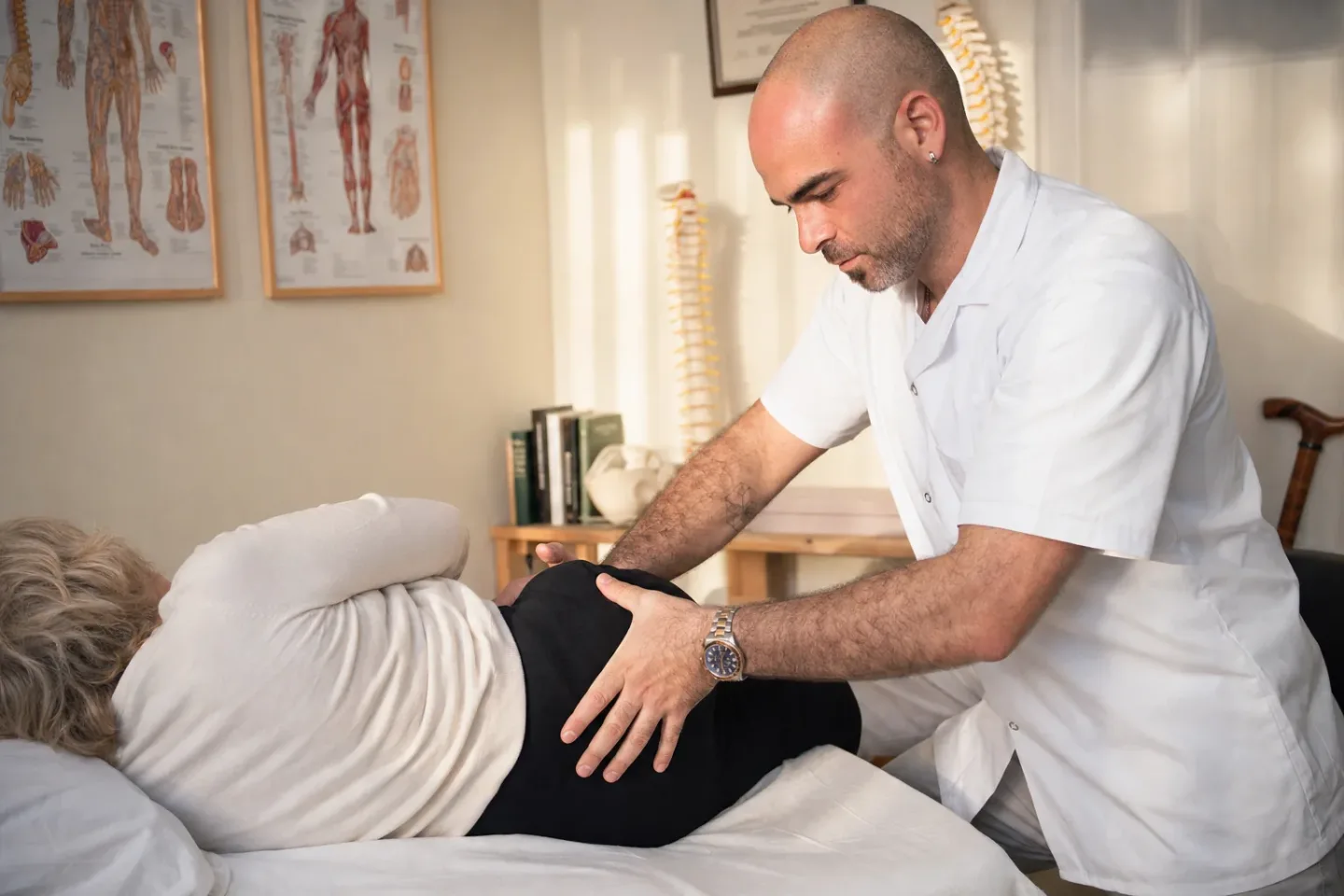
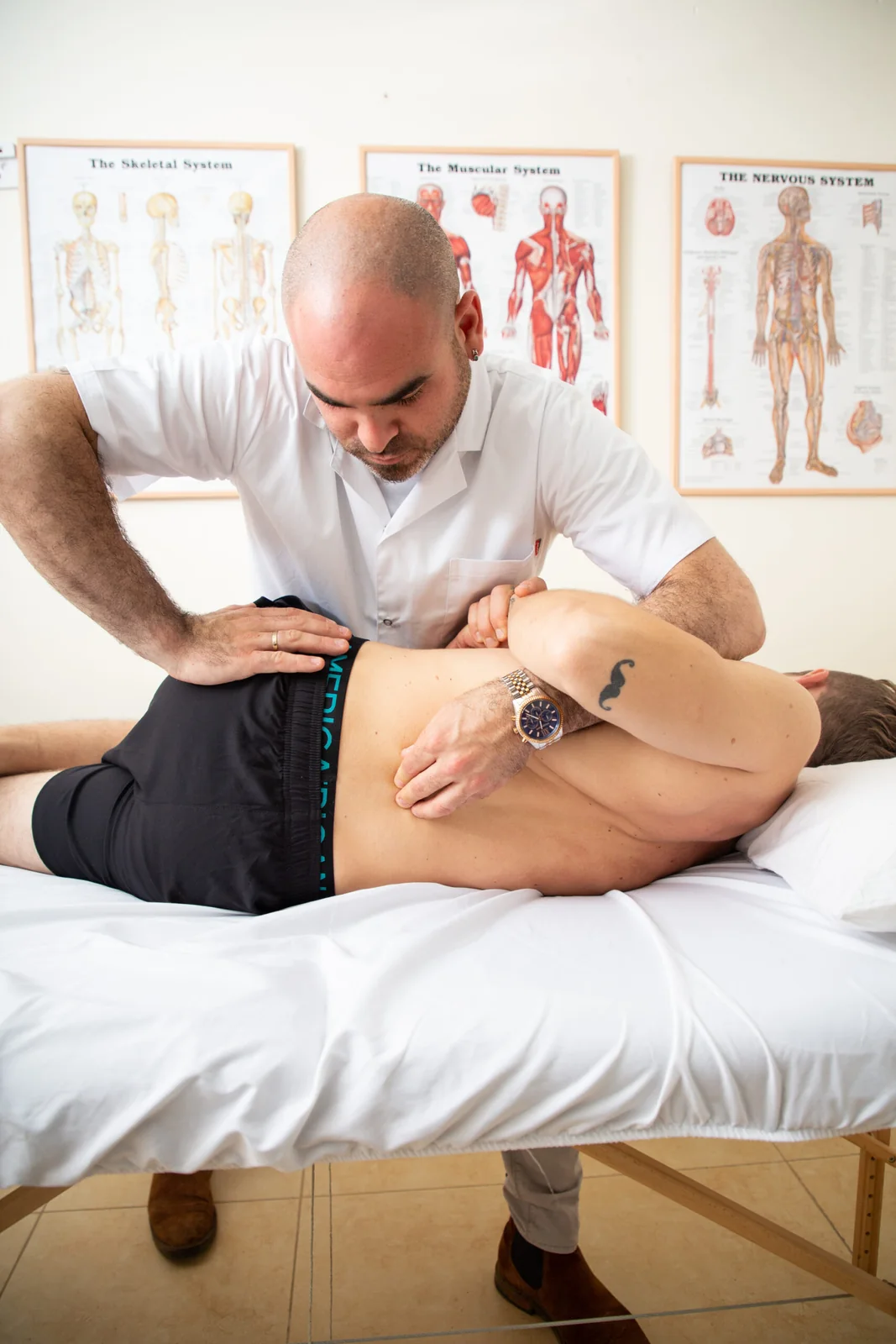
Osteopathic hip bursitis treatment does not focus only on the place that hurts. I look at how the hip‚ the pelvis‚ the lower back‚ the knee and the ankle move‚ and check whether one side takes more load and whether movement habits keep irritating the area.
The treatment itself includes gentle manual work to improve mobility‚ reduce tension in the soft tissues‚ balance the load between the pelvis and the hip and guide your daily activity. The aim is not to "press on the bursa" or fight the pain by force‚ but to create conditions in which the area receives less repeated irritation.
The first session takes about an hour and includes a conversation‚ a check of walking and movement and manual treatment‚ and follow-up sessions take about 45 minutes. I completed five years of osteopathy studies‚ including 1,000 clinical hours‚ and I have worked as a massage therapist since 2017.
At the end of each session you leave with clear instructions: how to lie‚ how much to walk‚ which movements to cut down on and which exercises to start. This way the process continues at home between sessions and does not depend only on what happens on the treatment table.
How Is This Different from Conventional Treatment?
Conventional treatment for trochanteric bursitis may include relative rest‚ reducing load‚ anti-inflammatory medication as medically appropriate‚ physiotherapy‚ and sometimes an injection or further tests. This is an important approach‚ especially when the pain is strong or other problems need to be ruled out.
The osteopathic approach adds a functional view: why the area took the load‚ how the hip moves‚ whether the pelvis is balanced and whether the lower back limits your stride. That is why it suits hip bursitis especially well when the pain is related to movement‚ posture‚ walking or repeated load‚ and it can work alongside medical treatment.
What Can You Do at Home for Hip Bursitis?
With hip bursitis‚ the first step is to cut down on what makes the pain worse: lying on the painful side for long periods‚ walks that are too long‚ lots of stair climbing or training that puts repeated pressure on the hip. There is no single solution that suits everyone‚ so it is important to watch how your body responds.
Simple adjustments that help many people:
- Sleeping on the other side with a pillow between your knees‚ so the upper hip does not drop inward.
- Sitting on a slightly higher chair‚ without crossing your legs.
- Standing with your weight spread over both legs.
- Brief cooling when the area feels irritated‚ and gentle warmth before movement.
- Short‚ frequent walks instead of one long walk.
Strengthening the Pelvic Muscles
Once the pain has calmed down a little‚ the next step is gradual strengthening of the muscles that stabilize the pelvis from the side‚ mainly the buttock muscles. Simple exercises lying down or standing‚ at a low dose and without sharp pain‚ are a good starting point.
It is important to choose exercises that do not press directly on the painful side and do not stretch it hard. Increase the pace according to the response the next day: if the pain has not increased‚ you can add a little.
A Gradual Return to Activity
Complete rest for a long time is not the answer‚ because the tendons and muscles around the hip need graded load to get stronger. On the other hand‚ going back too quickly to long walks‚ running or strength training can bring the pain back.
If a twenty-minute walk makes the pain worse‚ start with shorter spells and build up gradually. If a certain exercise causes sharp pain‚ do not insist on it at that stage; look for a load your body handles without flaring up and build from there.
When your legs feel loaded after activity‚ the first thought is often a strong stretch. If you are looking for information on tight leg muscles‚ you will find a gentler approach there‚ because with bursitis of the hip an aggressive stretch of the side of the thigh may actually increase the pressure on the bursa.
When Should You See a Doctor?
It is worth having a professional examination when the pain of hip bursitis lasts‚ keeps coming back‚ disturbs your sleep‚ limits walking or causes a clear change in movement. A check is also important when the pain spreads‚ when there is numbness or when it is not clear whether the problem comes from the bursa itself.
See a doctor quickly if you have fever‚ significant redness‚ unusual swelling‚ strong pain after a knock‚ a reduced ability to put weight on the leg‚ night pain that does not change with position or a general feeling of being unwell. In these situations infection‚ a fracture or another joint problem must be ruled out‚ and osteopathic treatment is not the first step.
The Bottom Line on Hip Bursitis
Hip bursitis causes pain at the side of the hip‚ tenderness when lying on that side and difficulty walking and climbing stairs. The pain is felt in one place‚ but the cause of the load can involve the pelvis‚ the lower back‚ the knee and the ankle.
That is why trochanteric bursitis is worth diagnosing carefully‚ telling local pain apart from pain with another source and choosing a treatment that fits the whole picture. If you are looking for an osteopath in Kiryat Tivon who will check the whole movement chain‚ my clinic is open for you to book an examination.
Frequently asked questions
How long does hip bursitis take to go away?
It varies from person to person. Pain that appeared recently after unusual load sometimes calms down within weeks‚ while pain that has lasted for months usually needs a longer process of reducing load and gradual strengthening.
Can I walk with hip bursitis?
In most cases yes‚ at a dose that does not make the pain worse. Short‚ frequent walks are usually better than one long walk‚ and if the pain increases during or after walking‚ shorten them.
How should I sleep with hip bursitis?
Lie on the other side with a pillow between your knees‚ or on your back with a pillow under your knees. Lying directly on the painful side usually increases the pressure on the bursa.
Do stretches help with bursitis of the hip?
Gentle stretches of stiff areas can help‚ but a strong stretch of the side of the thigh may increase the pressure. That is why it is better to get a personal plan than to pick random exercises.
Can hip bursitis come back?
Yes‚ especially if the cause of the load has not changed. Working on the walking pattern‚ strengthening the pelvic muscles and increasing activity gradually reduce the chance of it coming back.
Do I need an X-ray or an ultrasound?
The diagnosis of trochanteric bursitis is based mainly on a physical examination. A doctor will decide on imaging when the picture is unclear‚ when a joint problem is suspected or when the pain does not improve.
What is the difference between hip bursitis and pain coming from the back?
Pain from the back usually travels down the leg and is sometimes accompanied by numbness‚ while pain from the bursa is focused at the side of the hip and sensitive to pressure and to lying on it. In the examination both sources can be checked together.
Is an injection the solution for trochanteric bursitis?
In some cases a doctor may recommend an injection to calm the pain‚ and that is a medical decision. Even after an injection it is worth dealing with the cause of the load‚ or the pain may come back.
Can I keep training with hip bursitis?
Usually you can keep up activity that does not cause pain‚ such as swimming or a stationary bike at low resistance. Activities that make the pain worse are reduced for a while and brought back gradually.
Does health insurance cover osteopathic treatment?
Some private insurance companies refund part of the cost of treatment‚ including treatment for hip bursitis. Check the terms of your policy in advance.
Table of Contents
- What Is Hip Bursitis?
- Hip Bursitis and the Nearby Tendons
- Hip Bursitis Symptoms
- Why Does Hip Bursitis Appear on the Side of the Hip?
- Hip Bursitis Causes - Extra Load on the Side of the Hip
- Who Tends to Develop Hip Bursitis?
- Hip Bursitis After Childbirth and Around Menopause
- Is Every Pain at the Side of the Hip a Sign of Hip Bursitis?
- A Deep Locked Feeling in the Thigh
- Hip Bursitis‚ the Knee and the Calf
- Osteopathic Hip Bursitis Treatment
- How Is This Different from Conventional Treatment?
- What Can You Do at Home for Hip Bursitis?
- Strengthening the Pelvic Muscles
- A Gradual Return to Activity
- When Should You See a Doctor?
- The Bottom Line on Hip Bursitis
- Frequently asked questions
