
When Do Your Hips Widen During Pregnancy - What If It Hurts?
16 min read
Do you feel pressure or pulling at the front of your pelvis and wonder whether it means your pelvis is already widening? Does every turn in bed‚ every flight of stairs or getting into the car come with a sharp pain above the pubic bone? Are you unsure what counts as a natural change of pregnancy and what needs a check?
I am Roman Kibler‚ an osteopath D.O. with a clinic in Kiryat Tivon‚ and I accompany pregnant women with gentle manual treatment that reduces the load on the pelvis and back and is adapted to the week of pregnancy.
Leave your details or call me‚ and I will check with you what is happening in your pelvis and how to ease the pain safely!
Many women ask when do your hips widen during pregnancy‚ whether the pain they feel is a natural part of the process and when it is worth getting checked. The answer is not clear-cut‚ because the change does not happen in one moment but is a gradual adaptation throughout the pregnancy.
The feeling of pelvis widening is linked to softer ligaments‚ a change in joint stability‚ weight gain‚ a shift in the centre of gravity and the load on the lower back‚ the hips and the pelvic floor. In some women these changes are barely felt‚ while in others they cause significant pain when walking‚ standing and moving between positions.
When Do Your Hips Widen During Pregnancy and What Really Happens in the Body?
The term "pelvis widening" can sound as if the bones move sharply apart‚ but in practice it is a delicate process. The body releases hormones‚ among them one called the relaxin hormone‚ which soften the ligaments that support the joints and prepare the body for birth.
The hormonal change starts as early as the first trimester‚ so the answer to the question "when do your hips widen during pregnancy?" is "gradually‚ from the first weeks until the birth". The noticeable feeling usually appears as the pregnancy progresses‚ when the uterus grows and the centre of gravity shifts.
What Actually Moves in the Pelvis?
The pelvis is made of two hip bones and the sacrum‚ joined at one joint at the front‚ the symphysis‚ and at two joints at the back between the sacrum and the hip bones. Normally these joints move very little and are there mainly for stability‚ and pelvis widening changes that only slightly.
In pregnancy the ligaments around them become more flexible‚ and the gap in the front joint grows slightly. This is how pelvis widening during pregnancy happens to a small but important degree‚ which lets the pelvis adapt to the baby's growth and to the baby's passage through the birth canal.
Does Pregnancy Widen Hips?
Many women notice that their trousers fit differently and ask whether pregnancy widens the hips. Part of the change comes from pelvis widening and more flexible ligaments‚ and part from a natural increase in fat tissue and body mass.
After the birth the ligaments gradually become stable again‚ a process that usually takes a few months. In some women the shape of the hips stays a little different from before‚ and this is a natural change‚ not a sign of a problem.
So does pregnancy widen hips for good? For most women only slightly‚ if at all.
Can You Feel the Moment of Widening?
There is no single moment when you feel a "click". Pelvis widening is a slow process‚ and what you feel is mainly its results: pressure‚ pulling‚ a feeling that the body is less stable or difficulty with certain movements.
Some women describe a feeling of "opening" or heaviness in the hips after a long day‚ and some feel nothing until the last weeks. Both are normal‚ which is why the question "when do your hips widen during pregnancy?" gets a different answer for every woman.
Pelvis Widening by Stage of Pregnancy
There is no single week in which everything "opens". Even so‚ it is possible to describe in general what many women feel in each trimester‚ and so to understand better when do your hips start to widen during pregnancy and what to expect at each stage.
The First Trimester: The Hormonal Change Begins
Already in the first weeks the body starts releasing the hormones that soften the ligaments. Relaxin in pregnancy is part of this process. Most women do not yet feel that the pelvis is widening‚ but some feel sensitivity in the lower back or above the pubic bone earlier than expected.
Women who had pelvic or back pain in the past‚ or who have been pregnant before‚ sometimes feel pelvis widening earlier. This is not a sign of a problem‚ but a sign that the body already knows the process.
The Second Trimester: The Mechanical Load Joins In
In the second trimester the belly grows‚ the centre of gravity moves forward and the lower back gets more of a curve. This is the stage at which pelvis widening starts to be felt by many women‚ mainly on long walks‚ when standing for a long time and when turning over in bed‚ and pelvic pain in the second trimester often begins here.
It is also a good time to learn movement habits that will help later: getting up through your side‚ sitting symmetrically and sleeping with a pillow between the knees. Habits built early are easier to keep when the belly is big and movement becomes clumsy.
The Third Trimester: Towards the Birth
In the last months pelvis widening is felt the most‚ and the load on the pelvis is the greatest. Towards the birth the baby's head drops lower‚ and many women feel pelvic pain in the third trimester as strong pressure above the pubic bone and in the groin‚ heaviness in the hips and difficulty moving freely.
At this stage it is important to tell an expected mechanical load apart from signs of contractions or a medical problem. Any pain that comes with bleeding‚ leaking waters‚ regular contractions or fewer baby movements needs an immediate visit to the labour ward.
Why Does Pelvis Widening Hurt Some Women?
Two women can be in the same week of pregnancy and experience pelvis widening in completely different ways. One will feel only general heaviness‚ and another will struggle to walk for a few minutes without pain.
The pain is not decided only by the size of the belly‚ but also by a history of back pain‚ posture‚ physical activity‚ joint flexibility‚ muscle strength‚ the number of previous pregnancies‚ the type of work and the quality of sleep. So the important question is not only when do your hips widen during pregnancy‚ but how your body copes with the change day to day.
The pelvis has to combine stability and flexibility: carry weight and stabilize the spine‚ and at the same time allow more movement. When one side works harder‚ the lower back compensates or the supporting muscles cannot stabilize‚ you get pressure‚ pulling‚ sharp pain or a feeling of instability‚ and sometimes hip pain during pregnancy.
Pain at the Front of the Pelvis and the Pubic Bone
Pain at the front is usually felt around the pubic bone‚ the groin or the front joint between the two hip bones. In simple anatomical terms‚ the pubic bone is the bone at the front of the pelvis‚ and the joint that connects its two halves is called the symphysis pubis.
When pelvis widening makes the front joint sensitive‚ the pain gets worse when walking‚ spreading the legs‚ climbing stairs‚ getting into the car or standing on one leg‚ and many women describe it as pelvic bone pain in pregnancy. If you are looking for information about pubic symphysis pain‚ you will find a detailed explanation of the examination and the ways to get relief there.
Pain at the Back of the Pelvis and the Tailbone
Not all pain appears at the front. Some women feel pain in the lower back instead‚ on one side of the buttock or over the joints at the back‚ and sometimes the pain spreads to the thigh.
Both posterior pelvic pain in pregnancy and‚ in some cases‚ tailbone pain during pregnancy usually get worse with long sitting and when getting up from a chair. With pelvis widening‚ telling front pain apart from back pain matters‚ because the advice for movement and support is different.
Symphysiolysis‚ the Groin and Lasting Pain
Symphysiolysis is a term that describes pain and tenderness around the front joint of the pelvis‚ usually because of increased load or relative instability. Women who suffer from it describe difficulty walking‚ pain when spreading the legs‚ pain getting in and out of the car and sharp pain when turning over in bed.
Towards the end of pregnancy‚ natural questions come up about giving birth with symphysiolysis. The pain itself does not necessarily mean you cannot have a normal birth‚ but it is worth talking to the medical team about comfortable positions and avoiding spreading the legs too wide.
Pressure in the Groin in the Last Months
Pressure and pain in the groin are more common at the end of pregnancy‚ at the peak of pelvis widening‚ when the baby drops into the pelvis and the load rises. With groin pain during pregnancy in the ninth month‚ it is important to understand whether it is a mechanical pain that appears with movement or signs that need a check.
Pain that comes with bleeding‚ leaking waters‚ fever‚ regular contractions‚ fewer baby movements or a general feeling of being unwell needs medical attention. Movement-related pain without warning signs can be eased by adjusting positions‚ reducing load and gentle manual treatment.
Pelvis Widening and Everyday Movement
When the ligaments are more flexible and the weight goes up‚ the way you walk changes too. Many women notice that their walk becomes wider and slower‚ that their steps are shorter and that it is hard to turn quickly‚ and this is a natural response to pelvis widening during pregnancy as the body looks for stability.
During pelvis widening‚ long sitting‚ driving and getting up from a low sofa also become more challenging. A stable chair with a backrest‚ a small cushion behind the lower back and getting up slowly with the help of your hands reduce the load in these actions.
At work‚ short breaks every half hour help no less than exercises. When the hips widen in pregnancy and the body is heavier‚ it is better to spread tasks over the day than to put in one big effort at once.
When pelvis widening makes nights hard‚ a pillow between the knees and under the belly keeps a symmetrical position and reduces pain when turning over. Many women find that turning over "in one block"‚ with the knees together‚ eases the pain at night a lot.
The Link Between Pelvis Widening and the Lower Back
The pelvis is the base the spine rests on‚ so any change in its stability affects the lower back. While pelvis widening during pregnancy goes on‚ the abdominal muscles stretch and the back has to work differently to keep your posture.
In some women this shows up as a dull load‚ and in others as a sharp feeling of locking. A locked back in pregnancy affects function a lot: getting up from a chair‚ lifting a laundry basket‚ standing at the sink and turning over in bed all become hard.
In many cases the pain does not come only from a "locked" muscle‚ but from a combination of mechanical load‚ compensation by the back‚ tension in the hip muscles and a change in breathing. That is why the treatment looks at all these links together.
How Does Osteopathic Treatment Help When the Pelvis Hurts?
The treatment is based on gentle manual touch‚ a functional examination and an understanding of how the body spreads loads. The aim is not to "put the pelvis back in place"‚ but to improve the conditions in which the body moves‚ stands‚ sits and sleeps.
Everything worth knowing about safety‚ positions and suitable weeks is gathered on the page about osteopathic treatment during pregnancy. Here I will focus on what happens in the examination when the pain is linked to pelvis widening during pregnancy.
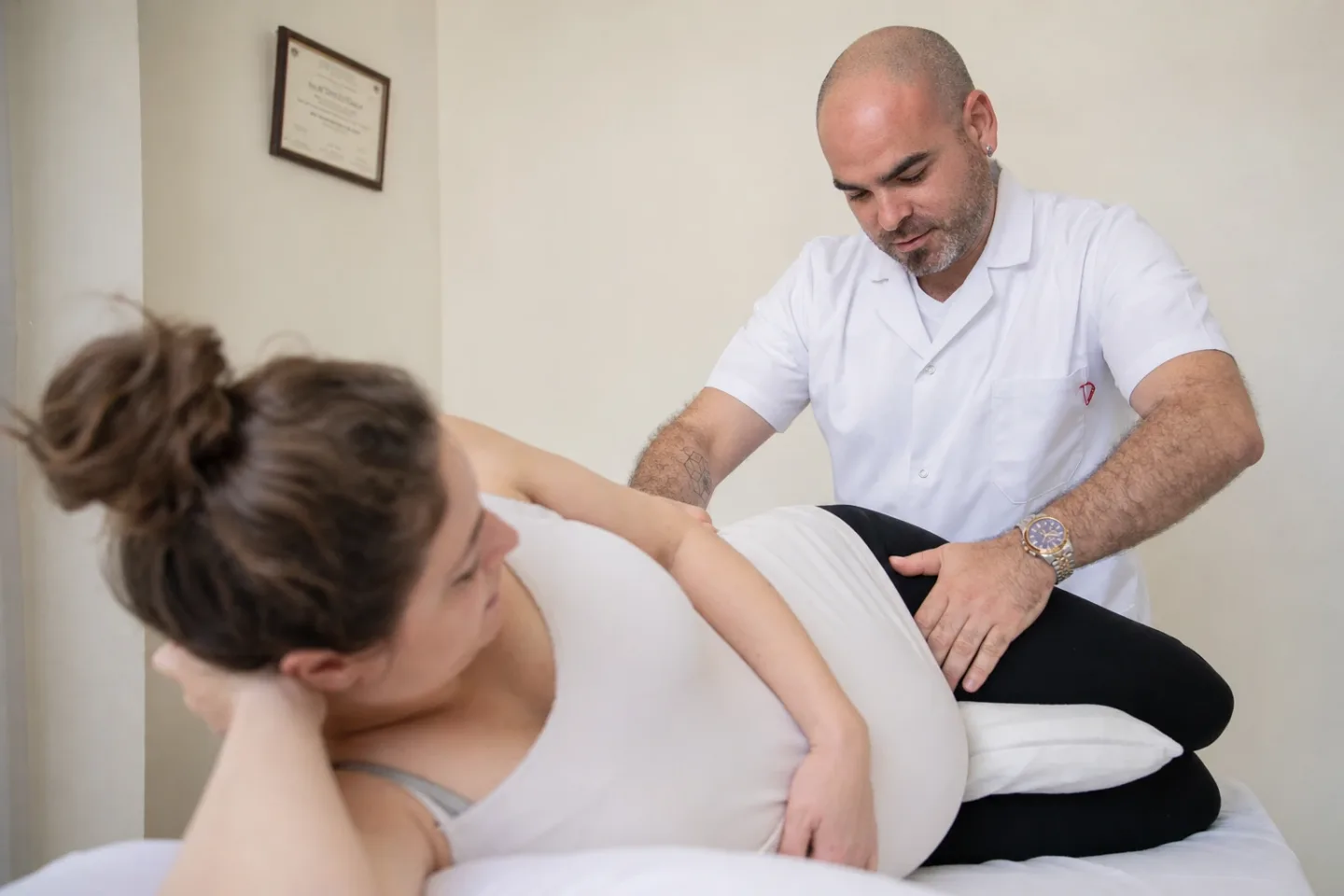
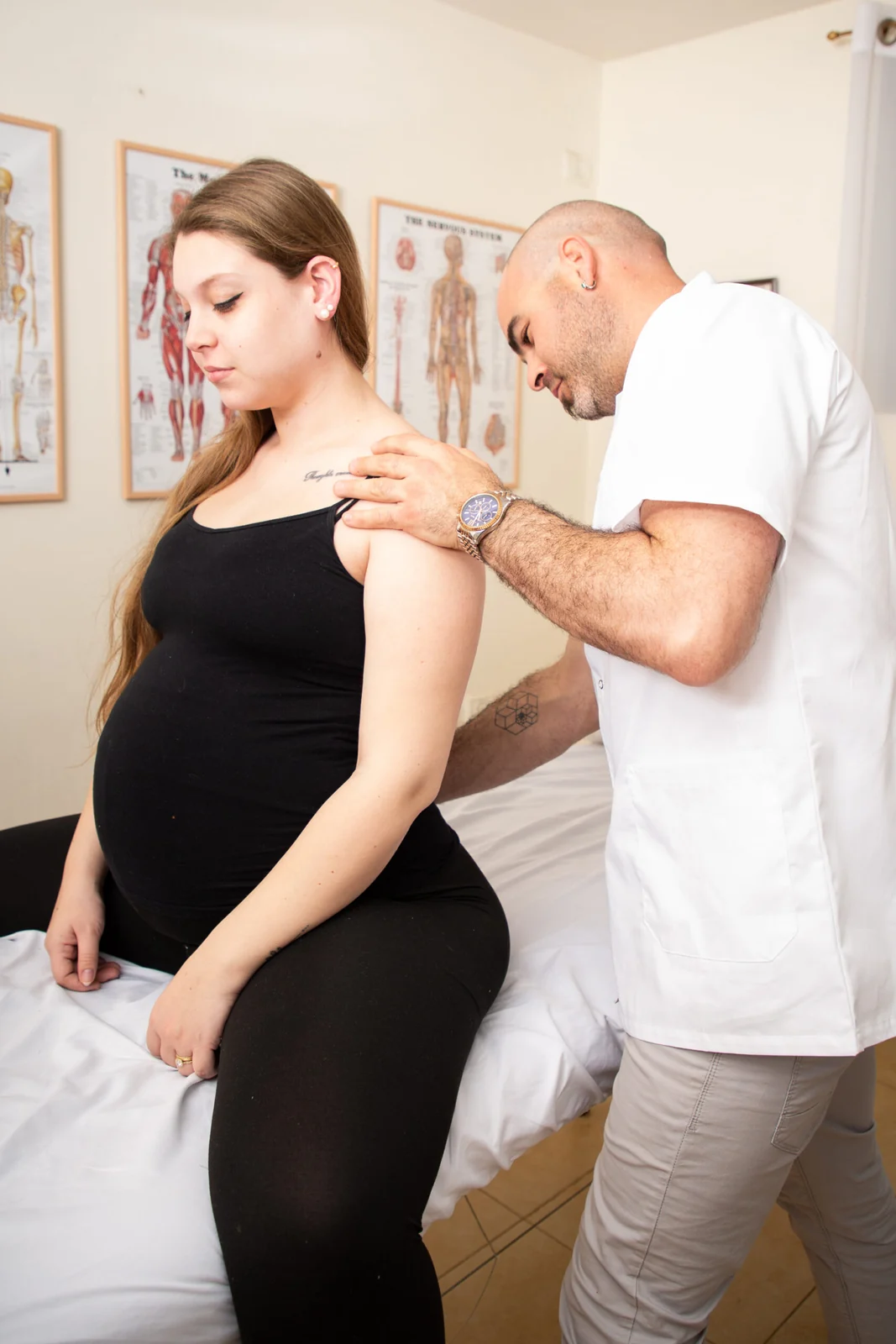
In the first session‚ which lasts about an hour‚ I will ask about the course of the pregnancy‚ the nature of the pain and what makes it worse‚ and gently check the movement of the hip bones‚ the lower back‚ the hips and the chest. The treatment is done in positions that are comfortable for your week of pregnancy‚ such as lying on your side‚ and follow-up treatments last about 45 minutes.
The treatment includes gentle work on soft tissues‚ improving the mobility of restricted areas and guidance for getting out of bed‚ walking‚ sleeping and sitting. If you are looking for an osteopath in Kiryat Tivon for your pregnancy‚ you should know that I studied osteopathy for five years‚ including 1,000 clinical hours‚ and that I am a member of the Israeli Osteopathic Association.
What Do You Feel After the Treatment?
Many women with pelvis widening describe a feeling of lightness after the treatment‚ freer breathing and more comfort when walking and turning over in bed. Sometimes there is mild tiredness or tenderness for a day‚ and this is a known reaction that passes.
One treatment does not stop the changes of pregnancy‚ because the body keeps moving towards the birth. The aim is to reduce load‚ improve movement and give you tools for your routine‚ and some women come back for another treatment every few weeks.
Osteopathy Alongside Medical Care
Medical care for this kind of pain in pregnancy includes an assessment‚ advice on reducing load‚ physiotherapy when needed‚ a pelvic support belt in suitable cases and sometimes pain relief that is allowed in pregnancy‚ as decided by a doctor. This is an important part of the picture‚ especially when conditions that are not mechanical need to be ruled out.
The osteopathic approach to pelvis widening does not come instead of medicine‚ but adds a wider view of movement. Sometimes a small improvement in the movement of the chest‚ less tension in the hip or a change in the way you get out of bed reduces the load.
What Can You Do at Home to Reduce the Load on the Pelvis?
If you are wondering when do your hips widen during pregnancy because it already hurts‚ the first step is to avoid movements that clearly make the pain worse. A few simple habits help many women while pelvis widening is going on:
- Get out of bed with your knees together‚ through your side.
- Get into the car by sitting down first and then bringing both legs in together.
- Sit symmetrically‚ without crossing your legs.
- Sleep on your side with a pillow between your knees.
- Climb stairs one step at a time‚ with both feet on each step when it hurts.
- Avoid carrying weight on one side and standing for a long time.
During pelvis widening‚ gentle movement is usually better than complete rest‚ but it has to be adapted. A short walk‚ deep breathing and gentle adapted exercises help as long as they do not make the pain worse‚ and an exercise that causes sharp pain is probably not right for this stage.
With pelvis widening‚ it is also worth paying attention to your shoes. A stable shoe with a low‚ wide heel reduces the load on the lower back and hips‚ and shoes you can put on without bending‚ for example with elastic laces‚ save you a movement that hurts many women in the last months.
Pelvis Widening After the Birth and the Return to Routine
The question of when do your hips widen during pregnancy almost always leads to the next one: when does the pelvis go back to how it was? The ligaments stay softer for weeks and sometimes months after the birth‚ especially while breastfeeding‚ so stability returns gradually and not in one day.
It is exactly in this period that the body has to work hard. Lifting the baby from the crib‚ carrying a car seat‚ breastfeeding while sitting bent over and walking with the baby at night load the same joints that pelvis widening in pregnancy softened.
Pain That Does Not Pass After the Birth
For most women the pain of pelvis widening eases in the first weeks after the birth. When it lasts‚ gets worse with walking or comes with a feeling that the joints "do not hold"‚ it is worth getting checked by your doctor or a pelvic floor physiotherapist‚ and later gentle manual treatment can be added.
A few simple habits help from the first days: lift the baby close to your body with bent knees‚ breastfeed sitting with support for your back and arms‚ and return to exercise gradually and with the approval of your care team. A body that went through months of pelvis widening during pregnancy needs time‚ and this is a natural process‚ not a failure.
Another Pregnancy After Pelvis Widening
Women who had pain in their first pregnancy often ask whether it will come back. Pelvis widening in the next pregnancy sometimes starts earlier and is felt more‚ but this is not a fixed rule.
What does help before the next pelvis widening is preparation: gentle strengthening of the deep abdominal muscles and the buttocks before the next pregnancy or at its start‚ and an early check as soon as pressure or pulling begins. That way habits can be adjusted before the pain limits your routine.
The Bottom Line: When Do Your Hips Widen During Pregnancy and When to See a Doctor?
Pelvis widening happens gradually in pregnancy‚ from the first weeks until the birth‚ and reaches the peak of its adaptation in the last months. The hormonal changes‚ the shift in the centre of gravity and the mechanical load can cause pain of different degrees‚ from mild and passing to pain that affects walking‚ sleep and work.
See a doctor when the pain comes with bleeding‚ leaking waters‚ regular contractions‚ fever‚ fewer baby movements‚ burning when passing urine‚ weakness in a leg or sudden‚ severe pain. When there are no warning signs and the problem is functional‚ gentle osteopathic treatment can safely be part of a process of relief‚ guidance and a return to comfortable movement.
Frequently asked questions
When do your hips widen during pregnancy for the first time?
The hormonal change that softens the ligaments starts as early as the first trimester. Most women feel pelvis widening only in the second or third trimester‚ when the mechanical load grows‚ so the usual answer to when do your hips widen during pregnancy in a noticeable way is from the middle of the pregnancy onwards.
Is pelvis widening a sign that labour is near?
Not necessarily. Pelvis widening goes on throughout the pregnancy‚ and downward pressure towards the end can also come from the baby dropping. The real signs of labour are regular contractions‚ leaking waters or bleeding.
Does the pelvis widen more in a second pregnancy?
In some women pelvis widening is felt earlier in another pregnancy‚ because the tissues have already been through the process. This does not mean the pain is necessarily stronger.
How long does it take for the pelvis to recover after the birth?
After pelvis widening‚ the ligaments become stable again gradually‚ and for most women the process takes a few months‚ especially if you are breastfeeding. Pain that lasts a long time after the birth is worth having checked.
Does a pelvic support belt help?
For women with pain or a feeling of instability during pelvis widening it can bring relief‚ mainly when walking and standing. The type of belt and how to use it are best adjusted with a professional‚ and it works best together with good movement habits.
Can I exercise while my pelvis is widening in pregnancy?
Yes. In most cases gentle activity such as walking‚ swimming without the breaststroke kick and exercise adapted to pregnancy is recommended. Skip wide leg spreading‚ jumping and movements that make the pain worse.
Is osteopathic treatment safe in pregnancy?
Gentle treatment adapted to the week of pregnancy is generally considered safe when there are no warning signs‚ including when pelvis widening is the cause of the pain. If there is a complication in the pregnancy‚ consult your treating doctor first.
Does pelvis widening affect the type of birth?
In most cases it does not. Women with this kind of pain usually have a normal birth too‚ and it is worth planning comfortable birth positions in advance with the medical team.
Does pregnancy widen hips permanently?
For most women the ligaments become stable again in the months after the birth‚ and the measurements gradually return. Some women are left with a small difference in the shape of the hips‚ and this is a natural change.
Does pelvis widening cause back pain?
Sometimes it does. When the pelvis is less stable during pelvis widening‚ the lower back compensates and works harder‚ which is why lower back pain is common in pregnancy. Gentle treatment and movement guidance can ease it.
Do I need to do anything to make the pelvis widen?
No. The pelvis widens naturally in pregnancy under the influence of hormones‚ and there is no need to "help" it with leg-spreading exercises. Gentle movement and keeping generally fit are enough.
When does pelvic pain in pregnancy need immediate care?
When there is bleeding‚ leaking waters‚ regular contractions‚ fever‚ fewer baby movements or sudden‚ severe pain. In these situations go to the labour ward or your doctor without waiting.
Table of Contents
- When Do Your Hips Widen During Pregnancy and What Really Happens in the Body?
- What Actually Moves in the Pelvis?
- Does Pregnancy Widen Hips?
- Can You Feel the Moment of Widening?
- Pelvis Widening by Stage of Pregnancy
- The First Trimester: The Hormonal Change Begins
- The Second Trimester: The Mechanical Load Joins In
- The Third Trimester: Towards the Birth
- Why Does Pelvis Widening Hurt Some Women?
- Pain at the Front of the Pelvis and the Pubic Bone
- Pain at the Back of the Pelvis and the Tailbone
- Symphysiolysis‚ the Groin and Lasting Pain
- Pressure in the Groin in the Last Months
- Pelvis Widening and Everyday Movement
- The Link Between Pelvis Widening and the Lower Back
- How Does Osteopathic Treatment Help When the Pelvis Hurts?
- What Do You Feel After the Treatment?
- Osteopathy Alongside Medical Care
- What Can You Do at Home to Reduce the Load on the Pelvis?
- Pelvis Widening After the Birth and the Return to Routine
- Pain That Does Not Pass After the Birth
- Another Pregnancy After Pelvis Widening
- The Bottom Line: When Do Your Hips Widen During Pregnancy and When to See a Doctor?
- Frequently asked questions
