
Pubic Bone (Pubis) - What It Is and Its Link to Pelvic Pain
23 min read
Does the front of your pelvis hurt every time you turn over in bed‚ climb the stairs or get into the car? After a run or a football game‚ does a pain in the groin appear that will not go away‚ and you find it hard to tell whether it is a muscle or the bone itself? Have you heard the word "pubis" and are not sure what it means or what to do about it?
I am Roman Kibler‚ an osteopath (D.O) in Kiryat Tivon‚ and I examine pain around the pubic bone with gentle manual work‚ and in pregnancy in positions adapted to your week and your comfort.
Leave your details or call me‚ and I will check with you where the pain at the front of your pelvis comes from and what will help you move comfortably!
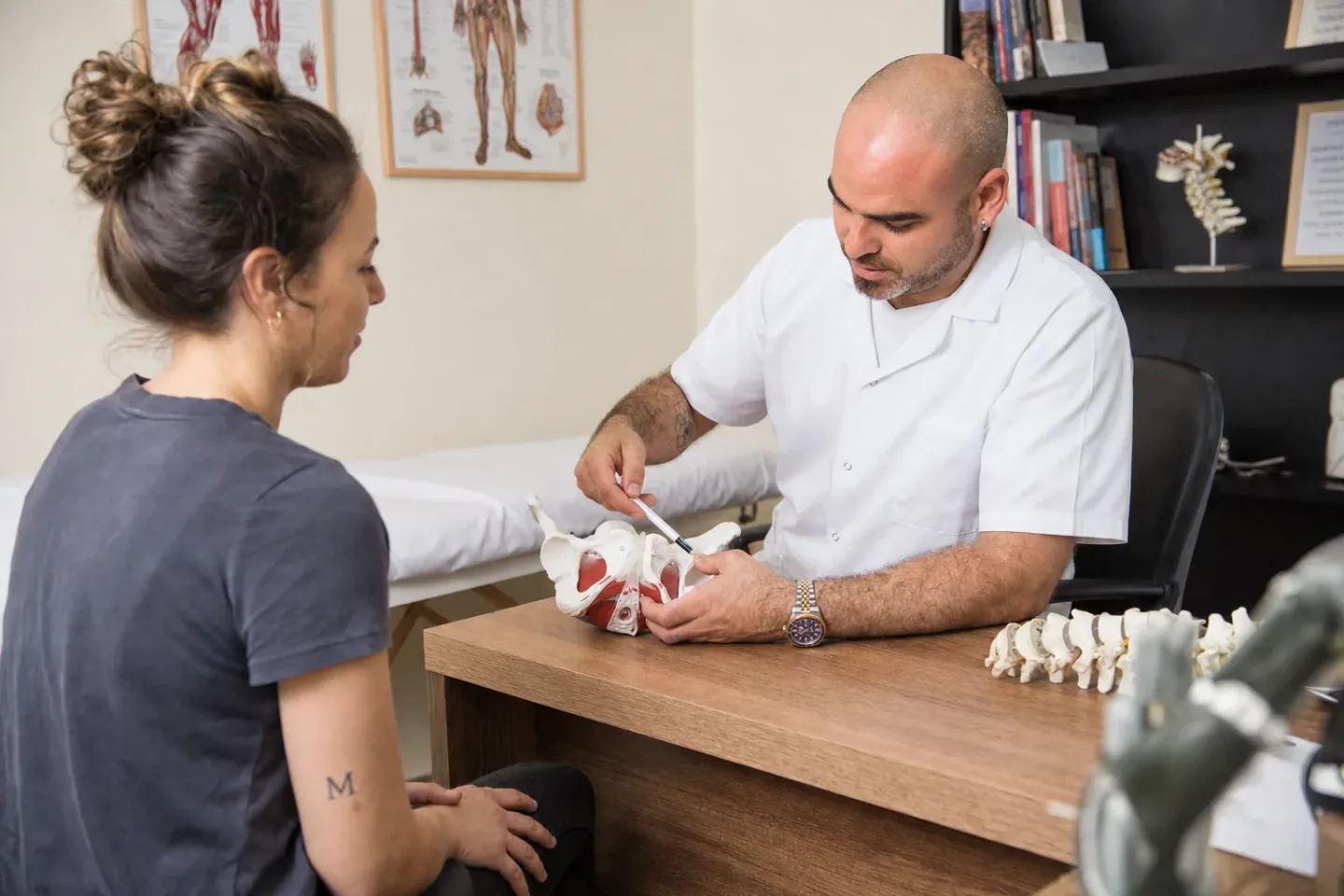
The pubis is the anatomical name of the pubic bone‚ the front part of the pelvis‚ which sits below the lower abdomen and above the genitals. Although it is a relatively small bony structure‚ it takes part in a complex system of joints‚ ligaments‚ muscles and loads.
When pain appears at the front of the pelvis‚ in the groin‚ in the inner thigh or around the pubic bone‚ it is not always easy to know whether the source is the joint itself‚ the tissues around it‚ the lower back‚ the hip or general changes in load. In pregnancy and after birth this area takes on special importance‚ and in athletes it is a common source of groin pain.
In this article I explain what the pubis is‚ how it fits into the function of the pelvis‚ what causes pain around it in pregnancy and in sport‚ and when it is worth going for a medical or osteopathic examination.
What Is the Pubis‚ and What Is Its Role in the Pelvis?
The pelvis is built of two large hip bones (not the thigh bone‚ which is the bone of the leg) that join the sacrum at the back and each other at the front. Each of them is made of three parts that fuse into one bone during adolescence: the ilium‚ the ischium and the pubic bone‚ which is the pubis.
In terms of pubic bone anatomy‚ the pubis has a central body and two branches‚ upper and lower‚ which together with the ischium surround a large opening in the wall of the pelvis. Blood vessels and nerves to the leg pass through this area‚ and many muscles of the abdomen‚ the pelvic floor and the inner thigh attach to it.
The Pubis and the Pubic Symphysis: What Is the Difference?
The terms pubis and pubic symphysis are close‚ but they are not the same. The pubis is the bone itself‚ while the pubic symphysis is the cartilage joint in the middle‚ between the right and left pubic bones.
The pubic symphysis is a stable joint that holds the ring of the pelvis closed at the front. It is not meant for wide movement like the hip joint‚ but it allows a small‚ delicate mobility with every step‚ when climbing stairs and when moving between positions.
When people say they have pain "in the pubis"‚ they usually mean pain at the front of the pelvis‚ around the pubic bone or around the joint in the middle. The pain can be very localized‚ but sometimes it radiates to the groin‚ the inner thigh‚ the lower abdomen or the lower back.
Muscles That Attach to the Pubic Bone
The straight abdominal muscles attach to the pubis from above‚ and the inner thigh muscles‚ the adductors‚ from below. The pelvic floor muscles also connect to the area‚ so it sits at a meeting point of forces that pull in different directions.
When these forces are balanced‚ most people do not feel their pubic bone at all. Pain usually starts when there is repeated load‚ an imbalance between the abdominal and thigh muscles‚ a postural change or a restriction somewhere else that makes the pubic bone area work harder.
The Pubis in Women and in Men
The structure of the pelvis differs a little between women and men. In women the pelvis is wider and the arch below the pubic symphysis is more open‚ a structure suited to childbirth‚ while in men the pelvis is narrower and taller.
These differences do not mean that men do not get pubic bone pain. They mainly explain why the area takes a special load in pregnancy‚ and why in men the pain is usually linked to sport and repeated load.
The Pelvic Floor and the Pubis
The pelvic floor muscles stretch like a hammock between the pubic bone at the front and the tailbone at the back. They support the pelvic organs‚ take part in bladder and bowel control‚ and work together with breathing and with the deep abdominal muscles.
When the pelvic floor is too tight or weak‚ for example after birth‚ the load on the pubis and on the tailbone changes. So with long-lasting pain at the front of the pelvis it is worth checking the pelvic floor too‚ sometimes with a physiotherapist who specializes in this field.
How Does Pubic Bone Pain Feel?
The pain can be sharp‚ dull‚ pressing or pulling. Sometimes it appears only in a certain movement‚ such as moving from lying to sitting‚ fast walking‚ standing on one leg or moving the legs apart.
Some people are sensitive to direct touch on the pubic bone‚ and in others the pain is felt deeper‚ in the groin or the inner thigh. An accurate description helps a lot in the examination‚ so it is worth noticing what brings on the pain and what eases it.
Why Is Pain at the Front of the Pelvis Confusing?
In a relatively small area there are bones‚ a joint‚ tendons of the abdominal and thigh muscles‚ the pelvic floor‚ the urinary organs and the genitals. So pain felt at the same point can come from completely different sources.
That is why it is not a good idea to diagnose yourself by the location of the pain alone. An organized conversation and an examination of movement help tell apart a mechanical load from a condition that needs a doctor.
Pubic Bone Pain in Pregnancy and After Birth
During pregnancy the body goes through many adjustments: the center of gravity shifts‚ the belly grows‚ breathing changes and the pelvis prepares for birth. In some women these changes pass almost without pain‚ and in others they cause significant sensitivity at the front of the pelvis.
Hormonal Changes and the Pelvic Ligaments
Pregnancy hormones increase the flexibility of the pelvic ligaments‚ so that the pelvis can widen a little during birth. It is a natural and important process‚ but when the ligaments stabilize less‚ the front joint of the pubis can become sensitive‚ especially in movements in which one leg moves separately from the other.
Many women ask when the pelvis widens in pregnancy and whether the pain in the pubic bone is part of the process. The answer depends on the picture: mild sensitivity is common‚ but pain that limits walking needs an examination and not only waiting.
When in Pregnancy Does Pubic Bone Pain Appear?
In most women the pain appears in the second or third trimester‚ when the weight of the belly increases and the pelvis prepares for birth. In some women‚ especially those who had similar pain in a previous pregnancy‚ it appears earlier.
The strength of the pain changes during pregnancy and from week to week. Days of a lot of walking‚ standing work or looking after small children make it worse‚ and quieter days ease it.
Pubic Bone Pain That Limits Walking
When the pain at the front of the pelvis becomes significant‚ it affects simple daily actions. Women describe difficulty turning in bed‚ pain when walking‚ a pulling feeling when getting up from a chair‚ difficulty getting into the car or pain when separating the legs.
In that situation it is worth checking whether the pain grows with long standing‚ turning over or lifting one leg. It may be linked to load on the inner thigh muscles‚ tension around the pelvis or irritation of the front joint of the pubis.
Work and Routine with Pain at the Front of the Pelvis
Women who work standing‚ walking a lot or lifting children feel pubic bone pain more than women who work sitting. Long sitting without breaks also adds load‚ mainly when getting up from it.
It is worth planning the day so that tasks with a lot of walking are spread out‚ and adding short breaks. When the pain greatly limits work‚ the conversation about adjustments or restrictions is with the treating doctor.
The Pubis and Symphysiolysis in Pregnancy
When the pain around the pubic symphysis is strong and limiting‚ people sometimes speak of symphysiolysis‚ meaning sensitivity and increased mobility of the front joint of the pelvis. It is relatively common in pregnancy‚ and its intensity varies a lot from woman to woman.
When a woman looks for information on relief for symphysiolysis‚ she is often already worried about how the pain will affect her work and routine‚ and whether she will need pregnancy bed rest. Decisions about bed rest and medical restrictions belong to the treating doctor‚ and osteopathic treatment fits in alongside them as functional support.
Pubic Bone Pain Postpartum
After birth‚ especially a long birth or one with a lot of pressure on the pelvis‚ pain in the pubic bone can last for a while. Pubic bone pain postpartum usually eases gradually in the first weeks‚ as the ligaments regain their stability and the load on the pelvis gets smaller.
If the pain is very strong‚ if it is hard to put weight on your legs or walk‚ or if it does not improve gradually‚ see a doctor. Once problems that need medical treatment have been ruled out‚ you can build a gradual return to movement‚ to lifting the baby and to physical activity.
After a Cesarean Section
After a cesarean section‚ too‚ women sometimes feel pain at the front of the pelvis. The pelvis carried a load throughout the pregnancy‚ and the abdominal muscles that attach to the pubic bone go through a healing process after the operation.
In the first weeks it is important to follow the medical team's instructions about lifting and effort. Once the scar has healed and the doctor has approved it‚ you can gradually return to movement and to gentle strengthening of the deep abdomen.
The Pubis and the Pelvis as a Ring: Back‚ Tailbone and Legs
The pelvis works as a ring‚ so pain at the front of the pelvis is often linked to what is happening at the back. The sacrum‚ the back joints of the pelvis‚ the tailbone and the pubis share the loads together when sitting‚ walking and getting up.
The Link to the Back of the Pelvis
When one side of the pelvis moves differently from the other‚ the load also passes to the front joint. Some women have posterior pelvic pain in pregnancy together with pain in the pubic bone‚ and in that case the examination needs to include the whole ring.
Treatment that focuses only on the painful point at the front may be partial. Sometimes it is precisely better movement at the back‚ around the sacrum and the lower back‚ that reduces the load on the pubis.
Pain When Sitting and the Tailbone
In pregnancy‚ when the sitting posture changes and the weight is distributed differently‚ different areas of the pelvis become more sensitive. Sometimes the pain is felt mainly when sitting‚ and sometimes it gets worse when moving from sitting to standing.
When tailbone pain during pregnancy appears together with pain at the front‚ it is worth checking the sitting pattern‚ the angle of the pelvis and the movement of the lower back. Simple adjustments such as a chair at the right height and movement during the day reduce the load on both sides of the ring.
The Legs and the Walking Pattern
When the pelvis changes the way it carries weight‚ the legs are affected too. Pain that starts in the pubic bone sometimes leads to shorter or wider steps‚ and this change creates extra load in the hips‚ knees and calves.
When leg pain during pregnancy appears‚ it is important to understand whether it is muscle load‚ pain radiating from the back or the pelvis‚ swelling or another medical condition. Unusual swelling‚ sharp pain in the calf‚ redness‚ local heat or shortness of breath call for seeing a doctor immediately.
The Hip Joint and the Pubis
The hip joint is very close to the pubic bone‚ and pain that comes from the hip is often felt in the groin and at the front of the pelvis. A restriction in hip rotation or stiffness in the joint changes the way you walk and passes load to the pubis.
So an examination of pain at the front of the pelvis always includes the hip joints as well. Hip pain that gets worse at night‚ morning stiffness or a long-lasting limp need a medical workup.
The Lower Back and the Front Joint
The lower back and the front joint of the pelvis work together with every step‚ even when the pain seems far from the back. When the lower back is stiff‚ the pelvis rotates less when walking‚ and part of the movement passes to the pubic symphysis.
So when the pubic bone hurts‚ the examination also includes the movement of the lumbar vertebrae and the back joints of the pelvis. You should not automatically conclude that the source is in the pubis‚ and sometimes better movement in the back reduces the load at the front.
Breathing‚ the Diaphragm and the Abdominal Muscles
The diaphragm‚ the deep abdominal muscles and the pelvic floor work together like a container that stabilizes the back and pelvis from the inside. When breathing is shallow or the belly is held tight all the time‚ the pressure inside this container changes‚ and the load on the front of the pelvis grows.
In pregnancy the diaphragm is pushed upward‚ and after birth the abdominal muscles are weaker. Calm breathing practice‚ into the belly and the ribs‚ is a simple way to help this container work better.
Pubic Bone Pain in Athletes‚ Outside Pregnancy
Pain around the pubic bone is not a problem of pregnant women alone. In active men and women it is often linked to sports with running‚ stopping‚ changes of direction and kicking‚ such as football‚ basketball‚ tennis and running.
Osteitis Pubis
Osteitis pubis is a condition of load and sensitivity in the pubic bone and at the pubic symphysis joint‚ which appears mainly in athletes. The pain usually starts gradually‚ in the groin or in the middle of the front of the pelvis‚ and gets worse with running‚ kicking and changes of direction.
The accepted view is that the condition comes from repeated load and an imbalance between the abdominal muscles‚ which pull the pubis upward‚ and the inner thigh muscles‚ which pull downward. The diagnosis is made by a doctor‚ sometimes with imaging‚ and treatment is based mainly on reducing load‚ gradual rehabilitation and a staged return to sport.
A Tight Groin and the Inner Thigh Muscles
The inner thigh muscles that attach to the pubic bone tend to shorten and tire in athletes and in people who sit for hours. People who want to know how to release a tight groin usually describe a pull in the inner thigh that gets worse when spreading the legs and taking a wide step.
Sometimes the feeling is similar to a tight muscle at the front or inner side of the thigh‚ and people who wonder how to release a tight thigh muscle discover in the examination that the problem actually starts at the attachment to the pubic bone. Telling muscle‚ tendon and bone apart matters‚ because it sets the pace of the return to activity.
The same inner thigh muscles also come under load in pregnancy‚ and you can read more about groin pain during pregnancy in a separate article.
A Gradual Return to Sport
After pain in the pubis‚ the return to sport should be staged‚ according to how the body responds and not according to a fixed timetable. Progress is usually built in stages:
- Walking and riding a stationary bike without pain.
- Strengthening exercises for the deep abdomen‚ the buttocks and the inner thigh at low load.
- Light running in a straight line‚ without stopping or changing direction.
- Changes of direction‚ sprints and kicking‚ gradually and in small volume.
- Full training and games‚ only once the previous stages have passed without pain.
If the pain comes back at a certain stage‚ go one step back. Slow‚ steady progress usually shortens the total time until the return to sport.
Warming Up‚ Load and Recovery Around Training
A warm-up of at least ten minutes‚ with gradual movement of the hips‚ the abdomen and the back‚ prepares the area for changes of direction and for kicking. In athletes who have had pain at the front of the pelvis in the past‚ this warm-up is a fixed part of training and not an extra.
Managing the weekly load is also important: a sharp rise in training volume‚ crowded games or moving to a hard pitch raise the risk of pain. After training‚ light walking and gentle stretching help the body return to rest.
Long Sitting and Driving
People who do not play sports can also develop pain at the front of the pelvis. Sitting for hours‚ long drives and one leg always crossed over the other change the balance between the inner thigh muscles and the abdominal muscles‚ and load the pubis.
Short breaks‚ sitting with both feet on the floor and movement during the day reduce this load. People who work at a computer can alternate with standing work.
Other Conditions That Need to Be Ruled Out
Pain in the groin and at the front of the pelvis can also come from the hip joint‚ an inguinal hernia‚ urinary tract problems or gynecological conditions. So pain that does not improve‚ swelling in the groin‚ fever or pain that is not linked to movement call for a medical workup.
How Does an Osteopath Examine and Treat Pubic Bone Pain?
The examination starts with a conversation: when the pain started‚ where it is felt‚ whether it is linked to pregnancy‚ birth or sport‚ what makes it worse and what eases it. I also ask about pain in the back‚ hip or legs‚ and about signs that call for a medical workup.
Then I gently examine the movement of the pelvis‚ the lower back‚ the hips‚ breathing and posture. The aim of the examination is not to press on a sensitive area without need‚ but to understand the pattern of load on the pubis.
What Should You Tell Me in the Examination?
It helps to come with a few details that make the picture clearer more quickly:
- When the pain started and whether there was a particular event before it.
- Which movements make it worse and which ease it.
- Whether the pain changes during the day or at night.
- Your week of pregnancy‚ the course of your previous birth‚ or your type of sport and training.
- Tests‚ imaging and previous visit summaries.
Gentle Treatment in Pregnancy
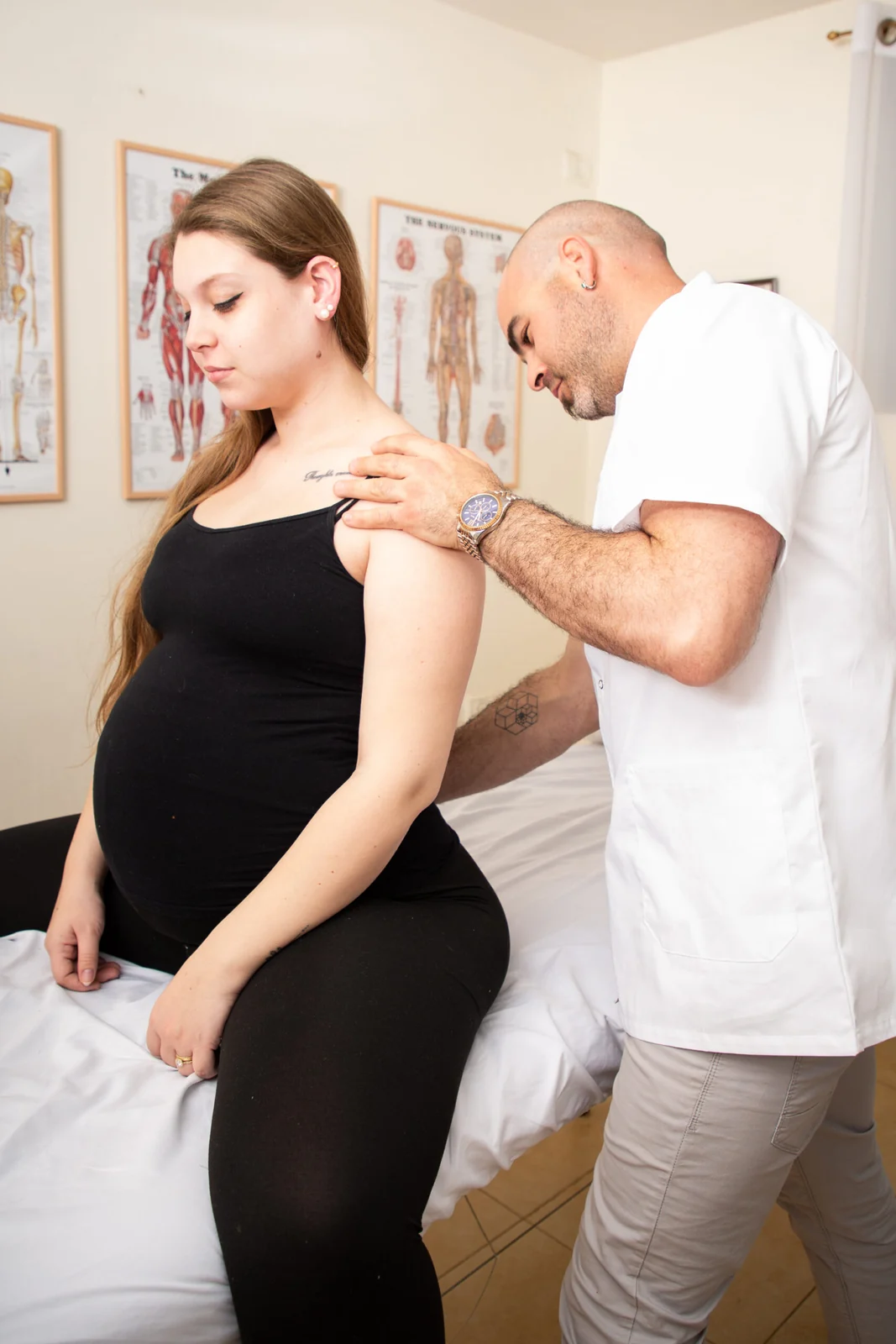
In pregnancy the treatment is especially adapted: no forceful techniques‚ no uncomfortable positions and no unnecessary pressure on the belly or the pelvis. The work includes gentle mobility work‚ releasing tension in soft tissues‚ balancing loads between the two sides and practical guidance for everyday movement.
If you want to understand what support throughout all stages of pregnancy includes‚ you can read about osteopathy during pregnancy: when to start‚ how many sessions are usual and how the treatment changes as the belly grows. Pubic bone pain is only one of the reasons women come for this kind of treatment.
An important part of the session is learning how to get into and out of bed‚ how to get up from a chair and how to share the load when walking. Small changes like these are sometimes felt within the same week.
Treatment for Athletes
In athletes the examination also includes the movement of the hip joints‚ the lower back and the balance between the abdominal muscles and the inner thigh muscles. Manual treatment fits into a plan of load reduction and rehabilitation‚ and does not replace it.
How Is the Osteopathic Approach Different?
The medical approach is very important when there is a need for diagnosis‚ imaging‚ a referral to physiotherapy‚ a recommendation for a pelvic belt or a decision on activity restrictions. A gynecologist‚ a family doctor or an orthopedist can rule out conditions that need medical attention.
Osteopathic treatment focuses on overall function: instead of treating the pubis as an isolated area‚ I examine how the pelvis‚ the back‚ the hips and breathing affect the pain. If you want to understand the options for pain in the front joint itself‚ you can read more about pubic symphysis pain and everyday adjustments.
What Do You Feel After the Treatment?
After gentle treatment most people feel lighter or pleasantly tired. Sometimes there is mild sensitivity in the area in the first days‚ and it usually passes on its own.
If the pubic bone pain clearly gets worse after the treatment‚ or new symptoms appear‚ it is important to let me know and to consider a medical workup. Progress is measured mainly in function: easier walking‚ better sleep and less pain when changing position.
Session Length and Who Treats You
The first session lasts about an hour‚ and follow-up sessions about 45 minutes. I studied osteopathy for five years‚ including 1,000 clinical hours‚ I am a member of the Israeli Osteopathic Association‚ and I have been treating patients at Maccabi Tivi since 2022.
People looking for an osteopath in Kiryat Tivon come to my clinic at 6 Karkom Street in Kiryat Tivon. Some private insurance plans refund part of the cost of the treatment.
Easing Pubic Bone Pain in Everyday Life
How you manage day to day matters a lot. Avoid movements that separate the legs sharply if they make the pain worse‚ and share the load between both legs.
- Getting into the car: sit down first and then bring both legs in together.
- Turning over in bed: knees together‚ and turn slowly as one block.
- Dressing: sit down while putting on trousers and socks‚ instead of standing on one leg.
- Stairs: one step at a time‚ with both feet on each step when it hurts.
- Walking: short steps‚ and breaks instead of one long route.
Complete rest is not always the solution. Gentle movement‚ breathing and short walks‚ to the extent that they do not increase the pain‚ help the body keep functioning.
Gentle Exercises for the Pelvis
When there are no warning signs‚ gentle‚ symmetrical movement helps keep the pelvis flexible and stable. The exercises are done slowly‚ in a range that does not bring on pain:
- Deep breathing into the belly and the ribs‚ lying on your side or sitting.
- Gentle pelvic tilts forward and back‚ on all fours or sitting on a ball.
- Gently squeezing a pillow between the knees‚ sitting‚ or lying on your back in early pregnancy.
- A small pelvic lift lying on your back‚ with the knees together.
If an exercise makes the pain in the pubic bone worse‚ stop it. In pregnancy it is worth checking the exercises with a professional before you start.
Physical Activity in Pregnancy with Pubic Bone Pain
Moderate physical activity is important in pregnancy even when there is pain at the front of the pelvis. Swimming‚ mainly without a wide breaststroke kick‚ short walks and exercise in water suit many women.
It is worth avoiding‚ for a while‚ activities with a wide leg spread‚ jumping and standing on one leg. If an activity makes the pain worse for hours or days afterward‚ reduce the load.
Shoes and Walking Surfaces
Stable shoes with a shock-absorbing sole reduce the load that passes from the legs to the pelvis with every step. High heels‚ loose flip-flops and walking barefoot on a hard surface sometimes increase the pain at the front of the pelvis.
When possible‚ it is better to walk on a flat‚ slightly soft surface‚ such as a path or a walking track‚ and not on a slope or on stones. In pregnancy these small changes are felt especially at the end of a long day.
Sleep and Pillows
When lying on your side‚ a pillow between the knees and along the shins keeps the pelvis aligned and reduces the pull at the front of the pelvis. In pregnancy you can add a small pillow under the belly‚ and change sides slowly with the knees together.
Lifting Children and Babies
Parents of small children lift weight dozens of times a day‚ usually while twisting and stepping to the side. When the front of the pelvis hurts‚ come close to the child‚ bend your knees and lift them close to your body‚ with both feet stable on the floor.
Instead of lifting a child from the floor‚ you can ask them to climb onto a chair or the sofa and lift them from there. In pregnancy it is worth cutting down on lifting as much as possible and getting help from your partner or family.
A Pelvic Belt and Support
A pelvic belt brings relief to some women‚ especially when there is a feeling of instability at the pubic bone. It is worth fitting it on professional advice and making sure it does not replace an examination of the load patterns.
When Does Pubic Bone Pain Need a Medical Workup?
See a doctor when the pain is very strong‚ appears after an injury‚ or comes with fever‚ bleeding‚ unusual contractions‚ weakness‚ significant difficulty putting weight on your legs or unusual swelling. In pregnancy‚ any pain that worries you or is different from usual justifies contacting a medical professional.
Even when the pain is not urgent‚ it is worth getting checked if it lasts‚ limits walking‚ disturbs sleep or makes basic functioning hard. The earlier the source of the load is understood‚ the easier it is to prevent it from getting worse.
What Is Important to Remember About the Pubis?
The pubis is the front part of the pelvic ring‚ and pain around it can be linked to the pubic symphysis joint‚ soft tissues‚ the thigh muscles‚ the lower back or changes in load in pregnancy and sport. It is important to understand the source of the load and not to settle for local treatment.
Osteopathic treatment can fit in‚ in suitable cases‚ as part of a conservative and gentle approach‚ especially when the pain is linked to movement‚ posture and the distribution of loads. It does not replace a doctor and does not promise an immediate solution‚ but it gives practical tools for managing better.
Frequently asked questions
What is the pubis in everyday terms?
The pubis is the pubic bone‚ the front part of the hip bone. The joint between the two pubic bones in the middle is called the pubic symphysis.
Is pubic bone pain in pregnancy dangerous for the baby?
Pain in the pubic bone in pregnancy is usually linked to load and changes in the ligaments‚ and not to a danger to the baby. Unusual pain‚ bleeding‚ contractions or your waters breaking call for seeing a doctor immediately.
When does pubic bone pain pass after birth?
In most women the pain eases gradually in the weeks after the birth. If it lasts‚ is strong or limits walking‚ it is worth seeing a doctor and looking at options for rehabilitation.
Can I have a vaginal birth when my pubic bone hurts?
In many cases yes‚ and the decision on how to give birth is made with the medical team. It is worth telling the delivery room staff about the pain‚ so that positions can be adapted and a very wide leg spread avoided.
Is osteopathic treatment in pregnancy safe?
Treatment in pregnancy is done with gentle techniques and in comfortable positions‚ without forceful manipulations. When there is a special medical instruction or risk signs‚ the doctor is consulted first.
Do men get pubic bone pain too?
Yes‚ mainly athletes in sports with running‚ kicking and changes of direction. The pain is felt in the groin and at the front of the pelvis and gets worse with effort.
How long does it take to recover from osteitis pubis?
Recovery is relatively slow and usually takes weeks to months‚ depending on the severity and on how carefully the load is reduced. Going back to sport too quickly often brings the pain back.
Do I need an X-ray when the pubis hurts?
Not always. The decision on imaging is made by the doctor‚ mainly after an injury‚ when a stress fracture is suspected‚ or when the pain does not improve with load reduction.
Is a pelvic belt suitable after birth too?
For some women it is‚ for a limited period and on professional advice. At the same time it is important to strengthen the abdominal and pelvic floor muscles gradually.
Which exercises should I avoid when the front of my pelvis hurts?
Exercises with a wide leg spread‚ standing on one leg‚ jumping and strong abdominal exercises can make the pain worse. Choose symmetrical‚ moderate exercises until the source of the pain is understood.
Can pubic bone pain radiate to the back?
Yes‚ the pelvis is a ring‚ and pain at the front sometimes appears together with pain in the lower back or in the back joints of the pelvis. That is why the examination includes the whole pelvis.
How many sessions are usually needed?
It depends on the source of the pain‚ the stage of pregnancy or the sports load. Sometimes one or two sessions with guidance are enough‚ and sometimes support over several sessions is recommended.
Can I come for treatment in the last weeks of pregnancy?
Yes‚ the treatment is adapted to every stage of pregnancy. In the last weeks the work is especially gentle and focuses on comfort‚ positions and preparing for movement during birth.
Is pubic bone pain linked to a fracture?
Usually not. A fracture of the pubic bone appears mainly after a fall or an accident‚ or as a stress fracture in athletes and in people with weak bone. Strong pain after an injury calls for an immediate medical examination.
Can I do yoga when my pubic bone hurts?
You can choose symmetrical‚ gentle exercises and give up‚ for a while‚ poses with a wide leg spread or standing on one leg. It is worth telling the instructor about the pain.
Does pubic bone pain come back in the next pregnancy?
In some women it does‚ and sometimes it appears earlier. A woman who had such pain can start adjustments and gentle strengthening early‚ and come for an examination at the start of the pregnancy.
Can pain at the front of the pelvis come from a hernia?
Yes‚ an inguinal hernia can cause pain and a bulge in the groin‚ especially with effort or coughing. A bulge that appears in the groin calls for a doctor's examination.
What is the difference between pain in the pubis and pain in the groin?
Pain in the pubis is centered at the front of the pelvis‚ on the pubic bone or at its middle. Groin pain is felt in the fold between the abdomen and the thigh‚ and can come from muscles‚ the hip joint or a hernia‚ so the distinction is made in an examination.
Do cold or heat help?
Brief cooling sometimes helps when the pain is sharp after effort‚ and gentle heat eases tight muscles. In pregnancy‚ avoid strong heat on the belly and choose whatever eases the pain for you.
Do I need to stop working because of pubic bone pain?
Not necessarily. Adjustments such as breaks‚ alternating sitting and spreading tasks allow many women to keep working‚ and when the pain is very limiting‚ the decision is made with the doctor.
What should I do when pubic bone pain wakes me at night?
Lie on your side with a pillow between the knees and along the shins‚ and turn over slowly with the knees together. Strong night pain that gets worse or comes with fever calls for seeing a doctor.
Does massage help with pubic bone pain?
Gentle massage of the thigh‚ buttock and lower back muscles sometimes eases the tension around the pelvis. Direct‚ strong pressure on a sensitive pubic bone is not recommended‚ especially in pregnancy.
Does insurance refund osteopathic treatment?
Some private insurance plans refund part of the cost. It is worth checking the terms of your policy before the session.
Table of Contents
- What Is the Pubis‚ and What Is Its Role in the Pelvis?
- The Pubis and the Pubic Symphysis: What Is the Difference?
- Muscles That Attach to the Pubic Bone
- The Pubis in Women and in Men
- The Pelvic Floor and the Pubis
- How Does Pubic Bone Pain Feel?
- Why Is Pain at the Front of the Pelvis Confusing?
- Pubic Bone Pain in Pregnancy and After Birth
- Hormonal Changes and the Pelvic Ligaments
- When in Pregnancy Does Pubic Bone Pain Appear?
- Pubic Bone Pain That Limits Walking
- Work and Routine with Pain at the Front of the Pelvis
- The Pubis and Symphysiolysis in Pregnancy
- Pubic Bone Pain Postpartum
- After a Cesarean Section
- The Pubis and the Pelvis as a Ring: Back‚ Tailbone and Legs
- The Link to the Back of the Pelvis
- Pain When Sitting and the Tailbone
- The Legs and the Walking Pattern
- The Hip Joint and the Pubis
- The Lower Back and the Front Joint
- Breathing‚ the Diaphragm and the Abdominal Muscles
- Pubic Bone Pain in Athletes‚ Outside Pregnancy
- Osteitis Pubis
- A Tight Groin and the Inner Thigh Muscles
- A Gradual Return to Sport
- Warming Up‚ Load and Recovery Around Training
- Long Sitting and Driving
- Other Conditions That Need to Be Ruled Out
- How Does an Osteopath Examine and Treat Pubic Bone Pain?
- What Should You Tell Me in the Examination?
- Gentle Treatment in Pregnancy
- Treatment for Athletes
- How Is the Osteopathic Approach Different?
- What Do You Feel After the Treatment?
- Session Length and Who Treats You
- Easing Pubic Bone Pain in Everyday Life
- Gentle Exercises for the Pelvis
- Physical Activity in Pregnancy with Pubic Bone Pain
- Shoes and Walking Surfaces
- Sleep and Pillows
- Lifting Children and Babies
- A Pelvic Belt and Support
- When Does Pubic Bone Pain Need a Medical Workup?
- What Is Important to Remember About the Pubis?
- Frequently asked questions
