

Torticollis in Babies - When the Head Tilts to One Side
14 min read
Does your baby almost always look to the same side‚ and cry when you try to feed from the other side? Have you noticed that the head leans a little toward one shoulder‚ and that one side of the back of the head is starting to flatten? Or does your baby stiffen and protest every time you lay them on the tummy or turn them in a certain direction?
I am Roman Kibler‚ an osteopath (D.O) in Kiryat Tivon‚ and I examine babies with torticollis using very gentle touch‚ and teach parents how to encourage movement to both sides at home.
Leave your details or call me‚ and we will check together what is limiting your baby's neck and what you can do starting today!
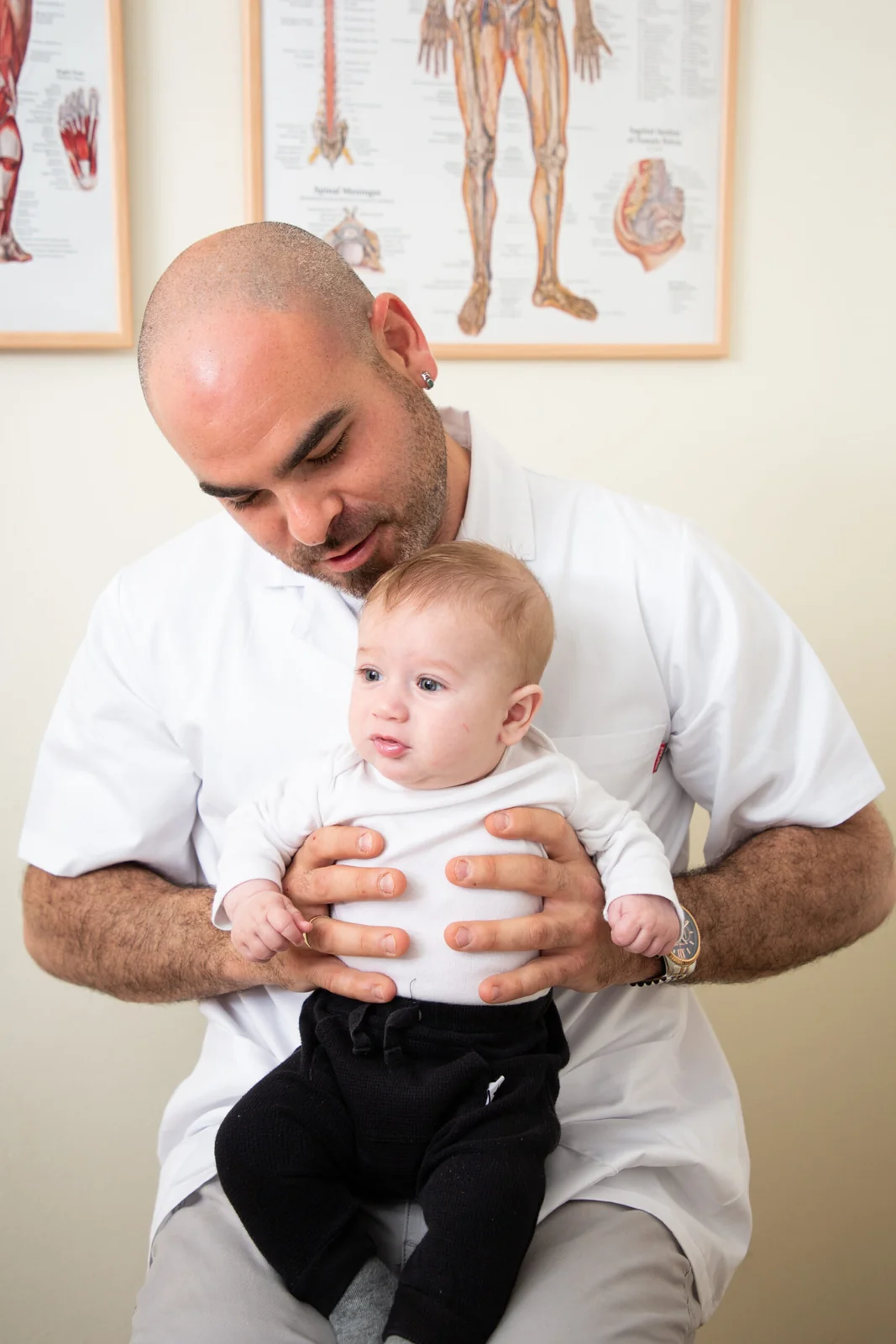
Torticollis is a condition in which the head tilts to one side‚ sometimes together with difficulty turning it to the other side. Torticollis in babies usually appears in the first weeks of life‚ and is sometimes discovered only in the second or third month‚ when the baby is more awake and starts following faces and toys.
With infant torticollis‚ parents usually notice that the baby looks mainly to one side‚ has difficulty feeding from a certain side‚ resists lying on the tummy or seems uncomfortable when their position is changed. Sometimes it is the well-baby clinic nurse or the pediatrician who spots the tilt in a routine check.
It is important to understand that torticollis is not always "only a neck problem". The neck is connected to the chest‚ the shoulder blades‚ the upper back and the pelvis‚ and in babies a long-standing side preference also affects feeding‚ sleep‚ tummy time and head shape.
What Is Torticollis?
The word torticollis means "twisted neck"‚ and the condition is also called wry neck. It describes a position in which the head is tilted toward one shoulder and the chin is turned slightly to the other side.
At the center of the picture there is usually a long muscle at the side of the neck‚ which runs from behind the ear to the collarbone and the breastbone. When this muscle is tight or shortened on one side‚ it tilts the head to that side and turns the chin to the other side.
That is why it is hard for the baby to turn the chin toward the shortened side and to tilt the head to the opposite side.
Congenital Muscular Torticollis and Acquired Torticollis
Congenital muscular torticollis appears in babies in the first months‚ and is usually linked to the position in the womb‚ to the birth or to tension in the neck muscle. It is relatively common‚ and it usually improves well when it is identified early and treatment and practice begin.
Acquired torticollis appears later‚ and is usually linked to muscle overload‚ sleeping in an uncomfortable position or an injury. In adults it usually shows up as a stiff neck‚ and anyone who knows neck pain after an uncomfortable night knows the feeling too. In rarer cases it is caused by inflammation‚ infection or another problem‚ so a new tilt with unusual signs needs a doctor.
Torticollis Symptoms in Babies: Signs Worth Knowing
Torticollis in babies usually shows up as the head tilting to one side and limited turning to the other side. Parents will not always see clear pain‚ and sometimes the main sign is that the baby simply "chooses" the same side again and again. These are the common signs of torticollis in babies:
- Looking constantly to one side‚ even when you call from the other side.
- Breastfeeding or bottle feeding that is easy on one side and hard on the other.
- Difficulty or crying when lying on the tummy‚ and lifting the head unevenly.
- Flattening of one side of the back of the head or the forehead.
- Sometimes a small‚ firm lump at the side of the neck in the first weeks.
A Baby Tilting the Head to One Side and Side Preference
Torticollis in babies can be subtle at first‚ so it is easy to miss. Parents sometimes notice that the baby always looks toward the window‚ a toy or a fixed side of the crib‚ and only later realize that it is a restriction and not just a preference.
When the baby looks mainly to one side‚ the rest of the body organizes itself around it: the baby prefers to feed from one side‚ rests the head at the same angle in sleep and has difficulty lifting it symmetrically. If the torticollis is clear or lasts‚ it is worth going for an examination and not waiting for it to pass on its own.
A Small Lump in the Neck
In some babies with congenital torticollis‚ a small‚ firm lump is felt inside the neck muscle in the first weeks‚ and it is not painful to the touch. This finding frightens parents‚ but it is usually part of the same change in the muscle and disappears gradually during the first months‚ with practice and follow-up.
Any lump in a baby's neck needs to be checked by a pediatrician‚ who will decide whether an ultrasound or follow-up is needed. Once the diagnosis is clear‚ gentle work and practice at home can be combined.
Assisted Birth and Tension in the Neck
A long birth‚ a birth assisted by an instrument or a cramped position in the womb in the last weeks can leave some babies with tension in the head‚ neck and shoulders. Not every such baby develops torticollis or needs treatment‚ but it is worth watching for a side preference‚ difficulty feeding from one side or a head position that keeps repeating.
Parents who want to understand more can read about how a vacuum birth affects the baby‚ and which changes are expected to improve on their own. This information also helps in the examination‚ when we try to understand where the tension started.
Sleep‚ Feeding and Restlessness
A baby with torticollis does not always look "in pain"‚ but may work harder to reach a comfortable position for feeding and sleep. Crying when turned to a certain side‚ waking in a certain position and difficulty settling are signs worth paying attention to.
In such cases‚ restless sleep in babies is not a diagnosis in itself‚ but a sign that needs to be understood in a broad context. Unusual crying‚ difficulty eating‚ fever or a sharp change in behavior call for seeing a doctor.
Torticollis and Plagiocephaly: The Baby's Head Shape
When a baby rests the head again and again in the same direction‚ repeated pressure falls on a certain area of the skull. Because the skull is relatively soft in the first months‚ long-term pressure on the same area affects the outer shape of the head.
The solution is not to change the safe sleep rules: babies keep sleeping on their back‚ on a firm and clear surface‚ without pillows or soft items. The difference is made during awake time‚ and by treating the turning restriction itself.
Flattening on One Side of the Head
When there is a clear side preference‚ a flat head in babies sometimes improves with varied positions‚ supervised tummy time‚ switching sides when lifting and feeding‚ and less time spent in the car seat. If the baby has trouble changing sides because of torticollis‚ releasing the restriction in the neck is an important part of the process.
Asymmetry That Needs an Accurate Diagnosis
Not every asymmetry of the head is a matter of position. When it comes to plagiocephaly‚ the assessment looks at the shape of the head‚ the position of the ears‚ the movement of the neck and the baby's age‚ and sometimes the doctor recommends follow-up or a corrective helmet.
Rapid worsening‚ an unusual look of the skull sutures‚ a developmental delay or parents' concern are reasons to see a doctor. Manual treatment addresses the movement component‚ but the medical diagnosis comes first.
Signs in the Head That Need a Doctor
A baby's skull has soft areas that have not yet closed‚ and in most cases they are completely normal. Unusual swelling‚ a clear dip‚ fever‚ vomiting‚ drowsiness or eating less call for seeing a pediatrician.
What is considered normal in these soft areas and when to worry is explained in the article on the baby fontanelle. An osteopath does not diagnose medical conditions in this area. When in doubt‚ the baby is referred to a doctor before any manual treatment.
Infant Torticollis: What Changes at Each Age?
Parents who type "torticollis in children" into a search almost always mean a baby in the first months whose head tilts to one side. The picture changes from month to month‚ because at every stage the baby uses the neck for a different action: sucking‚ following with the eyes‚ lifting the head‚ rolling over and sitting.
Torticollis in Newborns: The First Weeks
In a newborn‚ torticollis can be very mild‚ and the first sign is often breastfeeding that is harder on one side. The baby squirms‚ lets go of the nipple or turns the whole body instead of just the head.
At this stage the main work is observation and guidance: how to hold the baby when feeding on the hard side‚ how to lay the baby in the crib and how to approach from the less preferred side. When there is a lump in the neck or doubt about the diagnosis‚ the pediatrician checks before any manual treatment.
Months Two to Four: Tummy Time and Lifting the Head
In these months the baby starts lifting the head when lying on the tummy and following faces from side to side. Here baby torticollis stands out more: the baby lifts the head at an angle‚ leans on one side or refuses tummy time after a minute.
This is also the age at which head shape is especially sensitive to repeated pressure‚ so early identification matters. A combination of practice at home‚ varied positions and gentle treatment at this time usually makes further development easier.
Months Four to Six: Rolling Over and Using the Hands
When the baby starts rolling over‚ baby torticollis may show up as rolling to one side only‚ or reaching out mainly with one hand. Sometimes parents notice that the baby puts only one hand in the mouth‚ or that lying on a certain side frustrates them.
At this stage it is worth offering toys at eye level on both sides and letting the baby practice rolling in both directions on a safe surface. If the gap between the sides does not shrink‚ it is time for another examination.
Six Months and Older: Sitting and Crawling
A baby of six months or older with torticollis may sit with the body leaning slightly to one side‚ or fall again and again in the same direction. When crawling‚ the baby may prefer pushing off with one leg or crawl unevenly.
Infant torticollis that was not treated early still often improves at this age‚ but the practice takes longer. So it is better not to wait with an examination when you see an ongoing side preference.
When Does Torticollis in a Baby Need a Doctor?
A head tilt that appears suddenly in a baby who moved the head well before‚ or that comes with fever‚ vomiting‚ drowsiness‚ unusual crying or eating less‚ calls for seeing a doctor immediately. A head injury‚ unusual eye movements or weakness in one arm are also signs not to wait with.
In such cases torticollis can be a sign of another problem‚ so the medical workup comes before any manual treatment. Only when the doctor has ruled out a dangerous cause can we continue with gentle work and practice at home.
Diagnosis and Torticollis Treatment
The examination starts with a conversation: what the parents noticed‚ when it started‚ how the birth went‚ how the baby eats and sleeps and whether there were previous tests. I also ask about the baby's position in the womb‚ the length of the birth and the difference between feeding on the right and on the left.
With torticollis‚ I then gently examine the range of motion and how the body responds to different positions. I look at the neck‚ but also at the chest‚ the shoulders‚ the back and the pelvis‚ because a restriction in one area affects the way the head is held.
Gentle Osteopathic Treatment
When the picture is suitable for manual treatment‚ the work focuses on reducing tension and improving mobility. In babies the treatment is very gentle and includes soft work on the neck‚ chest‚ shoulders and upper back‚ without forcing movement and without strong stretches.
Parents looking for an osteopath for babies also get practical guidance: how to lift‚ how to offer stimulation from the less preferred side and how to add tummy time. During the treatment the baby lies in the parent's arms or on the table next to them‚ and we can stop for feeding or soothing at any moment.
Osteopathy Alongside the Doctor and Physiotherapy
The pediatrician or the orthopedist diagnoses‚ rules out dangerous conditions and refers to developmental physiotherapy or tests as needed. Physiotherapy is a central part of infant torticollis treatment when it is congenital‚ and it includes structured practice and parent guidance.
The osteopathic approach adds a manual view of the body as one system: how the neck is affected by the shoulders‚ the chest and breathing. There is no competition between approaches here‚ and sometimes combining them is the best fit.
Session Length and Who Treats Your Baby
When I examine torticollis‚ the first session lasts about an hour‚ and follow-up sessions about 45 minutes. I studied osteopathy for five years‚ including 1,000 clinical hours‚ and I have been working at Maccabi Tivi since 2022. Parents looking for an osteopath in Kiryat Tivon come to my clinic at 6 Karkom Street.
What Can You Do at Home for Torticollis?
With torticollis in babies‚ you can help at home mainly during awake time‚ through varied positions and gentle encouragement of movement toward the less preferred side. There is no need to force the head to turn‚ and torticollis stretches should not be done forcefully without professional guidance.
- Offer a toy‚ a voice or a face from the less preferred side.
- Switch sides when feeding and lifting‚ and also change the baby's position in the crib.
- Add short‚ supervised tummy time several times a day.
- Cut down on long periods in the car seat‚ swing and stroller.
- Do only exercises that were demonstrated to you in the examination.
How Much Practice Is Needed Every Day?
There is no need to set aside a long time for practice. It is much more effective to build it into the routine: at every diaper change‚ feed‚ lift and play‚ encourage the baby to look and turn toward the less preferred side.
A few short minutes of play on the tummy‚ several times a day‚ are better than one long practice session that tires out the baby and the parents. Stop when the baby is tired or hungry‚ and come back when the baby is calm and alert.
Pay attention to carrying too: in a carrier‚ on the shoulder or on the arm‚ switch sides every time so that the baby looks in both directions. If the practice causes strong crying or the tilt does not change after a few weeks‚ a professional examination is better than general exercises from the internet.
What Is Important to Remember About Torticollis?
Torticollis in babies shows up as a head tilt‚ a side preference and difficulty turning the neck‚ and it also affects feeding‚ tummy time‚ rolling over and head shape. That is why it is important to identify it early‚ already in the first weeks‚ and not wait for it to pass on its own.
Gentle osteopathic treatment can fit in when there are no warning signs‚ together with medical follow-up‚ physiotherapy when needed and the right practice at home. This way you can help the body move in a more balanced and comfortable way‚ and give parents the confidence that they know what to do every day and when to come back for another check with the doctor or with me.
Frequently asked questions
Does torticollis in babies go away on its own?
Mild cases sometimes improve with varied positions alone‚ but you should not wait without an examination. Early treatment and practice improve the chance of full improvement and reduce the effect on head shape.
From what age can torticollis be treated?
Treatment can start in the first weeks‚ after an examination by the pediatrician. Touch at this age is very gentle and adapted to the baby.
How long does it take to see an improvement in baby torticollis?
It depends on the age and on how severe the restriction is. Many babies show a change within a few weeks of treatment and practice‚ while complex cases need longer follow-up.
Does torticollis hurt the baby?
Usually the baby does not seem to be in pain at rest‚ but may resist or cry when turned toward the restricted side. That is why the practice is done gently and gradually.
What is the difference between torticollis and a side preference?
With a side preference the baby can turn the head to both sides but mainly chooses one. With torticollis there is a real restriction in movement or a tilt of the head‚ and the distinction is made in an examination.
Does torticollis in infants need physiotherapy and osteopathy too?
It depends on the baby and on the doctor's recommendation. For some families the combination fits‚ as long as each professional knows what the other is doing.
Can torticollis come back after it has improved?
In most babies the improvement holds. Sometimes‚ during teething‚ illness or a developmental leap‚ the old preference shows up again for a short time‚ and then you go back to practice at home and check again if needed.
Does torticollis affect development?
Torticollis in babies may affect tummy time‚ rolling over and crawling‚ because the baby uses one side more. Early treatment and practice at home help most babies develop symmetrically.
What do we do when a baby with torticollis refuses tummy time?
Start with very short tummy time‚ on the parent's chest or lap‚ and lengthen it gradually. With torticollis‚ it helps to place a toy on the less preferred side to encourage turning.
Does infant torticollis need an ultrasound of the neck?
Not always. The pediatrician decides on imaging mainly when there is a lump in the neck‚ when the picture is not clear or when there is no improvement with treatment.
Is torticollis in babies linked to vision?
Rarely‚ a head tilt comes from an eye problem‚ when the baby tilts the head to see better. When there is no restriction in the neck muscle‚ the doctor may refer the baby for an eye examination.
Can a baby born by cesarean section develop torticollis?
Yes. In a cesarean birth‚ too‚ the baby was in a fixed position in the womb in the last weeks‚ and sometimes this leaves tension in the neck. The signs and the treatment are the same‚ so it is worth watching for a side preference with any type of birth.
Is it OK to leave the baby in a car seat or a swing?
Short periods in such devices are fine‚ but when there is torticollis it is better to choose time on the floor‚ on the tummy and on the back‚ where the baby moves the head freely to both sides.
Does insurance refund osteopathic treatment?
Some private insurance plans refund part of the cost. It is worth checking the terms of your policy before the session.
Table of Contents
- What Is Torticollis?
- Congenital Muscular Torticollis and Acquired Torticollis
- Torticollis Symptoms in Babies: Signs Worth Knowing
- A Baby Tilting the Head to One Side and Side Preference
- A Small Lump in the Neck
- Assisted Birth and Tension in the Neck
- Sleep‚ Feeding and Restlessness
- Torticollis and Plagiocephaly: The Baby's Head Shape
- Flattening on One Side of the Head
- Asymmetry That Needs an Accurate Diagnosis
- Signs in the Head That Need a Doctor
- Infant Torticollis: What Changes at Each Age?
- Torticollis in Newborns: The First Weeks
- Months Two to Four: Tummy Time and Lifting the Head
- Months Four to Six: Rolling Over and Using the Hands
- Six Months and Older: Sitting and Crawling
- When Does Torticollis in a Baby Need a Doctor?
- Diagnosis and Torticollis Treatment
- Gentle Osteopathic Treatment
- Osteopathy Alongside the Doctor and Physiotherapy
- Session Length and Who Treats Your Baby
- What Can You Do at Home for Torticollis?
- How Much Practice Is Needed Every Day?
- What Is Important to Remember About Torticollis?
- Frequently asked questions
