
Holding a Baby: Positions and Play for Natural Movement
15 min read
Does your baby almost always look to the same side and calm down only in one position? Do they cry the moment you put them on their tummy or pick them up from the "wrong" side? And are you unsure how to hold a baby‚ lay them down and play with them so that they move freely to both sides?
I am Roman Kibler‚ an osteopath D.O. with a clinic in Kiryat Tivon‚ and I examine babies with very gentle touch and show parents how to vary holding‚ lying and play in everyday life.
Leave your details or call me‚ and together we will see how to help your baby move comfortably and with confidence!
In the first months of life‚ a baby's movement sometimes looks very simple: lying down‚ lifting the arms‚ turning the head‚ small kicks of the legs‚ trying to lift the head or reacting to a parent's voice.
In fact‚ each of these actions is part of an important developmental process in which the nervous system‚ muscles‚ joints and senses learn to work together. A baby does not "train" like an adult‚ but through touch‚ holding‚ lying down‚ being carried and play they get the chance to experience their own body‚ get to know different sides of movement and gradually develop better control.
This is the heart of infant development‚ and it is why knowing how to hold a baby matters more than it may seem.
Many parents buy different accessories out of a wish to help their baby feel more at ease‚ but when it comes to products such as a baby pillow‚ it is important to tell marketing apart from real safety and suitability for the baby's age.
During sleep‚ the safe recommendation is a stable‚ clear sleep surface‚ without pillows‚ soft objects or accessories that could cover the face or restrict breathing. When the baby is awake and supervised‚ on the other hand‚ you can vary positions using your hands‚ a blanket on the floor‚ your touch and suitable play‚ without rushing to load the baby with equipment that is not necessary.
Why Does Natural Movement in Babies Start With Everyday Life?
A baby's motor development does not happen only during "practice". It happens every time you pick the baby up‚ put them down‚ change a nappy‚ feed them‚ carry them in your arms or play with them on the floor. So even small habits of holding a baby can affect the range of movement your baby experiences.
If you always pick the baby up from the same side‚ always feed in the same position or always put the baby down at the same angle‚ their body gets fewer chances to try varied movement. There is no need to turn everyday life into a complicated series of exercises. On the contrary‚ the goal is to add variety in a natural and gentle way.
When holding a baby‚ pick them up once from the right and once from the left‚ put them on their tummy for a short time while they are awake and supervised‚ offer sounds or things to look at from different directions‚ and let them move without holding them in one position all the time.
Babies learn through repetition‚ but also through gentle‚ well-matched change‚ and this is the simplest answer to how to hold a baby in a way that supports infant motor development.
Holding a Baby Well Is Not One Fixed Position
There is no single "perfect grip" for holding a baby that suits every baby at every moment. A tired‚ hungry‚ alert‚ curious or overwhelmed baby reacts differently to touch and position. Holding a baby well means that the baby feels safe‚ breathes freely‚ gets suitable support and can change the organization of the body a little.
Sometimes holding a baby upright will help them calm down‚ and sometimes a gentle cradle hold will suit them better. Notice whether you always use the same way of holding a baby. Sometimes‚ out of convenience‚ a sore arm or daily habit‚ a parent carries the baby again and again on the same side.
This way of holding a baby is not "dangerous" in itself‚ but over time it is worth varying it. Holding a baby from both sides‚ changing height‚ switching between positions and adding calm touch can let the baby experience the body in a more symmetrical way‚ without force and without effort.
Holding a Baby in the Newborn Weeks
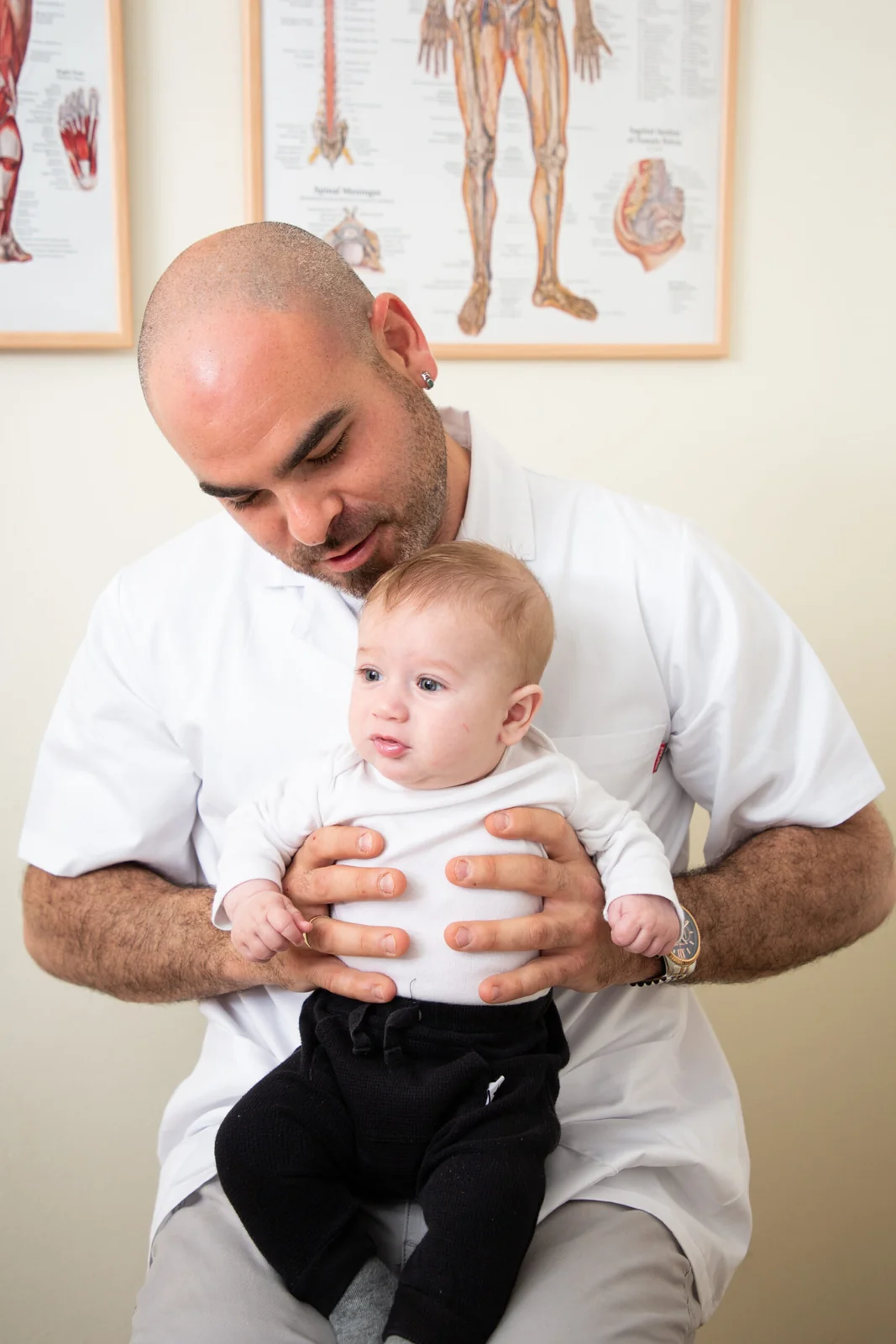
When parents ask me how to hold a newborn‚ I first remind them that the head and neck still need full support from your hand or arm. Within that rule there is room for several newborn holding positions: on your shoulder‚ in a cradle hold‚ lying along your forearm or facing you on your thighs.
Moving between these positions during the day is a natural way of holding a baby that offers variety without any special exercise. The same applies when you think about how to carry a baby around the house: switch arms and sides from time to time.
Many parents are especially careful about the soft area on the top of the head. In ordinary touch and when holding a baby there is no reason to be afraid of it‚ and if you want to understand its role and when to show it to a doctor‚ you will find an explanation in my article on the baby fontanelle.
Lying While Awake: How Do You Create a Space That Encourages Movement?
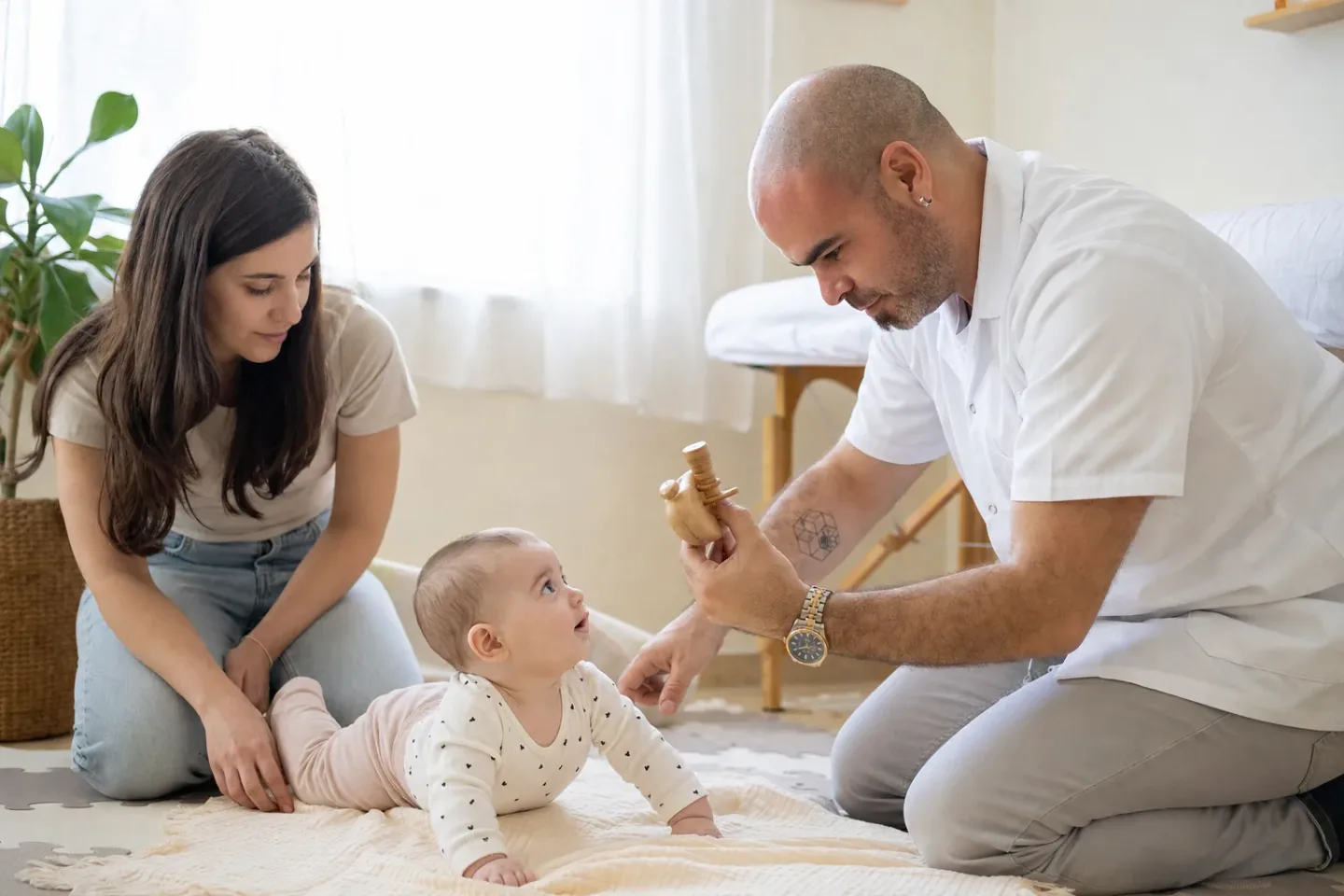
When the baby is awake‚ calm and supervised‚ the floor can be an excellent place to explore movement. A stable‚ safe surface lets the baby feel their body‚ push gently with the legs‚ move the arms‚ look for stimulation and gradually try to lift the head.
Lying for a long time in devices that restrict movement‚ such as a car seat‚ a bouncer or a pram‚ can be convenient for the parent for a short while‚ but it does not replace free and safe movement time or holding a baby in your arms. Good baby positioning on the floor gives the body what a seat cannot.
Tummy Time at Your Baby's Pace
It is worth starting tummy time with short periods and seeing how the baby reacts. If they struggle‚ cry straight away or do not look comfortable‚ there is no need to fight them. You can start by holding a baby on your chest‚ on your knees‚ at a slight angle or for just a minute or two‚ and gradually extend the time according to the baby's ability.
The goal is not to reach a certain achievement‚ but to create a pleasant experience in which the body learns to bear weight‚ use the muscles and meet the world from different angles.
When a baby almost always turns the head to the same side‚ even on the floor‚ it may be a passing preference‚ but sometimes there is a limitation in the neck behind it. Such a limitation is known as torticollis‚ and it is worth having the paediatrician or a professional check it early.
Simple Play Can Be Rich Movement Practice
A baby does not need complicated games in order to develop. A parent's voice‚ a face that appears from the other side‚ a light toy placed at a suitable distance‚ touching the soles of the feet or a short song can all encourage natural movement. When the stimulus is always in the same place‚ the baby may react mainly in the same direction.
When you gently change where the stimulus is‚ there is a chance for turning the head‚ following with the eyes‚ shifting weight and trying to reach with the hand. Good play does not have to tire the baby out. Sometimes a few minutes of quality interaction matter more than half an hour of too much stimulation.
If the baby looks away‚ arches the body‚ cries‚ goes red or seems overwhelmed‚ it is worth stopping. The nervous system at this young age is still learning to regulate information‚ so play also needs to match the baby's own pace.
How Can You Tell That Your Baby Needs More Varied Positions?
Some babies signal clearly that they prefer a certain position: they calm down only on one side‚ struggle to stay on the tummy‚ resist being put on the back while awake or seem less at ease with a certain way of holding a baby. Sometimes this is a temporary‚ passing preference‚ but when the pattern repeats again and again‚ it is worth paying attention.
The goal is not to panic‚ but to check whether you can help the baby get more movement options. Often the first place to look is simply how you hold a baby during the day.
Varying positions and the way of holding a baby can include switching sides during feeds‚ picking the baby up slowly by rolling them to the side‚ short tummy time while awake‚ carrying in different positions and offering toys from different directions. If‚ despite the variety‚ the baby keeps resisting a certain movement‚ looks especially stiff or finds it hard to calm down‚ it is worth consulting a suitable professional.
Sometimes a little guidance on holding a baby changes a lot‚ especially when it is given early and calmly.
A baby who looks especially stiff‚ arches the back and keeps the hands clenched most of the time may also need to be checked for high muscle tone in babies. The assessment is done by the paediatrician‚ and alongside it you can get guidance on how to hold a baby and put them down so that they calm down.
What Is the Connection Between Holding a Baby‚ Breathing and Movement?
Breathing and movement are connected in babies too. When a baby is calm‚ their breathing is usually freer and the body can organize itself more softly. When they cry‚ are tense‚ or when the way you are holding a baby is uncomfortable for them‚ you can sometimes see tension in the shoulders‚ neck‚ tummy or legs.
This does not mean there is a medical problem‚ but it is a reminder that the body works as one system. Good carrying and holding a baby close can help them feel clear body boundaries‚ calm down and release a little tension.
Sometimes a small change in the angle at which you are holding a baby‚ better support under the pelvis or switching to slower movement affects the whole body. That is part of learning how to carry a baby comfortably for both of you.
In some babies the discomfort when lying down is actually related to feeding: they arch and cry after feeds and calm down only when held upright. Such a picture may fit what is called infant reflux‚ and it is the paediatrician who checks it first.
You do not need to know anatomy to feel this: it is enough to notice when your baby melts into your touch and when they push‚ stiffen or try to pull away. That attention is the most practical lesson in how to hold a baby.
When Is It Worth Getting Professional Guidance on Holding a Baby?
It is worth asking for guidance when you feel that your baby has had difficulty with a certain movement for a long time‚ when there is a very clear preference for one position‚ when there is significant difficulty with tummy time while awake‚ when the baby seems unusually tense or when you are simply unsure how to hold a baby and encourage movement safely.
Professional guidance does not have to come only when there is a "problem". Sometimes it is meant to give parents confidence‚ precision and simple tools for daily life‚ including clear answers on how to hold a baby and how to hold a newborn in different situations.
At the same time‚ there are situations in which the first address is the paediatrician: fever‚ unusual drowsiness‚ repeated vomiting‚ eating less‚ a sharp change in behaviour‚ weakness‚ a seizure‚ breathing difficulty‚ unusual crying that does not settle or a suspicion of significant pain. Manual treatment or movement guidance does not replace a medical assessment when there are unusual signs.
The right approach is to combine medical caution with a functional look at movement and comfort.
How Does Gentle Osteopathic Treatment Fit Into the Picture?
In an osteopathic approach to babies‚ the emphasis is on gentle touch‚ movement assessment and an understanding of how the body organizes itself. I look at how the baby responds to different positions‚ whether some areas seem more tense‚ whether movement to both sides is comfortable‚ how the chest and pelvis take part in movement‚ and whether there is a pattern that puts repeated load on the same area.
The treatment is not supposed to be strong‚ painful or threatening.
The work can include very gentle touch‚ improving mobility‚ calming tension in the tissues and guidance for parents. In many cases guidance on holding a baby is a central part of the session: how to hold a baby‚ how to put them down‚ how to add active awake time‚ how to vary positions and how not to stress over every reaction of the baby.
The goal is not to "fix" the baby‚ but to help them gain more comfort and freedom of movement within their own natural process of development. In practice this often comes down to how you are holding a baby‚ feeding them and playing with them every day.
If you want to understand the principles of the approach itself‚ you will find an explanation on the home page about osteopathic treatment. For babies‚ the first treatment lasts about an hour‚ and most of the time is devoted to a gentle examination and guidance for the parents.
What Is Better Not to Do Out of Stress?
When parents are worried‚ it is very easy to look for a quick fix: another product‚ another accessory‚ another recommended way of holding a baby or another exercise found online. But babies do not usually need a load of solutions. They need safety‚ calm touch‚ moderate variety‚ free movement time while awake and an adult who listens to their signals.
Trying to force movement‚ leaving a baby for a long time in a position they resist or doing stretches without guidance may cause more tension than benefit. Comparing your baby with other babies is not always helpful either. Every baby has their own pace‚ temperament‚ body structure‚ birth history and habits‚ so there is no single answer to how to hold a baby.
Of course there are developmental milestones that are important to follow‚ but within the normal range there is a lot of variation. If in doubt about how to hold a baby or what to practise‚ it is better to ask a professional than to load the baby with practice that does not suit them.
The Difference Between Encouraging Movement and Treating a Problem
Encouraging natural movement is part of a healthy routine: varied positions‚ play‚ active awake time and attentive touch‚ along with careful attention to holding a baby during the day. Treating a problem‚ on the other hand‚ requires a more precise understanding of the reason for the difficulty.
If the baby struggles to turn the head‚ cries at every change of position or seems constantly tense‚ it is not always right to settle for general advice. In such a case a personal assessment is needed.
The common mistake is to think that every baby needs the same exercise. In fact‚ an exercise that suits one baby can be irrelevant for another.
That is why professional treatment starts with listening to the baby and to the parents' story: how the birth went‚ what happens during feeds‚ how the baby sleeps‚ how they react to being picked up‚ which positions and ways of holding a baby are easy for them and which cause resistance. Only then can I match guidance that really helps.
In Summary
Holding a baby‚ lying and play are not just everyday actions‚ but an important part of the way a baby learns their own body. Through touch‚ varied positions‚ active awake time and simple play‚ the baby gets chances to develop movement‚ control‚ curiosity and comfort.
There is no need to turn the routine into a training programme‚ but it is worth noticing habits of holding a baby that repeat themselves and asking whether your baby gets enough chances to move to both sides and in different positions. Knowing how to hold a baby‚ how to hold a newborn and how to carry a baby in a varied way is a large part of that.
When there is ongoing difficulty‚ a clear preference‚ unusual tension or restlessness around a certain movement or when holding a baby‚ you can turn to a professional assessment. Gentle osteopathic treatment can fit in where suitable‚ as long as there are no medical warning signs and as long as the approach is adapted to the baby's age‚ the baby's response and the parents' sense of security.
In the end‚ the goal is simple: to help your baby move comfortably‚ grow with confidence and develop at the pace that suits them.
Table of Contents
- Why Does Natural Movement in Babies Start With Everyday Life?
- Holding a Baby Well Is Not One Fixed Position
- Holding a Baby in the Newborn Weeks
- Lying While Awake: How Do You Create a Space That Encourages Movement?
- Tummy Time at Your Baby's Pace
- Simple Play Can Be Rich Movement Practice
- How Can You Tell That Your Baby Needs More Varied Positions?
- What Is the Connection Between Holding a Baby‚ Breathing and Movement?
- When Is It Worth Getting Professional Guidance on Holding a Baby?
- How Does Gentle Osteopathic Treatment Fit Into the Picture?
- What Is Better Not to Do Out of Stress?
- The Difference Between Encouraging Movement and Treating a Problem
- In Summary
