
Hypermobility - When Does It Hurt and How Is It Treated?
13 min read
Do your joints move further than everyone else's‚ yet they hurt‚ sprain or "pop" easily? Do you feel tight muscles all the time‚ even after stretching? And after an ordinary day of walking or training‚ is your body exhausted and sore?
I am Roman Kibler‚ an osteopath (D.O.) in Kiryat Tivon‚ and I treat hypermobility with a gentle approach that builds control and stability instead of adding even more range.
Leave your details or call me‚ and I will check with you what is loading your body and how we can ease it!
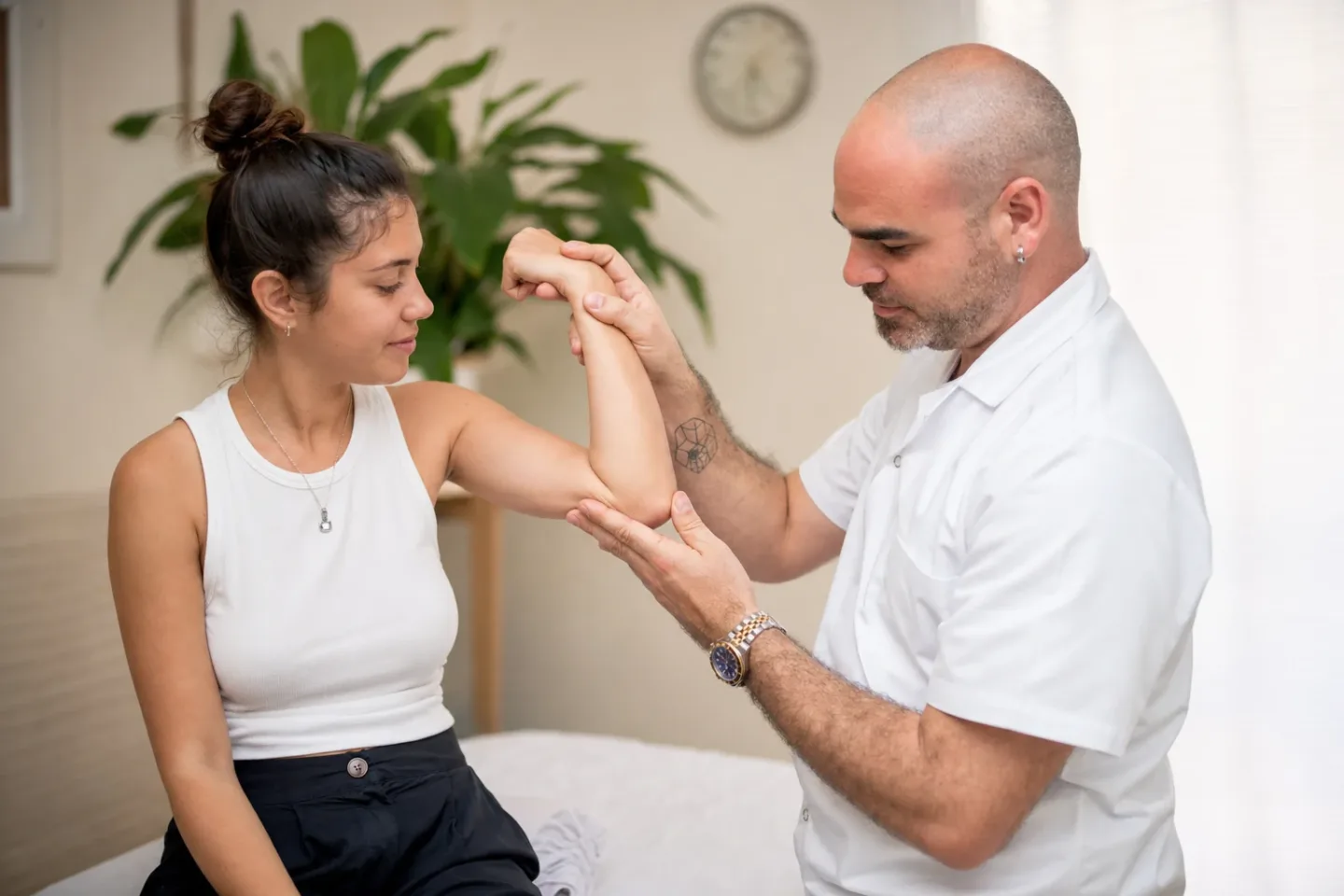
Hypermobility is a condition in which joints move beyond the range of motion considered normal for most people. Some people live with hypermobility without pain or limitation‚ and sometimes it is even an advantage in dance‚ gymnastics‚ yoga or certain sports.
The problem starts when the large ranges of motion come with pain‚ instability‚ repeated sprains or fatigue. Many people know this simply as being "double jointed"‚ but the joints are not doubled at all: the tissues around them are more lax.
Hypermobility is not one diagnosis that behaves the same in everyone. In some people it is only a mild structural feature‚ and in others it is part of a wider picture of pain‚ sensitivity and fatigue. That is why good care does not only ask how flexible a person is‚ but whether the body manages to control its ranges of motion.
What Is Hypermobility and When Does It Become a Problem?
Hypermobility describes a state in which joints move through a wider range than usual‚ in one joint‚ in several joints or throughout the body. It is more common at a young age and among women‚ and it often decreases with age.
Some adults remain very flexible for many years‚ but not all of them develop pain. Hypermobile joints are not a problem in themselves; what matters is how the body lives with them.
The key difference is not the range itself‚ but the quality of control within it. When a joint moves very far but is not well supported by muscles‚ the nervous system and a good sense of position‚ the body reacts by protecting itself.
The muscles tighten‚ the movement becomes less efficient‚ and then pain appears that keeps coming back in the same areas. This is how hypermobility pain usually develops.
Joint Hypermobility Versus a Wider Syndrome
When only a few joints are flexible and the person feels well‚ doctors usually speak of joint hypermobility without symptoms. When several regions of the body are involved‚ the term generalized joint hypermobility is used‚ and it too can exist without any complaint.
When the flexibility comes with ongoing pain‚ fatigue and reduced function‚ doctors check whether it is a hypermobility spectrum disorder (HSD)‚ the condition people still often call joint hypermobility syndrome or simply hypermobility syndrome. In some cases Ehlers-Danlos syndrome is also suspected‚ and it can be diagnosed only by a doctor.
Hyperflexibility in Pregnancy and After Birth
In pregnancy‚ hormonal changes (including relaxin and progesterone) increase the flexibility of the ligaments‚ especially around the pelvis‚ in preparation for birth. A woman who is very flexible to begin with may feel this change more strongly‚ as pelvic pain‚ lower back pain or a feeling of instability when walking.
After the birth the ligaments gradually return to their previous state‚ so the return to training should be slow‚ with the focus on strengthening and control rather than on stretching. With hyperflexibility‚ this patience pays off.
Hypermobility Symptoms Worth Paying Attention To
Hypermobility symptoms can include recurring joint pain‚ clicks or small dislocations‚ repeated sprains‚ fatigue after activity‚ tight muscles‚ back pain‚ knee pain or pain in the feet. Some people describe a feeling that the body "does not hold itself up"‚ or that they need a conscious effort to hold a position.
Others feel fine during the activity‚ but suffer from pain for hours afterwards. Common signs of joint laxity include:
- Repeated sprains of the ankle‚ knee or shoulder.
- A feeling that the joint "slips out" and back in.
- Muscle pain and fatigue after ordinary effort.
- Knees that lock backward when standing.
- A flat foot that collapses when walking.
- Muscles that feel tight even after stretching.
It is important to tell apart joint hypermobility that does not bother you from a situation in which the pain returns‚ gets stronger or affects your function. Significant swelling‚ sharp pain after an injury‚ repeated dislocations‚ loss of sensation‚ weakness‚ fever or a rapid worsening without an explanation require a medical assessment.
Osteopathic care fits in when the picture matches a functional overload‚ and it does not replace a medical diagnosis.
Why Do People With Hypermobility Feel Tight Muscles?
In a person with wide ranges of motion‚ the muscles have to work harder to stabilize the joints. Instead of a clear sense of a limit at the end of the movement‚ the body has to produce active control through the whole range. When this control is not enough‚ the muscles respond with a protective contraction.
That is why a person with hypermobility often feels a constant need to "release" the body‚ although the problem is not a real shortening of a muscle but a load on the stabilizing system. If you are searching for how to release tight muscles and find that stretching helps for only a few hours‚ check whether flexibility is part of the story.
In such cases stability and a gradual approach help more than another stretch. This is a central point of hypermobility treatment.
The Calf Muscle and the Lower Leg
In the lower leg‚ for example‚ load after a long walk‚ a run or standing for a long time creates a feeling of a tight calf‚ especially when the ankle‚ the knee or the pelvis do not take part in the movement in a balanced way. Local release eases it for a short time‚ but if the source of the load is the walking pattern‚ the feeling comes back.
Stretching tight calf muscles should also be gentle and controlled when there is hypermobility in the ankle and the knee.
Hypermobility and Leg Pain After Activity
Leg pain in people with hypermobility often appears after activity that seems completely ordinary: a long walk‚ standing for a long time‚ a leg workout‚ a light run or a day with a lot of stairs. The body invests more energy in controlling movement‚ and instead of the joints and muscles sharing the load‚ one area takes on too much of the work.
When the question is how to ease tight leg muscles‚ it is important not to rush into a strong stretch. In some people with hypermobile joints‚ aggressive stretching increases instability and leads to even more protective tightening.
It is often better to work on slow‚ controlled movement‚ gentle strengthening‚ breathing and a better sense of where the joints are.
The Hip‚ the Pelvis and the Back in Hypermobility
The hip and the pelvis are central areas for controlling leg movement. With hypermobility‚ the hip joint may move through large ranges‚ but there is not always enough control around it.
Then the lower back‚ the knee or the thigh muscles compensate‚ and the compensation feels like a "tight" muscle‚ a dull ache in the thigh or difficulty climbing stairs.
Even when a person is looking for a way to release a tight thigh muscle‚ the examination should find out whether the problem really lies only in the muscle. Sometimes the muscle tightens because the pelvis does not stabilize well‚ because the lower back is restricted or because the knee receives an unbalanced load.
Good care looks for what makes the thigh work overtime‚ and does not settle for pressing on the painful spot.
Pain on the Side of the Hip and Hypermobility
Pain on the side of the hip appears in flexible people because of repeated load when walking‚ running‚ standing on one leg or lying on the side. Sometimes it is muscle tension‚ sometimes tendon irritation and sometimes involvement of the soft tissues around the hip joint.
The hip joint can move well in terms of range‚ and still not be stable enough in terms of control. This is typical of joint hypermobility around the hip.
When the pain sits on the outer side of the hip and gets worse with local pressure or when lying on it‚ it is important to tell muscle overload apart from hip bursitis. Pain around the bursa needs a different adjustment of load than pain caused by muscle control.
That is why I check not only the painful spot‚ but also the movement of the pelvis‚ the back‚ the knee and the foot.
A Lower Back That Works Overtime
People with hypermobility tend to stand and sit at the end of their range: a lower back that arches too much‚ a pelvis that tilts forward or sitting that "hangs" on the ligaments. This load builds up‚ and at the end of the day a tight lower back often appears.
Practicing a neutral standing position and activating the abdominal and buttock muscles gradually reduces this load.
How Is Hypermobility Diagnosed?
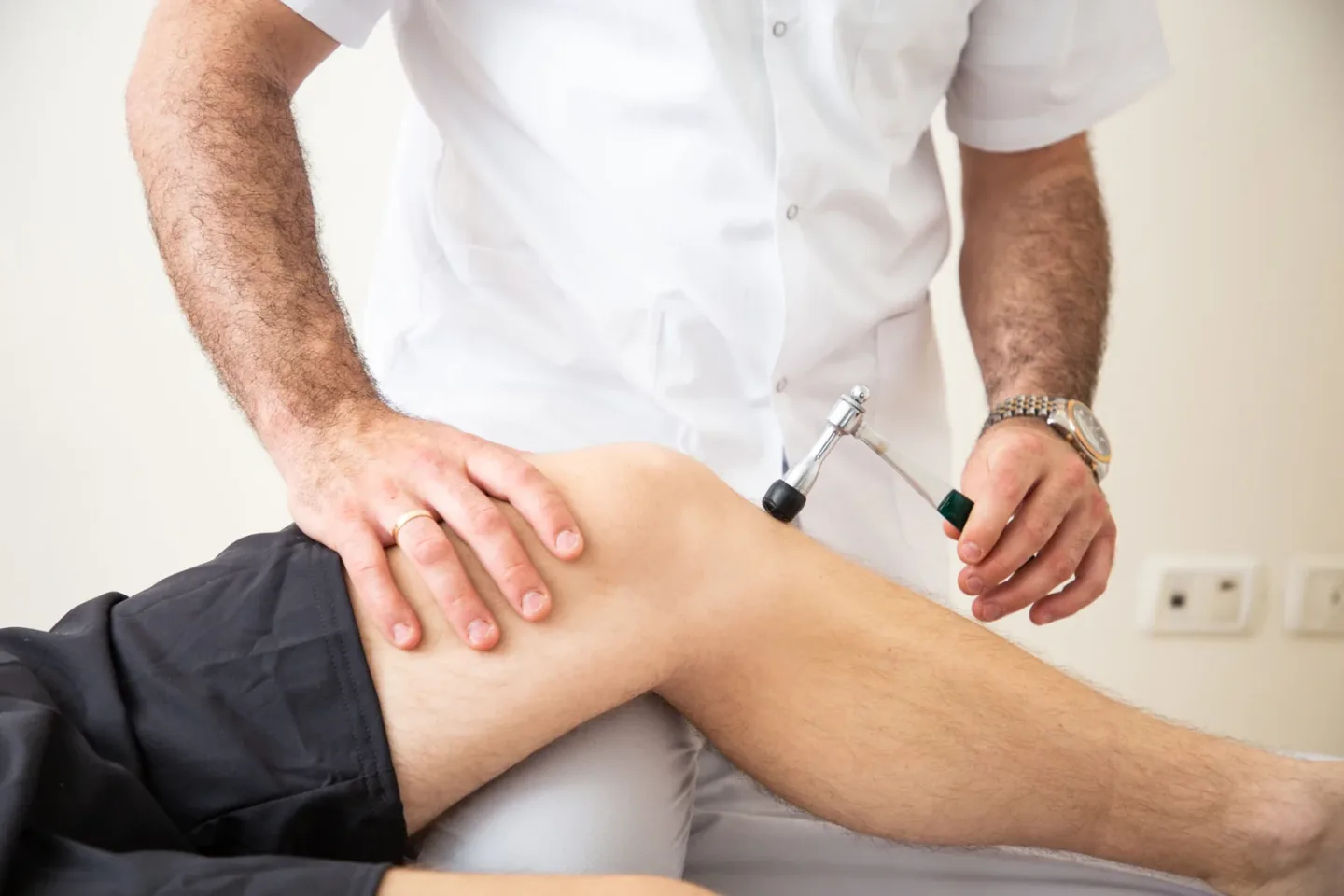
The diagnosis starts with questions and a physical examination: recurring pain‚ sprains‚ dislocations‚ fatigue‚ family history‚ physical activity and daily function. The examination assesses ranges of motion in different joints‚ the quality of movement control‚ posture‚ balance and walking pattern.
It is also important to see whether the person performs simple actions without collapsing or compensating.
The Beighton score is a well-known assessment tool that tests flexibility in the little finger‚ the thumb‚ the elbows‚ the knees and the back (palms on the floor when bending forward)‚ but the score does not tell the whole story. A person can be very flexible without pain‚ and another person with moderate flexibility can suffer from significant overload.
That is why a practical diagnosis of hypermobility links the ranges to the symptoms‚ the quality of movement and the effect on daily life.
Osteopathic Treatment for Hypermobility
In osteopathic treatment for hypermobility it is especially important to avoid an aggressive approach. When the joints already move through a wide range‚ the goal is not to add more movement at any cost.
The treatment focuses on balancing the load‚ improving body awareness‚ reducing unnecessary muscle tension and guiding you toward controlled movement.
The osteopathic examination looks at the connection between joints‚ soft tissues‚ breathing and posture. If the back‚ the pelvis and the hip do not work well together‚ other areas become overloaded.
That is why I do not just look for "where it is tight"‚ but ask why the body chose to tighten there and what will reduce its need for this protection.
What Does the Treatment Actually Include?
The treatment includes gentle touch‚ releasing tissues that are overworking‚ improving the mobility of areas that are truly stiff and simple guidance for daily life. The first session takes about an hour‚ and follow-up sessions take about 45 minutes. Alongside the manual work you get short stability exercises you can do at home.
I studied osteopathy for five years‚ including 1000 clinical hours‚ and since 2022 I have been working as an osteopath at Maccabi Tivi. If you are looking for osteopathic treatment in the north‚ at my clinic in Kiryat Tivon you will find an approach that respects a flexible body and does not try to "open" it even more.
Some private insurance companies refund part of the cost of the treatment.
Stretching‚ Strengthening and Returning to Activity With Hypermobility
For people with joint hypermobility‚ stretching is a subject that calls for caution. A light‚ pleasant stretch can be part of a healthy routine‚ but strong‚ long or competitive stretching increases instability.
When the body feels that the joint is moving beyond what it can control‚ it reacts with tightening‚ pain or fatigue. This is something I see often in hypermobility.
In many cases it is better to replace the thought "I need to stretch more" with the thought "I need to control the range I already have better". Slow practice‚ gradual strengthening‚ stability and balance are more effective than increasing the range.
An exercise that causes sharp pain‚ a feeling of collapse‚ numbness or a long-lasting worsening is not suitable at this stage.
A Gradual Return to Load
People with hypermobility often feel good during the activity‚ but pay the price later in pain and fatigue. That is why the load is built in stages: start with a low volume‚ follow how the body reacts the next day and add gradually.
Strengthening does not have to be heavy: simple‚ precise exercises are often the most important basis for hypermobile joints.
Daily Habits That Keep the Pain Going
Sitting in an extreme position‚ standing with the knees locked backward‚ leaning on the joints instead of the muscles‚ a heavy bag on one shoulder or training without enough recovery keep the pain going. A small change in habits reduces a significant amount of load.
The treatment helps identify these habits and turn them into simple guidelines.
When Does Hypermobility Require Seeing a Doctor?
See a doctor if there are repeated dislocations‚ significant swelling‚ sharp pain after an injury‚ weakness‚ loss of sensation‚ recurring dizziness‚ unusual fatigue‚ very widespread pain or unusual skin signs. Hypermobility can be a trait in its own right‚ but sometimes it is part of a wider syndrome that needs medical diagnosis and follow-up.
A correct diagnosis makes it possible to adapt the care and avoid unsuitable advice.
Even without warning signs‚ it is worth seeing a professional if the pain keeps coming back‚ limits your activity or makes you afraid to move. Avoiding movement for a long time weakens the body and increases sensitivity.
The goal is not to stop moving‚ but to learn to move in a way that matches the body's ability to control itself.
Hypermobility Without Fear of Movement
Hypermobility is not necessarily a problem‚ but when it comes with pain‚ muscle overload‚ instability or repeated injuries‚ it deserves professional attention. In many cases the problem is not too much range‚ but difficulty controlling it while moving‚ standing or exercising.
That is why a solution based only on stretching or local release is incomplete.
The right approach is gentle‚ gradual and focused on control‚ stability and managing load. When careful manual treatment is combined with gradual strengthening and listening to the body‚ it is possible to reduce pain and improve function without "fighting" the flexibility‚ but by learning to use it safely.
Frequently asked questions
Is hypermobility a disease?
Not necessarily. For many people it is a structural trait without symptoms‚ and only when it comes with pain‚ sprains or fatigue does it become a problem that needs attention.
Is joint hypermobility hereditary?
Joint hypermobility tends to appear in several members of a family‚ so I ask about family history during the examination. When a wider syndrome is suspected‚ the doctor refers you for a suitable assessment.
Can I do yoga with hypermobility?
Yes‚ as long as the focus is on stability and control and not on reaching the end of the range. Tell your instructor about your flexibility and avoid positions in which the joint "locks" or hangs on the ligaments.
Which exercises suit hypermobile joints?
Stability‚ balance and slow strengthening exercises in a middle range‚ such as standing on one leg‚ a pelvic bridge and core exercises. Progress is gradual‚ and the measure of success is control‚ not quantity.
Why am I so tired after activity?
With hypermobility‚ the muscles work harder to stabilize the joints‚ so the body tires more quickly. Extreme or ongoing fatigue also needs to be checked by a doctor.
Is osteopathic treatment suitable for hypermobility?
Gentle osteopathic treatment is suitable when there are no medical warning signs‚ and it focuses on balancing the load and on guidance. It does not include forceful manipulations of areas that already move too much.
Does hyperflexibility decrease with age?
In most people with hypermobility the ranges gradually narrow over the years. Still‚ the need for control and strengthening remains‚ especially after injuries or periods of inactivity.
Why does hypermobility appear in several family members?
It often does: flexibility tends to run in families‚ because the structure of connective tissue is often inherited. If several people in your family are very flexible and have pain‚ repeated sprains or dislocations‚ tell your doctor.
Do I need to stop stretching?
You do not have to stop‚ but it is worth replacing strong stretches with light stretches and controlled movement. If a stretch causes a feeling of instability or pain‚ it is better to skip it.
Can shoes and insoles help?
When the foot collapses when walking‚ a stable shoe with good arch support reduces the load on the ankle‚ the knee and the hip. Custom insoles are considered after an examination‚ not as a general solution for everyone.
How long does it take to feel an improvement?
It depends on how long the problem has lasted‚ the level of pain and how consistently you practice. Many people feel a change in their sense of stability after a few weeks of steady work‚ but real strength is built over months.
Table of Contents
- What Is Hypermobility and When Does It Become a Problem?
- Joint Hypermobility Versus a Wider Syndrome
- Hyperflexibility in Pregnancy and After Birth
- Hypermobility Symptoms Worth Paying Attention To
- Why Do People With Hypermobility Feel Tight Muscles?
- The Calf Muscle and the Lower Leg
- Hypermobility and Leg Pain After Activity
- The Hip‚ the Pelvis and the Back in Hypermobility
- Pain on the Side of the Hip and Hypermobility
- A Lower Back That Works Overtime
- How Is Hypermobility Diagnosed?
- Osteopathic Treatment for Hypermobility
- What Does the Treatment Actually Include?
- Stretching‚ Strengthening and Returning to Activity With Hypermobility
- A Gradual Return to Load
- Daily Habits That Keep the Pain Going
- When Does Hypermobility Require Seeing a Doctor?
- Hypermobility Without Fear of Movement
- Frequently asked questions
