
Migraine Treatment - What Can Help Beyond Medication?
16 min read
Do your migraines keep coming back and wreck your week‚ even when you take medication? Do you feel your neck‚ the back of your head and your jaw tighten even before the attack begins? Are you looking for migraine treatment that helps between attacks too‚ and not only on the day of the pain?
I am Roman Kibler‚ an osteopath D.O. in Kiryat Tivon‚ and I work gently on the neck‚ the jaw‚ the upper back and breathing‚ alongside the treatment set by your doctor or neurologist.
Leave your details or call me‚ and I will check with you what is loading your body and what we can ease!
A migraine is much more than an ordinary headache. It is a neurological condition that shows up as throbbing or strong pain‚ usually on one side of the head‚ and it often comes with sensitivity to light and noise‚ nausea and pain that gets worse with movement.
In some people the attacks come once every few months‚ and in others they return several times a month and affect work‚ family and sleep. That is why migraine treatment is not only the question of how to stop an attack‚ but also what can be done so that the next attack comes later and less strongly.
It is important to say right at the start: osteopathic care does not replace a neurologist‚ a family doctor or medication. It can be added alongside them when there are physical factors‚ such as neck tension‚ jaw load‚ shallow breathing or long hours in one posture‚ that add to the load on a sensitive system.
What Is a Migraine and How Is It Different from an Ordinary Headache?
A tension headache is usually felt as pressure or a "band" around the head‚ at a moderate level‚ without nausea and without strong sensitivity to light. A migraine behaves differently: the pain throbs‚ is stronger‚ gets worse with every movement and sometimes lasts from a few hours up to two or three days.
To know how to treat a migraine well‚ you first need to understand what kind of pain appears‚ how long it lasts‚ what makes it worse and what eases it‚ and whether there are other symptoms. This information helps tell migraine vs headache of other kinds apart‚ including pain that starts in the neck.
How Common Is Migraine?
Migraine is one of the common reasons for seeing a doctor about headaches‚ and it usually first appears in adolescence or young adulthood. Many people also have a family history of migraines‚ so it is worth telling your doctor if your parents or siblings have them.
Because it is so common‚ there is a lot of knowledge today about migraine treatment and about what helps most patients. Even so‚ every person's answer is different‚ so I always start from the personal picture.
The Stages of a Migraine Attack
In many people the migraine attack starts even before the pain: tiredness‚ yawning‚ a stiff neck‚ sensitivity to smells or a change in mood‚ hours or even a day before. Then comes the pain stage‚ and after it a recovery stage in which you feel tired‚ "foggy" and sensitive.
Knowing these stages matters‚ because some treatments work better when they are started early. If you recognize the early signs‚ you can act in time‚ following the instructions you got from your doctor.
Migraine with Aura
Some people with migraine get an "aura" before the pain: visual disturbances such as flashes‚ glowing lines or a blind spot‚ and sometimes numbness in the face or hand. It usually lasts less than an hour and passes.
An aura that appears for the first time‚ lasts a long time or comes with weakness‚ difficulty speaking or confusion needs an urgent medical check‚ to rule out other conditions.
When Does Migraine Treatment Start with a Doctor?
Every migraine treatment starts with a diagnosis. The family doctor or the neurologist asks about the nature of the pain‚ does a neurological examination and decides whether further tests are needed. Most people with migraine do not need imaging‚ but that decision belongs to the doctor.
It is worth coming to the appointment with an attack diary covering a few weeks: when the pain started‚ how long it lasted‚ what came before it and which medication helped. A diary like this saves the doctor and the therapist guesswork‚ and shows whether there is a fixed pattern that can be changed.
Warning Signs That Need Urgent Care
- A sudden‚ extremely strong headache‚ "the worst I have ever had".
- Weakness or numbness on one side of the body‚ difficulty speaking‚ confusion or double vision.
- A headache with high fever‚ a stiff neck or a rash.
- A new headache after a head injury‚ or after age 50 with no history of headaches.
- A sharp change in the pain pattern in someone who has had migraines for years.
For someone who knows only their usual attacks‚ a severe headache that feels different from usual is not "just another attack". In such situations manual treatment is not suitable before a medical check‚ and you should go to a doctor or the emergency room.
Even if you are already in migraine treatment and know your attacks well‚ pay attention to changes. An attack that lasts much longer than usual‚ or does not respond to the medication that always helped‚ is a reason to talk to your doctor.
Sometimes a recurring headache comes together with a mild fever‚ weight loss‚ joint pain or unusual tiredness. Then the doctor may ask for blood tests.
A result such as high ESR can point to an inflammatory process that needs medical attention rather than ordinary treatment for migraines.
After age 50‚ a new headache at the temples with a tender scalp‚ jaw pain while chewing or a change in vision needs a check on the same day‚ to rule out inflammation of the temporal arteries.
Treatment for Migraines: Relief During an Attack and Prevention Over Time
Medicine distinguishes between two kinds of treatment for migraines. Acute treatment is meant to ease an attack that has already started‚ and preventive treatment is meant to reduce the number of attacks and their strength.
Migraine Relief During an Attack
For migraine relief during an attack‚ different medications are used‚ and many people search for migraine relief fast‚ but the options range from simple painkillers to medications made specifically for migraine‚ and migraine headache treatment is chosen individually. The choice depends on how strong the attacks are‚ on other conditions and on other medications‚ so it is made with your doctor.
For lasting migraine relief‚ it is important to know that taking painkillers too often can actually increase headaches. If you take attack medication on more than a few days a week‚ talk to your doctor about it.
Long-Term Migraine Prevention
When the attacks are frequent or severe‚ the doctor can suggest daily preventive treatment or newer preventive treatments developed specifically for migraine. Chronic migraine treatment aims for fewer days of pain a month‚ and not necessarily for the attacks to disappear completely.
Migraine treatment that combines preventive medication with changes in habits‚ regular sleep and care for physical loads often succeeds better than any one of them alone.
The Neck‚ the Back of the Head and the Jaw in Migraine Treatment
Quite a few people with migraine also have a stiff neck‚ tension at the back of the head or a sensitive jaw. This does not mean that every migraine "comes from the neck"‚ which is an inaccurate way to put it‚ but these areas can add to the overall load and make the feeling worse during an attack.
Tension at the Base of the Skull
The small muscles that connect the neck to the skull work hard when the head leans forward in front of a screen. This area‚ called the occiput‚ is especially sensitive in many people with headaches‚ and the work on it is gentle and slow.
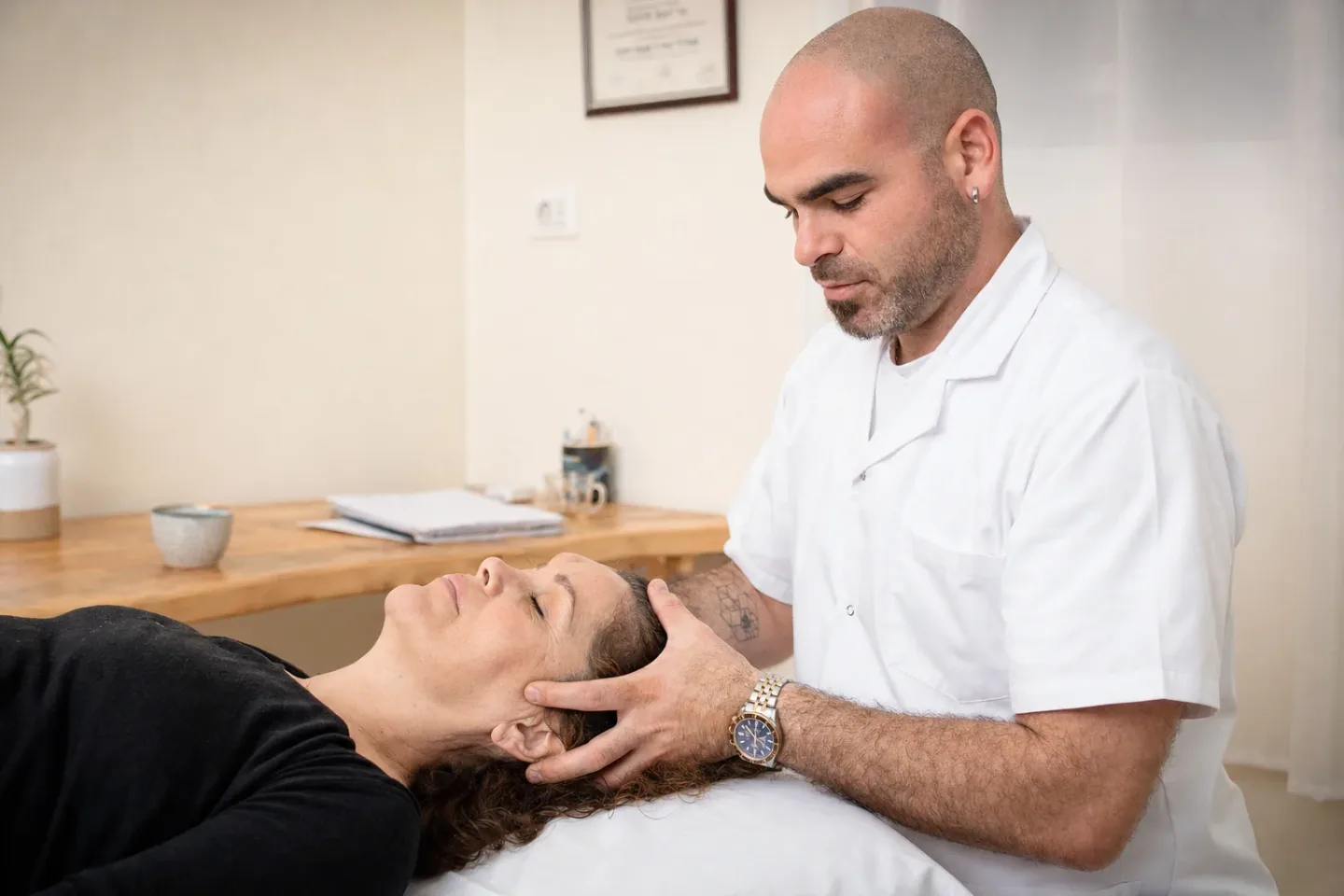
During migraine treatment I check this area carefully‚ because pressing too hard can trigger pain. Soft‚ slow touch‚ together with calm breathing‚ lets the muscles relax without flooding the nervous system.
People who also suffer from lasting stiffness between attacks‚ or who complain of neck pain‚ often feel that it comes before the migraine or makes it worse. Here‚ treatment that improves movement in the neck and upper back can take away part of the load and add to migraine relief.
The Jaw and Teeth Grinding
Clenching and grinding the teeth at night load the chewing muscles and the temples. In some patients‚ work on the jaw‚ together with a dentist when needed‚ reduces the tension in the area‚ eases the feeling of heaviness in the head and supports the treatment for migraines.
Migraine and Dizziness Together
Some patients describe‚ alongside the migraine‚ a feeling of unsteadiness or a "heavy" head. Sometimes it is a condition called cervical vertigo‚ and sometimes it is a symptom of the migraine itself‚ and only a proper examination can tell them apart before migraine treatment is planned.
Osteopathic Migraine Treatment: What Happens in the Clinic?
The first session starts with a detailed conversation: when the attacks began‚ how many times a month they come‚ what triggers them‚ whether there is an aura‚ nausea‚ neck pain‚ teeth grinding‚ stress or sleep problems‚ and which medications you take.
The Examination in the First Session
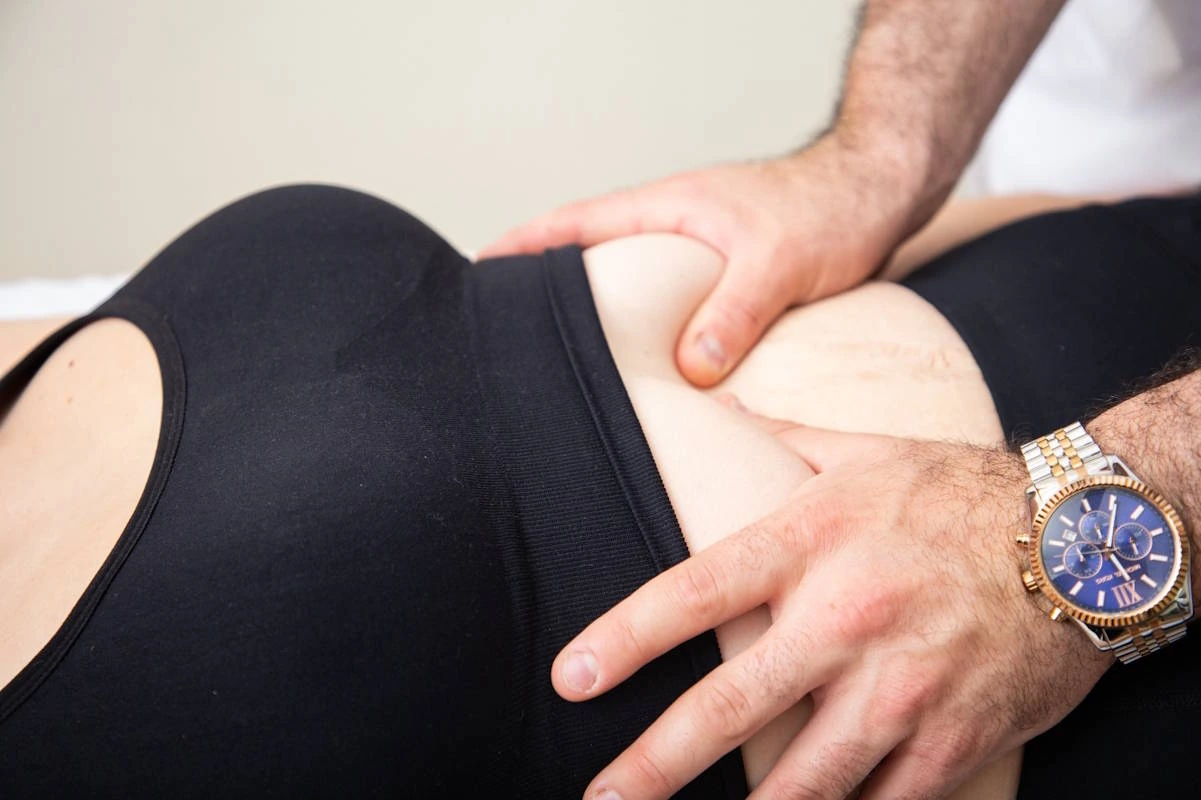
After the conversation I check the movement of the neck vertebrae‚ the muscles around the base of the skull‚ the jaw‚ the shoulders‚ the chest and the upper back. I also check your breathing pattern‚ because shallow breathing loads the neck muscles.
What Does Migraine Treatment in the Clinic Look Like?
Migraine treatment in my clinic is gentle and tailored to you: work on soft tissues‚ improving movement in restricted places‚ releasing the jaw and working on breathing. There are no strong manipulations of the neck in my migraine treatment‚ and certainly not during an attack.
At the end of the session you get short guidance for home: soft movement exercises‚ sitting habits and breathing practice. The first treatment lasts about an hour and follow-up treatments about 45 minutes.
What Do You Feel After the Treatment?
After manual treatment some people feel tiredness‚ local tenderness or a slight heaviness on the next day‚ and this usually passes quickly. If you want to know what counts as a normal reaction‚ you can read about osteopathy side effects.
A new headache that is different from usual‚ weakness‚ numbness or unusual dizziness after a treatment are not a normal reaction‚ and they need a visit to a doctor.
Natural Migraine Relief: A Routine That Lowers the Load
A large part of any migraine treatment happens at home. There is no single list that suits everyone‚ but there are a few habits that help most patients reduce the number of attacks.
- Fixed sleeping hours‚ also at weekends and on holidays.
- Regular meals and enough to drink during the day.
- Short movement breaks every hour in front of a screen.
- Moderate‚ regular exercise‚ such as walking or swimming.
- A migraine diary: when‚ how long‚ what came before the attack and what helped.
A Migraine Diary as Part of the Treatment
A simple diary‚ on your phone or in a notebook‚ is one of the most important tools in any migraine treatment. You write down the date‚ the time the pain began‚ its strength from 1 to 10‚ what you ate and drank‚ how much you slept and what helped.
After a month or two‚ patterns appear that are hard to see from the inside: attacks that always come on Sunday‚ after a short night or on days of long sitting. It is worth bringing this diary to your doctor and to anyone who works with you on migraine treatment‚ because it saves guesswork.
Personal Triggers
Some people are sensitive to lack of sleep‚ some are affected by stress‚ and some notice a link to alcohol‚ bright light‚ certain smells or skipping a meal. The diary helps you identify your own pattern instead of guessing‚ and that is often the first step in migraine prevention and migraine relief.
Stress and the Nervous System
In many people the attack comes right after a stressful period‚ when the body finally rests. Slow breathing‚ relaxation and a calmer routine help the nervous system come out of a state of alert‚ and they are part of natural migraine treatment. If you are interested in the link between breathing‚ calm and the feeling of stress‚ you can read about the vagus nerve and anxiety and what helps calm it.
Medicine is exploring this direction too: a device for external stimulation of the vagus nerve has been approved in the US for migraine treatment‚ as a medical treatment prescribed with the neurologist.
The Right Kind of Movement
Strong neck stretches are not the solution for migraine relief‚ and sometimes they increase sensitivity. It is better to work gradually: soft movement of the chest‚ relaxing the jaw‚ changing your working position and easy walking‚ and not to train during a strong attack.
Migraine Treatment Without Medication: What Is Known?
Many people look for migraine treatment that is not based only on medication‚ because of side effects‚ pregnancy or simply a wish to understand the body. Several directions have been studied‚ and it is worth knowing them with a clear head.
Regular sleep‚ moderate aerobic exercise‚ relaxation techniques and breathing practice have been found to help some people with migraine. Manual treatment of the neck and upper back has been studied less‚ and it seems to help mainly people who have a clear load in these areas.
Migraine treatment without medication does not mean treatment against medication. For people with frequent attacks‚ combining the right medication with a good routine and care for physical loads usually gives the best result.
Migraine Treatment for People Who Work at a Screen
Long hours at a computer combine several factors that load people with migraine: bright light‚ a head that leans forward‚ raised shoulders and short breaths. At the end of such a day many feel the back of the neck lock up‚ and sometimes that is the moment the attack begins.
Adjusting the screen height‚ a short break every hour‚ lowering the screen brightness and a one-minute breathing exercise are a simple part of any migraine treatment for office workers. In the clinic I add work on the neck and upper back‚ which carry most of the load.
Migraines in Women and at Different Stages of Life
Migraines are more common in women‚ and in many of them there is a clear link to the menstrual cycle. Attacks around the period tend to last longer and may need different migraine treatment‚ and a migraine diary helps identify the link and plan ahead with the doctor.
In pregnancy some women feel an improvement‚ and others feel worse. Any medication in pregnancy and breastfeeding is taken only after consulting a doctor‚ and gentle manual treatment can help with the load on the neck and upper back that grows in this period.
A new headache‚ or one stronger than usual‚ in pregnancy‚ especially from week 20 and with visual disturbances or swelling of the face and hands‚ needs an urgent check to rule out preeclampsia.
Life transitions‚ such as going back to work after a birth‚ sleepless nights or menopause‚ also change the pattern of attacks. Migraine treatment should be updated accordingly‚ and not stay the same for years.
In menopause‚ for example‚ some women find their attacks become less frequent‚ while others feel a temporary worsening. A conversation with your doctor about the changes‚ together with an organized diary‚ helps adapt the treatment for migraines to the new period.
Why Does Migraine Treatment Need to Be Personal?
Two people can get the same diagnosis and experience it completely differently‚ so there is no single answer to how to treat a migraine. For one the attacks are linked to sleep and stress‚ for another to the menstrual cycle‚ for a third to computer work and a stiff neck‚ and for a fourth there is no clear trigger.
When migraines go on for years‚ the whole pain system can become more sensitive‚ and sometimes pain in other places in the body joins them. I have written separately about this condition‚ called chronic pain syndrome‚ because it needs a broad and patient approach.
In such cases migraine treatment does not focus only on the head. We also work on sleep‚ gradual movement and lowering stress‚ and measure success by improvement in daily function and not only by the number of attacks.
There are also people who live between attacks with head pressure and dizziness that are hard to explain. Here too the check starts with ruling out medical causes‚ and continues with an examination of the neck‚ breathing and posture.
Migraine Treatment at My Clinic in Kiryat Tivon
My clinic is at 6 Karkom Street in Kiryat Tivon. I studied osteopathy for five years‚ including 1,000 clinical hours‚ I have worked as an osteopath at Maccabi Tivi since 2022‚ and I am a member of the Israeli Osteopathic Association.
Who Is Migraine Treatment with an Osteopath Suitable For?
- People who got a migraine diagnosis from a doctor and for whom an urgent condition has been ruled out.
- People who feel a link between the attacks and a locked neck‚ a clenched jaw or a loaded upper back.
- People who spend hours at a screen or drive a lot‚ and feel the back of the neck "lock up" before the attack.
- People looking for migraine treatment that works alongside medication‚ not instead of it.
If you are looking for osteopathic treatment alongside the medical treatment of your migraine‚ you will get a thorough examination‚ a clear explanation and a practical plan. Some private insurance plans refund part of the cost of treatment.
The Bottom Line: Migraine Treatment Is Teamwork
Migraine treatment is not just a pill on the day of the attack‚ even though medication has an important and sometimes essential place. To cope well with migraine you also need to understand sleep‚ stress‚ movement‚ the neck‚ the jaw and the loads that build up over time.
The right approach is careful and combined: a medical check when needed‚ medication as your doctor advises‚ a regular routine and gentle manual treatment. I do not promise a full cure‚ I do not ignore unusual signs‚ and we work together to reduce the load and improve your quality of life. If you want to check whether this kind of treatment suits you‚ leave your details and I will get back to you soon.
Frequently asked questions
Can osteopathic treatment cure migraine?
No. Migraine is a neurological condition‚ and osteopathic migraine treatment does not cure it. It can be part of migraine treatment when there is load in the neck‚ the jaw or breathing‚ and in some patients it can help reduce how often the attacks come or how strong they are.
Can I get migraine treatment during an attack?
For migraine relief during a strong attack it is better to rest in a dark room and follow your doctor's instructions. Manual treatment is usually given between attacks‚ when the body is less sensitive.
How long does migraine treatment take before I feel a change?
It varies from person to person. The effect is usually assessed after three to four treatments‚ with the help of a migraine diary that shows whether the number or strength of the attacks has changed.
Do I need to stop my medication when I start osteopathic treatment?
No. Do not stop or change medication without your doctor. Manual treatment works alongside medical treatment and does not replace it.
What is the difference between a migraine and a headache from the neck?
A headache that starts in the neck usually begins at the back of the head‚ gets worse with certain neck movements and long sitting‚ and usually does not come with nausea or strong sensitivity to light. Sometimes both types appear in the same person‚ and only an examination can tell them apart. This distinction matters‚ because it changes the priorities of the treatment.
Does coffee help or harm with migraine?
For some people a small amount of caffeine at the start of an attack eases it‚ but drinking a lot or stopping suddenly can trigger headaches. It is better to keep a steady‚ moderate amount.
Is jaw clenching linked to migraine?
Jaw clenching and grinding the teeth at night load the chewing muscles and the temples‚ and in some people they appear together with more frequent attacks. A dentist can fit a night guard‚ and in manual treatment I work gently on the jaw and the neck.
Does exercise make migraine worse?
Moderate‚ regular activity is a simple form of migraine relief and helps many people reduce the number of attacks. Unusual‚ sudden effort‚ or training without drinking and eating‚ can trigger an attack‚ so it is better to start gradually.
Does insurance cover migraine treatment with an osteopath?
Some private insurance plans refund part of the cost of osteopathic treatment. It is worth checking the terms with your insurance company before the session.
Is migraine treatment suitable at an older age too?
Yes‚ with adjustments. After age 50 a new headache is first checked by a doctor‚ and once the diagnosis is clear‚ gentle treatment of the neck and upper back is adapted to age‚ bones and other conditions.
Do I need to bring anything to the first session?
It is worth bringing summaries of doctor visits‚ a list of medications and a migraine diary if you have one. That way your migraine treatment can be tailored to what is already known.
Can sleeping late at the weekend trigger a migraine?
Yes. In some people a sharp change in sleeping hours‚ such as an especially long sleep on Saturday‚ triggers an attack. Fixed waking hours at the weekend too are a simple and important part of migraine treatment.
Does massage help with migraine?
Gentle massage of the neck and shoulders calms the tension between attacks for many people and can be part of migraine treatment. During a strong attack touch may be disturbing‚ so it is better to rest and go back to massage or manual treatment once the pain has passed.
When should I see a neurologist?
When the attacks are frequent‚ change their character‚ do not respond to the treatment for migraines you already get or come with neurological symptoms. Your family doctor can refer you‚ and in urgent cases go straight to the emergency room.
Table of Contents
- What Is a Migraine and How Is It Different from an Ordinary Headache?
- How Common Is Migraine?
- The Stages of a Migraine Attack
- Migraine with Aura
- When Does Migraine Treatment Start with a Doctor?
- Warning Signs That Need Urgent Care
- Treatment for Migraines: Relief During an Attack and Prevention Over Time
- Migraine Relief During an Attack
- Long-Term Migraine Prevention
- The Neck‚ the Back of the Head and the Jaw in Migraine Treatment
- Tension at the Base of the Skull
- The Jaw and Teeth Grinding
- Migraine and Dizziness Together
- Osteopathic Migraine Treatment: What Happens in the Clinic?
- The Examination in the First Session
- What Does Migraine Treatment in the Clinic Look Like?
- What Do You Feel After the Treatment?
- Natural Migraine Relief: A Routine That Lowers the Load
- A Migraine Diary as Part of the Treatment
- Personal Triggers
- Stress and the Nervous System
- The Right Kind of Movement
- Migraine Treatment Without Medication: What Is Known?
- Migraine Treatment for People Who Work at a Screen
- Migraines in Women and at Different Stages of Life
- Why Does Migraine Treatment Need to Be Personal?
- Migraine Treatment at My Clinic in Kiryat Tivon
- Who Is Migraine Treatment with an Osteopath Suitable For?
- The Bottom Line: Migraine Treatment Is Teamwork
- Frequently asked questions
