
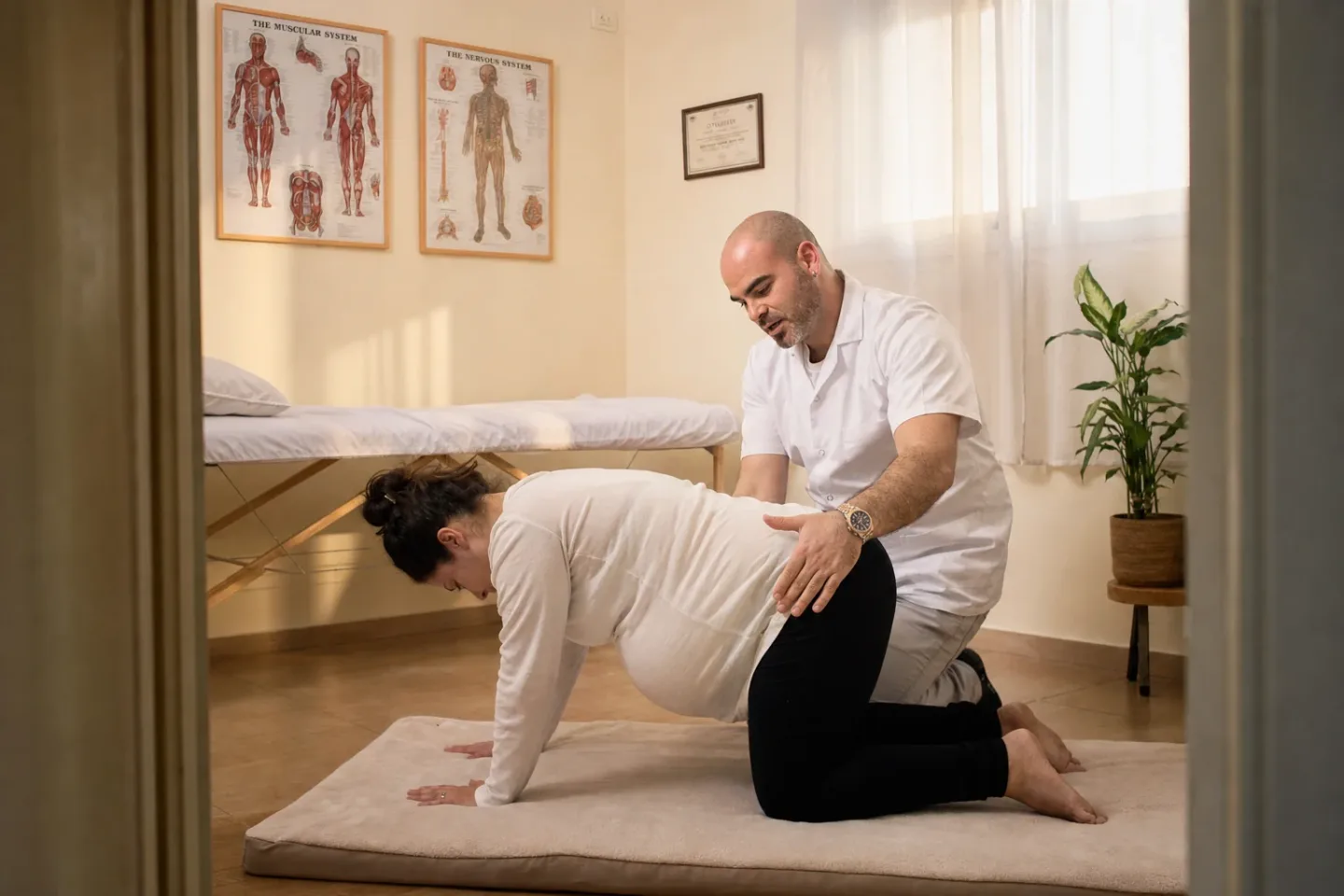
Buttock Pain During Pregnancy - Causes and Gentle Relief
16 min read
Does your butt hurt every time you get up from a chair‚ climb into the car or turn over in bed? Does the pain sometimes run down the back of your thigh‚ and you are not sure whether it is a nerve‚ the pelvis or a muscle that has locked up? Have long hours of sitting at work or a short walk to the kindergarten become a task you have to plan ahead?
I am Roman Kibler‚ an osteopath (D.O.) with a clinic in Kiryat Tivon‚ and I examine buttock pain during pregnancy with gentle manual work and in positions adapted to your week of pregnancy and your comfort.
Leave your details or call me‚ and I will check with you where the pain comes from and what we can do this week to ease it!
Buttock pain during pregnancy can appear early on‚ but most women feel it mainly in the second and third trimesters. The pain can be sharp‚ dull‚ burning or radiating‚ and it usually gets worse when walking‚ sitting‚ lying on one particular side‚ getting up from a chair or turning over in bed.
For some women butt pain during pregnancy sits on one side of the buttock‚ and for others it comes together with pain in the lower back‚ the pelvis‚ the thigh or the groin. It is important to understand that there is not always a single problem behind it: butt pain during pregnancy can come from the back‚ the pelvic joints‚ the gluteal muscles‚ a load on the tailbone‚ changes in posture or an irritated nerve.
During pregnancy the body goes through big changes: the center of gravity moves forward‚ the pelvis carries new loads‚ and the ligaments become more flexible under the influence of hormones. That is why the right care for pregnancy butt pain starts with understanding where the pain comes from‚ not just with trying to "release" the spot that hurts.
Butt Pain During Pregnancy: Why Does It Appear?
As the pregnancy progresses‚ the uterus grows and changes how the load is spread across the back‚ the pelvis and the hips. The body tries to adapt to the weight and to the changes in posture‚ and sometimes it compensates: a wider walk‚ a deeper arch in the lower back‚ more load on one side of the pelvis or tension in the buttock muscles.
When these compensations go on for weeks‚ they can cause local buttock pain during pregnancy or pain that radiates to the thigh and the leg. This is how pregnancy butt pain develops even in women who never had back pain before.
Hormonal Changes and More Flexible Ligaments
Pregnancy hormones prepare the pelvis for birth and increase the flexibility of the ligaments around the joints. This is a natural and important process‚ but when the ligaments stabilize less‚ the muscles around the pelvis and the buttocks have to work harder to keep things stable.
The gluteal muscles‚ and especially the deep muscles under the large gluteus muscle‚ become a central part of this stabilizing system. When they work for long hours without a break‚ they can tire‚ shorten and become sensitive to touch and movement. This is one of the reasons glute pain during pregnancy‚ and butt pain during pregnancy in general‚ is so common.
When During the Day Does Butt Pain While Pregnant Get Worse?
Some women feel butt pain while pregnant mainly when sitting‚ and others mostly when walking or standing for a long time. Sometimes butt pain while pregnant is worse when moving from lying down to sitting‚ when climbing stairs or when turning over in bed without moving the whole body together.
These differences in butt pain while pregnant matter a lot‚ because they help show whether the source is a joint‚ a muscle‚ a nerve or the tailbone. It is worth noting for a few days what makes the pain worse and what eases it‚ and bringing that list to the examination.
Many women also notice that their buttock pain during pregnancy is clearly on one side. Pain on the left side and on the right side is common‚ and the side alone does not tell us the cause‚ but it helps me focus the examination on the joints and muscles of that side.
The Link Between the Pelvis‚ the Back and the Buttocks in Pregnancy
The buttock is not an isolated area. It is part of a movement system that includes the lower back‚ the pelvis‚ the hip joints‚ the pelvic floor muscles and the thighs‚ and when one of these areas struggles to move in a balanced way‚ another area may compensate for it.
For example‚ if one side of the pelvis moves less freely‚ the buttock muscles on that side can work harder‚ and butt pain during pregnancy appears on that side. If the lower back is under constant load‚ the pain can radiate to the buttock even without a local problem in the muscle itself‚ and that is how butt cheek pain in pregnancy sometimes starts higher up.
During pregnancy‚ pelvic pain during pregnancy can also come together with butt pain while pregnant‚ especially when standing for long‚ walking or changing positions is difficult. In such a case‚ care that focuses only on the painful spot may be incomplete‚ so I check how the pelvis moves‚ whether one side carries more load and whether the hips are restricted.
The Back Pelvic Joints and Buttock Pain During Pregnancy
At the back of the pelvis there are two joints that connect the sacrum to the iliac bones. In pregnancy they move a little more than usual‚ and when one side moves differently from the other‚ pregnancy butt pain is usually felt as a deep spot at the side of the buttock‚ a little below the dimples in the lower back.
This kind of buttock pain during pregnancy often gets worse when standing on one leg‚ putting on trousers‚ stepping up onto a stair or walking for a long time. It is usually not dangerous‚ but it can limit daily life a great deal‚ so it is worth having it checked rather than just waiting for it to pass.
Buttock Pain During Pregnancy or Sciatica?
One of the important questions is whether buttock pain during pregnancy comes from an irritated nerve. Nerve pain tends to be burning‚ stabbing or radiating‚ and it sometimes comes with numbness‚ tingling or electric sensations along the leg.
Sometimes it continues from the buttock to the back of the thigh‚ the calf or the foot. Muscle or joint buttock pain during pregnancy‚ on the other hand‚ tends to be more localized‚ to appear with a specific movement and to change with the position of the body.
Not every pain that radiates to the leg is sciatica during pregnancy‚ and not every case of butt pain during pregnancy is related to a nerve. Sometimes a deep muscle in the buttock is overloaded and presses on its surroundings‚ sometimes a back pelvic joint is sensitive‚ and sometimes several factors combine.
When a deep buttock muscle is the main player‚ people often call it piriformis syndrome in pregnancy‚ and the left buttock pain in pregnancy or right buttock pain in pregnancy that comes with it can be stubborn. The name is less important than the examination: I check whether the muscle really is the source‚ or whether it is reacting to a load coming from the pelvis or the lower back.
Signs That Require Seeing a Doctor
If there is weakness in the leg‚ a significant loss of sensation‚ numbness around the groin and genitals‚ pain that gets worse quickly‚ fever‚ a fall or a change in bladder or bowel control‚ see a doctor and do not rely on manual treatment. In these situations the medical assessment comes before any other care.
Butt Pain During Pregnancy Together With Pelvic and Groin Pain
When the pain is felt not only at the back but also at the front of the pelvis or in the inner thigh‚ it is important to check whether there is a load on the front joint of the pelvis‚ the hip joints or the muscles that connect the pelvis to the leg. Sometimes the front pain and butt pain during pregnancy appear together as part of the same functional picture.
Some women describe groin pain during pregnancy on the left side together with buttock pain on the same side. In such a case the diagnosis matters‚ because pain that comes from the groin is not treated exactly like nerve pain in the buttock or pain that starts in the lower back‚ and good care looks at the whole pelvis and hip area.
Symphysiolysis and Pain That Gets Worse When Walking or Turning in Bed
Pain at the front of the pelvis‚ around the pubic bone‚ that gets worse when walking‚ climbing stairs‚ spreading the legs or turning over in bed can fit a load on the area of the symphysis pubis. This is the front joint of the pelvis‚ which in pregnancy may become more sensitive because of a combination of mechanical load and natural changes in the tissues.
When symphysiolysis appears together with buttock pain during pregnancy‚ it is important to tell apart front pain from the pelvic joint and back pain from the back pelvic joints or the spine. This distinction changes the advice: short‚ symmetrical steps‚ getting out of bed with both legs together and adjusting daily activity.
The Symphysis Pubis and Its Link to Pregnancy Pain
The symphysis pubis is the cartilage joint between the two pubic bones at the front of the pelvis. In some women the change in this area is barely felt‚ and in others it causes significant pain‚ mainly in movements where one leg moves separately from the other.
When the pain is focused on the pubic bone and comes with a feeling of instability‚ you can read more about pubic symphysis pain and how to adjust everyday positions. Gentle osteopathic treatment can be part of the care‚ but with acute pain or a rapid worsening‚ see a doctor.
Tailbone Pain and Painful Sitting in Pregnancy
Pregnancy butt pain while sitting is not always related to the buttock muscles or the sciatic nerve. Sometimes the source of butt pain while pregnant is the tailbone‚ at the lower end of the spine‚ and the pain gets worse when getting up from a chair‚ sitting on a hard surface or after a long time in the same position.
When the pain is centered at the very bottom of the back and felt mainly when sitting‚ it is often tailbone pain during pregnancy‚ which needs a different approach from pain that radiates along the leg. A suitable seat cushion‚ sitting with a slight forward tilt and getting up gradually may help.
If buttock pain during pregnancy appeared after a fall‚ an injury or a difficult previous birth‚ it is better to have a medical examination first. Only after injuries that need other treatment have been ruled out can gentle manual work around the pelvis be added.
How Does an Osteopath Examine Butt Pain While Pregnant?
The examination of butt pain during pregnancy starts with a structured conversation: when the pain started‚ where exactly you feel it‚ whether it radiates and what makes it worse or better. Then I ask about pain in the back‚ the groin or the tailbone‚ and about signs that call for a medical check.
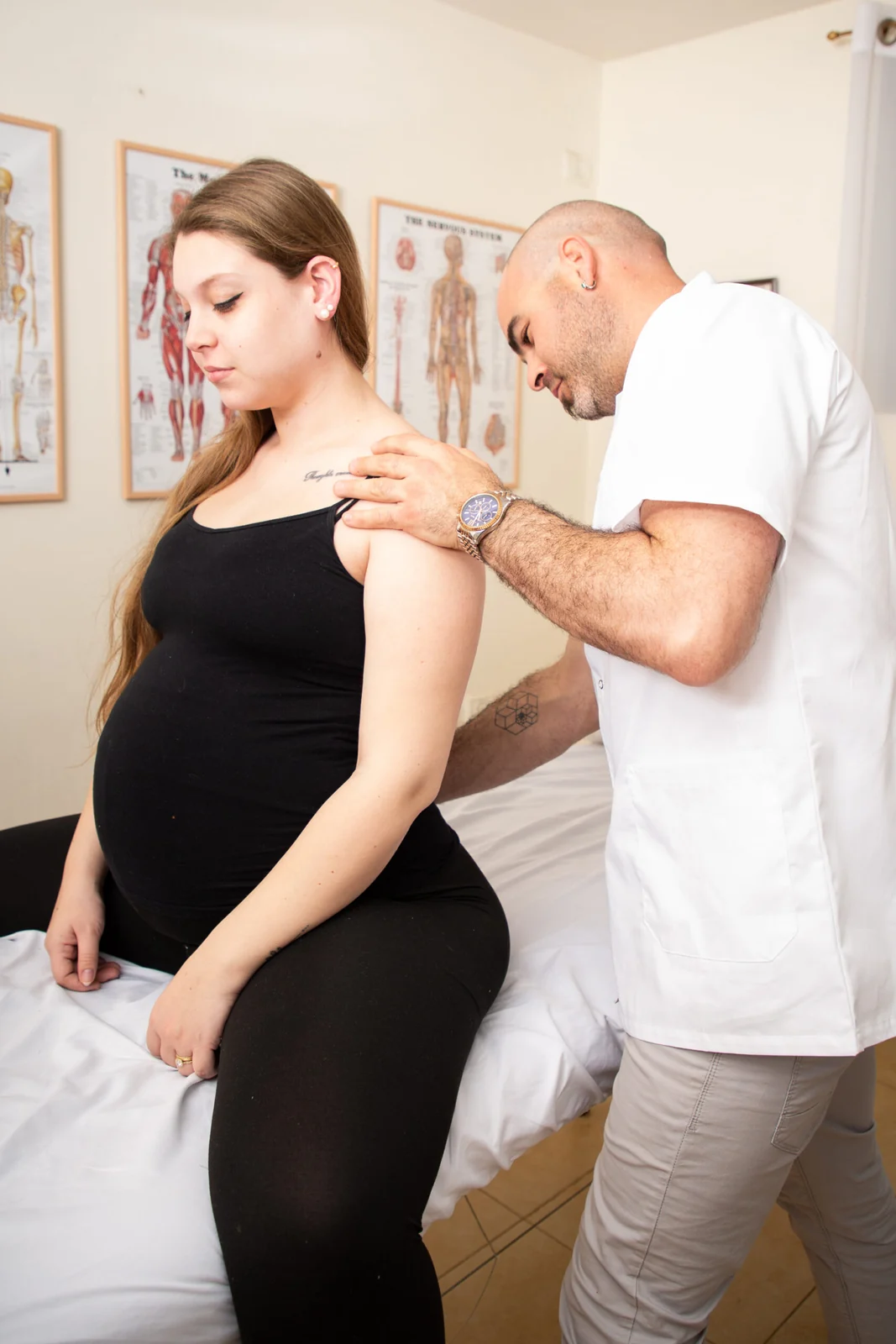
After that I gently check the movement of the back‚ the pelvis‚ the hips and the breathing‚ fully adapted to your stage of pregnancy. The examination is not forceful or painful‚ and it is done lying on your side‚ sitting or in any position in which you feel safe.
What Happens in the Treatment Itself?
In many cases of buttock pain during pregnancy‚ even a small change in how you get out of bed‚ how you sit or how you spread your weight when standing reduces the load. In other cases of pregnancy butt pain‚ gentle manual treatment is needed‚ aimed at improving mobility‚ reducing tension in the tissues and helping the body spread the load in a more balanced way.
The first session takes about an hour and includes a conversation‚ an examination and treatment‚ and follow-up sessions take about 45 minutes. I studied osteopathy for five years‚ including 1000 clinical hours‚ and I have been treating patients at Maccabi Tivi since 2022‚ so I am used to working with women at every stage of pregnancy.
If you are looking for an osteopath in Kiryat Tivon who knows the changes of pregnancy closely‚ at my clinic at 6 Karkom Street you will get time to explain‚ to ask and to understand what is happening in your body.
How Is Osteopathic Care Different From Standard Care for Butt Pain During Pregnancy?
Conventional medicine is very important in pregnancy‚ especially when buttock pain during pregnancy is unusual‚ a concern about a complication‚ an injury or symptoms that do not fit ordinary mechanical pain. A gynecologist‚ a family doctor or an orthopedist can carry out an assessment and rule out medical conditions.
In many cases physiotherapy‚ a pelvic support belt‚ a change in activity or medication suitable for pregnancy will also be recommended‚ according to medical guidance. These are important tools‚ and they can work together with manual treatment.
The osteopathic approach does not replace medicine; it focuses on the functional side: how the pelvis moves‚ where the load builds up‚ which muscles work too hard and whether the lower back is restricted. It suits cases where butt pain during pregnancy is affected by positions‚ walking or daily load‚ and where there are no signs that call for urgent medical care.
If you want to understand in depth what osteopathic treatment during pregnancy looks like‚ what is checked in each trimester and which situations need medical approval first‚ you will find a full explanation on the dedicated page. It also explains which other pregnancy pains‚ beyond the buttocks‚ can be checked at the clinic.
Everyday Relief for Pregnancy Butt Pain
Relief for pregnancy butt pain starts with adjusting the load. It is best to avoid standing for a long time without moving‚ taking very wide steps‚ lifting heavy things and sitting for a long time in the same position.
- Getting out of bed: roll onto your side‚ lower both legs together and push up with your hands.
- Sleeping: a pillow between the knees and a small pillow under the belly when lying on your side.
- Sitting: a chair at a height where the knees are slightly lower than the hips‚ and a short break every half hour.
- Walking: short‚ symmetrical steps‚ comfortable shoes and a flat route when possible.
- At home: gentle local warmth for a few minutes‚ unless your doctor has advised otherwise.
Rest is important for butt pain during pregnancy‚ but complete rest is not always the answer. Gentle movement that does not make the pain worse‚ such as a short walk or breathing exercises‚ can help you keep functioning.
Shoes also affect buttock pain during pregnancy: a flat‚ stable shoe with a shock-absorbing sole reduces the load on the pelvis when walking‚ while a high heel increases the arch in the lower back. If you work standing‚ rest one foot on a low stool from time to time‚ and if you work sitting‚ get up for a few steps before the pain starts‚ not only after it.
Butt pain in the third trimester often grows with the weight of the baby‚ so these small habits matter even more in the last weeks. If a certain action brings on sharp butt pain during pregnancy‚ radiating pain or numbness‚ it is better to stop and consult a professional.
Butt pain while pregnant that improves when you change position is a good sign that it is a mechanical load we can influence. Buttock pain during pregnancy that does not change at all with position deserves a closer look.
When Does Buttock Pain During Pregnancy Need a Medical Examination?
Most cases of buttock pain during pregnancy are related to mechanical load and changes in posture‚ but there are situations that require a medical examination. Strong‚ sudden pain‚ fever‚ a fall‚ real difficulty putting weight on the leg‚ weakness in the leg or a loss of sensation do not fit the picture of muscle pain alone.
When butt pain during pregnancy comes with sharp pain in the lower back‚ numbness that runs down to the foot or weakness when lifting the foot‚ the doctor will also check whether a nerve root in the back is under pressure. The signs of a herniated disc and how it differs from muscle pain are explained in a separate article‚ but the diagnosis itself is made only in a medical examination.
Butt pain while pregnant that comes together with bleeding‚ early contractions‚ leaking waters‚ unusual abdominal pain or a change in bladder or bowel control requires going to a doctor or the emergency room right away. If things are getting worse quickly or you feel something is not right‚ it is better to be checked.
Good osteopathic care does not ignore warning signs; it knows how to recognize when gentle work is possible and when the right step is a referral for a medical assessment.
What Should You Remember About Butt Pain During Pregnancy?
Butt pain during pregnancy can come from different sources: a load on the pelvis‚ tension in the gluteal muscles‚ an irritated nerve‚ pain coming from the lower back‚ sensitivity of the tailbone or pain at the front of the pelvis. That is why a general name for pregnancy butt pain is not enough‚ and it is worth understanding what makes the pain worse‚ where it is and which movements affect it.
Gentle osteopathic treatment can be part of the care when buttock pain during pregnancy is related to movement‚ posture and load‚ as long as there are no signs that call for a medical assessment. The goal is not a magic solution‚ but to reduce the load‚ improve mobility and help the body cope better with the changes of pregnancy.
Frequently asked questions
Is buttock pain during pregnancy common?
Yes‚ many women feel butt pain during pregnancy‚ sometimes together with pain in the pelvis or the lower back. Being common does not mean you have to suffer in silence: when the pain limits walking‚ sleep or work‚ it is worth having it checked.
Is osteopathic treatment safe in pregnancy?
Osteopathic treatment in pregnancy uses gentle techniques and comfortable positions‚ without forceful manipulations. Before the treatment I ask about the course of the pregnancy‚ and if there is special medical guidance or any risk signs‚ you should see your doctor first.
From which week can I come for treatment?
With buttock pain during pregnancy you can come at any stage‚ including the last weeks. The positions and techniques change with the size of the belly and with what is comfortable for you.
How do I know if butt pain while pregnant comes from the sciatic nerve?
Nerve pain tends to be burning or stabbing‚ to run down the leg and to come with numbness or tingling. Muscle or joint pain is more localized and changes with position‚ but only an examination can tell them apart with confidence.
Does pregnancy butt pain go away after the birth?
For many women buttock pain during pregnancy eases in the weeks after the birth‚ as the weight and the load on the pelvis go down. For others a load remains in the pelvis or the back‚ and then it is worth having it checked after the birth too.
Does a pelvic support belt help with buttock pain during pregnancy?
A pelvic belt can give support and reduce pain for some women‚ especially when the pelvic joints are sensitive. It is best to fit it with a professional and not to wear it all day without a break.
How many sessions are usually needed?
The number of sessions for butt pain during pregnancy depends on the source of the pain‚ the week of pregnancy and the response to the first treatment. Sometimes one or two sessions together with changes at home ease pregnancy butt pain‚ and sometimes a few sessions throughout the pregnancy are recommended.
Can I exercise when my buttock hurts?
With butt pain during pregnancy‚ gentle movement and breathing exercises suit most women‚ as long as they do not make the pain worse and there is no other medical instruction. Exercises with wide leg spreading‚ standing on one leg or strong stretching are better postponed until the source of the pain is clear.
What should I do when the pain wakes me up at night?
Try lying on your side with a pillow between your knees‚ and turn over with your knees kept together. If the pain at night is strong‚ getting worse or comes with fever or numbness in the leg‚ see a doctor.
What is the difference between buttock pain and tailbone pain?
Tailbone pain is focused at the lower end of the spine‚ between the two sides of the buttocks‚ and gets worse mainly when sitting and getting up. Pain in the buttock muscles or the pelvic joints is usually felt on one side and gets worse when walking and on stairs.
Does insurance cover osteopathic treatment?
Some private insurance plans refund part of the cost of osteopathic treatment. It is worth checking with your insurance company what your policy covers before the treatment.
Table of Contents
- Butt Pain During Pregnancy: Why Does It Appear?
- Hormonal Changes and More Flexible Ligaments
- When During the Day Does Butt Pain While Pregnant Get Worse?
- The Link Between the Pelvis‚ the Back and the Buttocks in Pregnancy
- The Back Pelvic Joints and Buttock Pain During Pregnancy
- Buttock Pain During Pregnancy or Sciatica?
- Signs That Require Seeing a Doctor
- Butt Pain During Pregnancy Together With Pelvic and Groin Pain
- Symphysiolysis and Pain That Gets Worse When Walking or Turning in Bed
- The Symphysis Pubis and Its Link to Pregnancy Pain
- Tailbone Pain and Painful Sitting in Pregnancy
- How Does an Osteopath Examine Butt Pain While Pregnant?
- What Happens in the Treatment Itself?
- How Is Osteopathic Care Different From Standard Care for Butt Pain During Pregnancy?
- Everyday Relief for Pregnancy Butt Pain
- When Does Buttock Pain During Pregnancy Need a Medical Examination?
- What Should You Remember About Butt Pain During Pregnancy?
- Frequently asked questions
